

































How does “Bee”, Amazon's new wearable, work? The acquisition of the start-up has renewed the debate on the future of wearable technology
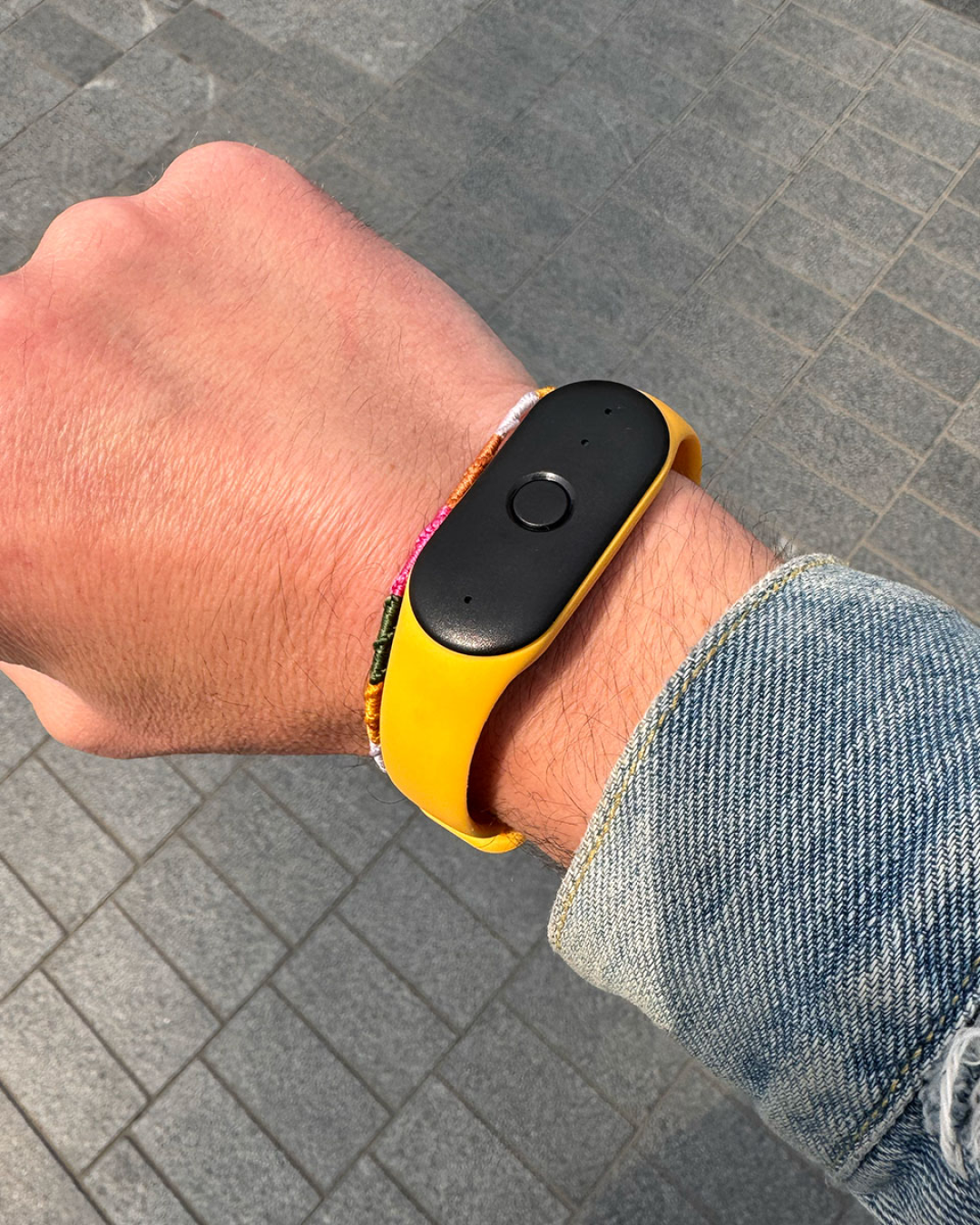
Amazon recently acquired Bee, a U.S.-based startup that developed an AI-powered wearable device. “It’s a strategic move,” commented Repubblica, “that revives Amazon’s ambitions in the field of intelligent personal devices.” Bee will specifically become part of the Amazon Devices division, with the goal of integrating the startup’s technology into a wider ecosystem of AI-powered personal devices, with Alexa leading the way. Bee is presented as a wristband with a simple and minimal design, yet it’s designed to act as a personal assistant, interacting with the user and offering, through feedback, what Repubblica describes as “discreet” support. Essentially, Bee is a hybrid tech product, somewhere between a wearable computer (like a smartwatch) and a voice assistant (such as Alexa), combining the capabilities of an AI-based system with the practicality of a wearable device.
“To truly serve us, artificial intelligence must live alongside us, learning not just from commands, but from the fabric of our lives: our relationships, emotions, and aspirations. Only by immersing itself in our everyday lives will it be able to truly understand who we are and what truly matters to us,” reads Bee’s website. However, similar products have already been introduced in the past, and a potential failure would not come as a surprise to industry experts. The idea behind AI Pin, for example, followed a similar direction to Bee: it was a device designed to be worn – in that case, as a pin – and meant to accompany the user everywhere, serving as an intelligent personal assistant through an integrated AI system. Despite the media hype and substantial funding raised at launch, AI Pin failed to gain traction in the market, and its creators announced the end of the project last February.
Has anyone figured out anything cool to do with the relic Humane Ai pin yet? pic.twitter.com/ZdfvJhrnk6
— Drake (@TheRealDriiZZy) June 27, 2025
Interest in so-called “invisible technology” remains high, and nearly all major tech players are investing in projects headed in this direction. The goal is to develop increasingly compact and discreet devices, capable of interacting with users in natural and intuitive ways, without sacrificing functionality or comfort. However, this ambition still faces significant technological and cultural limitations. One key challenge is the absence of a screen, which marks a major departure from traditional devices: this is one reason why many wearables have struggled to gain significant market share compared to smartphones. There is also a certain degree of skepticism (among both developers and consumers) toward devices that, directly or indirectly, aim to replace a product as deeply embedded in daily life as the smartphone – increasingly efficient and familiar across virtually all segments of the population.
@ridergpt Amazon just bought a wearable AI startup that listens to everything you say… on purpose. Amazon’s acquisition of Bee shows their interest in wearable AI. This wristband listens, transcribes, and summarizes audio throughout the day. Would you ever wear an AI that listens to all of your conversations? #amazon #bee #ai #wearable #tech #techtok #wearables original sound - Rider Harris
Human nature itself is deeply tied to perceiving and processing information through the visual dimension. As a result, the lack of a traditional interface for interaction presents a challenge not only on a technical level but also cognitively and culturally. Nevertheless, it’s clear that the steady advancement of artificial intelligence is enabling new modes of engagement and interaction that are no longer dependent on a screen. In particular, voice interaction is gaining ground as a preferred method for tasks like replying to messages or issuing commands, thanks to ongoing improvements in the field. Still, the prospect of living in a tech environment centered around wearable devices remains a distant – though not entirely unrealistic – scenario: first and foremost, it will require achieving a complex balance between technological progress, social acceptance, and cultural adaptation – all of which must evolve in parallel to allow for the widespread adoption of products like Bee.