






































Italy must say goodbye to Amazon deliveries by drone Could it be related to the financial dispute with the Italian Revenue Agency?
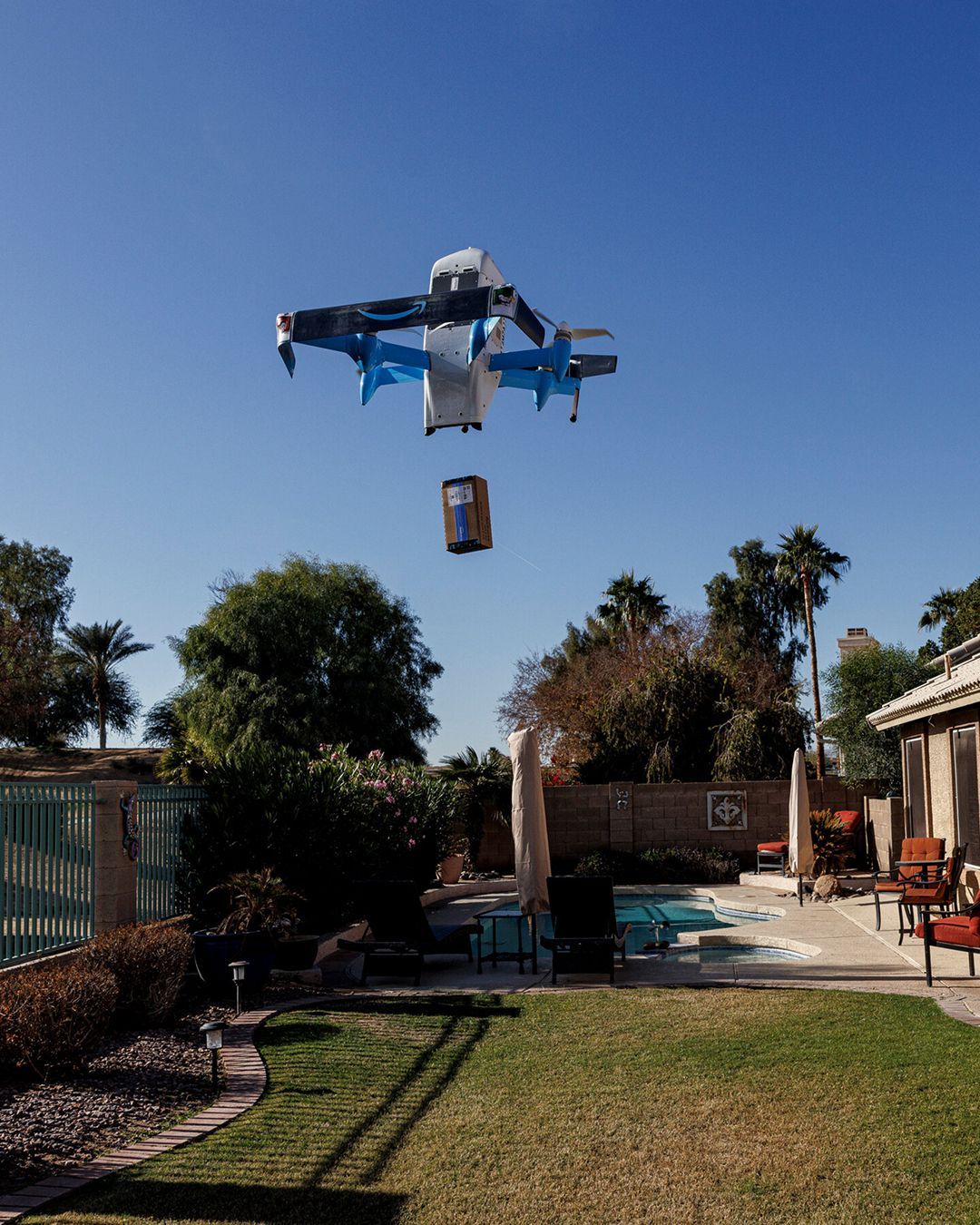
Amazon has announced the suspension of the Prime Air service in Italy. The project aimed to launch, by the first half of 2026, the delivery of small parcels weighing a maximum of about two kilograms via drones. Tests had begun in 2023 in Abruzzo, and, at least in the launch phase of the initiative, the drones would have made deliveries within a 12-kilometer radius from the point of departure.
The decision to suspend Prime Air in Italy took by surprise the very institutions that were participating in the project. According to many observers, it could be a form of retaliation linked to recent financial tensions between the Italian state and Amazon. The company was in fact involved in a legal proceeding initiated on the basis of investigations by the Guardia di Finanza and coordinated by the Milan prosecutor’s office over the possible non-payment of taxes amounting to 1.2 billion euros between 2019 and 2021.
Why did the Italian tax authorities have it out for Amazon?
The financial dispute between Amazon and the Italian Revenue Agency ended with an agreement providing for the payment of 723 million euros by the US company, in exchange for the dismissal of the case. According to the findings of the Milan prosecutor’s office, Amazon allegedly failed to provide the Italian tax authorities with the information needed to identify sellers based outside the European Union operating on its platform. In particular, the company allegedly did not disclose the data necessary to identify the parties required to pay the VAT due on sales made in Italy.
For the prosecution, this omission would not be the result of isolated irregularities, but rather the possible effect of the automated system used by Amazon to manage transactions: the algorithm governing product sales would not adequately take into account the tax obligations provided for by Italian and European regulations for those selling goods on behalf of non-EU sellers. Investigators further estimated that this mechanism may have made it possible to avoid paying taxes totaling more than one billion euros.
What’s wrong with Prime Air?
Amazon Prime Free Delivery within 1 hour on a $4 item in Richardson, TX
— Barrett Linburg (@DallasAptGP) December 28, 2025
From a drone
Trying to decide if this is more or less delicate than a normal driver handles the packages pic.twitter.com/0yjYJVtl0t
Amazon has been working on the Prime Air project for over a decade and has long been testing parcel delivery via drones in the United States. Despite periodic optimistic announcements, the project’s path has proven far from straightforward. The main difficulties arise above all on the technological front and concern the reliability, accuracy, and safety of the drones. These aircraft, in fact, must operate in complex urban environments, full of obstacles such as buildings, power lines, and moving people, and subject to variables that are difficult to control, increasing the risk of accidents and the resulting legal liabilities.
From an economic standpoint as well, drone delivery presents significant limitations. Ground transport vehicles, such as vans or cargo bicycles, are able to handle many packages at the same time (including large ones) and to make multiple deliveries along the same route. In most cases, this capacity makes them more efficient and cost-effective than using a dedicated drone for each individual shipment. In an official statement, Amazon nevertheless clarified that the suspension of Prime Air in Italy is related to the operational and bureaucratic context of the country, which would not yet offer the appropriate conditions to support the project’s long-term goals.