
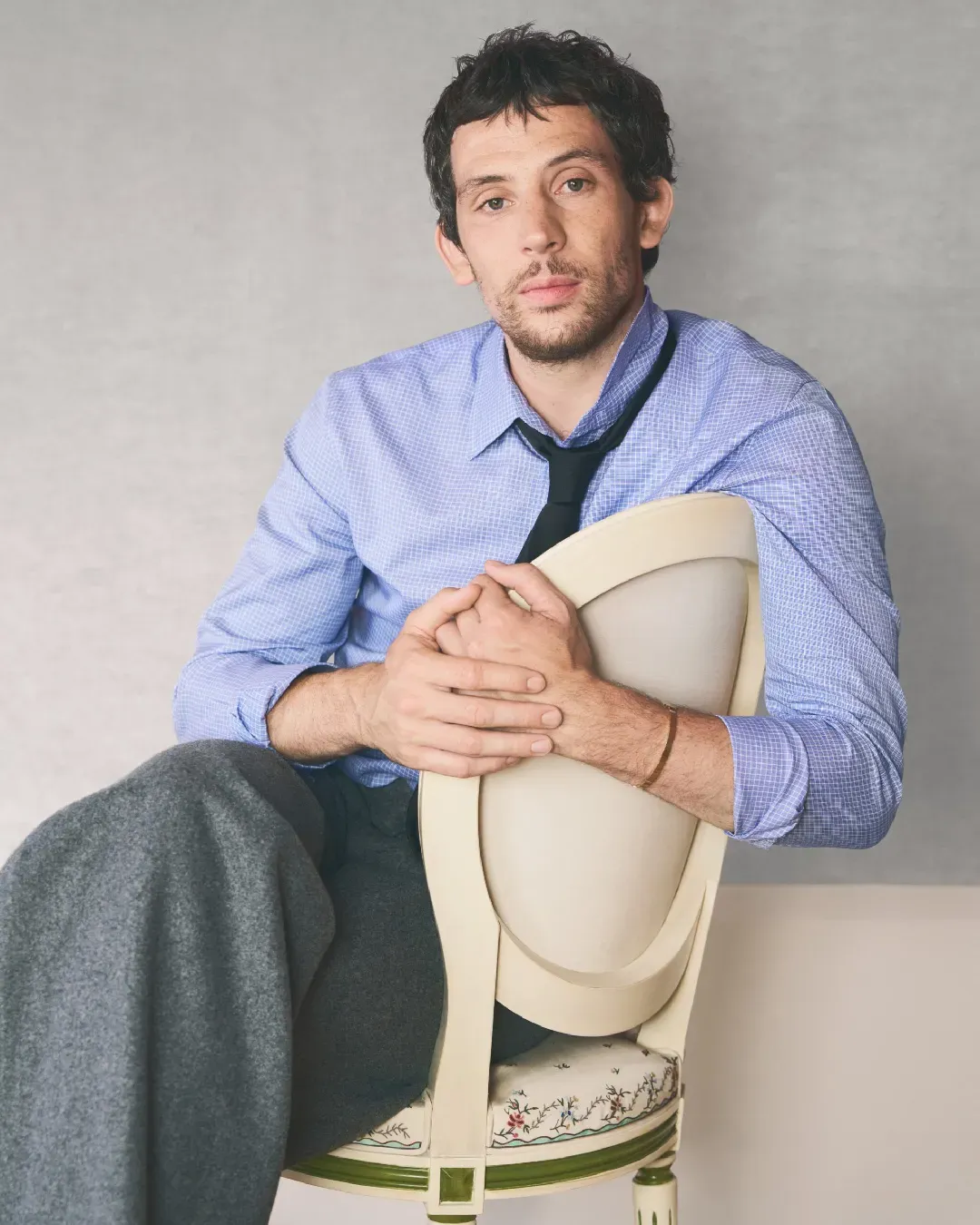
Are all these ambassadors really worth it? Millions in investments and endless announcements fill front rows and luxury campaigns
How many ambassadors does it take to build a luxury brand? A question that Dior seems unable to answer. Since the new creative director Jonathan Anderson entered the atelier, in recent weeks the French Maison has announced no fewer than sixteen new ambassadors—an astonishing number that raises questions about their true importance in the market. From Mia Goth to Josh O'Connor, from Taylor Russell to Mike Faist, the talents recruited by Jonathan Anderson’s Dior are emerging, very young figures who are giving the old guard of Hollywood cinema a run for their money. And the fact that some of them do not exactly belong to the world of Hollywood megastars is a key clue about the future of the fashion ambassadorship business.
Why choose emerging talents?
Many of the new Dior ambassadors are long-time friends of Jonathan Anderson, having collaborated with the creative director back when he was leading Loewe, until a year ago. Through contracts worth millions per year, the actors (because it really does seem that they are all actors, from Linglign to Greta Lee) not only have the privilege of attending the most anticipated shows of Paris Fashion Week or posing in the Maison’s campaigns: endorsement contracts with brands, for an emerging talent who is trying to make their way in the industry, are a springboard to cinematic success.
Added to this are the times of pop culture, which moves at an increasingly fast pace. With so many films and projects being released, the number of stars establishing themselves (even within niche fan bases) is growing. On the one hand, it benefits brands to have so many ambassadors, especially if they are geographically spread around the world: while in the past it was enough for Maisons to collaborate with a Hollywood celebrity to capture public attention, today the brands that manage to have the strongest hold on consumers are those that remain connected to international pop culture. Dior, for example, announced a partnership with Thai-Hong Kong actress Lingling, while Prada involved Chinese actress and ambassador Yang Mi in the new campaign for the Lunar New Year.
Why so many?
@burberry Introducing our new brand ambassador Barry Keoghan #Burberry original sound - Burberry
If the sixteen ambassadors chosen by Jonathan Anderson’s Dior in recent weeks leave you speechless, you should know that this is not the first time the Maison has signed contracts with so many talents. In May 2024, we conducted research on the media and monetary impact of ambassadors, discovering that Dior, under the leadership of Maria Grazia Chiuri, was working with as many as forty-eight ambassadors. A huge commitment, considering the expenses required to maintain these collaborations.
In the research, we established that the main reason behind activating so many partnerships was not so much financial (taking the example of Burberry, which had sky-high media engagement but minimal financial return), but rather cultural. Collaborating with many niche stars, for a world-famous brand belonging to one of the richest corporations in the world, is somewhat like polishing its image in the eyes of more intellectual consumers. Like in a strategic board game, sometimes it is better to have many small pawns than one single large piece to win the game. In this case, reaching many small communities, strong because they are cohesive and stable, is better than communicating only with the fandom of a megacelebrity.
The risk
@nssmagazine Jacob Elordi has just arrived at the Bottega Veneta Show in Milan #MFW #tiktokfashion #fashiontiktok #milano #milan #fashionshow #jacobelordi #bottegabag #bottegaveneta #guest #celeb #milanfashionweek original sound - nss magazine
It is not certain that working with many celebrities is the only favorable marketing strategy. Bottega Veneta, a brand that has neither an Instagram page nor a TikTok account, collaborates with a few, but well-chosen names, such as actor Jacob Elordi, tennis player Lorenzo Musetti, South Korean singer I.N., Thai actor Jirawat Sutivanichsak, Chinese diver Guo Jingjing, South Korean rapper RM, as well as Julianne Moore and Michelle Yeoh. The Maison teaches that ambassadors are important, but they must also be chosen carefully: by rolling out too many very fresh faces too quickly, you risk toppling a myth and shattering the value of the ambassadors themselves. In short, between those who bet on selectivity and those who bet on volume, those who take careful aim and those who shoot into the crowd, the winner is whoever hits the mark of cultural relevance. How brands interpret this term, perhaps, is what truly makes the difference.