
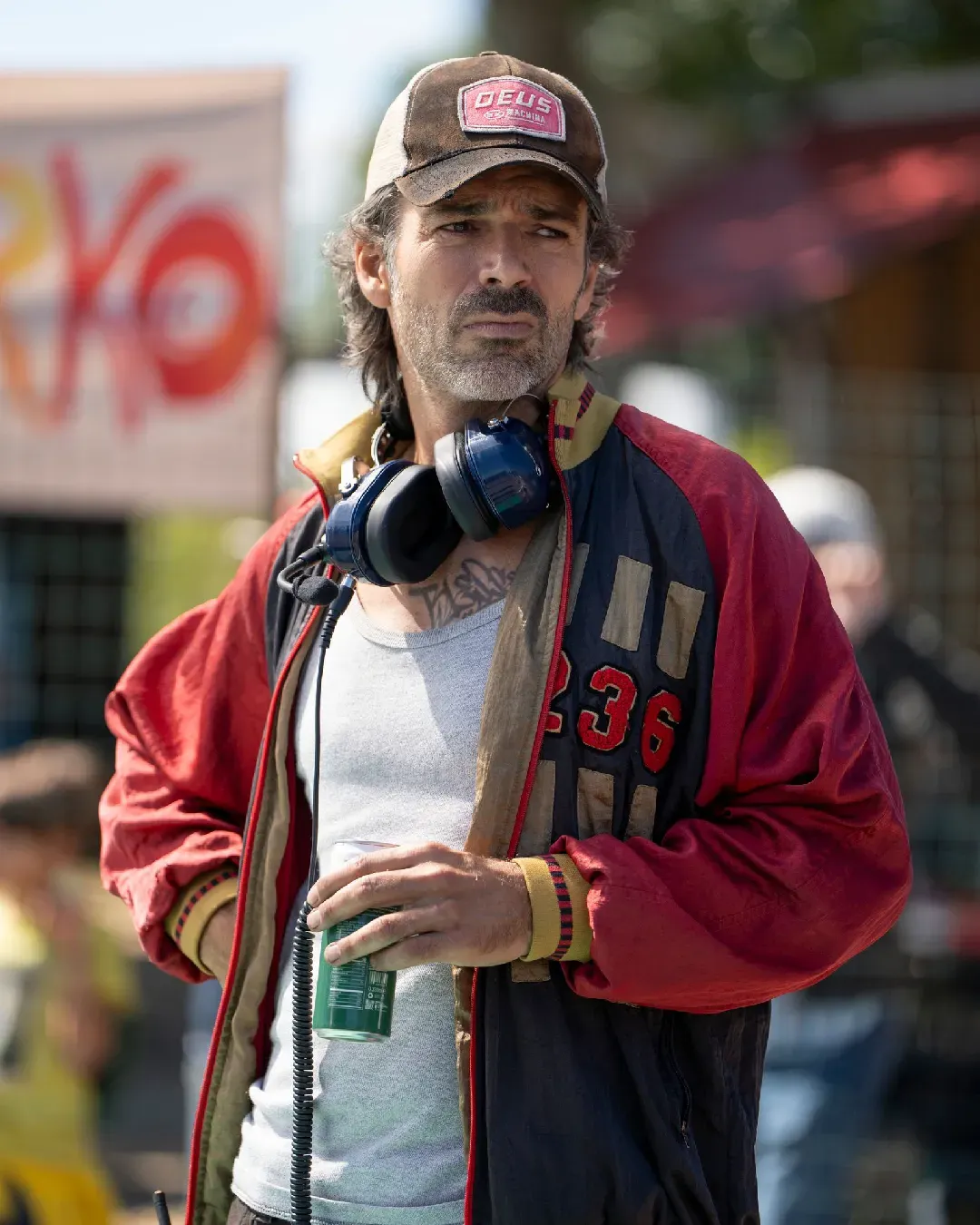
“Motorvalley” races onto Netflix with a few empty revs Luca Argentero, Giulia Michelini, and Caterina Forza star in the series about the Italian GT championship.
For the Italian entertainment industry, which tends to tell family dramas over and over in the same places and settings, the Netflix production Motorvalley is certainly a breath of fresh air that transports viewers to the Motor Valley in the Romagna area, where the main activities of the Italian GT championship take place. It is curious, however, that in this search for originality the choice once again falls on a sport and a type of storytelling that had already been explored ten years ago, albeit with different characters, different stories, and different dynamics.
The comparison with Veloce come il vento
Veloce come il vento (2016) marked a moment of achievement for director Matteo Rovere, but also for the entire technical and artistic sector of the Bel Paese, which proved that it knew exactly what to do with unexplored settings that at first glance seemed impossible to handle—and did so very well. Rovere returns there ten years later with Motorvalley, featuring a different story and different protagonists. The series is not a remake of Veloce come il vento, but rather a return to a circuit in which to introduce other figures entrusted with their own baggage, while the director and screenwriter takes on his own by reworking it in a different package. As if Veloce come il vento had been a training ground capable of leading to an evolution of what he (and his team) had managed to achieve, especially in terms of mise-en-scène and direction, which once again race at full throttle on the tracks of a national championship.
There is another difference, not only internal to the story: although the series is a fairly commendable example, placing it within Netflix’s catalog has partly dismantled its potential, which the 2016 film had instead been able to fully express. A certain flattening that nonetheless makes the result achieved with the episodes sufficient, but Veloce come il vento did not stand apart from the series solely because of its plot, but because of the courage that guided the creation of a project that in Italy appeared like a runaway monad, and whose boldness was rewarded, quickly establishing itself as a cult gem that is still talked about today when referring to the production and narrative possibilities of our country.
The plot
Leaving behind the characters played by Matilda De Angelis and Stefano Accorsi and, with them, the latter’s story of drug addiction, the central themes that remain in the show are redemption and the desire for a second chance, which all the protagonists cling to with all their strength. Blu Venturi, played by Caterina Forza, is a young thoroughbred who does not want to be tamed, and whom Elena Dionisi, portrayed by Giulia Michelini, tries to rein in with the help of a former driver, Arturo Benini, played by Luca Argentero. The young woman, recently released from prison and with a disastrous relationship with her mother, decides to pursue the dream that once belonged to her father, who died as a result of an accident during a race, while what drives Arturo and Elena is the prospect of believing again and making others believe again by proving they still have what it takes. The man tries to lead Blu and his colleague to victory by setting up his own racing team after she was pushed out of the family one by her brother.
First impressions
@netflixit Tre vite, un solo obiettivo: non arrendersi. Luca Argentero, Giulia Michelini e Caterina Forza vi aspettano in Motorvalley. Solo su Netflix, dal 10 febbraio.
suono originale - Netflix Italia
What drives the events of Motorvalley is not so much the desire for speed that characterizes the boldest and most adrenaline-fueled part of the series, but rather the trio formed by the protagonists, who must find a way to create a team that works. A level of chemistry that is built with difficulty, given the rusted gears of the characters, whose sense of challenge and unity nonetheless comes through, managing to overcome the more predictable and bland passages of the writing. The screenplay cohesively sketches the human ensemble of Motorvalley, but slips into neutral when it comes to inserting a subplot (not even that secondary) linked to crime, which clashes slightly even though it is coherently integrated into the story. Motorvalley is therefore a series that does not showcase Italian excellence, but at least attempts to let it be glimpsed. It does not have the same grit and will not have the same impact as Veloce come il vento, but at least it manages to cross the finish line.