
























Is the crisis over for Italian fashion? The worst seems to be over, but the year that has just begun will certainly not be a turning point
The crisis in fashion in general and of Made in Italy in particular has been at the very forefront of the entire industry’s mind throughout 2025. And a few weeks ago, the release of LVMH’s financial results, with a -3% in quarterly sales in the Fashion & Leather Goods division, made it clear that the situation appears stable but is not exactly poised for improvement.
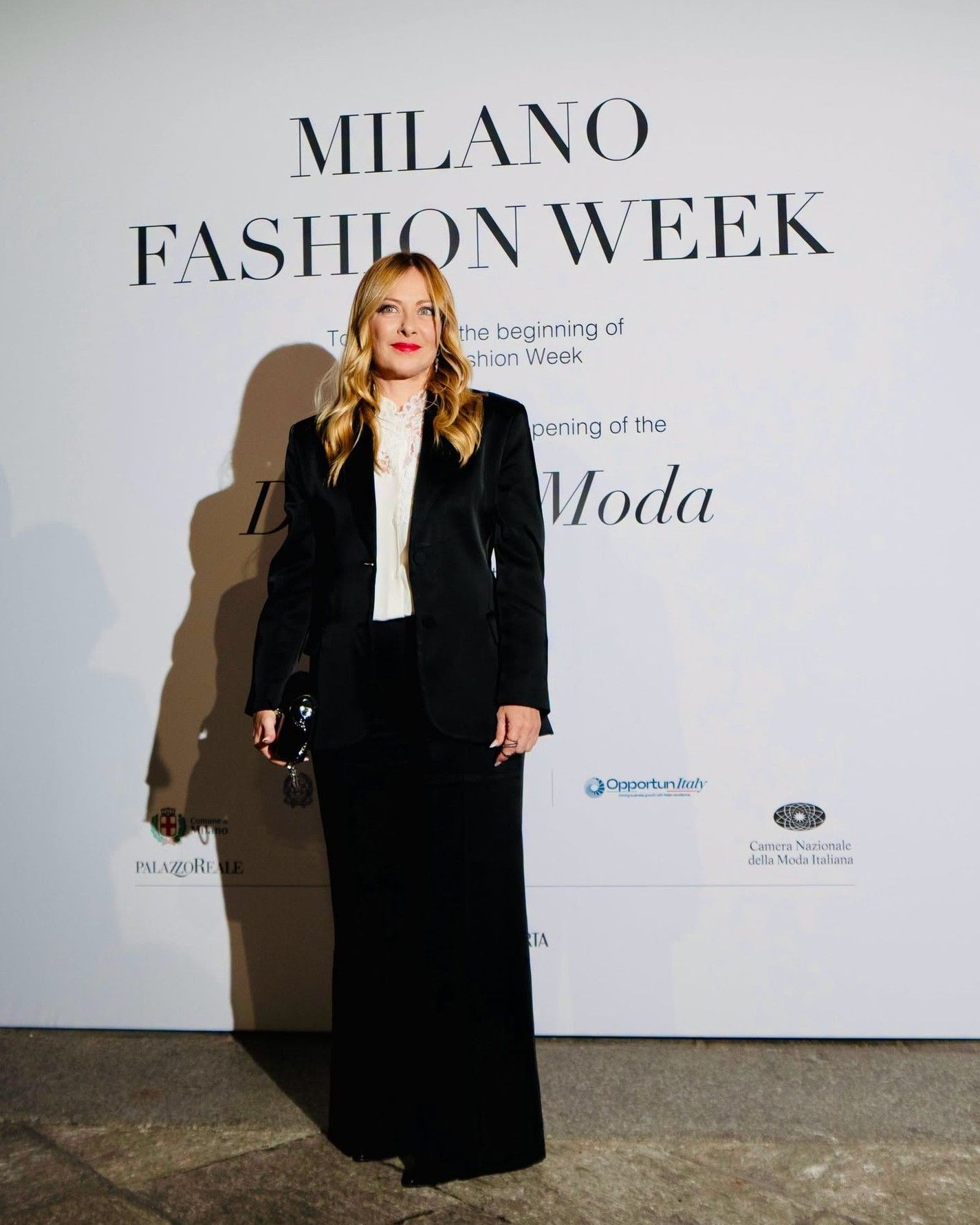
However, the most recent data presented by Camera della Moda Italiana during the traditional press conference ahead of the upcoming women’s Milan Fashion Week seemed slightly more encouraging. How come?
Better slow than in crisis
@vale_vale_75 Luigi Lardini, Direttore Creativo e Co-fondatore di Lardini, non ha dubbi: questa è la peggior crisi che abbia mai visto nel settore moda. Il mondo del lusso sembra paralizzato. I negozi sono fermi. La Cina rallenta. Le tensioni globali aumentano. Ma il vero problema? Nessuno ha una risposta chiara. E intanto auto da 320k euro si rivendono a 480k in sei mesi. Perché se vuoi il nuovo, devi aspettare anni. Un lusso che si vende... ma non si capisce più.
suono originale - Valentina
Summing it up, it can be said that 2025 saw a slow and uneven decline in overall turnover across the entire sector, which fell by 2.6% compared to the previous year, reaching a total of approximately €93 billion. The figure is indeed negative, but not catastrophic, since this loss appears to be caused – in addition to the turbulent geopolitical situation – by an increase in international trade tariffs, which overall rose from 5.3% to 8.9%.
In reality, when breaking down last year by quarter, it becomes apparent that the period from July to September (which likely corresponds to the peak months for tourist shopping) showed growth after eight consecutive months of decline. July started with a modest +1.4%, which by September reached +5.7%, before slowing down again in autumn, but without falling below the average of both the previous months and the same months of the prior year.
How did 2025 go?
ISTAT retail sales data for the last eleven months of 2025 then provide a slightly more detailed picture: sales contracted overall, especially in footwear which fell by -1.8%. However, towards the end of the year, in November, clothing sales grew by +1.4% and footwear by +1.3% compared to November 2024. Interestingly, cosmetics grew by +3.6% and – although exact percentages are not available – niche/artistic perfumery is also growing at an unusual rate.
The hypothesis that can be drawn is that, in a landscape dominated by inflation and rising costs, consumption has not stopped but has simply shifted towards luxurious yet less expensive products: it is easier to buy a €300 perfume than a €1,500 T-shirt or a €2,600+ bag. A persistent obstacle therefore remains very high prices and, above all, a product mix that still needs to better balance high-end items with more entry-level or aspirational segment products. However, some prices have fallen: wholesale prices.
Prices are falling, but for whom?
A curious figure concerns wholesale prices, which fell in the case of textile products and therefore raw materials; while they only increased by +0.2% for clothing and +0.9% for footwear. In practice, brands paid less for their raw materials but did not pass that saving on to retailers and therefore to end consumers.
The probable reasons are always the same three: increasing margins, maintaining brand positioning, and possibly absorbing fixed cost increases. There may also have been a desire to avoid triggering price wars. Curiously, however, wholesale prices for jewellery and eyewear rose by +10.6% even though turnover fell, especially in the case of jewellery.
Looking at the import/export balance, what immediately stands out is that imports from abroad have increased significantly, particularly those from China, which rose by +8.7%, certainly due to U.S. tariffs that turned Europe into a release valve for Chinese surplus. Although it should be clarified what these imports consist of: most likely finished fast-fashion or mid-range garments, but also fabrics, leather goods components, or the well-known semi-finished products that are then “finished” in Italy. Exports, on the other hand, performed far from brilliantly, demand remained weak and suggests a decline in European purchasing power.
And now?
The luxury downturn feels endless, but the data is starting to clarify one thing: this is an industry cycle, not an LVMH-specific problem.
— StockOpine (@Stock_Opine) January 30, 2026
Ultra-premium names like Hermès remain the exception, but that doesn’t invalidate the broader cycle.
We broke down LVMH’s FY25 results,… pic.twitter.com/QSkkwb6290
There is a certain amount of optimism for the coming year, so to speak. Forecasts point to growth of around 1%, therefore very, very modest. The positive aspect, however, is that no worse damage is expected, also considering the anticipated slowdown in U.S. growth and relative stability in Europe and China, where the miracle of the early 2010s is unlikely to be repeated.
So we are not exactly in a deep black crisis, but more in a kind of convalescence. The truth is that a widespread sense of difficulty in spending – affecting much of the world – is compounded by general international political uncertainty, as business trends could be influenced by potential declines in the dollar, escalating tensions in South-West Asia, and the hoped-for Chinese economic recovery. In short, there is nothing to celebrate, but we can take some comfort in the fact that the situation could have been much worse.
Takeaways
- In 2025, the Italian fashion and luxury sector recorded a moderate decline in overall revenue (-2.6%, approximately €93 billion), influenced by geopolitics and rising tariffs, but the situation is not dramatic.
- After eight consecutive months of decline, between July and September 2025 there was a recovery in sales (up to +5.7% in September), mainly thanks to tourist shopping, with visible improvement also in November (+1.4% clothing, +1.3% footwear).
- Consumers, hit by inflation and high prices, have shifted spending toward more accessible luxury products (e.g. perfumes) rather than ultra-high-end clothing and accessories, while cosmetics and niche/artistic perfumery show solid growth.
- Wholesale prices of textile raw materials have decreased, but brands have not passed the savings on to retailers and consumers, keeping retail prices high to protect margins and positioning; conversely, wholesale prices for jewelry and eyewear have risen sharply.
- Forecasts for 2026 indicate modest growth (+1%), with no significant worsening expected: the sector is not in a severe crisis, but rather in a phase of slow convalescence, with cautious optimism tied to geopolitical variables and global purchasing power.