
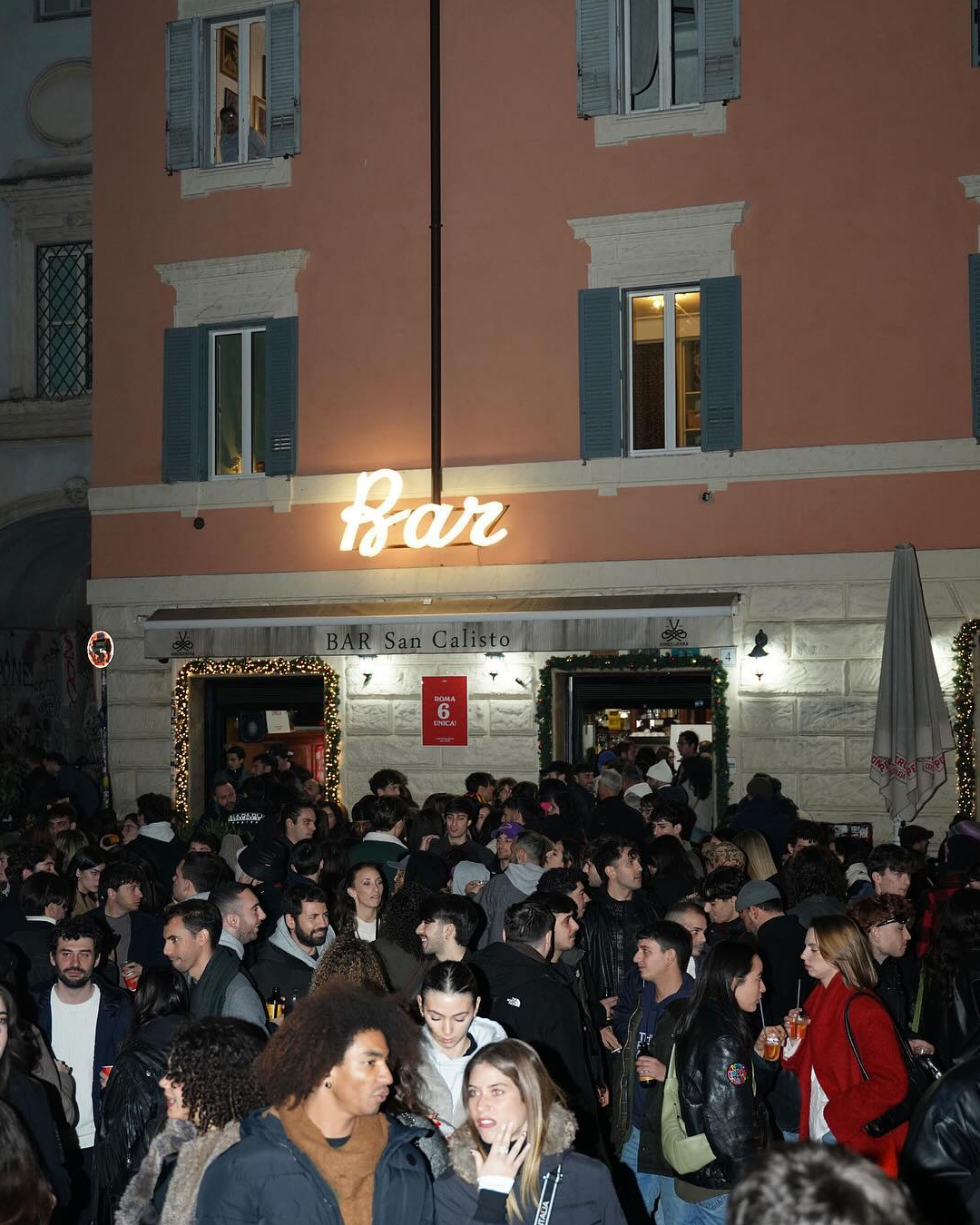
Gen Z prefers the good old neighborhood bar No more listening bars, no more endless waiting, no more reservations
Would you rather go to a Milan nightlife hotspot, wait in line for two hours in the freezing cold, pay €20 for a drink, and get an Instagram story in return to prove you’re part of the cool kids, or end up with all your friends at the run-down neighborhood bar, where prices are still stuck in the ’90s and the atmosphere is loudly convivial?
For Gen Z, more and more often, the answer is the latter. Shabby bars have become a real alternative to the crisis of contemporary nightlife, which is increasingly expensive, performative, and governed by dynamics of forced exclusivity. As reported by Business Insider, in recent years dive bars, informal venues, often long-standing and mainly frequented by locals, have experienced a renewed popularity, attracting a younger crowd looking for something different from the hyper-curated formats of TikTok-proof nightlife.
The appeal of the run-down bar
According to data cited by Business Insider, just over half of Americans consider themselves a “regular” at a local bar or restaurant, meaning someone who goes there at least three or four times a month and is recognized by the staff. Gen Z, however, is less likely than Millennials and Gen X to say they have such a place, but the food and beverage industry remains ruthless: hype cycles tied to new openings create sharp spikes in demand, often followed by equally rapid closures.
Although Business Insider’s analysis focuses on the United States, the phenomenon is clearly visible in Italy as well. Old-school bars have once again become central hubs of social life for many young people. Just think of Bar San Calisto in Rome, Frizzi e Lazzi in Milan, Bar Maurizio in Bologna, or the San Pasquale bars in Naples. Places that until a few years ago seemed to be frequented exclusively by an over-60 clientele. Today, they’ve become urban reference points, often more sought-after than listening bars or wine bars with metal saucers.
Gen Z longs for third places
The real turning point, however, goes beyond price or convenience. At the center is a structural lack of third places in the everyday lives of millions of Gen Z individuals around the world. Spaces that are neither home nor work nor university, but informal environments where you can exist without a specific purpose, without being forced to consume or book days in advance. At a time when places like these have disappeared, absorbed by profit-driven logics, gentrification, or turned into hyper-curated formats where everything is measured, from how long you stay to who you are, the neighborhood bar works precisely because it fills a systemic void.
And often, not by chance, these spaces still host forms of playful sociality that have largely disappeared from young people’s radar, such as billiards, table football, card games, and impromptu karaoke. As in the case of Milan’s EuroJolly, which turned billiards into Gen Z’s new favorite pastime, or Bar Di Là in Bologna, open only during the summer of 2024 but responsible for reigniting a passion for burraco among young people who might not have even known what French playing cards looked like.
Takeaways
- - Gen Z increasingly prefers neighborhood "scrausi" bars over exclusive and expensive nightlife venues, tired of queues, high prices (drinks at 20 euros), and social performances to appear "cool".
- - In the context of the contemporary clubbing crisis, these low-cost, noisy and convivial bars offer a genuine alternative, with 90s prices and relaxed sociability, attracting young people seeking authenticity away from hyper-curated TikTok formats.
- - The phenomenon is global (from the US to Italy): venues like Bar San Calisto (Rome), Frizzi e Lazzi (Milan), Bar Maurizio (Bologna), or the small bars of San Pasquale (Naples) are regaining popularity among young people, becoming new informal "third places" after years dominated by over-60 clientele.
- - "Scrausi" bars fill a structural gap in non-performative social spaces: no reservations, no forced consumption, no exclusivity, they encourage playful interactions (billiards, table football, cards, karaoke), meeting the need for authentic, low-pressure community.