
«I think of brands as animals», an interview with Luca Solca We discussed the future of luxury with Bernstein's star analyst
Luca Solca, Managing Director, Global Luxury Goods at Sanford C. Bernstein, is one of the most frequently quoted names in fashion media. Solca is arguably the most cited analyst when it comes to the luxury market, and it’s easy to imagine that, with the crisis that has hit the sector in recent months, his commentary has been in even greater demand than usual.
To get a clearer picture of the ongoing luxury consumption crisis which has prompted numerous brands to replace creative directors and many groups to reshuffle their executives and CEOs, we reached out to him to take stock of the situation. With cautious optimism, Solca explained that we are seeing a gradual improvement. But what can we expect for 2026?
The latest quarterly results from the major luxury conglomerates have been encouraging after a very tough year. Can we say the crisis is over?
L.S.: These past two years have been a normalisation of spending after the post-Covid consumption boom, especially in China, where the real-estate crisis has led many to spend less. You can look for consumers in the US Midwest or Southeast Asia, but China remains central for now. The structural factor that’s missing is the appetite of the Chinese consumer, who is currently very cautious. Over the last four or five months, however, there are signs of gradual improvement, not abrupt, but steady, and it looks set to continue. If Chinese consumers return to spending, next year we’ll be talking about a luxury boom.
What exactly do we mean by “normalisation”?
L.S.: In the first two decades of the century, the leading brands and groups grew at an average of 11% per year. From 2019 to 2023 they doubled their revenue, growing at 20% annually. By normalisation we mean that from 2023 onward we fell below that long-term trend and are now returning to it. This year, as far as Western demand is concerned, I believe normalisation is complete.
And what will happen in 2026, in your view?
L.S.: We expect growth of between 4% and 5% which is a progressive improvement. The markets that can drive stronger growth are the United States and the Middle East, where we are seeing the biggest increases, followed by Europe, Southeast Asia and, for certain categories such as watches, India.
What were the main factors that fuelled this crisis?
L.S.: Certainly the reduced participation of the middle class. Until now, aspirational customers were mainly new middle-class consumers in emerging markets, whereas in the West the middle class has been under pressure for forty years. The primary reason the industry is growing more slowly today is that in countries like China there are no longer waves of new middle-class consumers. In the United States this year, the middle class has also been hit hard by inflation and price increases. Consumers who could no longer afford European brands have turned to labels like Ralph Lauren or Coach.
This is more visible in fashion and leather goods than in jewellery, for example. Jewellery stayed more grounded after Covid and is now gaining share-of-wallet: consumers prefer a piece of jewellery or a watch over a handbag.
Luxury Market Recovers but Trust Crisis Evident — Bain Report
— Amanda Chen (@Amanda12266) November 25, 2025
According to Bain's latest report, the global luxury market is expected to recover to 3-5% growth by 2026.
However, years of continuous price increases have left some consumers, even high-net-worth individuals,…
Do you think the growth problems are due to prices that have become too high for the aspirational segment?
L.S.: Certainly, income and wealth inequality continues to widen. There is now a segment that is increasingly wealthy and spends ever more. It’s not huge, but it’s attractive. That said, it’s unfair to call brands greedy or foolish for raising prices. Between 2021 and 2022 we emerged from the pandemic and resumed spending heavily on fashion, jewellery and watches. If brands had remained too accessible, they risked banalisation. The promise of a luxury brand is to make you feel special and unique.
I believe this partly explains why some companies raised prices so aggressively. That said, there was genuine error too. When you look at production costs versus retail prices, and there have been some glaring examples, the markup has reached ten, fifteen times or more. At that point you touch unsustainable extremes.
How are brands correcting these excesses without openly cutting prices?
L.S.: When the strategy and positioning were wrong, a reset is the right move: cut prices and rethink the positioning. That’s what Burberry did with its leather goods, for instance. The idea that it could sell bags at Prada or Gucci price levels was mistaken. You have to reverse course.
In other cases, brands can quietly prune the assortment, introduce new, more attractive entry-price products, launch into new categories like beauty (which has much lower absolute prices), or exploit everything else at their disposal.
Do you think limiting the influence of creative directors, as Luca de Meo suggested at Kering, could be risky?
L.S.: I think Luca was expressing a wish, because the reality is that some brands are more fashion-driven than others. At Louis Vuitton it has always worked that way. Gucci, like Prada, has always been more dependent on fashion. One thing we told Kering shareholders is that Gucci does not work with standardised product.
People buy Gucci because it has the right marketing message, the right communication, the right product. Gucci works when it’s over-the-top. Customers have proved that for the last thirty years. When the brand tried to do something different, the results were disastrous.
@nssmagazine Negli ultimi anni parlare di moda significa avere a che fare non solo con l’estetica o la storia del costume ma con la brand strategy. Se ai tempi della moda autoriale lo sviluppo di una strategia di branding era qualcosa di relativamente semplice, intuitivo e organico, oggi le difficoltà si sono evolute e ramificate. I brand ci parlano e ci persuadono non solo con il solo fascino della loro opulenza, ma anche con i sottointesi della loro comunicazione, i significati nascosti tra le righe delle show notes. Un complesso gioco a scacchi con la psiche di un consumatore sempre più astuto e disincantato che la scorsa fashion week, a Milano, ha aggiornato le sue regole. #milanfashionweek #fashionweek #mfw suono originale - nss magazine
Why do some creative directors who were hugely successful at one house fail when they move to another?
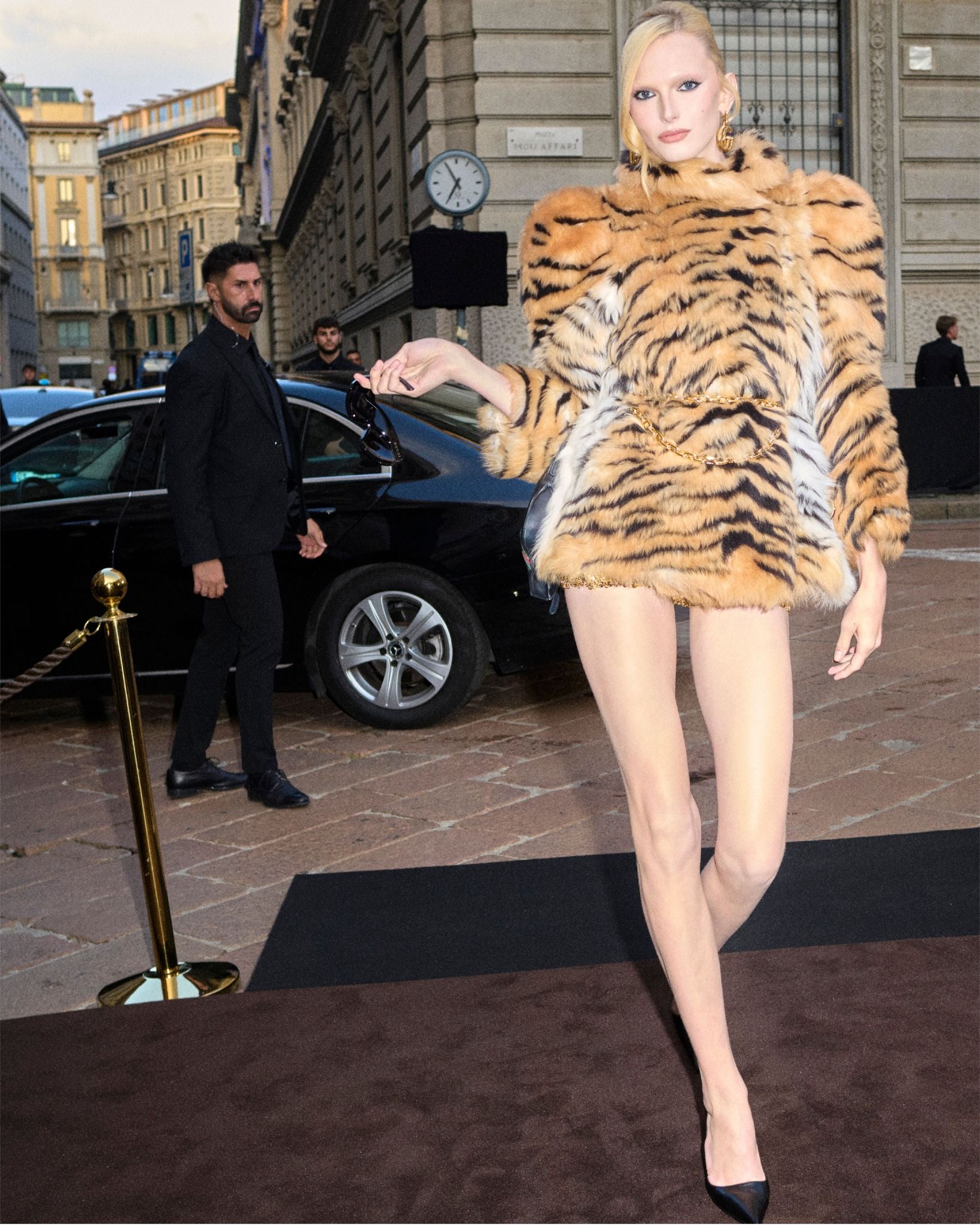
L.S.: I think of brands as animals. There are giraffes, lions, rhinos, cats, fish, and so on. Not every animal can become anything you want. You can’t take a horse, stretch its neck and turn it into a giraffe. You’d kill it.
Every brand has its own DNA, and the creative director’s job is to shift it gradually toward the most interesting market opportunity. The reason some of these changes haven’t worked is that they were too extreme.
You always have to ask whether a given creative director makes sense for that brand and is moving it in the right direction. If not, a change is needed. Matthieu Blazy at Chanel, for example, is interesting precisely because he isn’t doing the same thing Lagerfeld did, yet he remains coherent with Chanel while making it even more compelling by being different.
If you could change one thing in the current landscape to get the big luxury machine moving again, what would it be?
L.S.: I would focus on creativity. Brands are appealing because they make beautiful things. Product desirability is 80% of success. Then comes marketing, communication, etc. But if the product is exciting, the company thrives. Investing in creativity, refreshing creative directors, bringing in new talent. That’s the right strategy. Not very original, but I’d start there.
You also need inspired leadership that is deeply immersed in the product and strong on marketing. And you need teamwork where the creative isn’t left alone. A creative on their own gets nowhere. It’s the collaboration with merchandising that makes creativity commercially effective. We all look at Alessandro Michele for Gucci’s success in 2015, but that triumph was also very much the work of Jacopo Venturini, who helped structure the collection and bring it to market at prices and with products that made sense.
Ultimately, it’s about being authentic, doing something well and returning to a more sustainable path, not just ecologically, but in terms of storytelling. After Covid there was insane demand, and some thought it would last forever. This normalisation will help the industry rediscover growth.
What to read next

These are the secondhand handbags that are worth the most in 2026
Searches for the Chloé Paddington have risen by 610%, but the real star of the secondhand market is Chanel
LVMH's fashion division keeps getting worse
Third-quarter results showed a -5% decline driven by the Chinese market
Three business lessons we can learn from the Coperni crisis
The brand could soon be acquired by one of three potential buyers, but the picture is very complex