




















«For me, women come before fashion», interview with Diane von Furstenberg The brand bets on Europe for its newest chapter
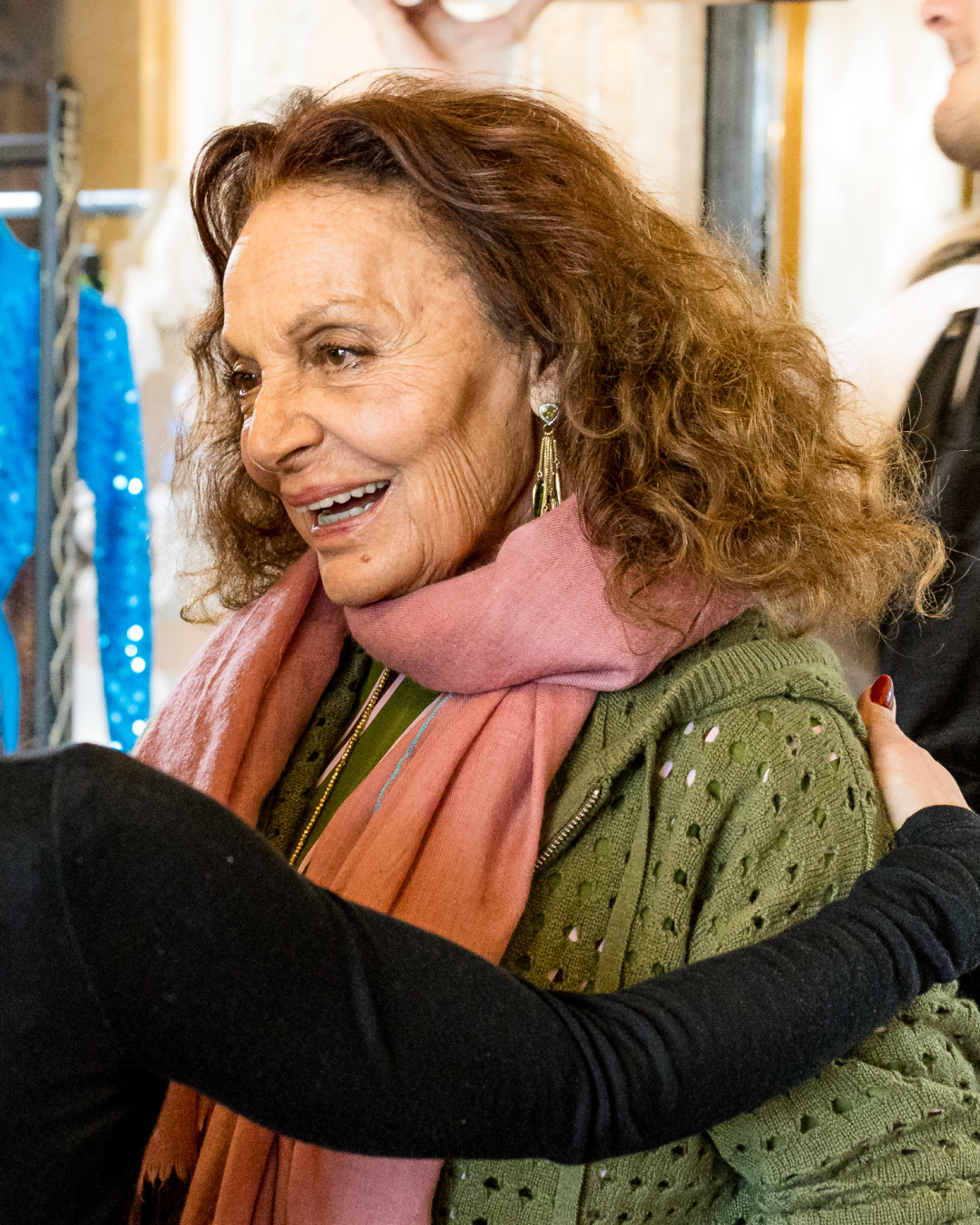
There are names in fashion that end up exceeding their own individual dimension, becoming something more than a career or a brand. Not so much because of an accumulation of successes, but because of their ability to build a language that withstands the cycles of the system. Diane von Furstenberg is one of those cases. At 79, the designer decided to take back direct control of the brand in 2025, a choice shaped by a period of operational distance that allowed her to look at DVF with greater clarity. As she explained herself, «in the few years when I wasn’t involved, I realized the enormous potential and the vocabulary of the brand», becoming aware of how intact that identity had remained precisely because it was grounded in something that comes before seasonal fashion.
That “something” now takes shape in Venice, a city that von Furstenberg does not describe as a simple place but as the perfect embodiment of femininity, «Venice is a woman», a complex presence that brings together different and even contradictory roles. By describing it as «the merchant, the diplomat, the muse, the mother of the Republic», the designer sketches a portrait that speaks of power, mediation, and resilience, far removed from any decorative idea of femininity.
It is no coincidence that she chose Venice as her symbolic point of departure, going so far as to define it as «the stage for the winter of my life», an expression that does not suggest withdrawal but rather a phase of awareness and responsibility. Von Furstenberg explains that she wants to serve Venice as much as possible, convinced that, in an increasingly chaotic world, the city has «something to offer humanity beyond beauty», a perspective on time and duration that relativizes the urgency of the present.
The European return of DVF fits into a trajectory that is first personal and only secondarily strategic. Italy, after all, is the starting point of her journey. Von Furstenberg recalls beginning to work at a very young age in Como, when she was just in her early twenties, coming into direct contact with the textile industry and developing a deep relationship with material, print, and craftsmanship. From that experience emerged an approach to fashion that she herself defines as different, reiterating that «DVF is the woman before fashion», not the other way around.
Graziano de Boni, CEO of DVF, explained that after years in which the brand’s operations had been entrusted to others, the decision to bring the business back in house stemmed from the need to restore order and realign the brand with its original identity. He recounts that «we brought the business back internally about a year ago» and that even before that it was necessary to take a delicate step, namely to “reset the market”, selectively closing part of the wholesale network in order to create the conditions for a new beginning. It is a decision they avoid calling a “clean-up”, because «it would be presumptuous and disrespectful to those who were working with us before», preferring instead to describe it as a necessary pause before restarting on more coherent foundations.
As de Boni underlined, the goal is not aggressive expansion but rather a progressive and conscious growth, built on local partnerships and a more direct relationship with retailers. The idea, as emerged, is to return to the market «without pretending to be perfect», accepting that the brand must also learn, listen, and adapt, while remaining faithful to what it is. In this sense, Diane von Furstenberg is very clear in underlining that «the brand and my identity are the same thing», making evident how, in DVF’s case, the distinction between creative vision and corporate structure is deliberately blurred.
Von Furstenberg insists on this point by explaining that she has never really been interested in fashion in the strict sense, but rather in women and in what makes them feel good in their own bodies. As she emphasizes, «what makes a woman beautiful is not the dress, but eye contact, the smile, above all body language», which is precisely why, in her view, DVF clothes only work once they are worn. She explains that sometimes garments may seem hard to grasp at first glance, but that «when you put them on, suddenly something happens», because the dress enters into a dialogue with the body instead of imposing itself on it.
This attention to the body runs through the entire history of the brand, from the wrap dress to the idea of DVF as a sort of uniform for what she calls the “woman in charge”. Von Furstenberg does not reject the concept of uniform at all, explaining that «when you find something that really works for you, you want it in more colors, in more prints», because it becomes part of your everyday identity. The fabric remains central, and it is no coincidence that many DVF pieces continue to circulate on the vintage market. According to the designer, «the ones that stand the test of time always have something in common, and that is the fabric».
Today, looking at the present, von Furstenberg also redefines what it means to be a woman in charge in 2026. She explains that it is not about exercising power over others, but about «owning who you are», turning imperfections into an asset and vulnerability into a form of strength. With age, she adds, she has discovered another dimension of power, that of kindness, which she describes in very concrete terms, explaining that «kindness is a currency, and like money it compounds».
What to read next
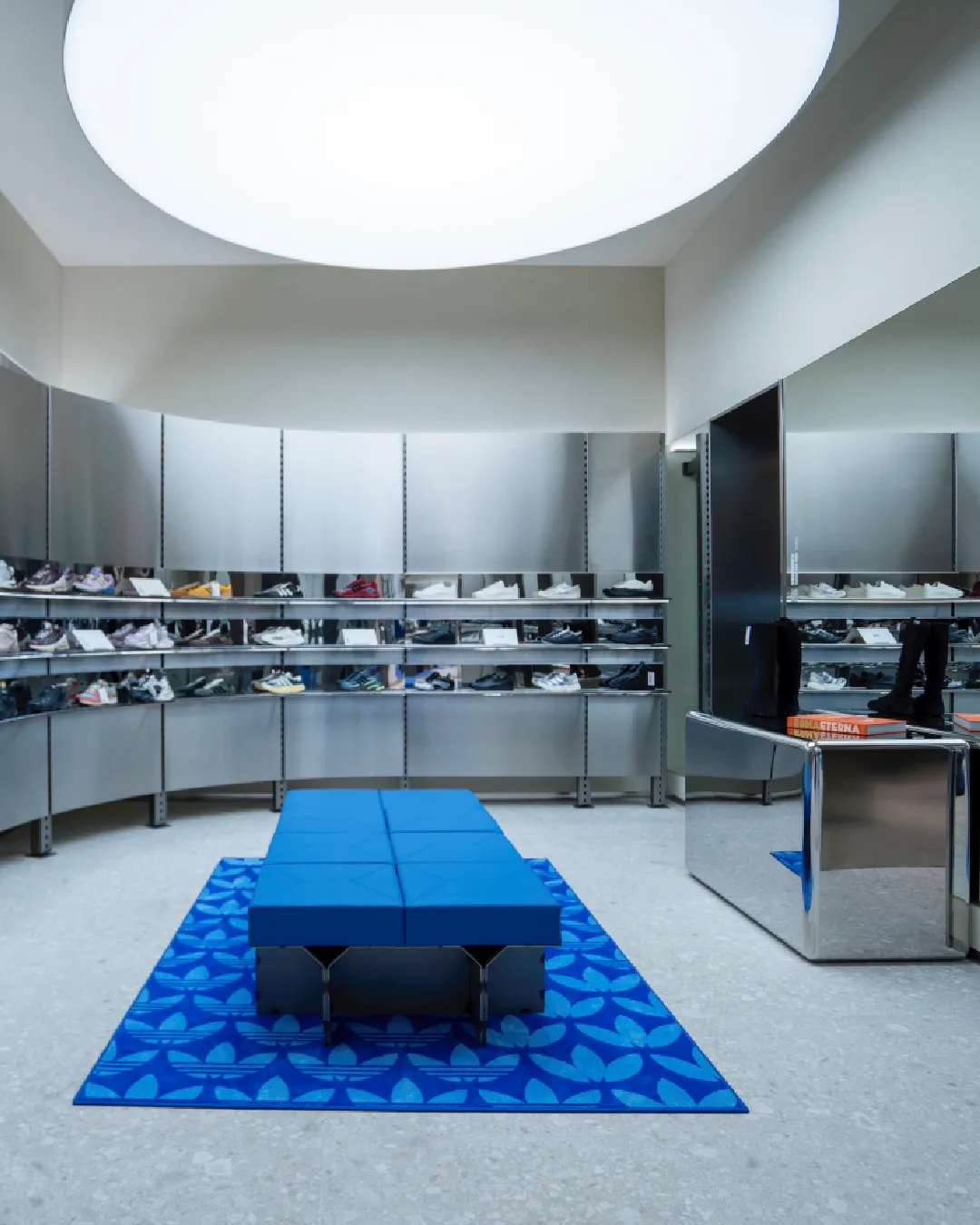
adidas Originals opens a new store in Rome on Via del Babuino
Here's what went down at the opening event
Miu Miu's commercial boom is coming to a halt
The rest of the Prada Group, however, is holding up well
5 Style Lessons We Can Learn from Jeff Goldblum
How to put together a look inspired by the iconic actor