
























Guerrilla gardening is a gentle protest Planting without permission is not only about greenery, but about who has the right to transform the city
At first glance, it seems like a small thing. Someone throws seeds into a dry flowerbed, plants flowers at the base of a tree, fixes up a forgotten patch of land between two sidewalks, turns a dust-filled hole into something that can grow. There is no major project, no rendering, no inauguration, no councilor cutting a ribbon. There is only a minimal gesture, almost banal, which nevertheless contains an enormous question: who gets to decide what public space should look like?
This is where guerrilla gardening begins. It is not simply creative gardening, nor is it just a prettier way to beautify the city. It is a practice of urban intervention, often unauthorized, that emerges when someone decides to take care of a space no one seems willing to care for. It might be an abandoned lot, an empty flowerbed, the edge of a road, a patch of land under a railway, a roundabout, a crack between concrete and asphalt. Tiny, marginal places, seemingly without value. And precisely for that reason, political.
The origins of guerrilla gardening
The modern movement is often traced back to early 1970s New York, when Liz Christy and the Green Guerillas began intervening in the city’s abandoned lots. It was not just about planting flowers, but about reacting to an urban landscape marked by neglect, disinvestment and empty spaces left to decay. The Green Guerillas threw “seed green-aids” over the fences of abandoned lots, planted sunflowers in traffic medians and placed planters on the windowsills of empty buildings. It was a simple and radical way of saying that the city could not be left solely to property, bureaucracy or abandonment.
This origin matters because it prevents guerrilla gardening from being reduced to an aesthetic trend. Today, seed bombs work extremely well as an image: a ball of soil and seeds thrown into a dead space has something immediate about it, almost cinematic. It is small, cheap, photogenic, easy to narrate. But before becoming content, it was a gesture of reappropriation. A plant in the wrong place is not just a plant. It is a question planted in the ground.
The point is not merely to “make a street more beautiful.” The point is to understand who has the right to intervene in what everyone passes through but few are allowed to modify. The city is designed from above: urban plans, regulations, contracts, maintenance, restrictions, ownership. But it is lived from below, every day, by people walking past dry flowerbeds, broken benches, urban voids, sidewalks without shade, public spaces reduced to passageways. Guerrilla gardening emerges precisely from this friction between those who manage space and those who inhabit it.
This is why it is a form of handmade urbanism. It does not replace actual urban planning, it does not solve the climate crisis, it does not erase urban inequalities. But it reveals something that planning often forgets: the city is not made only of major projects. It is also made of maintenance, attention, proximity, small repeated gestures. A flowerbed cared for by someone can say far more than a public project left to die after its inauguration.
Gardening as a political gesture
Absolutely love the idea of guerrilla gardening! It's such a creative and impactful way to beautify urban spaces, improve local ecosystems, and challenge the status quo on land use. Here's to more green acts of rebellion! pic.twitter.com/yxpW3xPX5R
— Beauty of music and nature (@Axaxia88) September 20, 2025
The subject taps into a very specific fatigue: exhaustion with activism that remains only image, post, story, digital outrage. Here, instead, the gesture is physical. You leave the house, touch the soil, plant something, come back to see whether it has grown. It is a slow action in a fast culture. It is a form of protest that seeks not only visibility, but consequence. In a world where many battles feel too big, guerrilla gardening has an almost provocative force: it does not promise to change everything, but it changes one precise point.
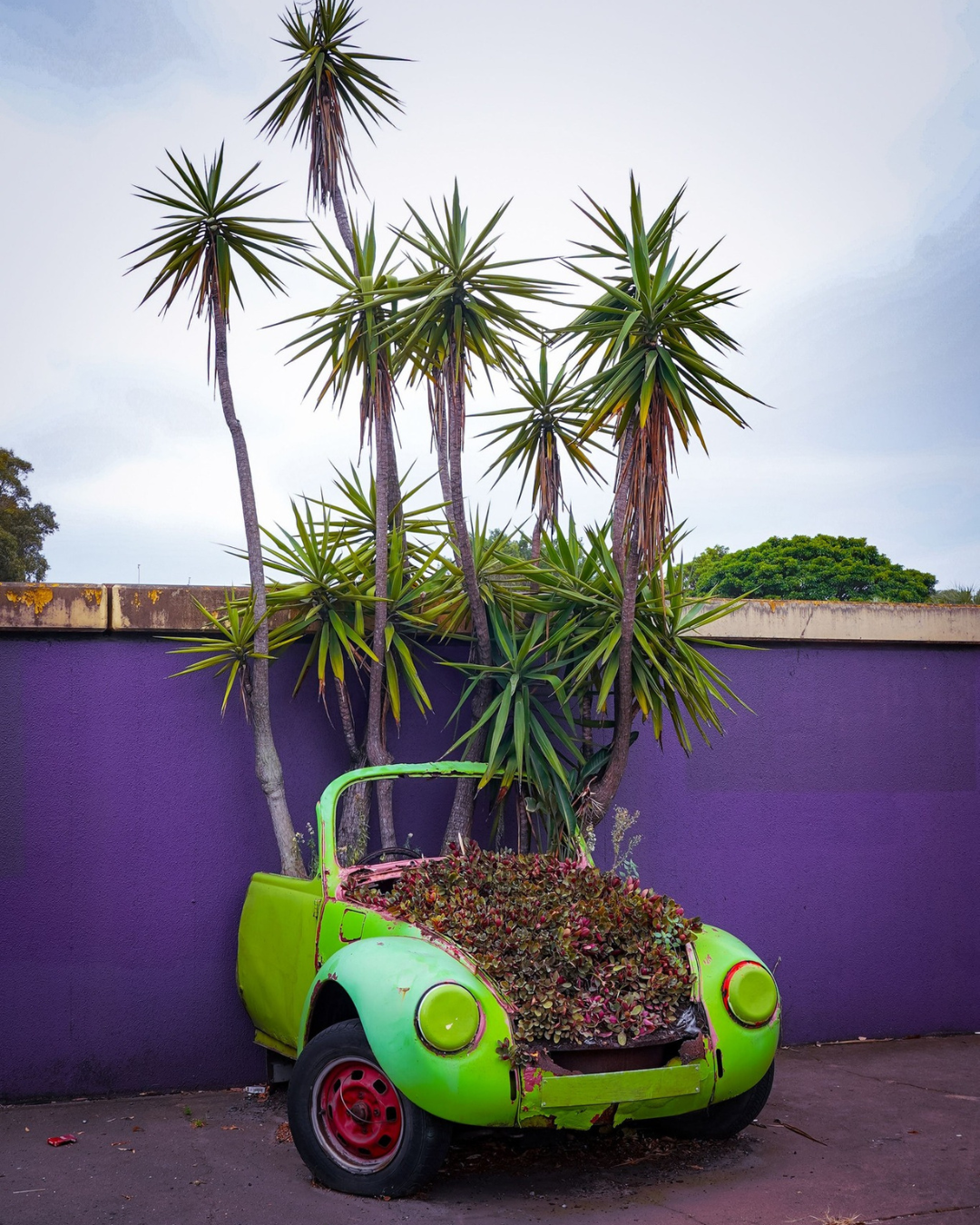
That is also why it works visually. Seed bombs, the before and after of flowerbeds, transformed lots, plants breaking through asphalt all have an immediate language. They look like small acts of gentle sabotage. They do not smash a shop window, cover a wall or block a road. They intervene in decay with something that grows. It is a form of disobedience that does not destroy, but adds. And precisely for that reason, it can be much more difficult to dismiss.
But it would be naive to describe it only as a romantic practice. Guerrilla gardening exists within a contradiction: it often intervenes without permission, on public or private spaces, and therefore raises a real issue around the relationship between care, property and legality. Some scholars describe it precisely as a normalized form of “law-breaking” , a light violation of rules that nevertheless challenges the aesthetic and proprietary order of the city. Who decides that an abandoned lot should remain empty? Who decides that a dry flowerbed is more acceptable than a flowerbed cared for without authorization?
There is also an ecological limit. Not all seed bombs are automatically a good idea. Some commercial mixes may contain only a few species, non-native species or seeds unsuited to the local context. A practice born as a gesture of care can become harmful if it ignores the soil, the climate, biodiversity, insects and the plants already present. Urban greenery is not a graphic layer to be placed over concrete. It is an ecosystem, even when it seems tiny.
Care, illegality and risk
And then there is the social limit. Who can afford to do guerrilla gardening? Who has the time, safety, tools, knowledge and access to relatively protected spaces? This practice does not always reach the places where it would be most needed. Sometimes it works better in neighborhoods that are already receptive, already inhabited by people with cultural capital, already ready to turn a political gesture into a shareable image. The risk is that even green rebellion becomes aesthetic: a cute, documentable form of activism, compatible with Instagram.
This does not mean diminishing it. It means taking it seriously. Guerrilla gardening is interesting precisely because it sits in between: between care and illegality, between aesthetics and politics, between individual gesture and collective space, between the desire for greenery and a critique of the city. It is not a complete solution, but it is a very clear symptom. If people start planting without permission, perhaps it is not only because they love flowers. Perhaps it is because they no longer accept that public space should be left unfinished: designed but not cared for, promised but not maintained, crossed by everyone but decided by few.
In this sense, the question is not whether it is right or wrong to throw seeds into an abandoned flowerbed. The question is why that flowerbed was abandoned in the first place. Why a piece of the city has to wait for an unauthorized gesture in order to become visible again. Why care should seem exceptional when it should be the foundation of urban life.
The city made visible again
after I found out a data center was coming to downtown little rock I get really into guerrilla gardening, everywhere there will be flowers
— laine (@skullfukc) April 15, 2026
Guerrilla gardening will not save cities. A seed bomb is not enough to solve urban heat, the lack of trees, overbuilding or unequal access to green space. But it reminds us of something simple: public space is not only what gets designed. It is also what is repaired, contested, cared for, temporarily occupied by those who no longer want to walk past a dead piece of the city without doing anything.
Perhaps that is why it feels so contemporary today. Because in an age when everything is discussed, commented on and turned into opinion, planting something remains a strangely concrete gesture. A small action against the idea that the city has already been decided. A way of saying that even a flowerbed can be political, even a seed can be urbanism, even a flower growing where it was not supposed to grow can change the way we look at a sidewalk.
What to read next
Will the heat make us live at night?
From Paris to Barcelona, parks and museums stay open late to counter extreme temperatures
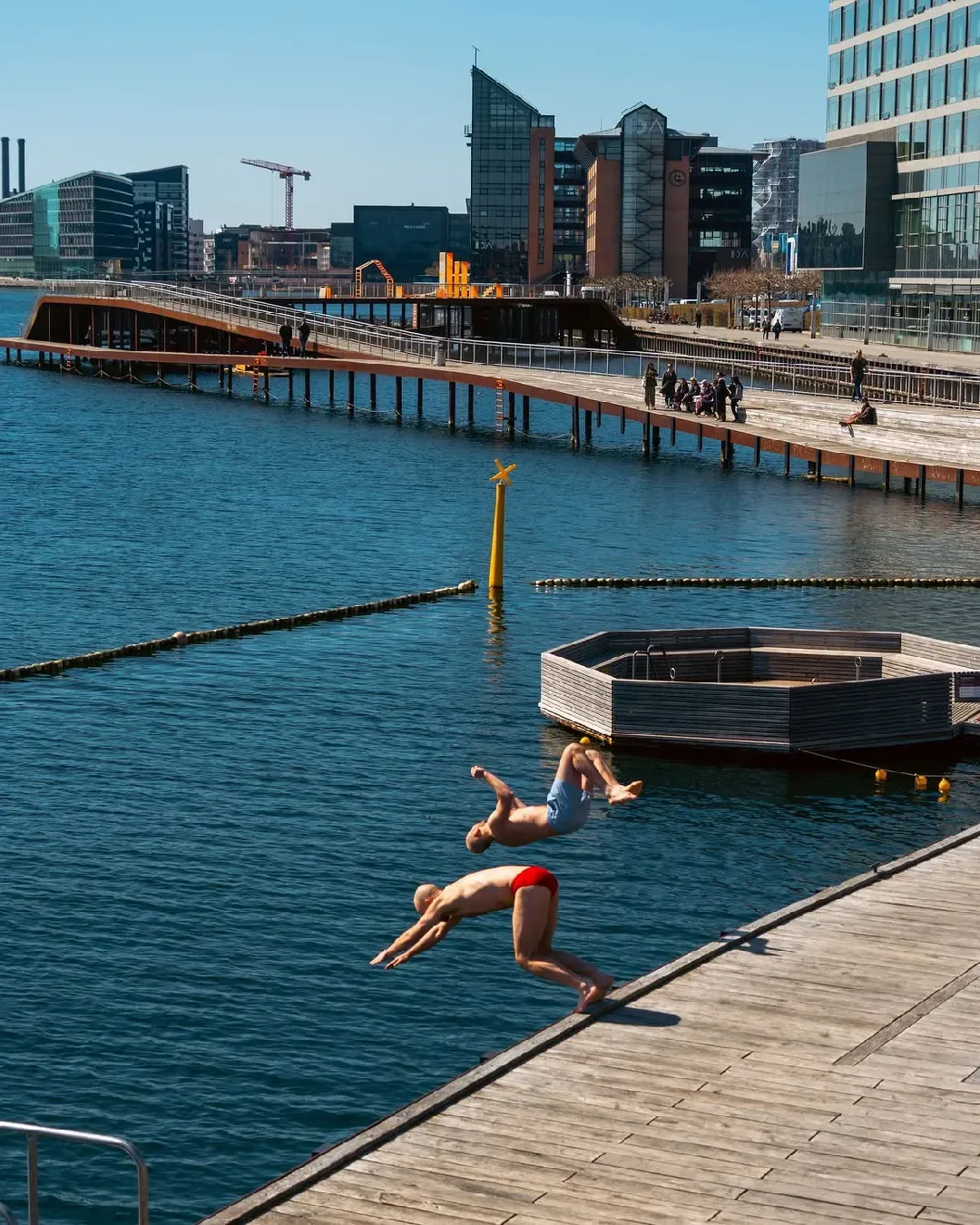
Copenhagen is once again the world's most liveable city
According to the Global Liveability Index 2026