





















Who decides the tone of the future? What happens when a vision continues without the person who imagined it?
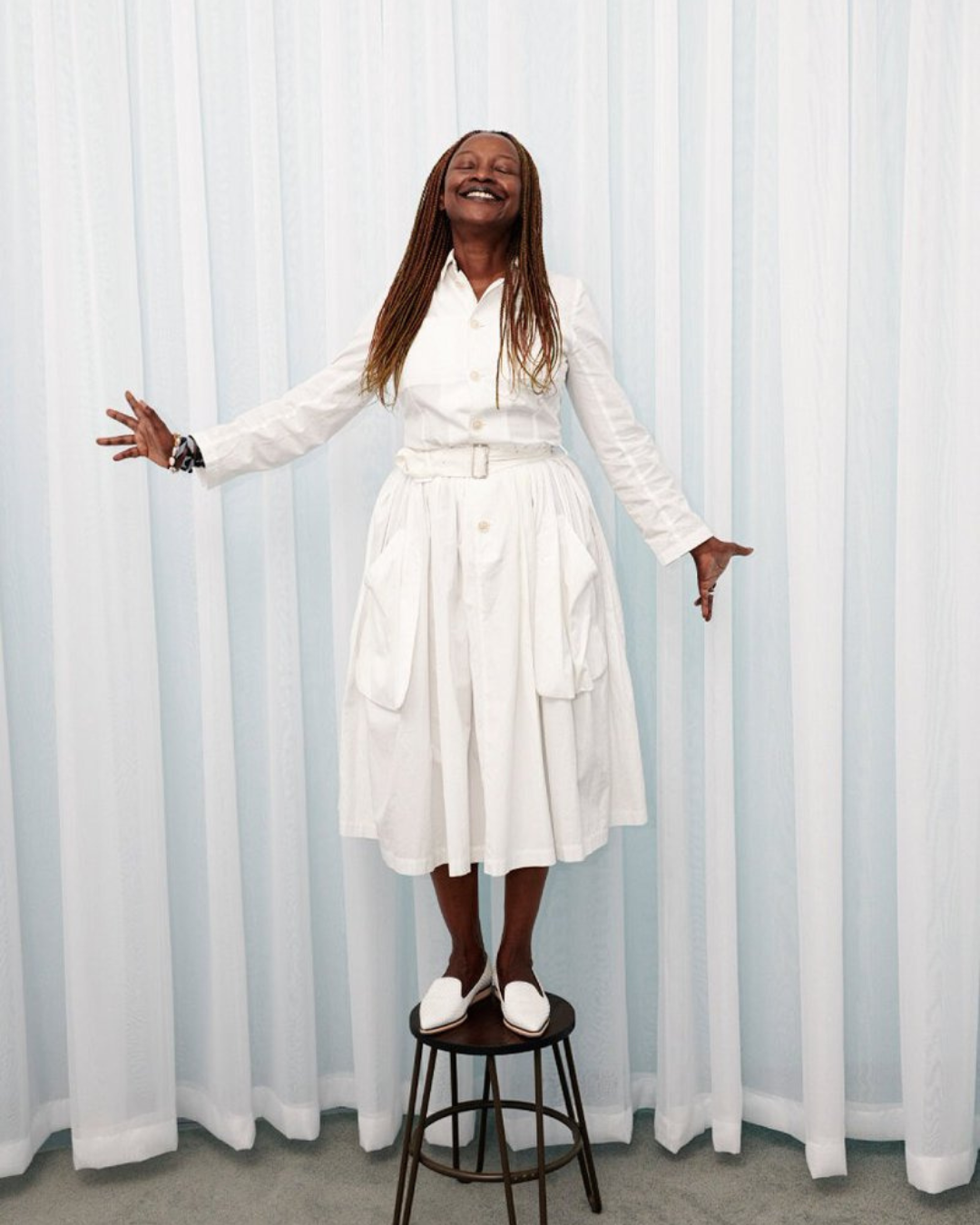
The Biennale Arte 2026 does not emerge solely from a title, a list of artists, or a curatorial project. It emerges from an absence. In Minor Keys, the 61st International Art Exhibition of Venice, carries the vision of Koyo Kouoh, appointed artistic director of the Biennale Arte in 2024 and who passed away suddenly on May 10, 2025. The exhibition, which opened on May 9, 2026 and can be visited until November 22, unfolds across the Giardini, the Arsenale, Forte Marghera, and other locations in the city. But its center is not only what it exhibits. It is the question it produces: what happens when a vision continues without the person who imagined it?
It is a question that concerns curating, but also something broader: legacy, responsibility, and the way cultural institutions safeguard ideas when the person who generated them can no longer accompany them, modify them, or contradict them. The Biennale chose to carry forward Kouoh’s project, specifying that the curator had already developed the theoretical framework, selected artists and works, identified the catalog contributors, defined the graphic identity and the architecture of the exhibition spaces, and had begun the dialogue with the invited artists. It was not, therefore, a matter of replacing one vision with another, but of accompanying an already formed one toward its public realization.
An exhibition between legacy, translation, and responsibility
This is precisely where the most delicate knot emerges. An exhibition is never just a written concept. It is an organism made of continuous decisions: displays, distances, lights, texts, rhythm, hierarchies, communication, interpretations. Even when a project is advanced, realizing it always means translating it. And every translation is both an act of fidelity and a transformation. The Biennale Arte 2026 will therefore not only be an exhibition realized after the death of Koyo Kouoh, but a test of responsibility for the art system.
Kouoh was not a marginal figure called upon to occupy a symbolic role. She was one of the most relevant curators on the international scene, executive director and chief curator of Zeitz MOCAA in Cape Town since 2019, founder of Raw Material Company in Dakar, and a central intellectual figure in rethinking the geographies of contemporary art. Her appointment to the Biennale already carried historical weight: she was the first African woman invited to curate the International Art Exhibition of Venice. Her death transformed this passage into something even more complex, because it moved the exhibition from the realm of anticipation to that of custodianship.
The risk, in cases like this, is always monumentalization. The art system is very skilled at turning a loss into an icon, a voice into an image, a curator into a symbolic figure. Mourning can quickly become institutional language, and institutional language can make everything more solemn but also more distant. This is where In Minor Keys will have to defend its own complexity: not becoming merely “the exhibition built around Koyo Kouoh’s absence,” but remaining a living exhibition, crossed by relationships, artists, conflicts, materials, geographies, and thoughts.
A plurality of voices
#ArtnetNews: The list of 111 participating artists has been announced for “In Minor Keys,” the main exhibition at this year’s 61st Venice Biennale, curated by the team of the late curator Koyo Kouoh.
— Artnet (@artnet) February 25, 2026
The exhibition is being realized according to Kouoh’s wishes by a handpicked… pic.twitter.com/Y83oTaLcly
The title itself seems to indicate a path. In Minor Keys does not promise a loud, assertive Biennale, built on the major key of the great global event. Rather, it suggests a different disposition: listening, nuance, plurality, lateral vibration. In the introduction published by the Biennale, the project is described through sounds, sensations, silences, resonant worlds, conviviality, conflict, collectivity. It is a vocabulary that does not aim at proclamation, but at composition. It does not seek the future as a single image, but as an ensemble of tonalities.
This choice is important because it comes at a time when the art system, like many other cultural systems, is obsessed with immediate legibility. Exhibitions are expected to have a clear positioning, an exportable message, a press-release sentence, a recognizable aesthetic, a media-friendly value. Kouoh seemed to be working in a more difficult direction: not simplifying the world in order to make it more communicable, but building a platform in which many voices could coexist without having to become a single dominant narrative.
The list of invitees confirms this plural structure. The Biennale announced that In Minor Keys brings together 110 participants, including artists, collaborative duos, collectives, and artist-led organizations, from different geographies and regions. This is not a quantitative detail, but a political one. The presence of collectives and organizations suggests a vision of artistic practice that is not always centered on the individual author, the recognizable name, or the signature as a brand. This, too, speaks to the condition of the exhibition: a personal vision that continues through collective work.
A collective responsibility
This is perhaps the strongest point of the entire story: In Minor Keys can continue not because the curator is replaceable, but because her idea of curating does not seem to be founded on the vertical authority of a single voice. If the project is born from relationships, encounters, affective and intellectual geographies, then its continuation is not a simple technical execution. It is a practice of care. The curatorial team must not “imitate” Kouoh, nor turn her into a sacralized absence. It must do something more difficult: listen to what she had built and complete it without closing it.
In this sense, the question “who decides the tone of the future?” does not concern only the Biennale. It concerns the entire way in which cultural institutions manage continuity. The future is often imagined as an individual gesture: a mind, a vision, a direction. But when that mind is no longer present, the future becomes a collective responsibility. It is not enough to say, “we respect the original vision.” We must understand what it truly means to respect it. Does it mean reproducing it literally? Does it mean protecting it from every deviation? Or does it mean allowing it to breathe even when it is traversed by others?
The Biennale 2026 forces us to recognize that no exhibition belongs entirely to one person. A curator can define its heart, its method, its language, but an exhibition always lives in the passage between those who imagine it, those who produce it, those who install it, those who move through it, and those who interpret it. Kouoh’s death makes this structure visible, a structure that usually remains hidden behind the name of the artistic director. It reminds us that curating is not only authorship, but also a relational infrastructure.
Beyond tribute
@artaunty Quick summary of Next years #venicebiennale theme . So beautiful that her whole team is seeing this through #artnews #artist #arttiktok #koyokouoh #curating #exhibition slow piano music(1297827) - syummacha
For this reason, In Minor Keys should not be read only as a tribute. Tribute risks freezing. An exhibition, instead, must be able to disturb, open up, put things into crisis, even when it is born from mourning. If Kouoh’s legacy is treated only as something to preserve, it becomes a monument. If it is treated as something to continue, it remains thought. The difference is decisive: a monument is looked at from a distance, while a thought forces us to take a position.
Ultimately, the title of the exhibition already contains a possible answer. Minor keys are not less important. They are not weak versions of major keys. They are different ways of organizing emotion, tension, and listening. Perhaps the Biennale Arte 2026 will be important precisely because it does not claim to decide the future with a definitive voice, but tries to lower the volume enough to allow what usually remains beneath to emerge: relationships, absences, lateral geographies, non-aligned memories, forms of coexistence that do not immediately become slogans.
The future of art, in this case, is not decided by whoever speaks the loudest. It is decided by those who know how to care for a voice when that voice can no longer speak. By those who manage to continue a vision without appropriating it. By those who understand that legacy is not a property, but a responsibility. The Biennale Arte 2026 will not only answer the question “what exhibition would Koyo Kouoh have made?”. It will answer a more difficult question: what are we capable of doing with a vision when we can no longer ask it for confirmation?
What to read next
Ploom* reinvents soft clubbing with T-Club
DJ sets, non-alcoholic drinks inspired by the new LYO* range, and exclusive gadgets
Burro Studio has turned eleven but still hates rules
For the anniversary, it created a special pizza together with Fradiavolo Milano

Kris Jenner Steps Behind the Camera for Ferragamo's New Holiday 2026 Campaign
With The Joy of Loving, the Maison celebrates love and family bonds through an exceptional cast