





















All the times brands have cancelled their fashion shows From the recent case of Giambattista Valli to the historic cancellations of Victoria's Secret
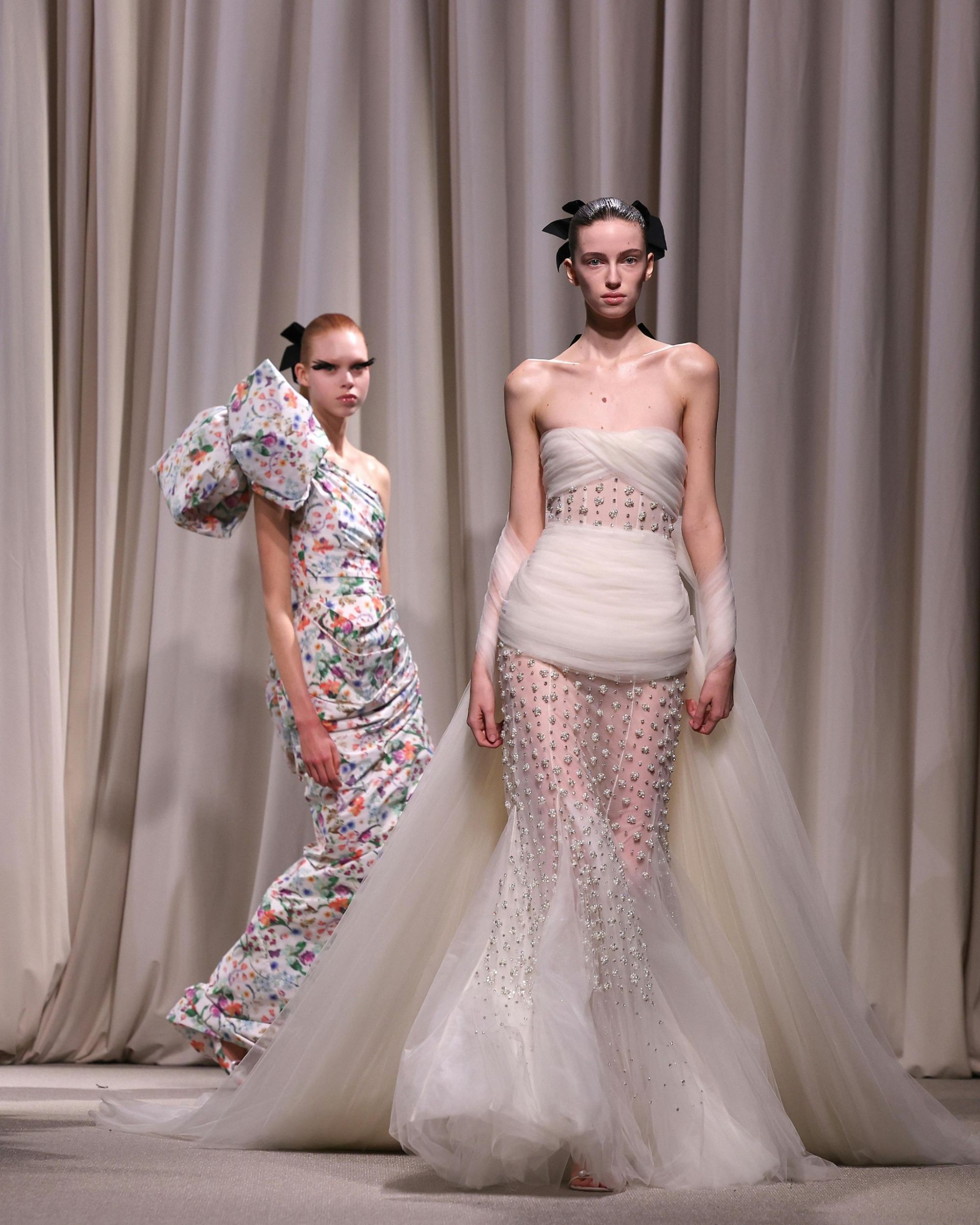
In a post published in mid-February on Instagram, the designers behind Ester Manas spoke about all the difficulties and costs associated with producing a fashion show. The two described putting on a show as something "closer to a miracle than the simple execution of a well-oiled seasonal event". The reasons all stem from how much effort is required to create an event whose function is purely symbolic. These thoughts come to mind when reading the news that Giambattista Valli has canceled his ready-to-wear show that was supposed to take place this week, following the cancellation of his Haute Couture show last season.
The reasons behind this cancellation are both mysterious and fairly clear. Mysterious because the company has provided only vague explanations about a review of expenses and the brand's operations to justify the cancellation. Clear because it is obvious that in a moment of crisis like this, the motivations behind a cancellation of this type are almost certainly linked to financial issues. Even though the brand is technically in the hands of the Pinault family through Artémis (it is not, however, part of Kering), which theoretically should have the budget for even a small show, it has probably turned off the taps in a broader landscape of cost-cutting due to the crisis at Gucci.
But what have been the other cases of last-minute canceled shows? Rather than listing individual cases in a purely chronological line, it will be more useful to organize the various occasions into thematic groups that can overall provide a picture of the motivations behind canceled shows. For relevance to the cases we want to examine, we will not consider the shows canceled during the pandemic period, since the reasons behind those cancellations are quite obvious while we'll talk about withdrawals from the usual calendar or schedule changes due to larger situations..
The Sample of Cancellations: Victoria’s Secret
@onecool_momma WHICH IS IT!!! Put some respect on all my OG angels that walked yesterday! Half of yall were in diapers peak fashion show! KATE MOSS!? Tryra closing the show?Candace, my queen Adriana, allesandra, DOUTZEN KROES?! Where was the budget?? RIGHT THERE smh
sonido original - ᴄαмιℓα
There would perhaps be books to write about the essentially evil nature of Victoria’s Secret and its historic CEO, Les Wexner, who was one of the main financiers of Jeffrey Epstein and who had turned a brand revered by pop culture into the fashion equivalent of a crime scene. And that is why the two cancellations we are talking about are notable, being linked to causes of a more moral than strictly economic nature.
The first was as far back as 2004. According to some, it was a decline in TV ratings; according to many others, the reason was the incident in which Janet Jackson’s costume tore during the 2004 Super Bowl, which drove American media crazy over the issue of indecency and nudity in public. That time, the brand turned the show (which had lost about 3 million viewers since 2001) into a kind of promotional tour in major American cities.
After years of continuous decline, with only 3.2 million viewers left to watch the show in 2018. It must be said that the brand’s good faith had largely collapsed: lawsuits and accusations from models and employees were piling up and would become public in 2020; Epstein’s arrest in 2019 led Wexner to distance himself from that image (he would later leave the brand entirely), and in general, the brand’s crisis was also due to outdated marketing that the female public had rightly begun to label as misogynistic. From 2024, attempts were made to bring the show back, but with rather disappointing results.
The Problems of the English Scene
In 2023, the as talented as problematic Dilara Findikoglu opened the discussion on the unsustainability of independent shows when she canceled her SS24 show in London, basically saying she was still paying off the debts from the previous show and did not have the funds to organize another one.
At the time, that statement resonated within the scene of independent designers (and even in the NY Times) who were facing similar difficulties, even though the denunciation of an unbalanced system was overshadowed by controversies surrounding the designer, whose reputation has quite declined due to highly questionable political sympathies and a series of horror stories regarding her offices. At the last London Fashion Week in February, there was simply no mention of her show, and no one has said if or when she will return.
The same could be said of S.S. Daley, who has even stopped posting on Instagram since last October. But London’s problems had already emerged about a year earlier, before the cancellation of the men’s edition, when Hero Magazine wrote: “It was surprising to see how many major brands did not show this season. J.W. Anderson, Molly Goddard, Supriya Lele, Nensi Dojaka, Standing Ground and KNWLS completely skipped this season, while 16Arlington, Aaron Esh, Chopova Lowena, Stefan Cooke and Ahluwalia all opted for lookbooks”.
Force Majeure: Celine, Tom Ford, Burberry and Raf Simons
@tatianabellator Her makesty deserves that we take things slow to pay tribute to her life of service ! There will be many fashion weeks, but only 1 #QueenElizabethII original sound - Tatiana Bellator
The 2022-2023 biennium was quite disastrous. Just out of the Covid-19 crisis, many brands had to face show cancellations often due to force majeure. This was the case of Burberry and Raf Simons who, to respect the national mourning after the death of Queen Elizabeth II, canceled their London shows.
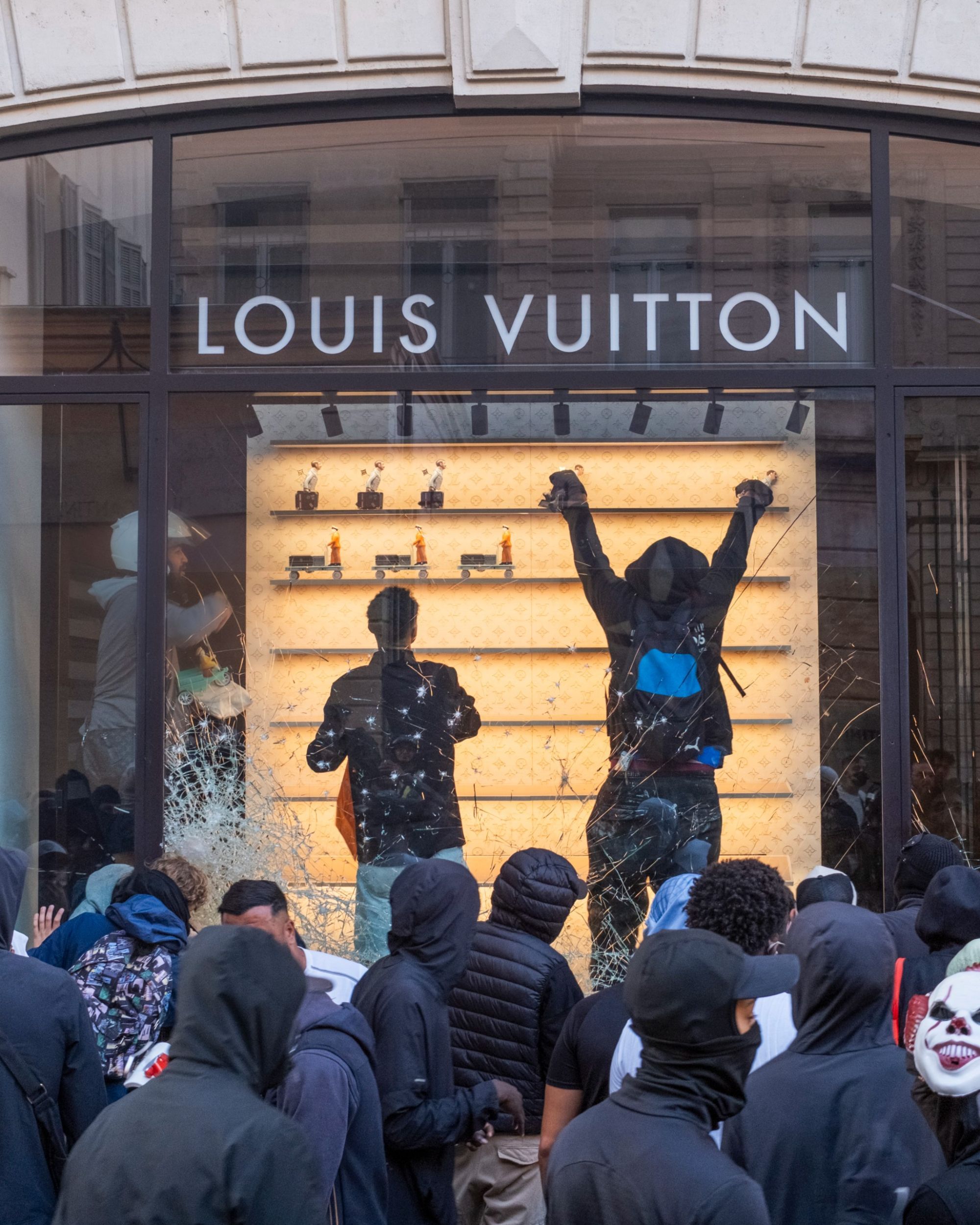
But it was also the case of Tom Ford who in January 2022, due to a series of production delays in the Italian factories producing his brand, had to cancel the New York show at the last second, declaring himself deeply disappointed. In 2023 instead, while Paris was in the middle of a series of rather violent riots and protests, it was Hedi Slimane who canceled Celine’s off-calendar show, much to the disappointment of fans, given that under Slimane the brand’s physical shows practically did not even exist.
Post-Scandal Cancellations: The Cases of Dolce&Gabbana and Alexander Wang
@louis_pisano the culture-washing of Alexander Wang
Creepy and simple horror background music(1070744) - howlingindicator
2018 was a very significant year in the history of canceled shows. The case that made history was that of Dolce&Gabbana who had to cancel the “The Great Show” scheduled in China after the disastrous explosion of their promotional strategy in the country that infuriated practically the entire nation and inflicted a deep wound on the brand from which it only recovered in the post-pandemic period.
Far more serious was the case of Alexander Wang, whose New York shows were legendary but who already in 2018 decided to show off-calendar. That year there were only two shows, one on-calendar and one off-calendar. From May 31, 2019 to 2021 there was practically no real show, also due to the serious sexual harassment accusations that hit the designer, who only returned to show in 2022 with a single show in Los Angeles, followed by one show per year until 2025, when the designer returned for his anniversary on the New York calendar after seven and a half years.
In the Red and Other Disasters
No shade I always wondered how giambattista valli was solvent and guess the answer was they weren’t
— (@SunshinesDeluxe) January 16, 2026
In addition to all these cases, a canceled show is often an indicator of a serious economic crisis. This was the case of Shayne Oliver who canceled the FW17 show of Hood by Air in February shortly before putting his brand on pause in April. Theoretically it was all due to the fact that Oliver would be designing for Helmut Lang from that year, but that collaboration was short-lived. The reasons for the crisis were more or less detailed by BoF in a 2020 interview, but the problem was that after the initial traction the brand struggled to maintain its status and dissolved.
Another more ambiguous case was the canceled show of Ludovic de Saint Sernin for the SS25 season: theoretically the designer chose to focus on his Haute Couture collection for Jean-Paul Gaultier and chose not to show in order to better concentrate his personal and economic resources. The only other show by the brand took place last March, then nothing beyond the lookbook. More explicit was that of Y/Project who, shortly before Glenn Martens’ departure, and again in the SS25 season, completely canceled the show due to costs and economic sustainability issues that then led to the end of the brand.
The real bloodbath, however, has arrived only this year: besides the Giambattista Valli case, there have also been those of Coperni as well as the canceled or unannounced shows of Casablanca, Vetements, Christopher Esber and Sunnei whose founders left last September and whose future is still unclear. Surely none of these brands were making millions, even though we do not know precise details about their economic performance.
Two other American brands this year have instead canceled or simply not organized their usual shows. One is Rachel Comey who completely skipped this season citing misaligned timelines, which can mean that her production and sales model no longer needs a show because she focuses on versatile and sustainable pieces, direct-to-consumer sales and limited wholesale. Another is Brandon Maxwell who instead preferred to invest in merchandising, e-commerce or targeted events to focus without pressure on the development of more sellable products, without openly withdrawing from shows as such.
What to read next
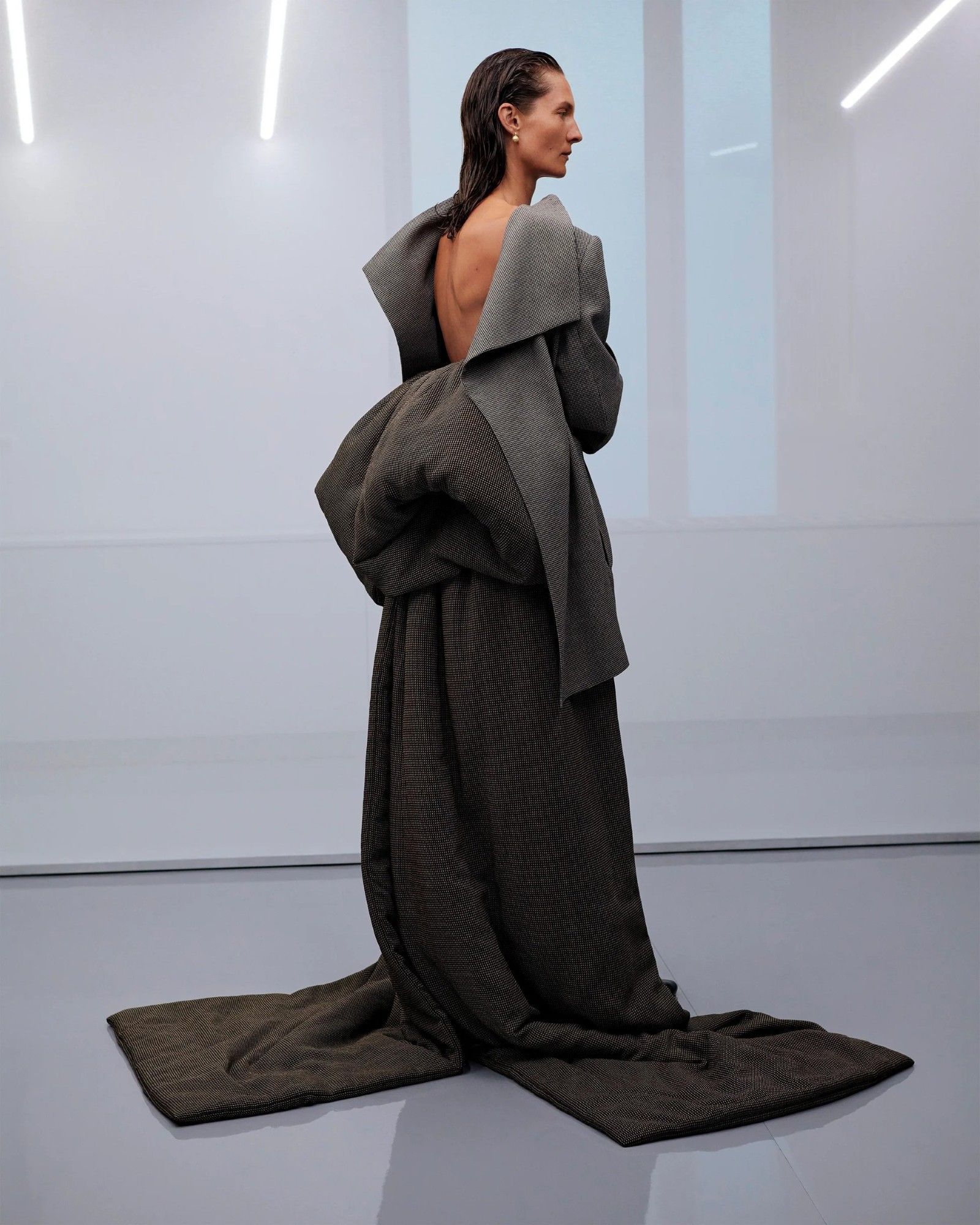
Now Phoebe Philo Wants You to Dress Avant-Garde
With Collection F, the designer plays with silhouettes in an entirely new way
5 key trends from Paris Fashion Week SS27 Women's
What we'll be wearing next summer, according to the fashion of the Ville Lumière
Three business lessons we can learn from the Coperni crisis
The brand could soon be acquired by one of three potential buyers, but the picture is very complex