



































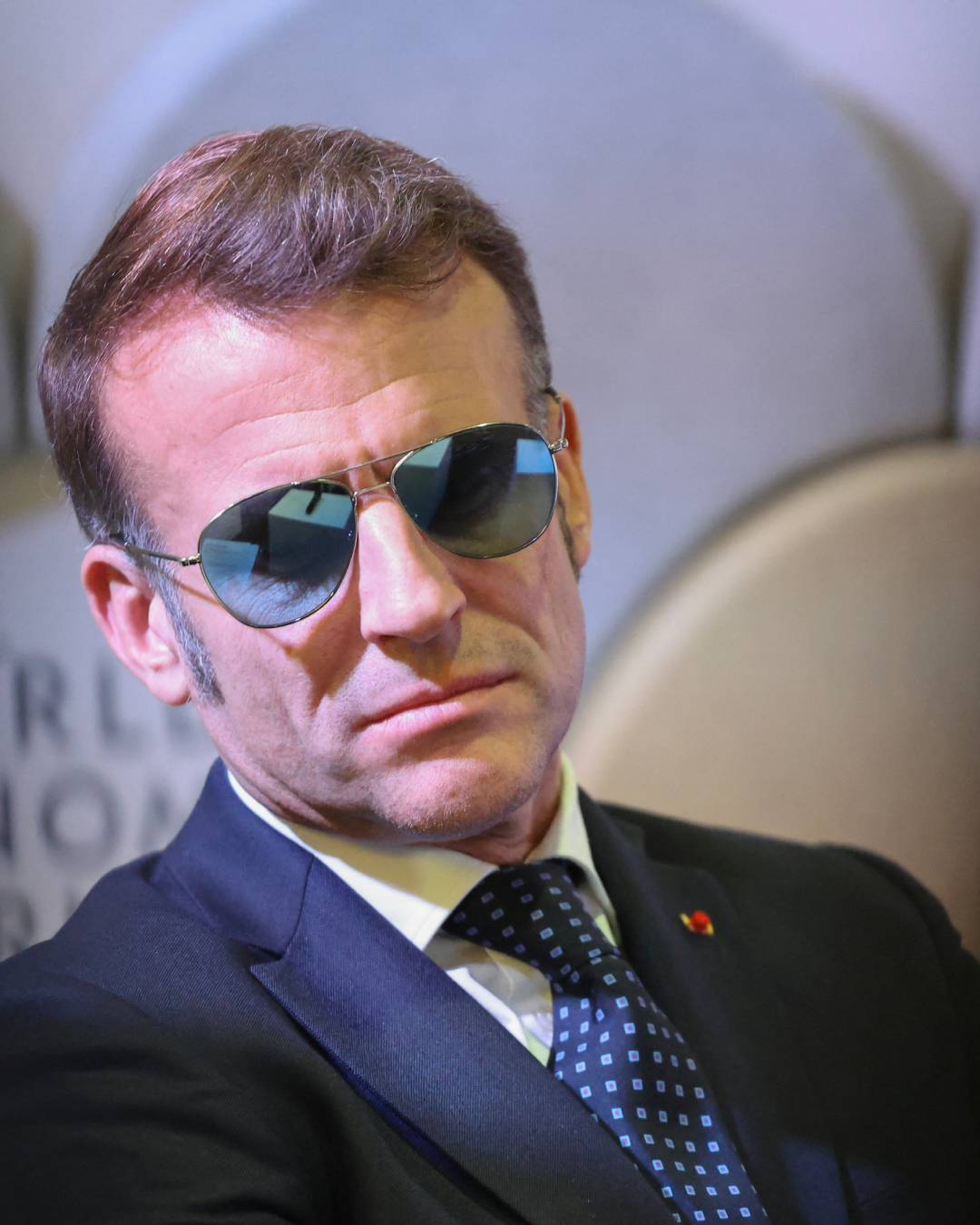
Will France replace the United States? A recent proposal from Macron seems to suggest so
Recently, Macron announced that in the coming years France will seek to expand its nuclear arsenal, which currently consists of about 300 warheads. The French president also specified that, in case of an attack, these weapons could be used not only to defend the country but also to protect its allies, particularly European ones. This is a significant stance, considering that since the end of World War II many European countries have relied on a similar form of nuclear deterrence, albeit guaranteed exclusively by the United States.
Poland is in talks with France and a group of closest European allies on the programme of advanced nuclear deterrence. We are arming up together with our friends so that our enemies will never dare to attack us.
— Donald Tusk (@donaldtusk) March 2, 2026
Macron's proposal comes at a time when the US is showing decreasing willingness to ensure Europe's defense in case of aggression, as highlighted by the controversial statements of the Trump administration and its aggressive rhetoric. This is compounded by the rise of a new world order based more on the law of the strongest and national interests than on diplomacy and long-standing alliances, especially during a period of major geopolitical upheavals. For this reason, the French president’s initiative has been welcomed by several European countries – including Germany, the Netherlands, Belgium, Denmark, and Sweden. Even the Polish Prime Minister, Donald Tusk, stated that Poland is in talks with France and its closest European partners to support the nuclear deterrence program: «We are arming up together with our friends so that our enemies will never dare to attack us».
What Macron's European protection proposal consists of
@gbnews Emmanuel Macron has announced Britain has joined a French scheme to set up an 'archipelago of force' across the European continent, involving the deployment of French nuclear weapons. Macron stated the weapons would not be shared with participating members of the scheme - the UK, Germany, Poland, Greece, Sweden and others, and the ultimate say so on using the weapons would be at the sole discretion of the French president. The UK has not confirmed the extent of its involvement in the scheme, giving rise to fears the Prime Minister, Keir Starmer, may be leading Britain to humiliation at the hands of the French. The French government regularly threatened the UK's electricity supply in rows during Brexit negotiations and has been unwilling to stop the flow of migrants from the country headed to Britain. Many fear a loss of economic and foreign policy autonomy would follow allowing France's nuclear weapons onto our soil. Britain's existing nuclear deterrent, however makes it more likely the weapons will be deployed in Germany and Poland. #iran #macron #keirstarmer #labour #war
original sound - GB News
Europe has long hosted several US military outposts that house nuclear warheads. However, these weapons remain under exclusive US control, even though coordination mechanisms exist with the countries that host them. The idea behind this system is that, in case of an attack against NATO countries, the United States could use these weapons to intervene in their defense.
To strengthen France's and Europe's protection mechanisms in the face of a possible US disengagement, Macron has therefore proposed building French airbases in other European countries: these facilities would host French military personnel and nuclear warheads and contribute to the continent’s defense systems, especially if the US were to turn its back on Europe in case of an attack.
The context of France's initiative
The proposal is particularly significant because France is currently the only European Union country to possess its own nuclear arsenal and, compared to other states on the continent, has an economy and military capabilities that – proportionally – make it potentially the most suitable candidate to partially replace the role that the United States is supposed to play on paper in Europe’s defense. The United Kingdom also possesses nuclear weapons, but is no longer formally part of the Union following Brexit.
Macron's proposal, however, remains just that for now. It should be noted that it is not supported by all French political forces: for instance, leaders of the far-right party Rassemblement National (RN), which has gained increasing influence among the electorate, argued that moving part of France’s nuclear weapons outside national borders could weaken the country’s defense. Additionally, next year France will hold presidential elections and Macron will not be able to run again – consequently, a new president could decide not to pursue this project.
What to read next

This Summer, the Stade de France keeps breaking attendance records
Aya Nakamura and The Weeknd on top of the world

Anti-ultra fast fashion law officially comes into force this September 1st
You will now pay more for items ordered on Temu or Shein