
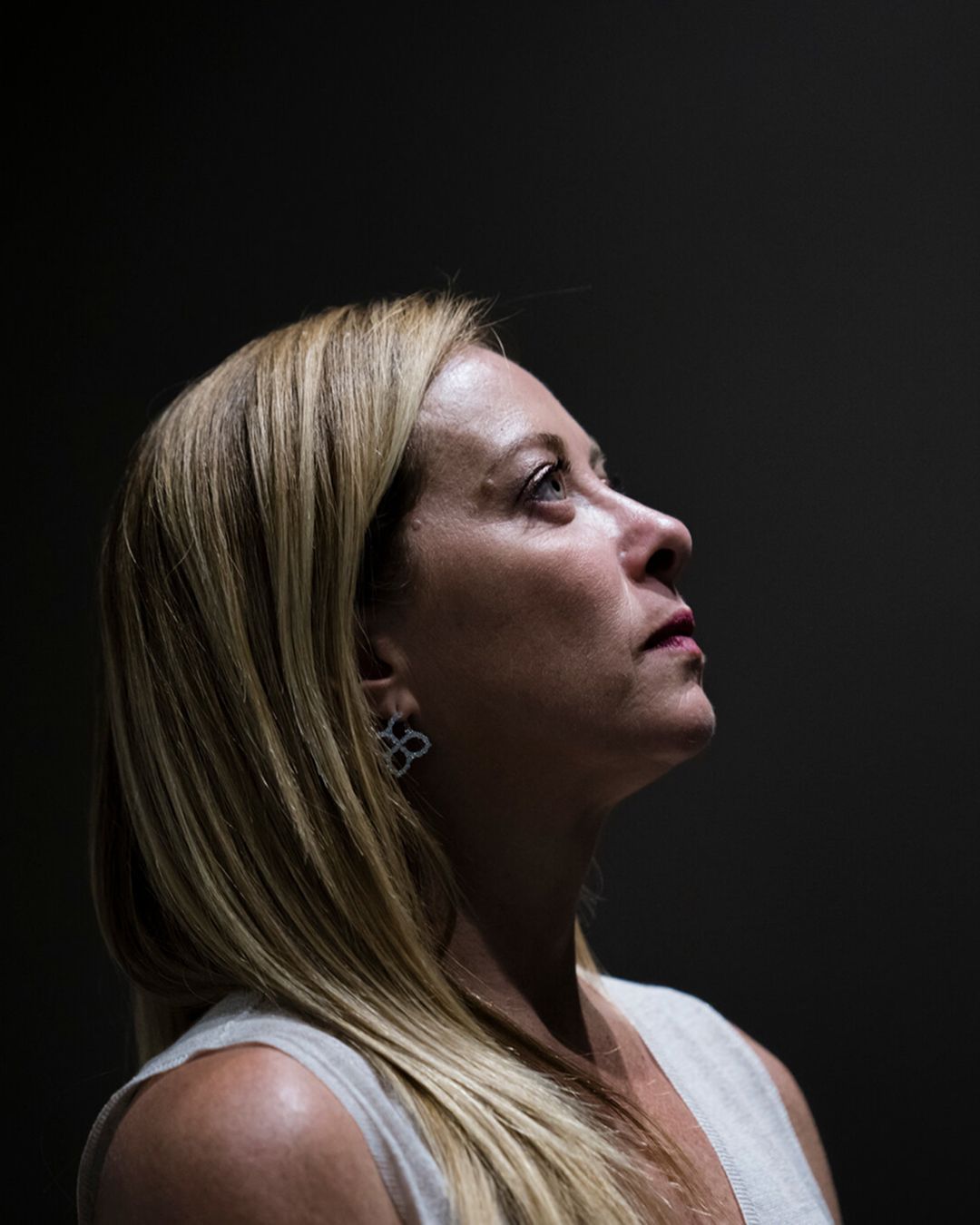
France believes that Italy is experiencing an “economic miracle" An unfounded argument that is seducing part of the country's electorate
In recent months in France, the – mistaken – idea has partially spread that Italy is experiencing a sort of “economic miracle” under the Meloni government. This narrative circulates especially in conservative and radical circles, where some argue that before warning the French population about a possible rise of the far right, it would be more sensible to assess the results of governments that share its approach – such as the Italian one.
This is a position that, in France, attracts part of the electorate, especially in a historical moment marked by growing distrust in institutions. The current French prime minister Sébastien Lecornu is experiencing a moment of major political instability: he first took office in early September, but unexpectedly resigned less than a month later because he lacked sufficient support. Macron – as President of France – then reappointed him on October 10, but two parties (La France Insoumise, of the radical left, and the Rassemblement National, of the far right) presented motions of no confidence, both of which were subsequently rejected.
What is wrong with Italy’s economic policy
Domani, in prima pagina di @libe:
— nonleggerlo (@nonleggerlo) November 16, 2025
Giorgia Meloni: il miraggio economico.
Elogiata dalla destra e dall'estrema destra per i suoi risultati, la premier italiana cavalca le riforme dei suoi predecessori e beneficia di massicci aiuti dell'Unione europea.
Il vero-falso miracolo… pic.twitter.com/R4o6bFwoR6
France has never experienced a far-right majority, but using the Italian example to argue that such a government is harmless in itself, or even efficient in certain fields (such as the economy), is quite a distortion. The Italian deficit is indeed being managed better than the French one, as of today, but Italy’s public debt remains much higher and economic growth has essentially been stagnant for a long time – despite a degree of governmental stability that is rather atypical for Italian standards.
The government led by Giorgia Meloni, and in particular the Minister of Economy Giancarlo Giorgetti, is generally credited with keeping a prudent management of the public accounts: spending has been contained and the deficit reduced in order to fully comply with European rules, at times even following a line more rigorous than that suggested by the Commission. But there is a catch. After the fourth budget law approved by the Meloni government, another aspect of the executive’s economic strategy is becoming increasingly clear: the almost total absence of structural reforms or measures capable of stimulating the country’s growth – and this is no small issue.
Where the theory of the Italian “economic miracle” comes from
The narrative that has become popular in France regarding the alleged Italian “economic miracle” stems mainly from the fact that the Meloni government has been very cautious in its budgetary policy. However, the issue is indeed more complex: what is missing in the executive’s economic approach are ambitious reforms in favor of businesses (both small and large), productivity, and investments. Confindustria has described the country’s growth as «anemic», and the same view has been expressed by other public institutions monitoring the government’s economic policy, such as the Bank of Italy and the Court of Auditors. Moreover, according to many observers, the already modest growth forecasts for Italian GDP (0.5% in 2025, 0.7% in 2026 and 2027) risk being overly optimistic.
According to the French newspaper Libération, the Meloni government has benefited from measures approved by previous governments, especially that of Mario Draghi, and from European contributions, which were crucial in preventing the country from slipping into recession. The model pursued by the majority is therefore not an economic success and offers no reason to believe that a potential rise of the far right in France would be harmless, even if it followed the Italian example.