




























French politics is obsessed with TikTok To the point that politicians’ speeches in parliament are adapting to its language
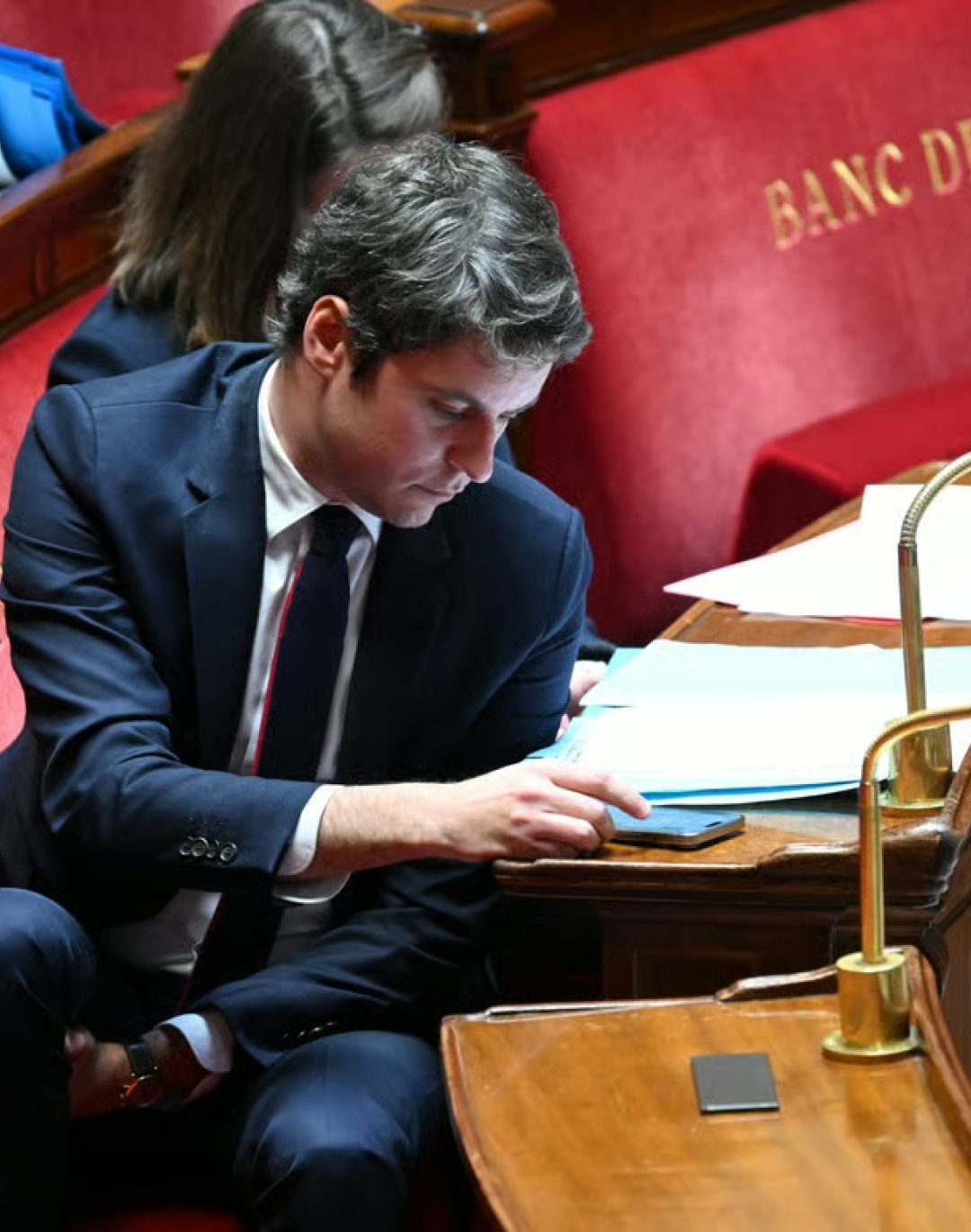
For some time in France, many politicians’ speeches in parliament have been cut, subtitled, properly edited, and then published on TikTok—either by the politicians themselves or by their party’s official account. This practice is also present in Italy, though much less than in France: in the country, it has become so popular that it recently sparked an institutional-level discussion. Le Monde, France’s leading daily newspaper, collected a series of testimonies in which several parliament members complained that the political debate now aims more at generating engagement on TikTok than at fostering discussion in the chamber.
In essence, rhetoric, which works very well on the Chinese platform and on social networks in general, has become the dominant line in many political interventions within the French parliament. The president of the far-right party Rassemblement National, Jordan Bardella, was one of the first to leverage TikTok to boost his popularity, and his approval ratings have indeed grown. Moreover, Bardella presents himself more like an influencer: his goal is to project a more moderate image of his party, despite its radical orientation, in an attempt to broaden the electoral base.
The obsession of French politicians with social media
@jordanbardella Passion Rummo
son original - Jordan Bardella
The shift in French political language has several causes. First of all, lawmakers—and especially members of extremist parties—are increasingly aware of the overwhelming power of social media and the approach they need to maintain on digital platforms. Secondly, the 2022 elections brought many young people into the French parliament (for example, Rassemblement National elected 89 deputies), and compared to the previous generation, they are much more skilled at strategically using social media to their advantage—unsurprisingly, graphic and editing choices almost always align with the dominant style of TikTok and Instagram.
The phenomenon in France is so widespread that many politicians now address their speeches directly to the social media audience, and you can clearly notice it from one fact: interventions are unnecessarily agitated, considering that the deputies present in the chamber are few and almost entirely disinterested.
What is happening in France?
@mathildepanot A69 : Les députés playmobils de la macronie se sont encore illustrés. Cela fait 2 fois que le gouvernement détourne la motion de rejet en 49.3 parlementaire. Par conséquent, ce texte est illégitime et doit être retiré !
son original - Mathilde Panot
The new approach has spread during a particularly difficult moment for French politics. In recent days, there have been anti-government protests in many French cities, organized by groups of young demonstrators who named themselves “Bloquons tout”, meaning “Let’s block everything.” The criticisms mainly target the 2026 budget law: to reduce the country’s excessive public debt, the government had proposed very harsh measures, such as suspending next year’s adjustment of public pensions to inflation. As a result, the French parliament passed a vote of no confidence against the incumbent prime minister.
Macron, who is the head of government, was therefore forced to reshuffle, appointing one of his close collaborators, former Defense Minister Sébastien Lecornu. However, the direction of the budget law seems set to remain the same: implementing cuts, however difficult, with the aim of reducing the deficit. According to supporters of the “Bloquons tout” movement, instead of taxing the wealthiest classes to reform pensions, the government is putting the less affluent segments of the population in difficulty. The only area spared from public spending cuts so far has been military expenditure, which has not only remained intact but is expected to increase—something that has further angered protesters.