
























The 5 best Olympic ceremonies of all time “Milan, such a cool place,” said Dua Lipa
After endless months of preparations, complaints, and ugly dormitories, today, Friday, February 6, the Milano–Cortina Winter Olympics finally kick off. Although the Games will be split between the Lombard capital and several Alpine locations, the true symbolic destination is Milan, which will host both the Olympic Village and the opening ceremony. And what a ceremony it will be: San Siro will welcome musical artists such as Mariah Carey, Andrea Bocelli, Laura Pausini, and Ghali, alongside two of Italy’s most internationally acclaimed actors, Sabrina Impacciatore and Pierfrancesco Favino. The show, titled Armonia, was conceived by Marco Balich, the Venetian creative director who holds the record for having produced 16 Olympic ceremonies. So, as we wait for the torch to light the Olympic cauldron, it’s worth looking back at some of the best opening ceremonies in Olympic history.
London 2012
@tntsports Throwback: During the #London2012 opening ceremony, The Queen joined James Bond with the entrance of a lifetime #Paris #Paris2024 #olympics original sound - TNT Sports
James Bond, Queen Elizabeth II, Mr. Bean, an entire medley celebrating the importance of music in British culture, and Paul McCartney closing the night to the sound of Hey Jude. Expectations for the opening of the London 2012 Summer Olympics were sky-high, but Danny Boyle’s direction managed to exceed them, delivering a spectacle destined to go down in history. It’s no coincidence that when the opening ceremony of the Paris Olympics disappointed a large portion of the public in 2024, many chose to rewatch the one from twelve years earlier.
PyeongChang 2018
For just over two hours in 2018, the conflict between North and South Korea seemed to be put on hold. During the Parade of Nations, athletes from the two countries marched together as a Unified Korea under the Korean Peninsula flag, in one of the most powerful moments of the entire ceremony. The theme of the opening was peace and harmony, concepts also staged through a performance in which 371 percussionists, dressed in white, played the janggu, the traditional Korean drum. At the climax, their costumes shifted into red and blue, forming the taegeuk shape, the symbol of cosmic balance found on the national flag.
Beijing 2008
2008 Beijing Olympics Opening Ceremony pic.twitter.com/OKDDyH3Qvu
— lark (@KnightClawk) May 13, 2025
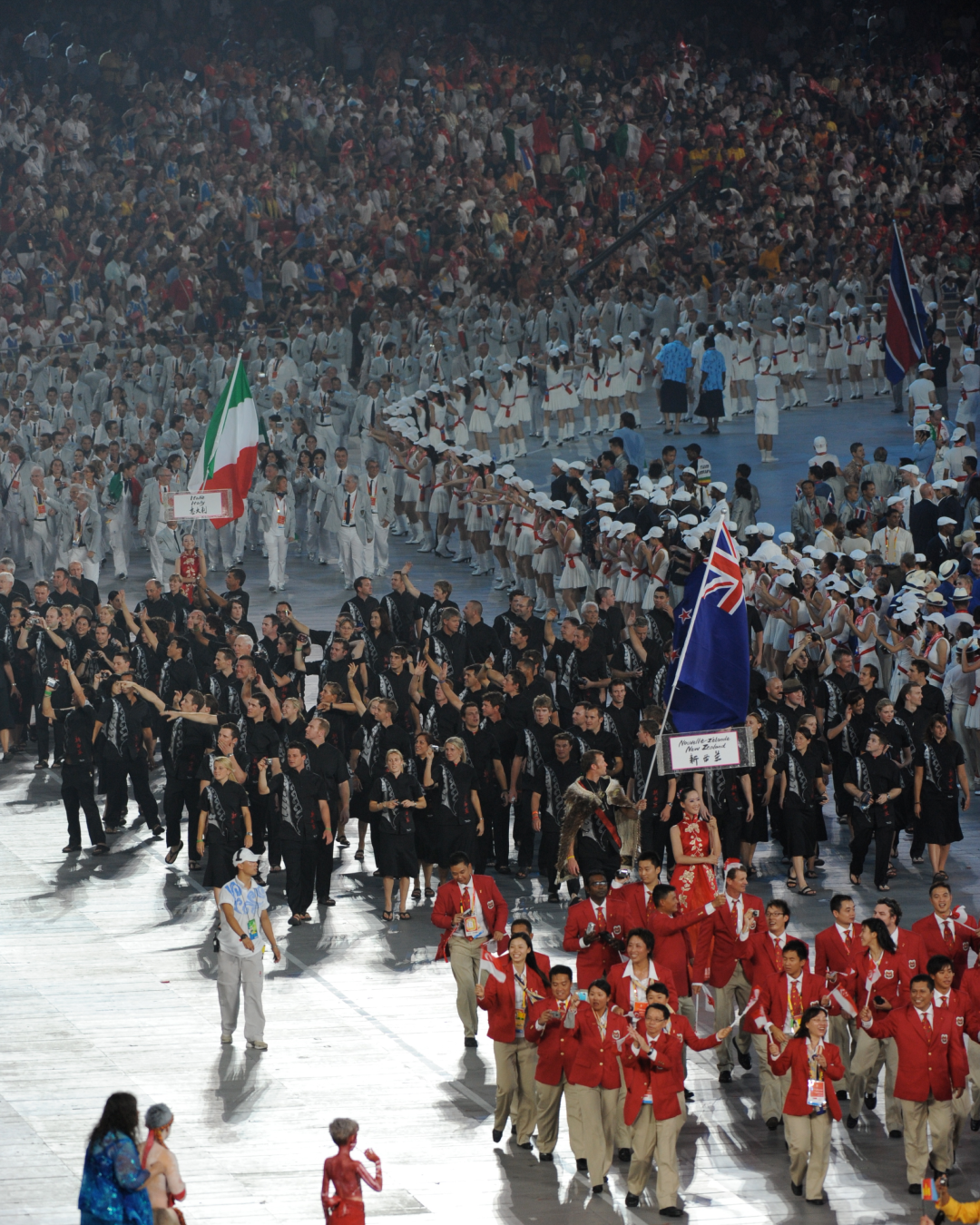
If there is one ceremony that redefined the idea of Olympic spectacle in terms of scale and precision, it is Beijing 2008. Directed by Zhang Yimou, it featured a monumental choreography built around thousands of perfectly synchronized performers, turning the National Stadium into an awe-inspiring visual machine. The opening told the story and cultural identity of China through calligraphy, gunpowder, philosophy, and technology, leaving little room for improvisation while setting a new production standard. From that moment on, every Olympic ceremony has inevitably been measured against Beijing’s.
Nagano 1998
More intimate and spiritual than others, the Nagano 1998 ceremony was built around an idea of global connection and transcendence. The most iconic moment remains that of the five continents connected live, with choirs from different parts of the world singing Beethoven’s Ode to Joy together. An opening that was less spectacular in the traditional sense, yet perfectly aligned with the Olympic spirit of the late 1990s, when globalization was still portrayed as a promise of unity.
Turin 2006
@olympics 20 years on, the Olympic flame has returned to Italy, bringing the passion, spectacle, and unmistakable Italian flair. Ready to make new memories? See you at #MilanoCortina2026 #Olympics #WinterOlympics #Torino2006 som original - Olympics
Often underrated, the Turin 2006 ceremony was in fact one of the most elegant of the past few decades. Conceived by Marco Balich, it turned ice, fire, and the human body into central narrative elements, avoiding excess and focusing instead on symbolic storytelling. The moment of the Fire Woman remains unforgettable, as does the use of athletes’ bodies as an active part of the staging. Among the guests of honor, Pavarotti and Sophia Loren could not be missing, both international symbols of Italian identity.