
























A sartorial project made in Scampia was born A Sewing Machine of One’s Own and a new collective vision of the margins
What happens when one attempts to represent the periphery by stepping away from mainstream narratives? The collection “A Sewing Machine of One’s Own” offers an answer. Developed by Eleonora Cecere and Andrea Bertello, both PhD candidates within the National Doctorate in Design for Made in Italy, the project unfolds as a research-based and co-creative practice.
For the 17th edition, the Fashion Clash Festival selected creatives engaged in practices of collaboration, activism, and community-based co-creation. Cecere and Bertello’s proposal takes the shape of a manifesto in which fashion is no longer a mere aesthetic exercise, but a tool through which to read, transform, and give back a territory such as Scampia, a peripheral neighborhood of the city of Naples, and the periphery more broadly.
The core of the capsule collection
The project’s title draws inspiration from Virginia Woolf’s celebrated call for “a room of one’s own.” Here, that room is metaphorically transformed into a sewing machine: a space of autonomy, identity construction, and self-determination. Through this process of re-signification, fashion—much like the periphery itself—becomes a field of experimentation and a site for reclaiming values such as symbolic resistance, empowerment, and education.
Fashion’s multifaceted nature—its ability to function as a cultural, political, and communal tool—emerges as a means through which individuals can narrate themselves, imagine alternative futures, and transform their realities. It becomes an opportunity to carve out one’s own space within a context overcrowded by clichés and preconceptions. Once again, fashion turns into a space of the self, where everyday life is dressed in resistance and authenticity, embracing vulnerability as well.
The collection
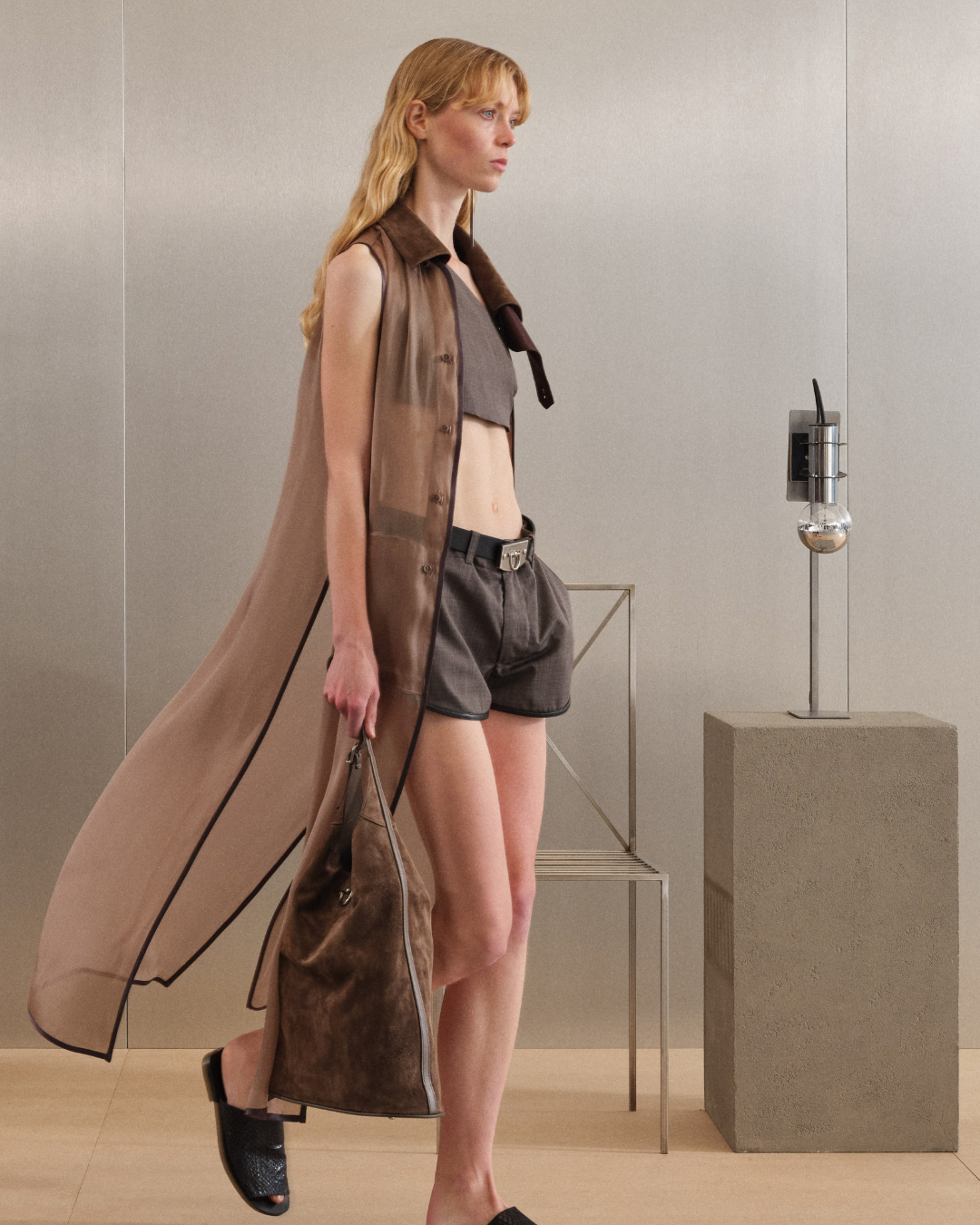
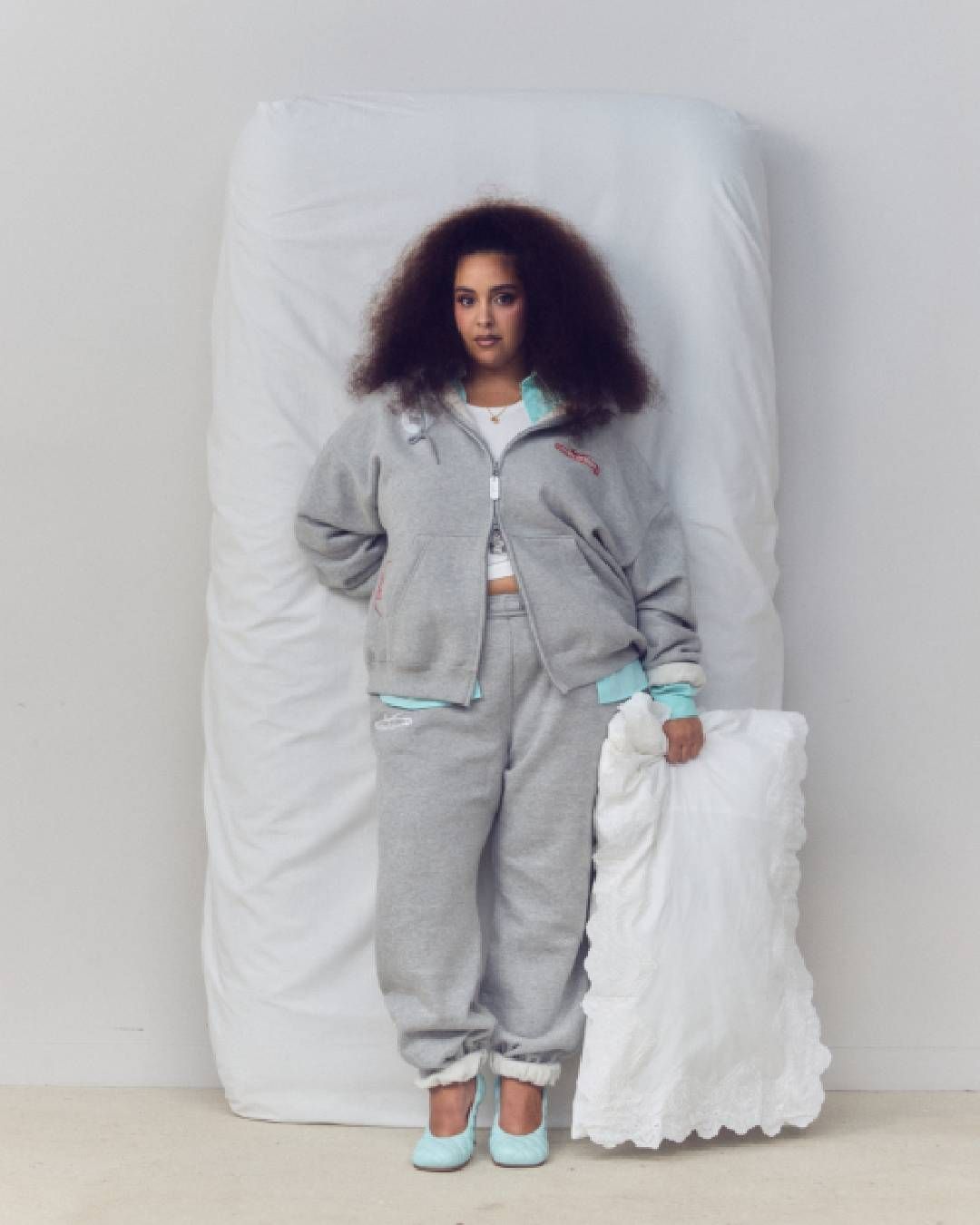
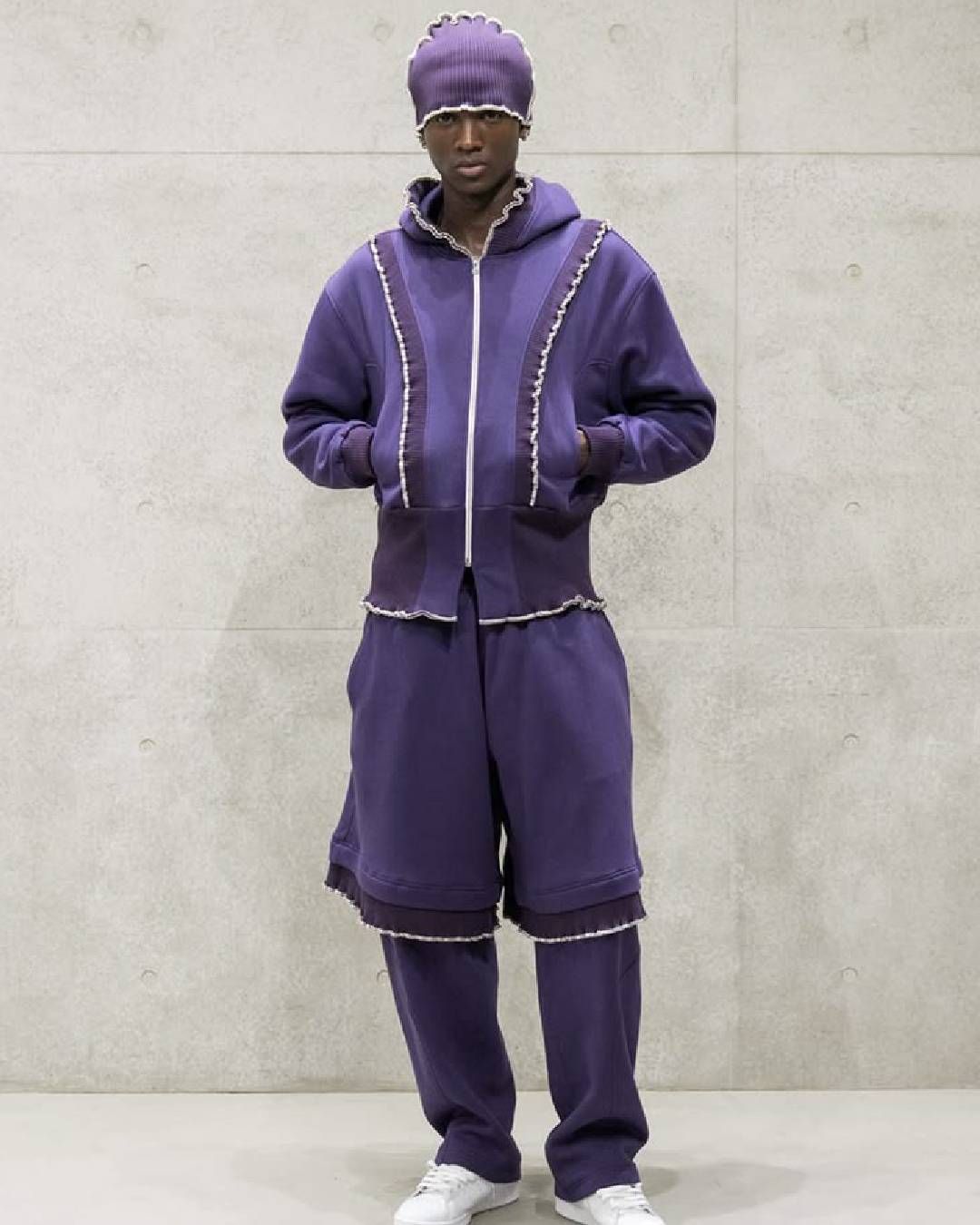
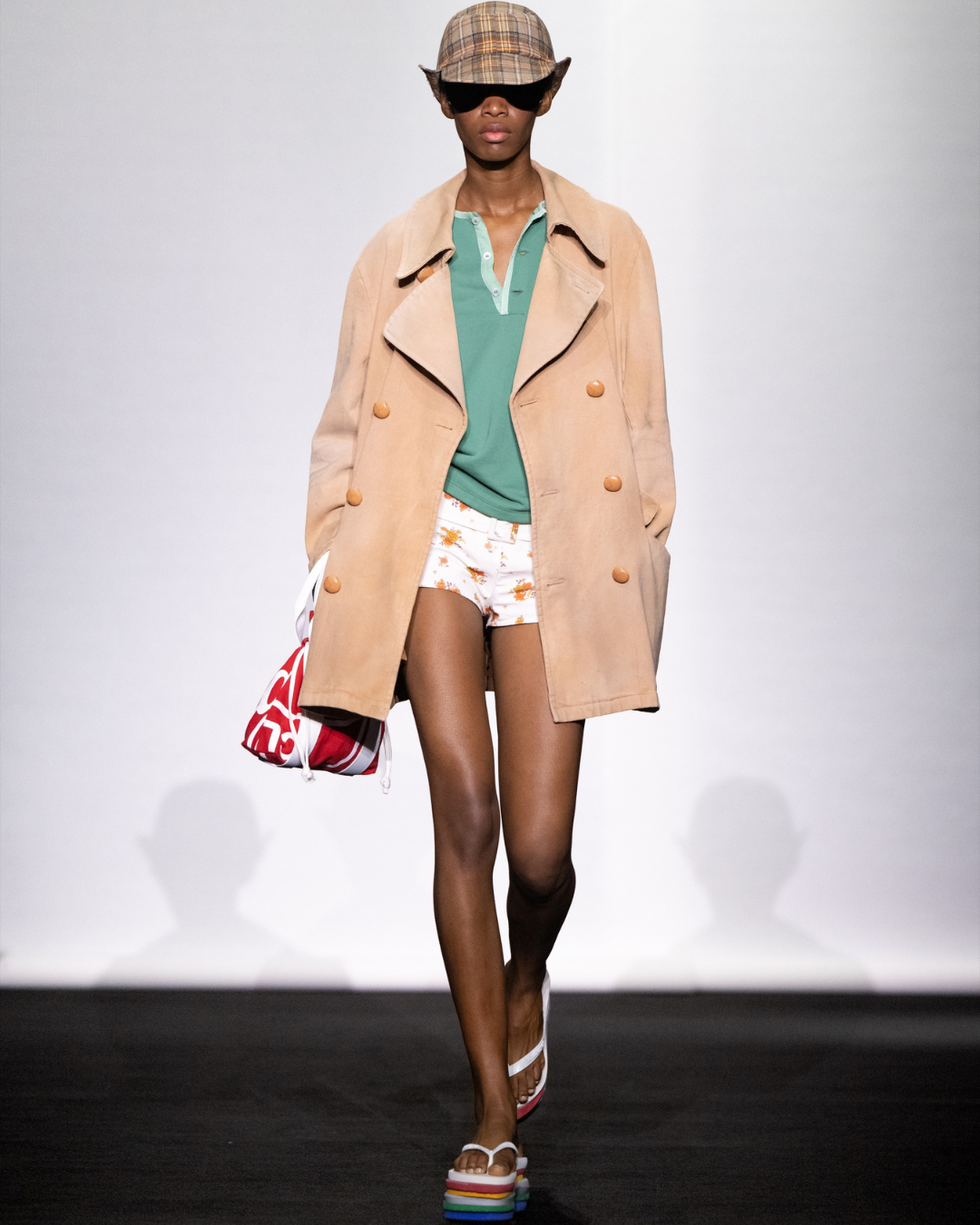
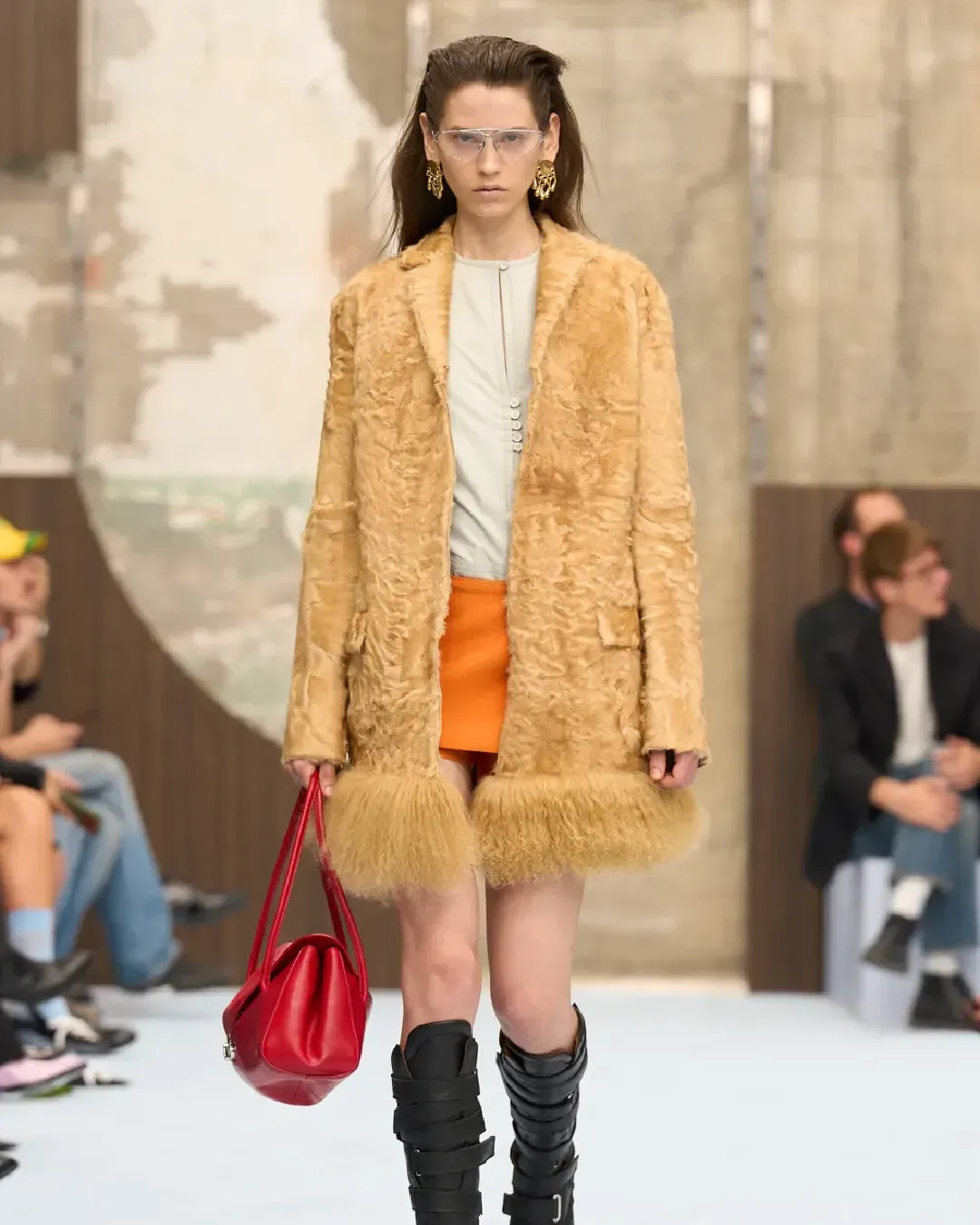
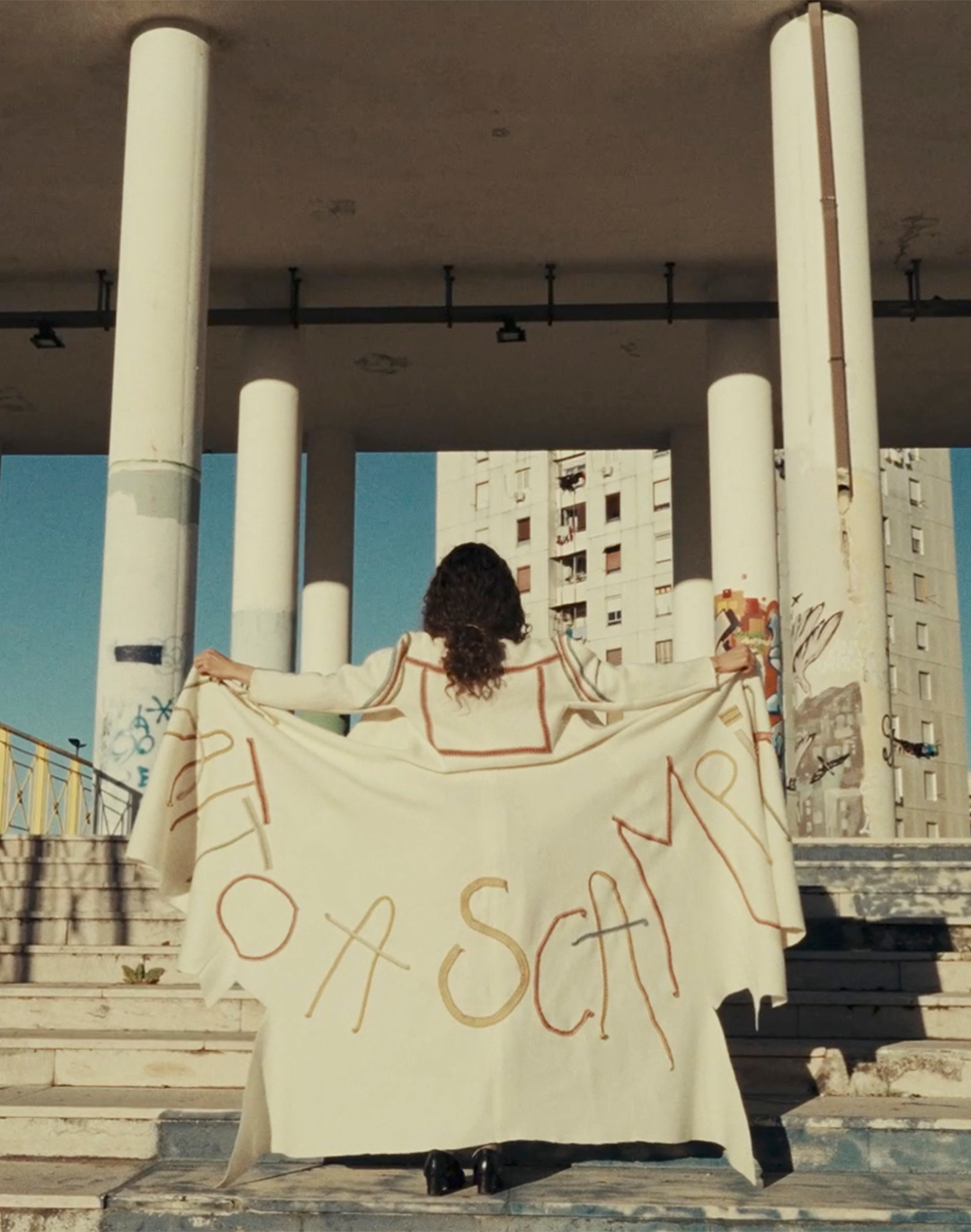
The collection unfolds as a collective practice, in which the collaboration with Fatto a Scampia took the form of a truly shared pedagogical process. Seamstresses, volunteers, and young participants involved in the workshop’s professional training paths actively contributed to every stage of the capsule’s development. The result is a ten-look capsule collection born from the encounter between technical expertise, personal narratives, and the neighborhood’s aesthetic imaginaries.
Through dialogue and exchange, aesthetic elements emerge as narrative materials: signs drawn from the neighborhood are decontextualized and recoded within the collection—not as fossilized icons of a stereotypical aesthetic, but as vectors of change. The collection seeks a delicate balance: denouncing a context marked by marginalization and resistance to development, without crystallizing it. What emerges instead is the construction of new visual codes, closer to the vitality and energy of those who inhabit the territory.
Diversity inhabits both fashion and the periphery, and here it reveals how local actors—each with different histories, scales, and traditions—can find forms of mutual support, creative contamination, and shared growth. Voices, the architecture of Scampia’s Vele, and the broader urban context also find representation in the accompanying video, in which the peripheral space becomes a stage for diversity, where life teems just beyond the city’s margins.
At the core of the project lies a network of stories, experiences, and traditions that fuels its many collaborations: with Manteco S.p.A. (PO) for regenerated wool and cotton—high-quality materials rooted in a long-standing tradition of sustainable textile production. In parallel, thanks to connections fostered by the National Doctorate in Design for Made in Italy, the project engaged with the Antico Opificio di San Leucio Design (CE), sourcing not only trimmings but also precious damask silk remnants, materials imbued with the deep memory of Campania’s textile heritage.