


























What happened to Coperni? The brand won't show at Paris Fashion Week
If last year the most typical news was the announcement of a new creative director, in 2026 the news is multiplying of brands that, due to internal issues, are giving up fashion week runway shows. The trend actually seems to have started already in the last months of the previous year, when the announcement came that McQueen would give up presenting menswear on the runway, but in the last few weeks there have been two cases of shows cancelled more or less dramatically: the first concerned Giambattista Valli at Couture Week and the second Coperni.
In the case of Giambattista Valli, we have some information on what is happening. Valli stated that he gave up the show for a “thorough review” of the brand’s activities which, let us remember, is owned by the Artemis Group, i.e. the Pinault family. According to WWD, the owners themselves are considering selling the brand, while according to an in-depth article by Il Foglio, the brand is actually at risk of closure, in the broader context of review of the accounts that the Pinaults are carrying out on their portfolio of brands with the arrival of Luca De Meo.
It is therefore time to ask ourselves: are these brands the first victims of the crisis?
Problems at home for Coperni?
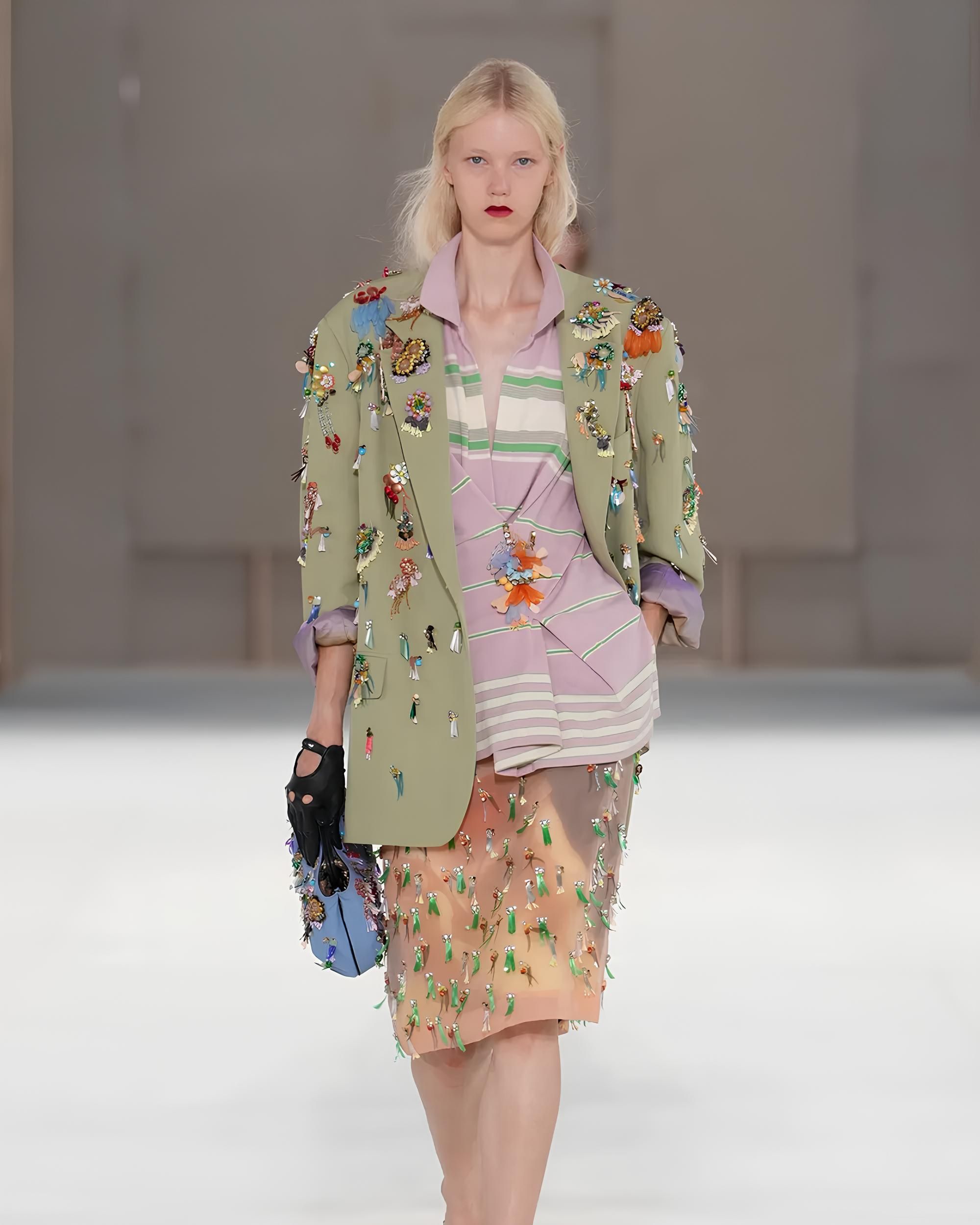
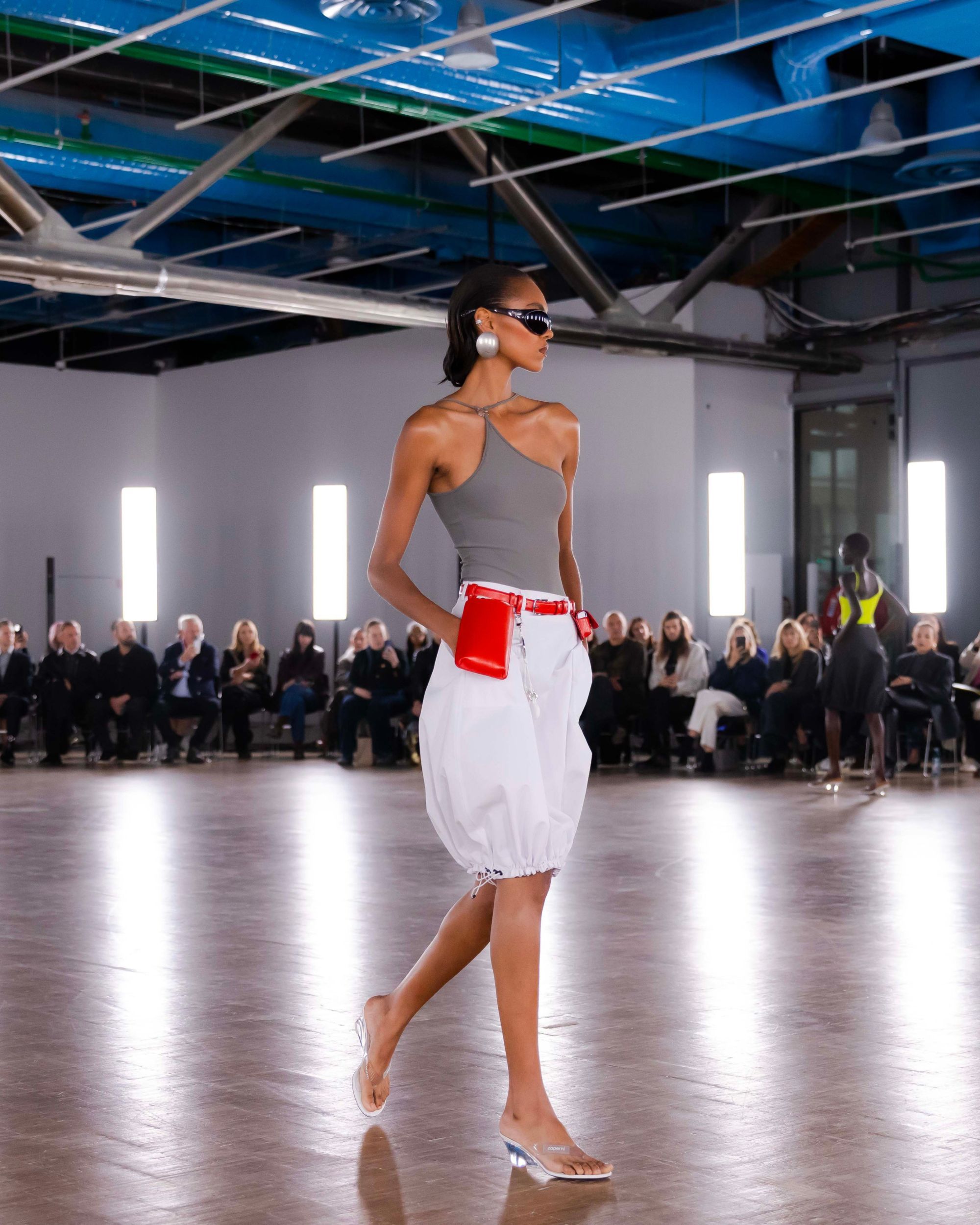
More complicated is the case of Coperni, whose decision to skip the Paris show was due to some dispute with its distributor and shareholder Tomorrow London that led the brand to no longer have «the means to sustain its development», the founders told BoF. The two also spoke of wanting to regain control of the brand, perhaps suggesting that Tomorrow had influenced creative or operational decisions excessively.
Since the two discussed means for the brand’s development, it seems plausible that the dispute arose from a reduction in funding that Tomorrow would have provided to the brand. Other possibilities (which do not exclude the first hypothesis) could also concern controversies over the budget for runway productions. Now, if an investor stops investing as in the past, the problem is very likely sales and profitability.
Remember when a Coperni employee bought this tshirt from Vinted 3 weeks prior to the show and they even lowballed him pic.twitter.com/29VOxCDzUx
— beyza misses chandler (@beyzanurapaydin) February 7, 2026
So we could hypothesize that the brand’s problem was what several voices in the press, including Jing Daily, had already foreseen, namely a failure to convert the brand’s virality on social media into physical sales. Surely an alarm bell on the budget issue had already rung last year when it emerged that, for the Disneyland show, a T-shirt that appeared on the runway had actually been bought for a few euros on Vinted. A decidedly unusual thing.
The hypothesis that the problems between Coperni and its shareholder are linked to the brand’s commercial performance is perhaps strengthened if we look at the other two brands of which the London incubator is a shareholder: Charles Jeffrey LOVERBOY and Martine Rose, both acquired in 2021. For both we do not have economic data at hand but judging by the retail expansions of both brands, the increase in their collaborations and the enthusiastic reception of their collections by critics, we can assume that both are performing quite well.
Canaries in the coal mine?
Certainly the issues concerning Coperni first and then Giambattista Valli are different from each other and specific to each brand. But perhaps precisely their cases are the first symptoms of a problem that is getting worse even if still invisible. As we anticipated at the beginning, even McQueen has indirectly announced in recent months that it will lighten its runway program by showing only womenswear. It is not the only one that has revised the number of runway appearances.
In Milan, Emporio Armani announced that starting from this season it will combine menswear and womenswear shows into a single co-ed show. In Paris, Celine presented the menswear collection in a showroom, then showed womenswear during the fashion week that will open in early March. But this year from the Paris calendar are also missing Maison Margiela’s ready-to-wear (also absent from the Haute Couture calendar) together with Casablanca, Vetements and Christopher Esber. In Milan, Sunnei has disappeared from the calendar after the founders’ departure.
@coperni Introducing the Frozen ice Swipe Bag sculpture #COPERNI SS25 Show at @Disneyland Paris original sound - devuelvo follow<3
In reality, based on documents presented last February 3 to the English chamber of commerce and reported by WWD, it turns out that even JW Anderson is not doing very well. The brand technically returned to recording profits for the first time in ten years of continuous losses thanks to the restructuring of an intra-group loan from LVMH, whose debt was probably modified, cancelled or converted, leading to an accounting gain. Without that restructuring, the brand would have had an operating loss of 5.5 million pounds in the last year for which we have news, i.e. 2024.
The same can be said for Roberto Cavalli: for months gossip has been circulating about a possible sale, then denied by the Damac group, controlled by the Emirati billionaire Hussain Sajwani who not only paid out of his own pocket to cover the losses of 23.3 million euros recorded in 2024 (2025 data are still missing) but who added, through the group’s spokespersons, that he is interested in the intervention of external partners. Even if the group’s sales technically rose and there is a new distribution agreement signed with Tomorrow, the problem remains probably the fixed production costs, marketing, personnel, runway shows and store rents but the fact remains that the brand still depends on external injections and does not generate profits on its own.
So?
Luxury brands are facing a downturn as consumers question the value of high prices, especially after aggressive post-pandemic price hikes.
— DeJesus (@DeJesusMorrobel) January 28, 2026
The warning signs of economic difficulties for the fashion system seem ready to materialize. For a long time the crisis manifested itself in the form of negative percentages in the brands’ financial statements, store closures and order cancellations. It was briefly relegated to the behind-the-scenes of fashion, with alarm bells rung only by the associations of the Italian manufacturing supply chain which, in fact, in recent years has entered a serious crisis. Its most striking form has so far been the progressive collapse of big e-commerce players such as SSENSE or Farfetch.
And as can be seen from the examples we have presented, there are also many brands that are still in business but that in reality live beyond their means, operating in a constant state of loss and floating only thanks to the financial lifeboats thrown by this or that investor. All behind the scenes as we said. But when the crisis reaches the fashion week calendars, perhaps it is the sign that certain fragilities have begun to get out of hand. One can only wonder whether the year 2026 that has just begun will or will not be the year of truth for the fashion system.