
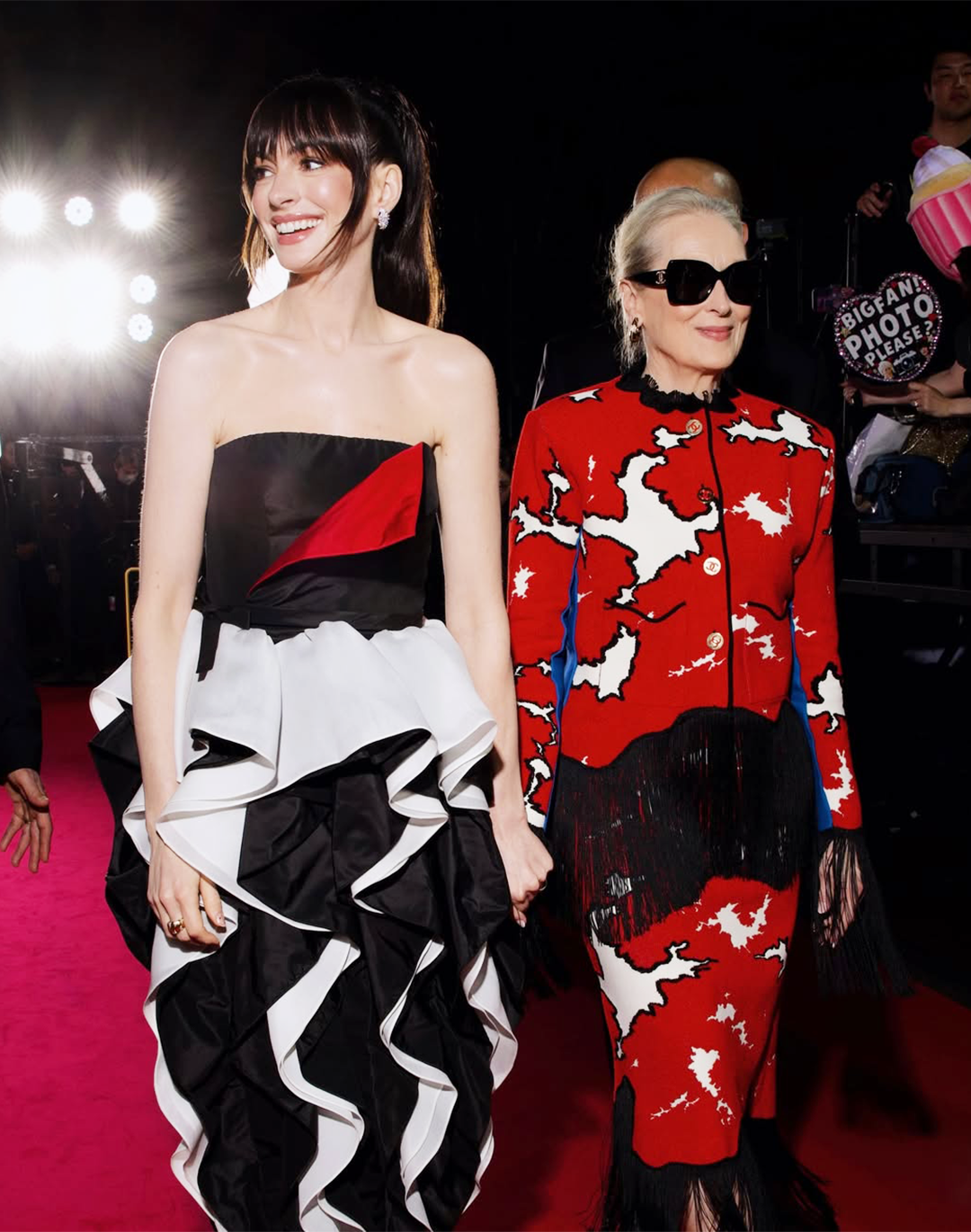
"The Devil Wears Prada 2" is a worthy heir to the first film And It brings the crisis of publishing into the spotlight
There are two macro-sections through which to divide the discussion around The Devil Wears Prada 2 after watching it. On one side there is the expectation surrounding the sequel to one of the most widely known and beloved mainstream films in the world, which includes the nostalgia-driven operation that risked sinking the memory of the original work released in 2006, as well as the rush toward recognizable brands in a cinematic landscape increasingly populated by sagas, remakes, reboots, and so on.
On the other side, there is the openness that the film by David Frankel (who returns to direct after The Devil Wears Prada) has granted audiences regarding the world not only of fashion, but of publishing, with its lights and its ever more pressing shadows, exactly as happened in the chapter from the early 2000s, for a theme that has become even more urgent in the contemporary world.
A rediscovered lightness?
@disneyit Vi presentiamo la nuova features editor di Runway Guarda questa clip de Il Diavolo Veste Prada 2 e vivi il film evento dal 29 Aprile al cinema. #IlDiavoloVestePrada2 #DaVedere audio originale - Disney Italia
Let us begin, then, to talk about The Devil Wears Prada 2 starting from the film’s most engaging aspect: a welcoming and above all accessible spirit that allowed the title to become one of the most widely known and recognizable films on the face of the planet. This did great things for the careers of two stars such as Meryl Streep and Anne Hathaway, consolidating the former as a pop icon as well as a dramatic one, and further paving the way for her colleague, already launched by box office films such as The Princess Diaries and auteur titles like Brokeback Mountain.
The Devil Wears Prada became at once a classic and an instant cult film, a movie with all the credentials to transcend cinematic eras and continue winning over audiences in the years to come, while also standing as a portrait of American productions from the early 2000s, becoming a kind of fresco of them. The burden the sequel was preparing to carry was no small one. And it is with a certain lightness that director Frankel, screenwriter Aline Brosh McKenna (also writer of the first film), and the entire returning cast chose to live with it back in the offices of Runway. This greatly benefited its realization, more than many sequels that often fail exactly where The Devil Wears Prada 2 succeeds: following in the footsteps of its predecessor, not resting on its laurels, and framing the spirit of the times with an attentive and critical gaze, while always remaining faithful to the foundations of writing for the big screen.
A solid and autonomous plot
@disneyit Lei ama il suo lavoro. Non perdere Il Diavolo Veste Prada 2, dal 29 Aprile solo al cinema. Acquista ora il tuo biglietto. #IlDiavoloVestePrada2 #davedere #Disney suono originale - Disney Italia
At first glance, it is easy to notice how the sequel, while moving the hands of time forward for its characters just as it has for fans and viewers, retraces the narrative structure that belonged to the adaptation of the novel by Lauren Weisberger published in 2003. The events are different, but the passages and turning points of the story occur at the same moments and in similar ways, finding Miranda Priestly once again at the head of the most influential fashion magazine in the world, and journalist Andy Sachs, no longer forced to bring her coffee or hang up her coat, yet still in a disadvantaged position compared with the prejudice of her superior.
In the first film the young woman was an assistant full of dreams, in the second she has become a professional who still has hope, though now put at risk. A kind of repetition also occurs in Miranda’s arc: she holds a position of power (though immediately attacked in the sequel), everything proceeds more or less normally (though during a moment of crisis for Runway) until collapse threatens, and in the end the woman remains the most important figure and the one with the best hairstyle ever seen in the fashion world.
What makes watching The Devil Wears Prada 2 enjoyable, and prevents audiences from feeling the need to underline how immortal the first film is at every frame, is the tone established by McKenna’s rhythmic writing, which in turn echoes Frankel’s direction and ends up resonating in the sparkling performances of the lead actors. Even the humor lands well, which is often the trickiest thing given the shifting cloak of comedy, never the same as years go by.
The irony of The Devil Wears Prada 2 is not domesticated, remaining faithful to the personality of its editor Miranda Priestly, and it is clever enough not to forget the times in which it arrives, where jokes about what can or cannot be said are not a jab at so-called political correctness, but rather a way to contextualize the world in which both we and the film find ourselves, understanding it, respecting it, and every now and then joking about it.
The theme of publishing
@disneyit Un magazine? Per la primavera? Avanguardia pura. L’iconico Runway Magazine arriverà a Milano dal 27 Aprile al 3 Maggio in una speciale edicola popup. Rimanete aggiornati per maggiori informazioni. È tutto. #IlDiavoloVestePrada2 suono originale - Disney Italia
We therefore arrive at the most strictly contemporary part of The Devil Wears Prada 2 and the way in which publishing is placed at the center of such a wide-reaching story, one that chooses to put under the spotlight a theme that usually tends to interest only industry insiders. The crisis of newspapers, magazines, cultural labor, and writing as a paid profession is the engine that first knocks Andy down and then lifts her back up when the fate of Runway once again intersects with hers.
It is here that the film commits itself to becoming the standard-bearer of a dying sector that, however, in an operation like this inevitably ends up looking glamorous even when the ship is sinking. Partly because of the nature of the title itself, partly to comply with the rules of American comedy. This is not about drawing from the American dream, long since unmasked, but about sprinkling a little fairy dust over the misfortunes Miranda and her team will have to face.
Between reality and fiction
Where the danger of losing one’s job is never a real danger, and where precariousness is only narrated and never shown from the splendid offices or the splendid homes on the New York streets of the film. With a small parenthesis reserved for Andy’s search for an apartment, and if the money she earns allows her to rent the home seen in the film, then one starts to wonder whether the other journalists are precarious because every single cent goes into the salaries of the Runway editorial staff.
In any case, we were not expecting The Devil Wears Prada 2 to be a treatise or a solution to issues such as underpaid work or the closure of publications, but since the film brings up the matter, it is unavoidable to notice how, in the end, it turns it obviously to its own advantage. Reaching a conclusion that, once again, mirrors the first title: it is capital that moves the gears of any machine, economic or cultural, and all one has to do is understand whether one wants to be inside it or outside it, hoping that, if one is on board, the mechanism does not break down.
Everything can once again be traced back to the punctual, analytical, and disarming monologue about the cerulean sweater. Because cerulean is not just cerulean and a film is not real life, and that is why at least there everything can go according to plan and journalists can have fair contracts.