.gif 2000w)



































Every mistake in "Michael" is compiled in a book The biopic about the King of Pop isn't enough to tell his story
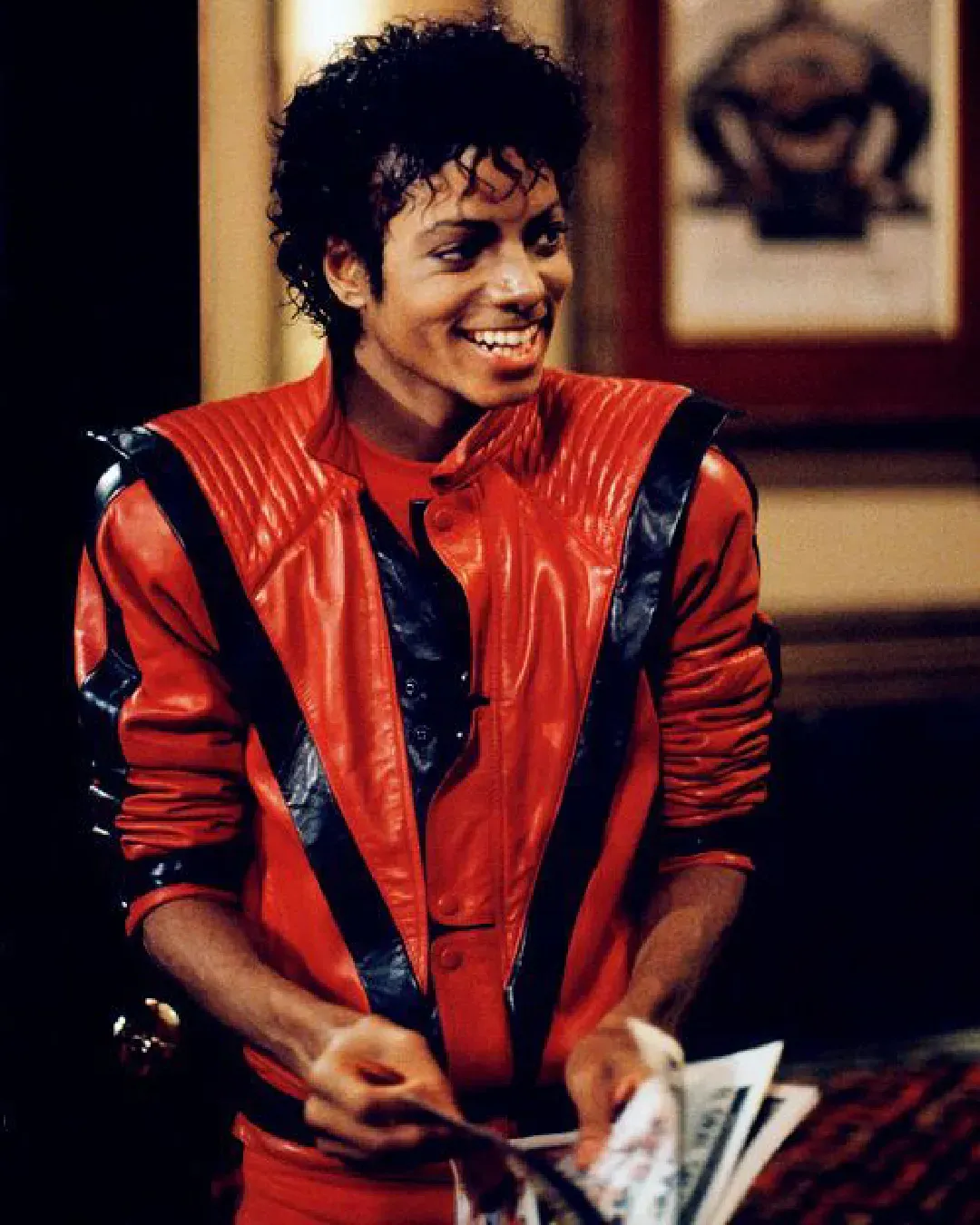
As had already happened with the Queen biopic, the film about Michael Jackson is smashing the box office, going far beyond its intrinsic cinematic value. Despite the criticism, the film can rely on its fanbase, extremely solid and massive, which has never stopped loving him, on the particularly successful performance of Jaafar Jackson, and of course on a repertoire of songs that are magnificent. After all, we’re talking about the King of Pop, who still holds the record for the best-selling album in the world with Thriller (1982), whose latest estimates stand at around 122 million copies sold.
As mentioned in our review, the film was heavily influenced by the family and there are several things that don’t add up: for instance, at least two sisters (Rebbie and Janet) and one brother (Randy) are missing. There are also some small inventions (MJ, for example, never wrote the song Thriller), distorted timelines, and many omissions of facts. As Andy Greene wrote in his fact-checking article for Rolling Stone, if we were to list everything omitted from the film, we’d need an article as long as War and Peace.
When making a biopic that covers such a long span of time, compression of events and temporal distortion are almost part of the game. By early 2026, we should have learned that the quality of a biopic, especially a musical one, is not judged by its total and complete adherence to facts. For narrative purposes, many events must be simplified, compressed, and shifted in time to make the story and its viewing experience more engaging.
The main problem with Michael is not the accuracy of the facts, but the level of depth given to such a complex character as MJ. That’s why, if you truly want to get to know MJ more deeply, our advice is not just to watch a film, but to read a good book. Specifically, an essay by Pulitzer Prize-winning writer Margo Jefferson, also published in Italy and simply titled On Michael.
Here you can find everything that’s missing from the film. Not only the well-known allegations of pedophilia and the resulting legal cases - the film carefully avoids the issue by ending in 1988 (the first accusations arrived in 1993) - but also other fundamental aspects of MJ’s life that the film treats only superficially.
Here they are summarised.
1. The relationship with his father
Watching the latest Michael Jackson doc, the first public speech his father made after his death was to announce he's starting a new record label, some families can be useless, I'm glad he was omitted from his will.
— YH (@Yemihazan) April 11, 2026
It is theoretically the heart of the film, whose narrative is based on MJ’s liberation from his father’s grip, who wanted to keep him tied to the family business and to the band he formed with his brothers - the Jackson Five, where everything began. This is essentially the film’s story, but it presents a watered-down and sanitised, almost Disney-like version. Of course, some episodes of violence are inevitably shown, such as the scene depicting MJ being whipped - something his father himself admitted, confirming he beat him with a rod and a belt, though he claimed he never “beat” him because, in his words, “you beat someone with a stick.”
A statement that gives a clear idea of how the normalization of violence was a cornerstone in the upbringing of the Jackson children. Joseph Jackson has often been described, euphemistically, as a «strict advocate of discipline», but the film does not convey the same climate of terror in which all the Jackson siblings lived - something that instead emerges from interviews conducted by J. Randy Taraborrelli with the Jacksons and their relatives, from the revelations of La Toya J. in her book (Here Is My Story, the One My Family Doesn’t Want You to Read), and from Michael’s own public statements.
As Jefferson recounts in her essay, there is a strange Till Eulenspiegel-like quality to some of these abuses: the domineering father often wore macabre masks and frightened his children by waking them up, tapping on their bedroom window pretending to break in, or standing over their beds waiting for them to wake up screaming. This adds a new dimension to the monsters in the haunted house from the famous Thriller video. And to the doubles that keep appearing in Michael’s video cosmology: the good Michael and the demon Michael; Michael the savior and Michael the killer; Michael singing in a song titled Threatened: «You fear me ’cause you know I’m a beast / Watching you when you sleep.» MJ’s first real horror films were experienced in person, not on television.
2. The child star
@michael110005 Whos loving you by the Jackson 5 #michaeljackson #kingofpop #thejackson5 #thejacksons Beat It - Michael Jackson
Michael Jackson entered the entertainment world at the age of five, and by ten he was already a little star. He and his brothers rehearsed six hours a day: three before school and three after. There was no room for anything else. The film about MJ clearly shows how his childhood was literally stolen from him: at the beginning, we see him looking out the window enviously while other children play in the snow; later, we hear him complain to his mother about not being able to have real friends because of his fame. But there is an unspoken aspect that is not explored: the sexualization of the child star.
In some ways, MJ was the male, 1980s version of Shirley Temple. Both entered the entertainment world thanks to an early media-driven sex appeal, encouraged by their adult figures of reference. In his performances as a child, MJ was pushed toward seducing the female audience. In her essay, Jefferson cites a particularly explicit performance from 1968 at Mr. Lucky’s, a nightclub in Gary. Michael sings Skinny Legs, a Joe Tex song about a poor woman who has to walk the streets exposing her thin limbs to any man who wants to look. Joe offers her to every man, but no one wants her. “Don’t worry,” he reassures her, “because there’s someone somewhere” who will take the sister, “skinny legs and all!”.
11-year-old Michael Jackson with The Jackson 5 singing “I Want You Back” on the Ed Sullivan Show (1970)
— Rock History (@historyrock_) April 26, 2026
The rest is history. pic.twitter.com/dSlYJ2kgwv
During the performance of Skinny Legs, the young Michael was pushed under tables to lift women’s skirts. No one ever lingered too much on his gestures, his movements, and those sexually explicit lyrics expressed by a child of just eight or nine years old. “When I had you to myself, I didn’t want you around...” he sings in the hit I Want You Back. But he is a child, and this gives the song a boldness it otherwise wouldn’t have. He is a child singing for us adults, yet he seems far more confident than we would be, singing about things that children shouldn’t even know.
The same happens in I’ll Be There and Never Can Say Goodbye. For years, there has been endless discussion about how MJ is thought or suspected to have treated children. But we never talk about how we as a society have for decades treated and sexualized young stars. There is nothing natural about the way these child stars are created, who in a sense were victims of abuse by the very culture they helped create.
3. The King of Pop
@therocknrollbible Michael Jackson and Paul McCartney were friends and collaborators in the early ’80s, working together on hits like “Say Say Say” and “The Girl Is Mine.” But things changed when Michael bought the publishing rights to The Beatles’ catalog in 1985—something Paul had once advised him to invest in. Jackson outbid him, leaving McCartney feeling betrayed. What started as a friendship turned into one of music’s most famous business rifts.
original sound - The Rock N Roll Bible
When we reach MJ’s adulthood, the film does not fail to show his boundless ambition and his desire to do things on a grand scale, complete with a quote from Walt Disney: «If you can dream it, you can do it.» But it stops there. It shows us the bright side of his enthusiasm, but not how far he was willing to go to achieve his dream. Walt Disney was certainly one of MJ’s key reference figures, but not the only one.
There was at least one other, less well-known figure who was just as decisive: Phineas Taylor Barnum, the great American circus entrepreneur who in 1872 created the circus known as The Greatest Show on Earth, which also inspired the film The Greatest Showman starring Hugh Jackman. Barnum was essentially a master manipulator of reality, who made his fortune by staging a series of carefully constructed freaks: from the fake 161-year-old nurse of George Washington to the bearded woman, all the way to the monkey-man.
when michael jackson and britney spears performed together in 2001... the stage had never seen so much pop power. HISTORY. pic.twitter.com/JMCmcTtuaI
— 2000s (@PopCulture2000s) April 27, 2026
Barnum’s shows often ended up in court accused of fraud, but this only increased his success. MJ read Barnum’s autobiography with fervor and gave a copy to all his staff, telling them: «I want my career to be the greatest show on earth.» Thus, he became both producer and product - the impresario of himself. Who doesn’t remember at least one of the outrageous stunts that followed, such as sleeping in a hyperbaric chamber like a pharaoh, or presenting his newborn son on a balcony before a cheering crowd, like a king showing his new prince to his subjects?
MJ had no limits. In the bridge of Billie Jean, he sang about how his mother warned him: «Be careful what you do / ’cause a lie becomes the truth.» He began his solo career by creating the spectacle and ended it by becoming the spectacle himself, turning into a kind of freak.
4. MJ’s identity
@thr1llern1ght Michael Jackson Talks About His Surgery Surrounding His Face. ##MichaelJackson##kingofpop##mjcontent##FYP##mjedits Beat It - Michael Jackson
And so we come to one of the most controversial aspects of the Jackson story: the transformation of MJ’s body, particularly his face. The film only shows the first nose surgery and briefly touches on the issue of vitiligo, the condition that led him to undergo various depigmentation treatments to even out his skin tone, effectively making him the first white African American in history.
In the last two decades of his life, we saw MJ transform from a slim, dark-skinned man into an effeminate, androgynous figure, almost alien, with white skin. His face became a ceremonial mask achieved through makeup and surgery. For some he became a monster; for others, like Keith Haring, he was the bold invention of «a creature neither black nor white, neither male nor female» that «denied the finality of God’s creation and took it into his own hands.»
MJ never offered portrayals of Black or white masculinity that were even remotely realistic or conventional. In the video for Black Or White, Michael - wearing a white shirt and black pants - dances with different peoples of the world. Each wears traditional clothing, and for a few moments, his fluid body adapts to each dance style. At the end, we witness a virtual ethnic fusion of men and women from various groups transforming into one another, exchanging faces and features. It is likely that this was always the chimera MJ pursued: the desperate attempt of an adult-child to embody a new face of humankind created by science, medicine, and cosmetology. As the song’s lyrics say, «If you're thinkin' of being my baby (or brother) / It don't matter if you're black or white.»