.gif 2000w)































“Michael” is pure fanservice For fans of the King of Pop, but also for his family
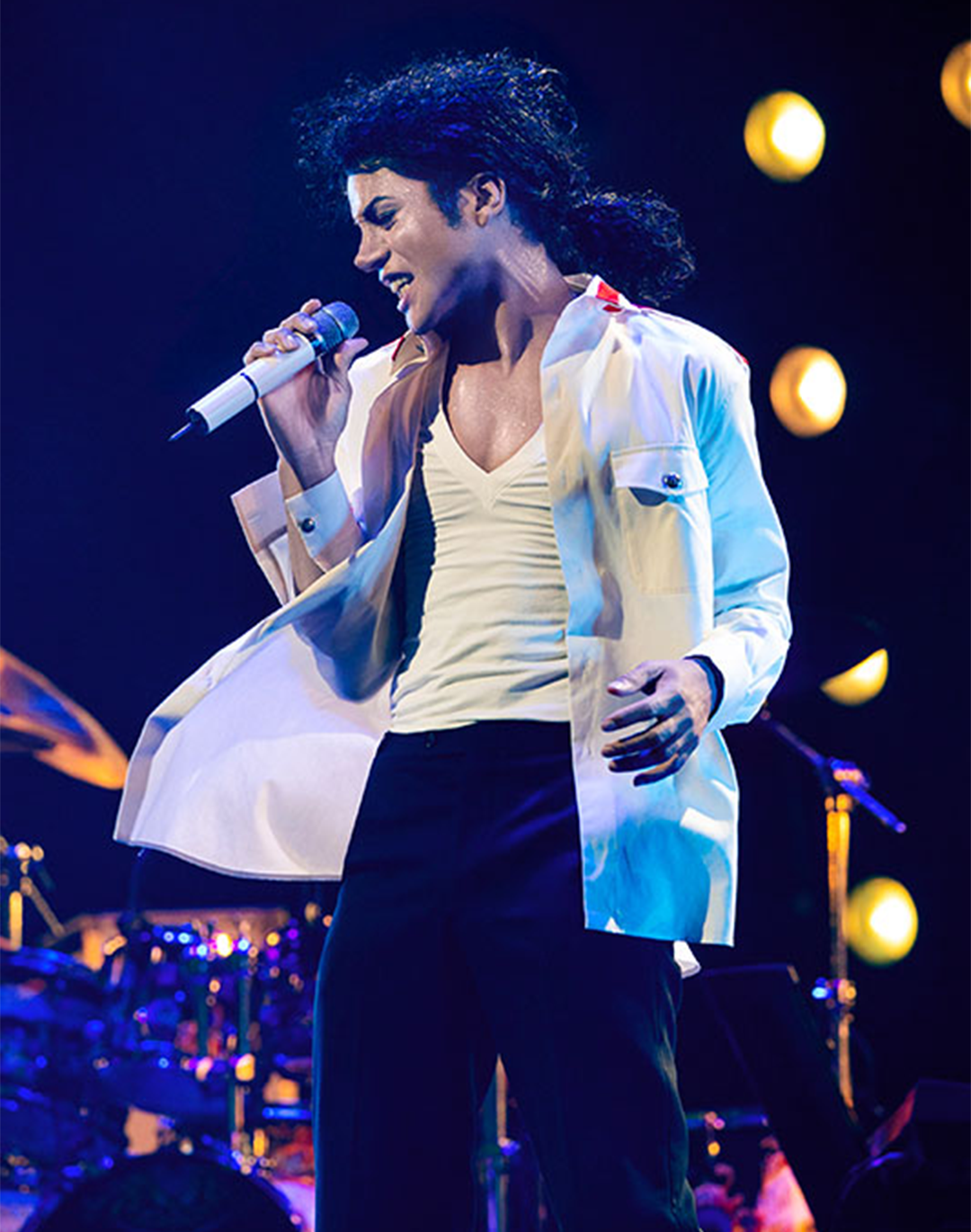
It’s important to be honest from the very beginning: Michael, the musical biopic about the King of Pop, was an operation that didn’t convince from the start. There is one single point, yet unequivocal in undermining the intellectual honesty of the project written by John Logan and directed by Antoine Fuqua: the present and pressing involvement of the family of the singer. Not only is the pop star portrayed by his nephew Jaafar Jackson, son of Jermaine, Michael’s brother and fellow member of the Jackson 5, but almost all relatives were involved in the film’s production process, effectively controlling what could be said and shown. Among the producers appears none other than John Branca, lawyer and executor of the singer’s estate, portrayed in the film by Miles Teller.
Music and performance, but no narrative
@universalpicsph Watch the makings of a star. MICHAEL in cinemas only this April 22.
original sound - Universal Pictures Philippines
This aspect alone should already place the film in perspective. Michael is an agiography of both the person and the artist that Jackson was. It celebrates the good heart and spirit of the boy from Gary who brought success to his family, allowing them to move from Indiana to the dream of Encino. A boy who always knew he was special, just as his loved ones did, and who wanted to become the master of the universe. But if this is already an established fact, making such a film becomes doubly pointless. First for how the character of Michael Jackson is written, and secondly for the sanctification carried out by the work, which forgets above all the cinematic medium in which his story is being told.
It is precisely the story that is missing in Michael. In its overwhelming desire to depict the image of the protagonist, which we all know to be dazzling yet stained by certain events that will always be tied to him, the film forgets how a narrative should function. Michael Jackson is not portrayed through storytelling tools: no real conflicts or obstacles are created, nor are the weaknesses of the main character explored, except as a further springboard to demonstrate how talented he was on stage and how human he was beneath it.
In the film, the well-known facts about Michael Jackson’s life are simply lined up, spun like a carousel filled with music and staged moments. It is such a fanservice operation that it makes no attempt to dig into the protagonist’s existence, instead reproducing, sometimes entirely and other times in part, the artist’s iconic moves through his nephew. The cinematic space holds nothing narrative, only music and performances (timeless and electrifying), both easily accessible online.
There is, in fact, a narrative thread about Michael Jackson’s search for independence, rooted in the conflictual relationship he had from a young age with his father, whom he refers to as Joseph rather than dad. A man who exploited his children partly because he believed in them, partly as a way out of Gary. But Michael’s struggle remains superficial, both in showing the inner impact that child labor and the beatings from his parent had on his growth, and as a central theme for the screenplay. More a fact than a trauma to be explored and yet many of the controversies surrounding Michael Jackson over the years likely stem from that very relationship.
Criticism
We thus arrive at the nature of Michael, both the film and the person. With the pop star brought back to the center of pedophilia accusations in 2019 with the documentary Leaving Neverland, an operation whose construction and interviews present a series of controversies that only add further shadows to the truthfulness of what is told, Fuqua’s film insists while remaining approximate regarding the childlike innocence of the artist. Almost a contradiction, given that the film pushes on the theme while deliberately choosing not to explore it. Jackson’s attachment to his inner child is not analyzed, and this puerile spirit is presented as something pure, not problematized even when the character becomes an adult over the course of the film.
That inaccuracies mark the film has been pointed out by other members of Michael Jackson’s family. His sister Janet Jackson did so, distancing herself from the film from the beginning and, after watching it in a private family screening, harshly criticizing the biopic. The same was done by Paris Jackson, the King of Pop’s daughter, who chose not to be involved in the project and has long been critical of those managing her father’s estate.
@universalpicsph Just beat it ~ MICHAEL in cinemas only this April 22.
original sound - Universal Pictures Philippines
That Michael is for fans is evident. That it was also made to polish his image is highly likely. That it is a profit-driven project for the family is equally clear. What is disappointing, among many things, is that Michael Jackson was passionate about cinema, and his desire to create videos like Thriller directed by John Landis or Bad by Martin Scorsese proves it. One wonders what he would think if he knew that the first true biographical film dedicated to him is so mediocre. And that, if it earns what is expected, it will lead to the production of a second chapter, as theoretically planned, with rumors suggesting that development is already underway and will pick up from the 1990s, the very years of the first accusations against him.