



































The second season of "Beef" is more intense than ever And it shows us why Celine Song was right in her film "Materialists"
Beef returns with its second season on Netflix, and in watching it, viewers might find themselves reflecting and finally understanding what Celine Song meant with her film Materialists. The anthology series created by Lee Sung-jin is not only about relationships, even though there are many and all of them are central. It is about the struggle between the weak and the powerful, about the constant seesaw between those who can have everything and those who have nothing, even going as far as showing how sometimes the battle is between the weakest and the not-so-weak, who are still not much better off.
Love in late-stage capitalism
An ongoing clash within a perpetual class struggle, where the hope is to come out as victorious coyotes rather than poor, defenseless, and innocent dachshunds. While the rich-poor dichotomy was already at the center of the first season, starring the duo Steven Yeun and Ali Wong, this time the narrative lines double, triple, reaching peaks of corporate conspiracies involving powerful figures capable of determining the fate of the world. But returning to the core of Materialists and how Beef develops it, late-stage capitalism becomes the true enemy in the series, shaping the dynamics within the romantic relationships portrayed and showing how it influences the decisions and behaviors people feel compelled to adopt.
In the theory of Materialists, money and status are the currency of exchange between a suitor and the partner they deem most suitable to secure their place in society. A position that does not require much, only stability, security, certainty for the future, everything that a solid income can provide, and which begins to tilt even feelings if it were to falter – as for height, we can overlook it, even though it holds some relevance in the film’s broader discourse. What Song did, however, was highlight the impossibility of romanticizing the need for money within an anti-romantic comedy. One that, in the end, comes full circle and even contradicts the very principles of its thesis, choosing to bring its two protagonists together rather than separating them by income and ideals.
Beef – The Clash 2: plot
No feuds, all love at the BEEF Season 2 premiere. pic.twitter.com/r4ncOsA5u3
— A24 (@A24) April 9, 2026
Beef, by its very nature, operates in the opposite direction. It amplifies the conflicts that can arise within a couple over money and extends them into often violent and ethically questionable attempts at overcoming one’s social class or, for those already positioned at the top of the pyramid, maintaining their place there. Another difference that contributes to shaping and conveying this theory to the audience, compared to Materialists, is the cynical tone the series adopts. This tone, considered more fitting than the nuances of a romantic comedy, becomes a more acceptable and effective tool for telling this kind of story and truth, unlike the reflective calm of Celine Song’s film.
Perhaps the key lies in knowing what to expect, and from the second season of Beef, this was exactly it. Following the sharp humor of the first season, starting from heated skirmishes that erupt like wildfires, the narrative becomes even more complex, encompassing the desperate attempt of individuals to pursue their desires, whether honest or not. There are those who simply want health insurance, those who want to avoid paying for supporting their family despite having manipulated company accounts, and those who know that love is a transactional asset that can grant benefits, but will never outweigh the loyalty and trust that are often demanded.
The return of Beef on Netflix
With its return, Beef and creator Lee Sung-jin pull no punches, exposing what lies beneath the veneer of perfection of an exclusive country club, where the truly wealthy are so unattainable, even when seemingly within reach, that it is always those on the lowest rung who must fight to stay afloat. All for the chance to be granted an exclusive seat, albeit one that constantly reminds them that their position depends on those who never have to think about money, who allow them to take part in their world – whether as the one serving drinks or booking the sauna, to be clear.
It is a multi-layered hierarchy that defines the second season of the show, where everyone, whether higher or lower, hides wrongdoing that reveals only one truth: there is always someone worse off than you, and you must fight simply to avoid taking their place. And in today’s world, where only the truly rich are rich and everyone else is just getting by, it is no longer a battle of coyote versus coyote or coyote versus dachshund. Now, it is only dachshund versus dachshund.
What to read next
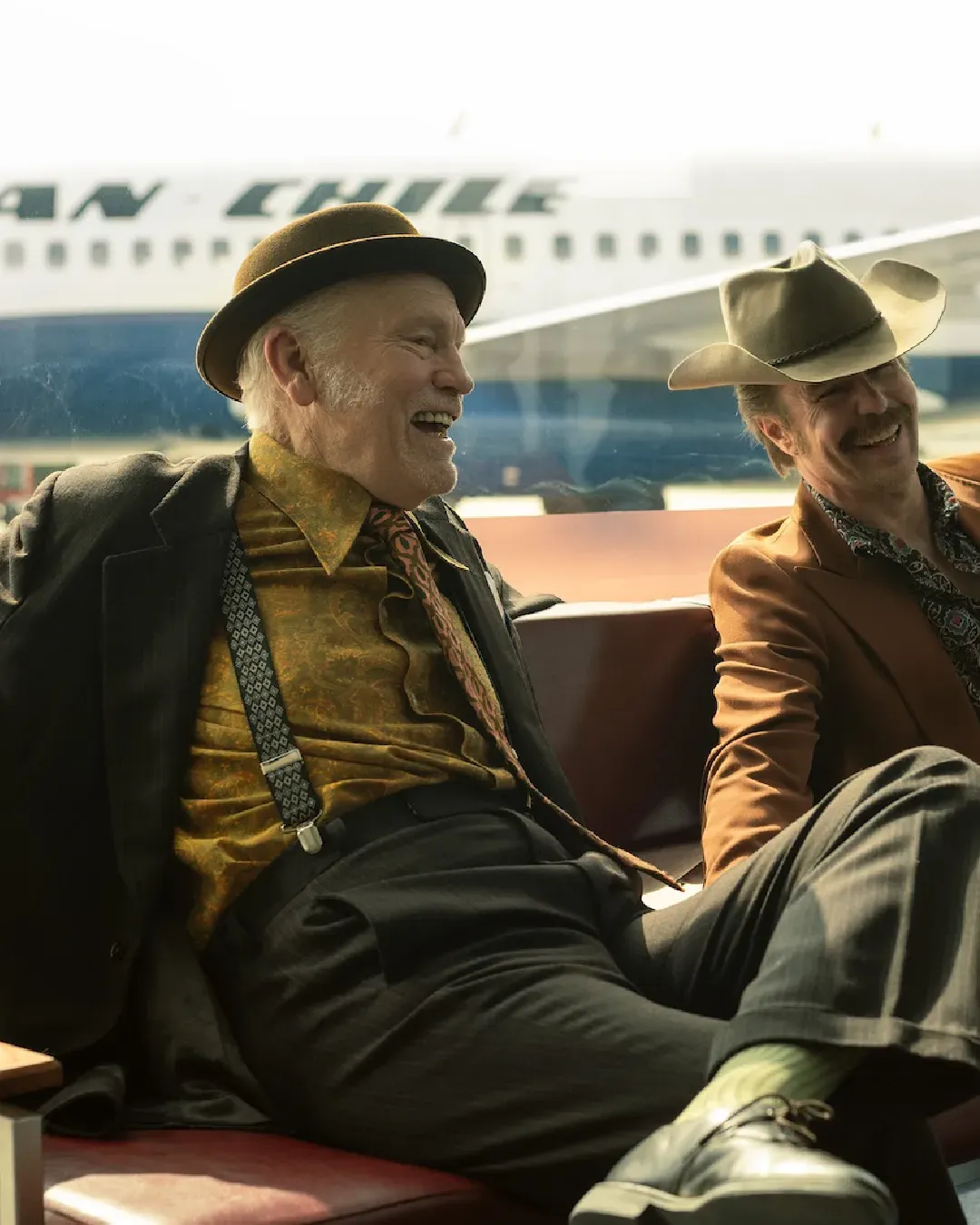
"Wild Horse Nine" by Martin McDonagh is tender and ruthless at once
With an award-worthy John Malkovich

"Un tranquillo funerale di famiglia" is everything comedy should not be today
Massimiliano Bruno's film had its premiere at the Rome Film Festival
«Club Kid is a once-in-a-lifetime opportunity», interview with Jordan Firstman
Everything about the directorial debut of the American actor and screenwriter