

































Has Trump’s presidency become too predictable? Betting on power has become the most profitable game of all
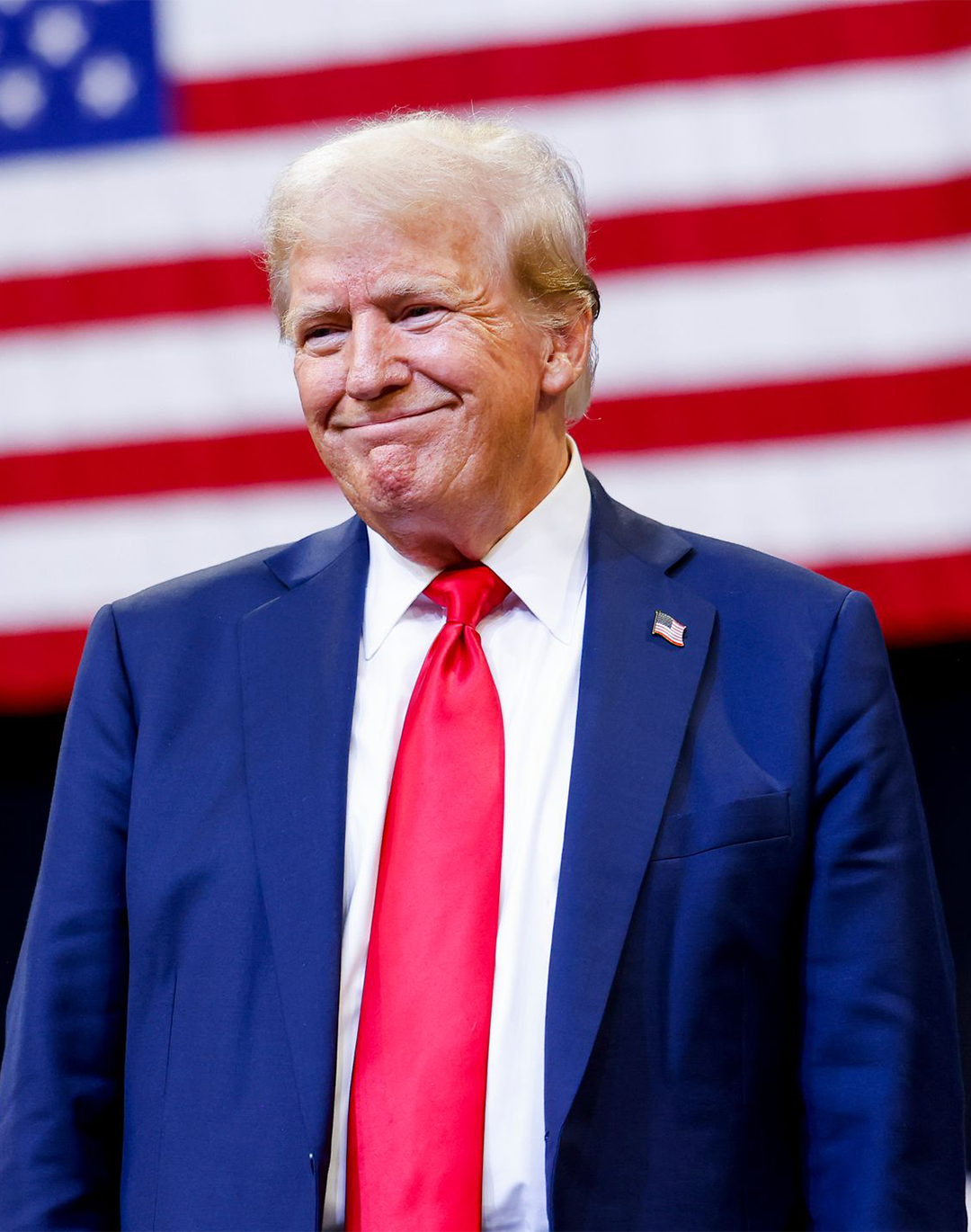
For some time now, an air of speculation has been hanging over the White House. The second presidency of Donald Trump appears, to many observers, surprisingly predictable: billions of dollars are being wagered on financial markets shortly before his most significant announcements. These apparent “coincidences” have drawn the attention of the BBC, which, through an analysis of trading volumes across different markets, identified a significant correlation between spikes in activity and some of the president’s most impactful statements, well known for their ability to influence global markets. And if the world increasingly resembles a dystopian novel, in which bets are placed on words that have yet to be spoken, it is also a sign that we must begin to question what we are accepting as normal.
A suspicious pattern
The analysis highlights a recurring pattern: anomalous spikes in financial transactions recorded just minutes, or at most a few hours, before the publication of social media posts or the release of interviews. According to some analysts, this pattern resembles typical insider trading, in which operations are carried out based on information not yet public. Others, instead, speak of a growing ability among certain traders to anticipate the president’s moves.
The most evident case dates back to March 9, 2026, when, in the midst of the conflict between the United States, Israel, and Iran, Trump stated in an interview that the war was “practically over.” When the news was made public, the price of oil dropped by about 25%, falling in less than an hour from around 100 to 85 dollars per barrel. Yet, 47 minutes before the interview was released, an anomalous spike in trading was recorded, betting precisely on that decline. Some traders, investing millions of dollars, managed to generate profits in the order of tens of millions within a few hours.
A similar episode occurred on March 23, 2026. After days of tension, Trump posted on Truth Social a message in which he spoke of “very productive” negotiations with Iran and a possible “complete and total resolution” of the conflict. The market reacted immediately: oil prices fell by about 11%, while stock markets rose. In this case as well, however, about 10 to 15 minutes earlier, an unusually high trading volume was recorded in the same direction, suggesting an extremely precise anticipation.
The Polymarket problem
The case reported by the BBC is a broad set of data which, in its financial movements, conceals a far more troubling reality from a human perspective. We are witnessing a global crisis in which political decisions, poorly chosen words, and wars represent, in all respects, a humanitarian failure. Complicating this dystopian and at times surreal framework is an element that seems to legitimise the economy of destruction: the prediction platform Polymarket.
Indeed, in February 2026, six new accounts were created on the platform and all of them bet on a military attack by the United States against Iran before February 28. When the attack took place, the six accounts collectively earned around 1.2 million dollars. Five stopped operating immediately, while one continued to bet, also predicting a ceasefire by April 7 and earning an additional 163,000 dollars. Polymarket thus becomes a sort of no man’s land, an ongoing game in which human lives, countries devastated by war, and real deaths are reduced to simple profit variables, where user anonymity removes accountability, contributing to stripping actions of their human weight.
The case of Nicolás Maduro is another emblematic example. Between late December and early January, a user invested around 32,500 dollars betting on his fall by the end of the month. On January 3, 2026, Maduro was indeed removed from power and the user collected over 436,000 dollars, changed their name, and stopped operating. Here as well, the logic of gambling seems to overlap with that of reality, turning geopolitics into a mere predictive market.
A mystery difficult to prove
The platforms where anonymous accounts cashed in? Polymarket and Kalshi. Donald Trump Jr. sits on Polymarket’s advisory board and is a strategic advisor to Kalshi.
— D Forrester (A frog no more) (@forrester2) April 20, 2026
The situation, however, is far from straightforward. It not only raises possible signs of an information flow that, in theory, should remain confidential, but above all opens deeper questions about the direction we are taking as a society or, more radically, as a form of humanity that is increasingly anesthetised. Although the focus seems to be on anonymous users particularly skilled at predicting the moves of the President of the United States, a hypothesis that remains highly unlikely, or on the possibility of a leak of information, the point is not the accuracy of the predictions themselves.
The issue is ethical and structural: the transformation of geopolitical risk into a profit tool. It is no longer about analysis or interpretation, but about the monetisation of the possibility of conflict. In effect, we are talking about an ongoing game in which the stakes are other people’s lives. Betting on power, like in a distorted version of Risk, is no longer a marginal game: it has become one of the most profitable mechanisms of the present.
What to read next

adidas Originals opens a new store in Rome on Via del Babuino
Here's what went down at the opening event

Miu Miu's commercial boom is coming to a halt
The rest of the Prada Group, however, is holding up well

5 Style Lessons We Can Learn from Jeff Goldblum
How to put together a look inspired by the iconic actor