

































The Hollywood film asking whether art can be separated from the artist is a flop Jonah Hill's "Outcome - Hollywood doesn’t forget" is too late
In April, a film completely out of time was released on AppleTV+. Maybe that’s also why few people have heard about it: partly because feature films are often not up to the standard of the platform’s serial offerings, and partly because we are faced with the zero degree of (self-)critical judgment.
Ruthless Hollywood
Outcome - Hollywood doesn’t forget is a work that arrives late to the conversation about the entertainment industry, about how the public perceives stars, and how the constant threat of backlash (read: cancel culture) has become a source of anxiety and uncertainty for those who bring the industry to life. The film tries to justify times gone by, but it could have explored the topic from a more contemporary perspective.
Outcome almost seems to long for a past in which it was possible to be the worst person in the world without it affecting one’s artistic or professional opportunities. A time when being hailed as a genius was preferable to being a decent person. If this is the trap many have chosen to fall into, it’s no surprise that the industry has turned out to be a universe filled with fraudsters, abusers, and more.
A controversial debut
It’s no coincidence that the film is the second fictional work directed by Jonah Hill. After the emotional and delightful debut Mid90s, followed by a documentary project (Stutz) released on Netflix, the actor co-wrote Outcome with screenwriter Ezra Woods. Hill himself, never excluded from Hollywood circles, was at the center of a controversy, described by his ex Sarah Brady as a psychologically abusive partner who controlled her friendships and pushed her to delete photos of herself in swimsuits from her social media profiles.
Brady, who published chats with the actor and director confirming her claims in 2023, specified that a partner who turns out to be terrible does not necessarily equal a bad person, but rather someone who has failed to overcome their own trauma. A statement Hill never responded to, as the film seems like nothing more than a way to clear his name from what was said - but also to assert that there’s really nothing to apologize for when one is in positions of privilege. In fact, one can even make a film about it and profit from it.
Redemption between fiction and reality
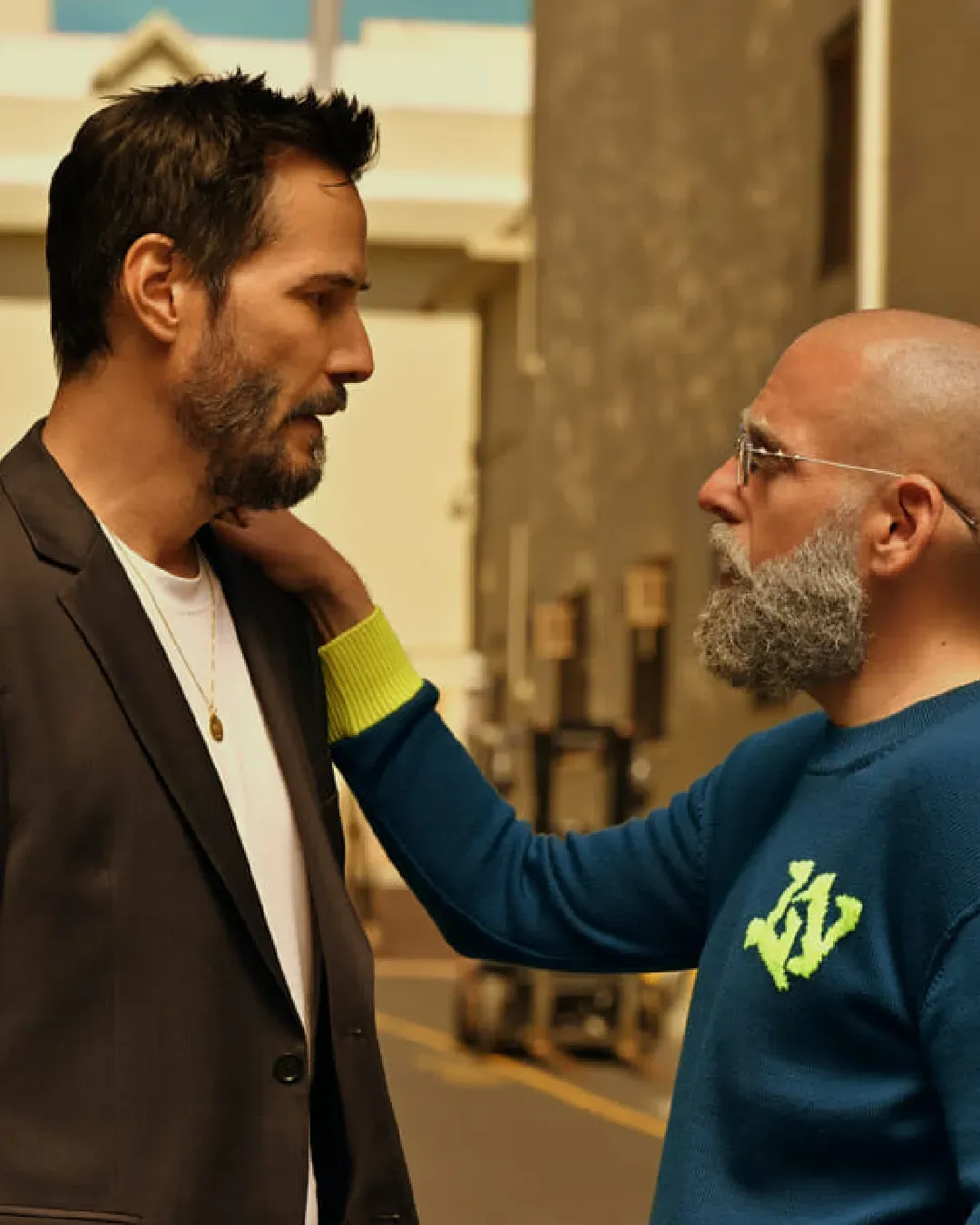
Unfortunately, Keanu Reeves fell into Jonah Hill’s trap, even though it remains excellent casting. In the role of Reef Hawk, the actor plays a Hollywood star with a spotless (legal and moral) record, but hiding a small secret: a heroin addiction he has managed to conceal for decades. His glass castle risks collapsing when he discovers that someone is about to release a video involving him - a clip he knows nothing about and whose content he cannot imagine, sending him into total panic. To fix things, Reef apologizes to everyone in his life, in a kind of preventive defense that also serves as a form of self-therapy.
Casting Reeves is a stroke of genius, as he is widely considered the kindest man in Hollywood. Someone who has lived a troubled life but has always shown himself to be on the right side. Someone who has never hurt anyone and hardly seems capable of doing so. It is on this level of public perception that the film operates, and at least it deserves credit for choosing the right lead. Although Reeves’ character’s intentions may seem noble, what the film ultimately suggests is, subtly, the exact opposite.
On his path to redemption, the protagonist must make amends and truly understand how fortunate he has been in life, especially thanks to the people around him. Yet the film never misses a chance to provoke (or at least thinks it does) the audience’s sense of morality. Essentially arguing that how people behave in private is their own business - and that is a fair principle we also support. But claiming that this should not affect their public image, especially following inappropriate behavior, only reinforces the idea that Hollywood stars see themselves as a step above others: (VIP) individuals who must be protected, justified, and absolved even from the worst accusations.
A failed justification
Outcome sounds more like an excuse than an analysis, a way to once again claim that we should just leave these rich, privileged, system-protected people alone. The project fails to consider that, in an era where the public and private spheres overlap, avoiding accountability fuels a flawed vicious cycle in which privilege outweighs dignity. This doesn’t mean judging every famous person’s life, but neither does it mean excusing everyone simply because they are culturally relevant.
If Hollywood, when talking about itself, is usually somewhat self-indulgent - or at least slightly hypocritical, pretending to scold itself while maintaining a light tone - this time, with Outcome, it has outdone itself. It has justified itself to the point that a sticker on a car reading «Honk if you can separate the art from the artist» is meant to be a jab at today’s climate, but instead feels like a pitiful attempt to assert its position and ends up looking ridiculous. A film that prefers to accuse in order not to be accused itself - and does so in the most self-pitying way possible. And if, as the title suggests, Hollywood doesn’t forget, then Jonah Hill should have thought twice before making this film.
What to read next

adidas Originals opens a new store in Rome on Via del Babuino
Here's what went down at the opening event
«Club Kid is a once-in-a-lifetime opportunity», interview with Jordan Firstman
Everything about the directorial debut of the American actor and screenwriter

"Cambogia" teaches actors that you have to care about your own characters
Valerio Lundini's directorial debut premiered at the Rome Film Festival