.gif 2000w)




























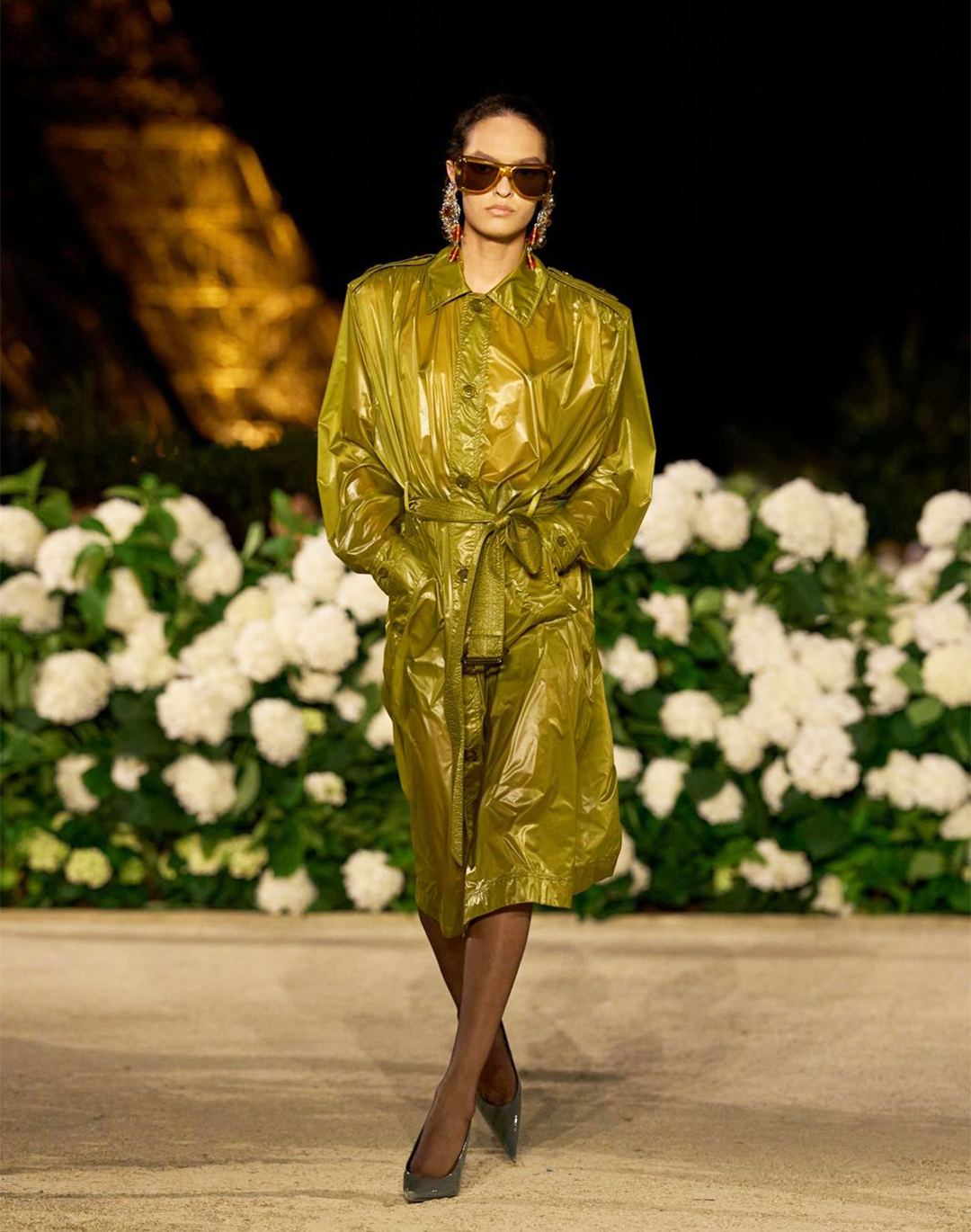
Do We still like plastic raincoats? The history of the plastic raincoat and its return to the runway
It is as noisy as two balloons rubbing against each other and as uncomfortable as an inflatable costume, yet fashion cannot seem to do without the plastic raincoat. During the latest fashion weeks, this glossy and transparent armor returned to the runway in its many material variations together with its schizophrenic charm: you see it worn by groups of tourists wandering like ghosts beneath a downpour and, a moment later, you find it again in the forbidden dreams of the most perverse eroticism. But when did we start wearing “plastic coats”?
Origins
@oldloserinbrooklyn My brain is part crystal ball. Rain coats, clear transparent plastic, and purpose driven fashion are making big waves this fall/winter season. #fashiontrends #trendpredictions #parisfashionweek #tomford #bottegaveneta original sound - Mandy Lee
Before becoming a protective and sexy shell, this garment was the subject of chemical experiments that were initially disastrous. In the early nineteenth century, scientist Charles Macintosh, tired of seeing wool coats turn into heavy sponges soaked with rain, had the intuition to spread liquid rubber between two layers of fabric. This first prototype of waterproof coat, called the Mac and initially tested on members of the navy, was not without its manufacturing flaws: in the cold it became stiff as stone and in the heat it tended to melt, releasing a distinctly unpleasant smell of burnt rubber.
What saved the fate of this garment was vulcanization, a process born almost by chance thanks to Charles Goodyear: by mixing rubber with sulfur, the inventor finally managed to tame the instability of the material, preventing the coat from melting at the first ray of sunshine. Yet the limits of weight and poor breathability still remained an insurmountable obstacle. The real revolution had to wait until the early twentieth century with the discovery of PVC: thanks to the new frontiers of synthetic chemistry and the genius of certain fashion creators, the raincoat began to reveal its lightweight nature and brazenly artificial character.
The evolution of the plastic raincoat in fashion
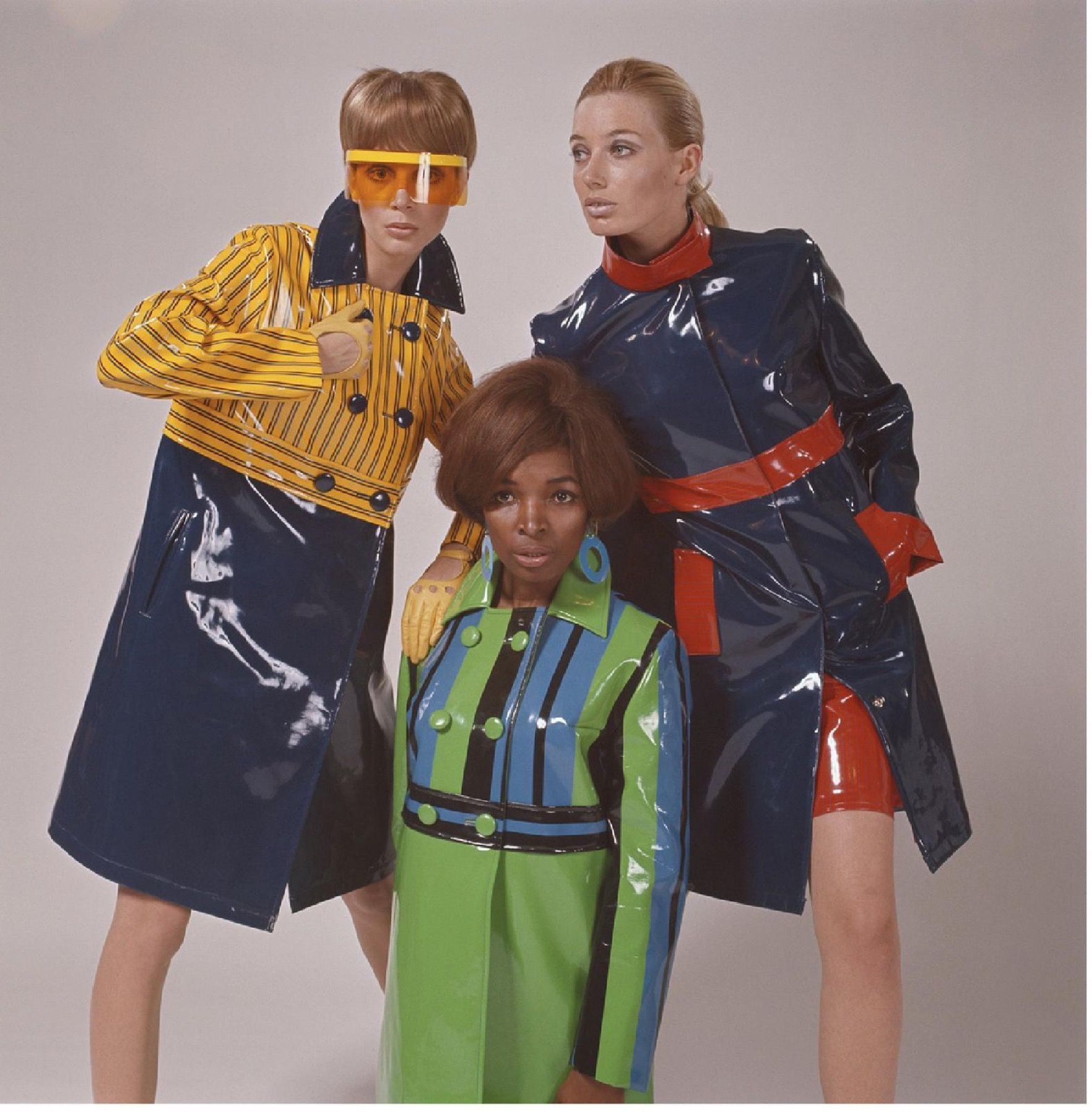
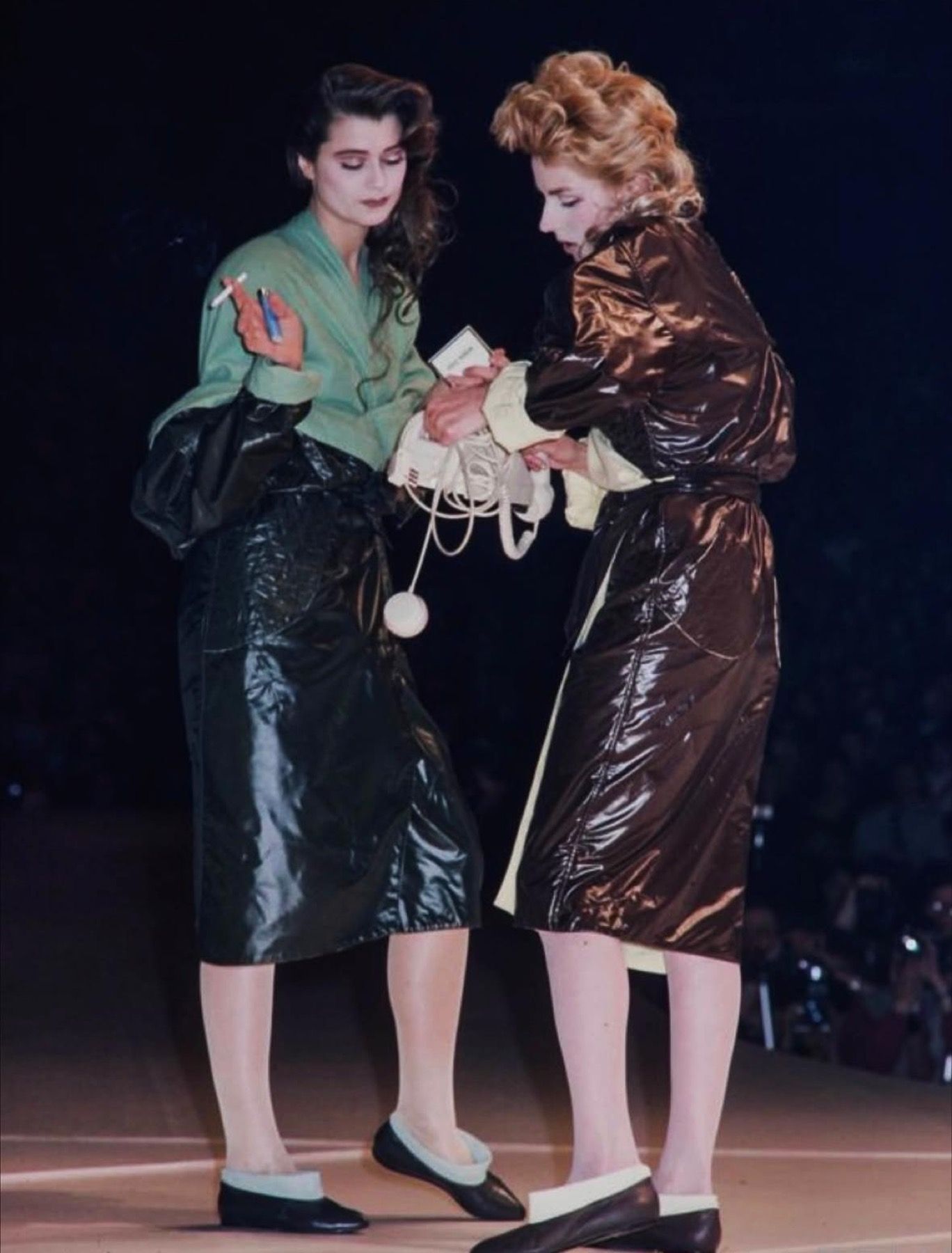
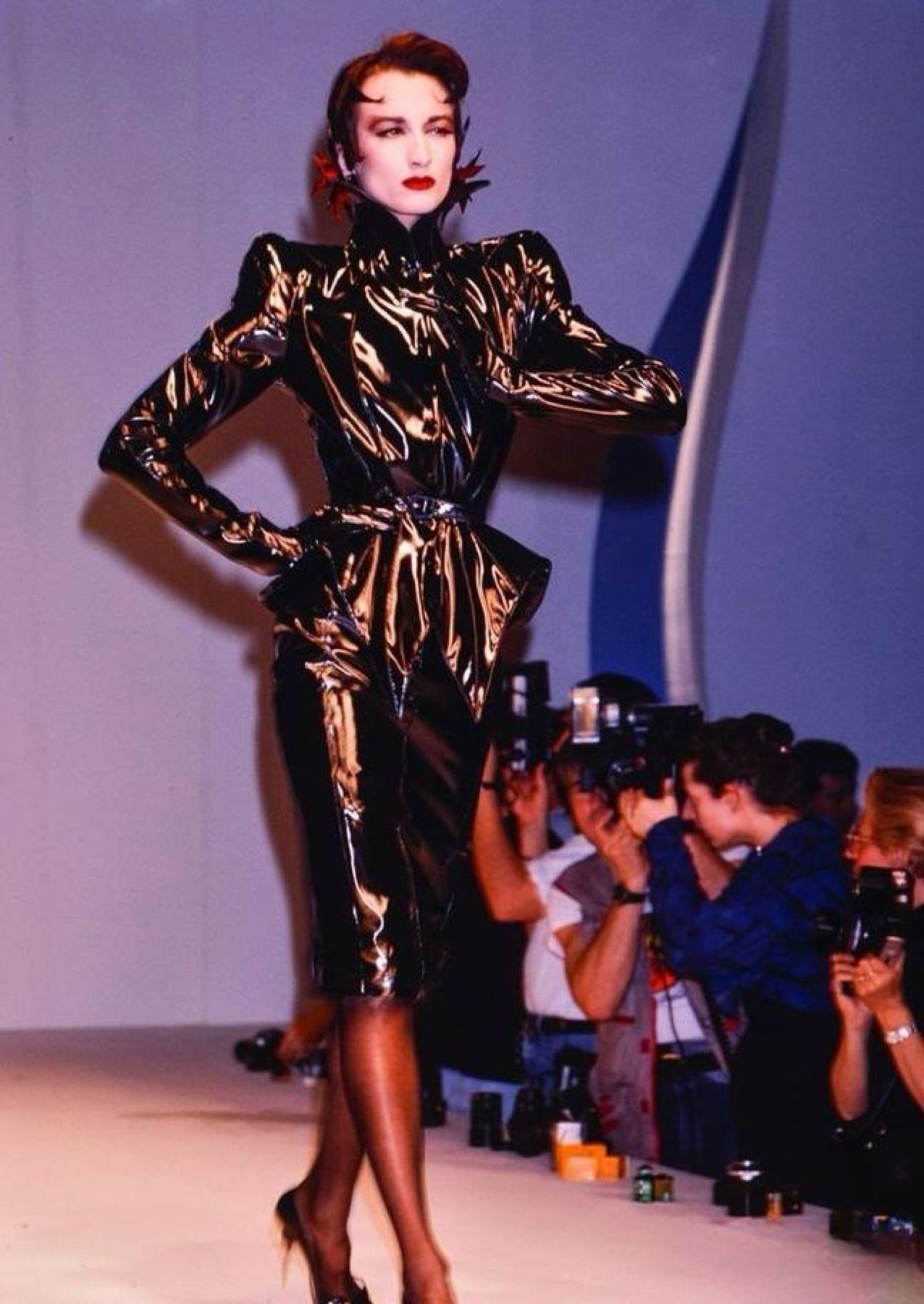
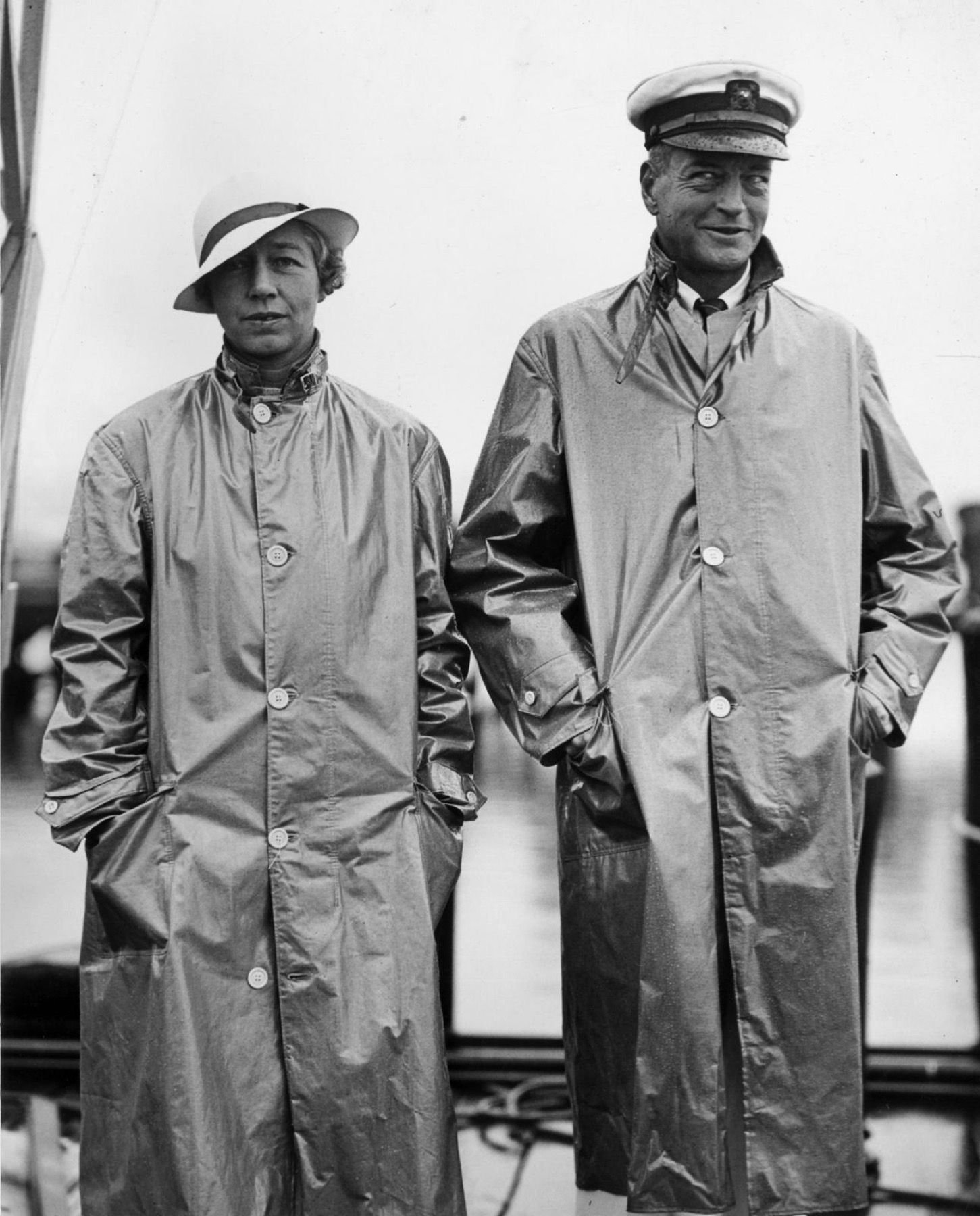
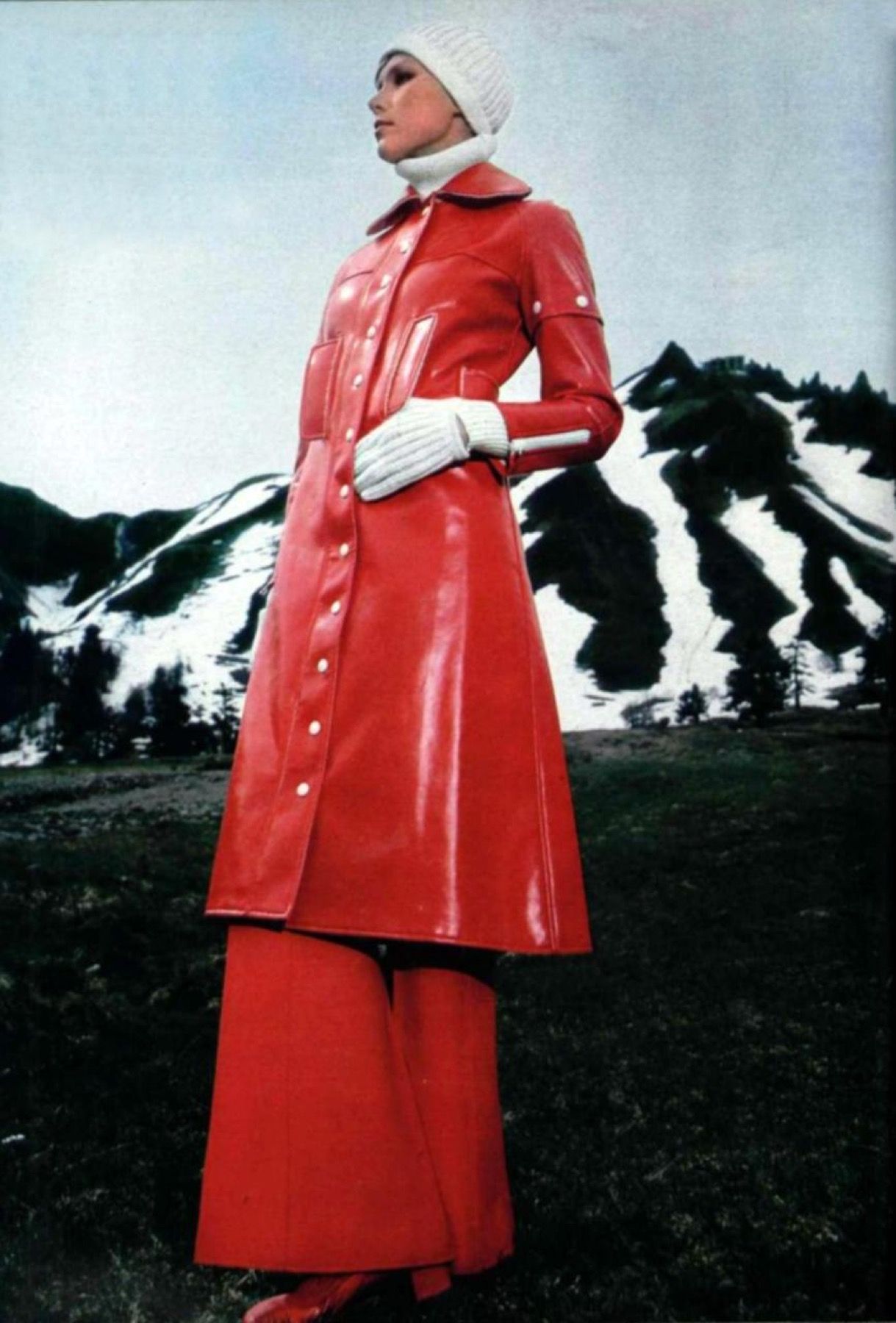
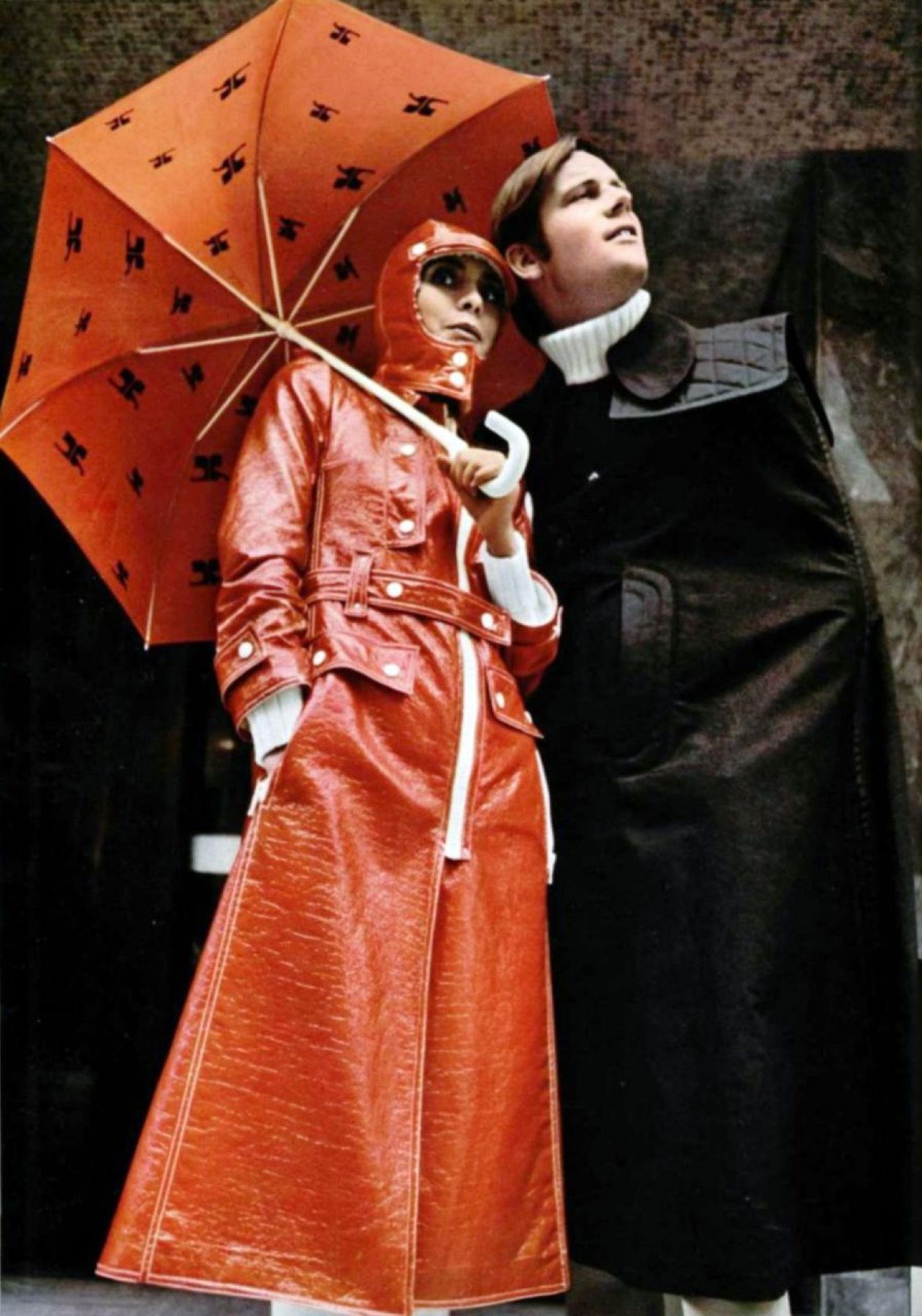
In the early 1960s, the raincoat became urban and everyday: on one side, Mary Quant in London created matching sets and vinyl trench coats in bright colours, while in Paris André Courrèges, Pierre Cardin and Paco Rabanne, architects of the space age aesthetic, turned the garment into the uniform of the woman of the future. In the following years, the plastic raincoat became more daring and irreverent. In the 1980s, Thierry Mugler and Claude Montana transformed the raincoat into a symbol of power dressing and extreme eroticism: uncomfortable, sculpted and glossy, their coats wrapped mistresses and meta-human creatures.
Between the late 1990s and the dawn of the 2000s, the garment underwent a further mutation, shedding its polished glamour to reveal a purely functional, technical and urban dimension. Designers such as Miuccia Prada, Helmut Lang, Martin Margiela and Raf Simons brought attention back to the aesthetic of uniform and labour: their collections featured storm capes and raincoats made with materials borrowed from construction sites or road safety gear such as coated nylon, waxed tarpaulins and rubberised fabrics. Seduction was no longer the goal, but rather an aseptic, minimal and metropolitan protection.
Between cinema and music
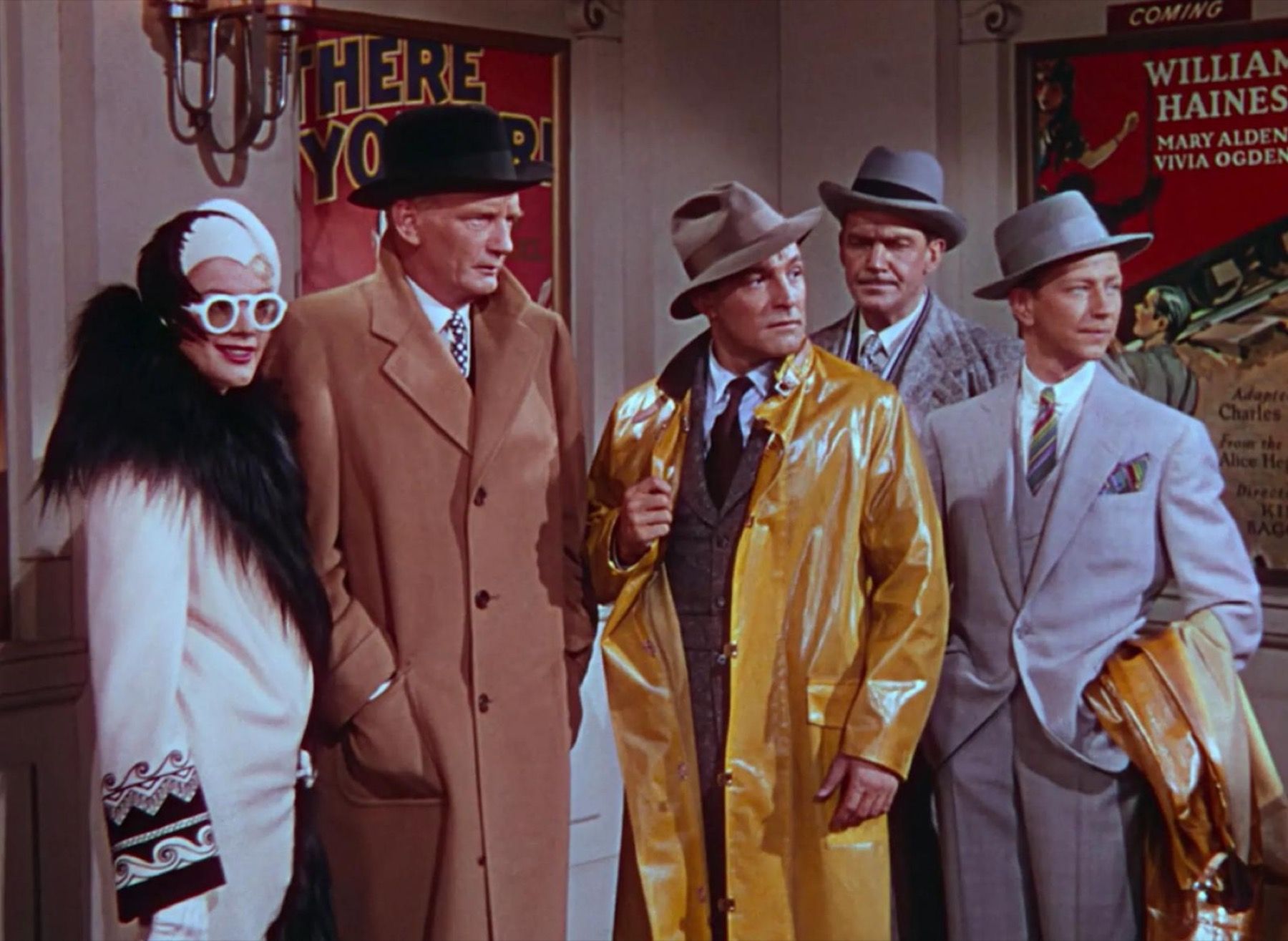
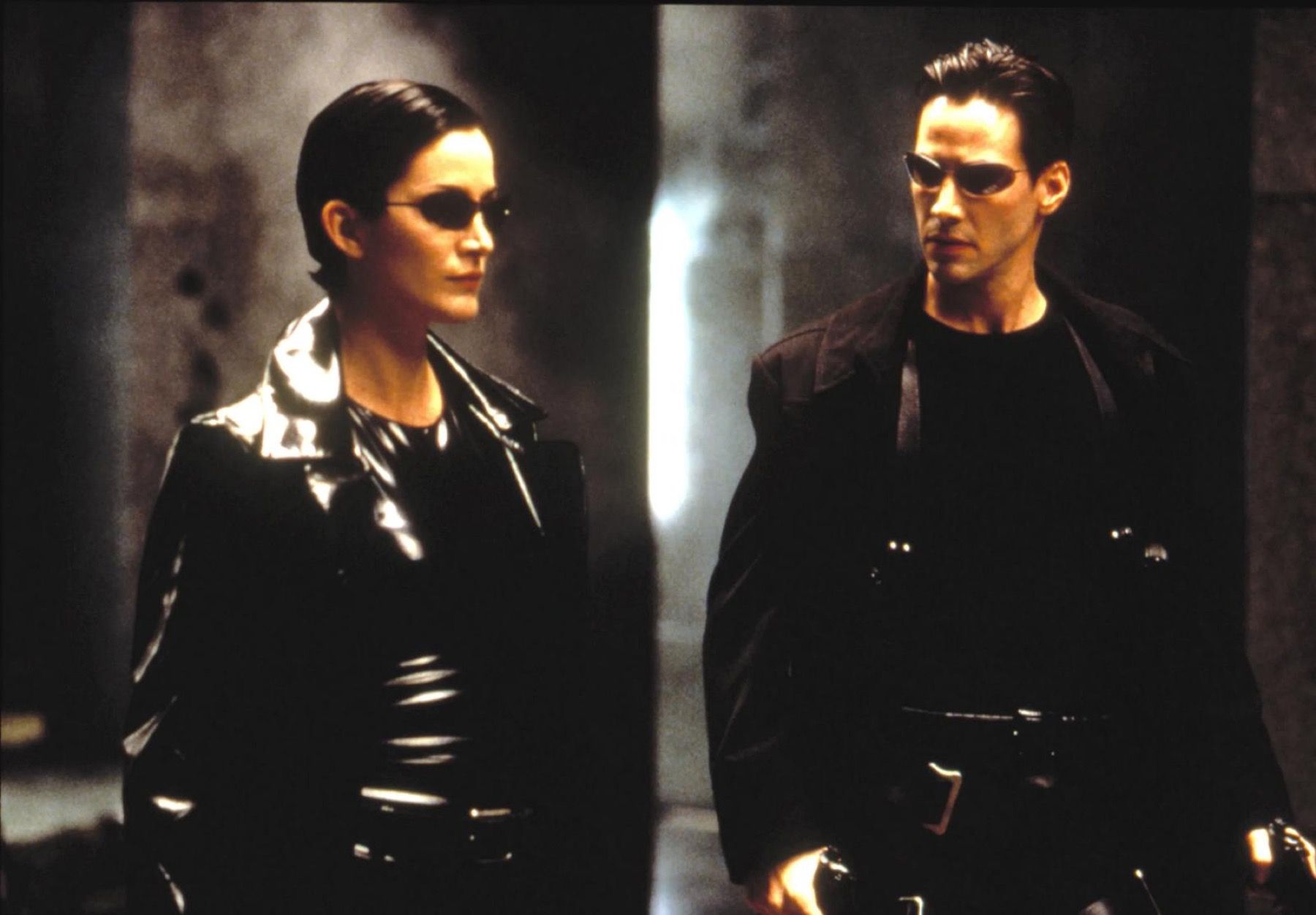
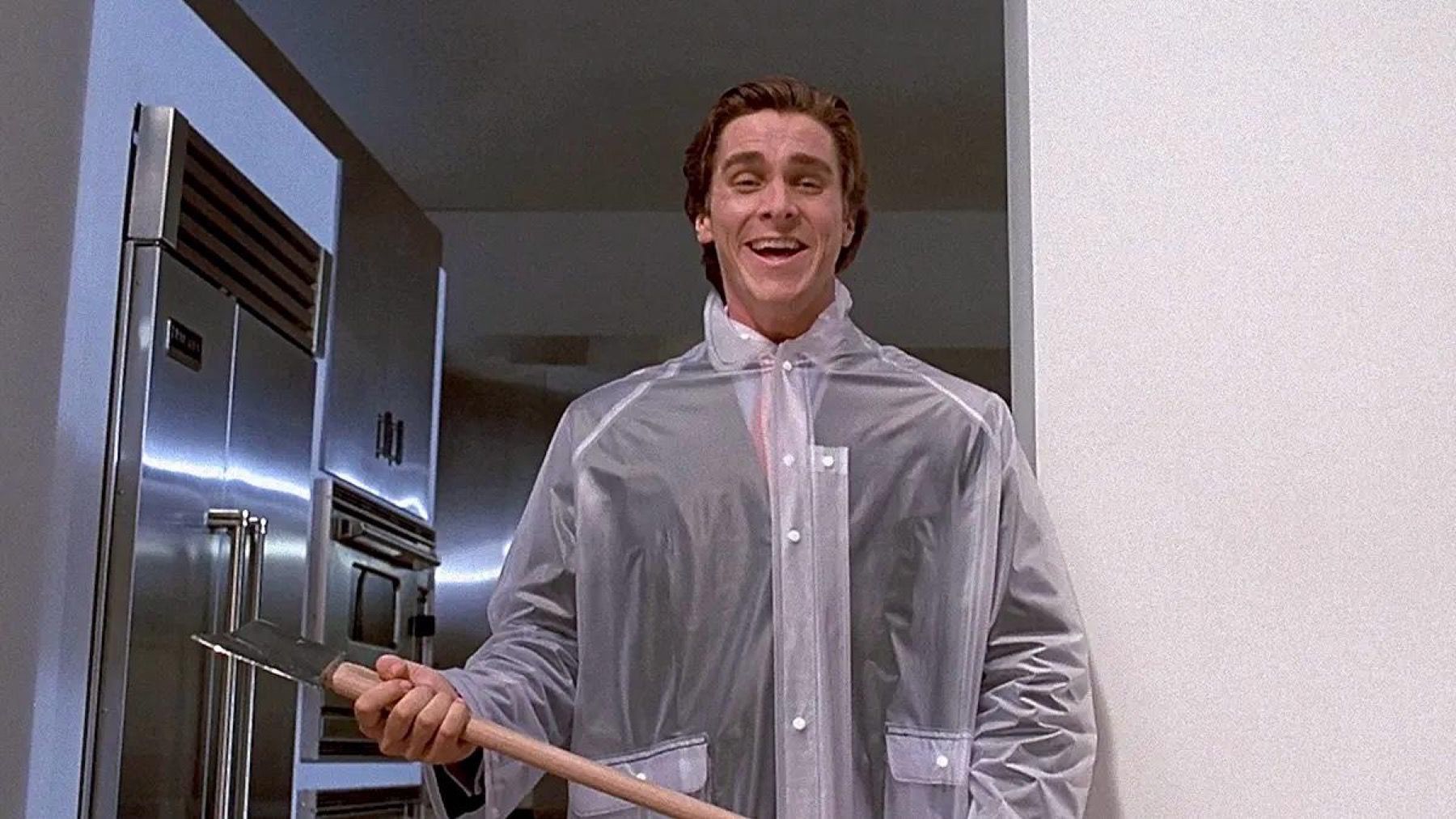
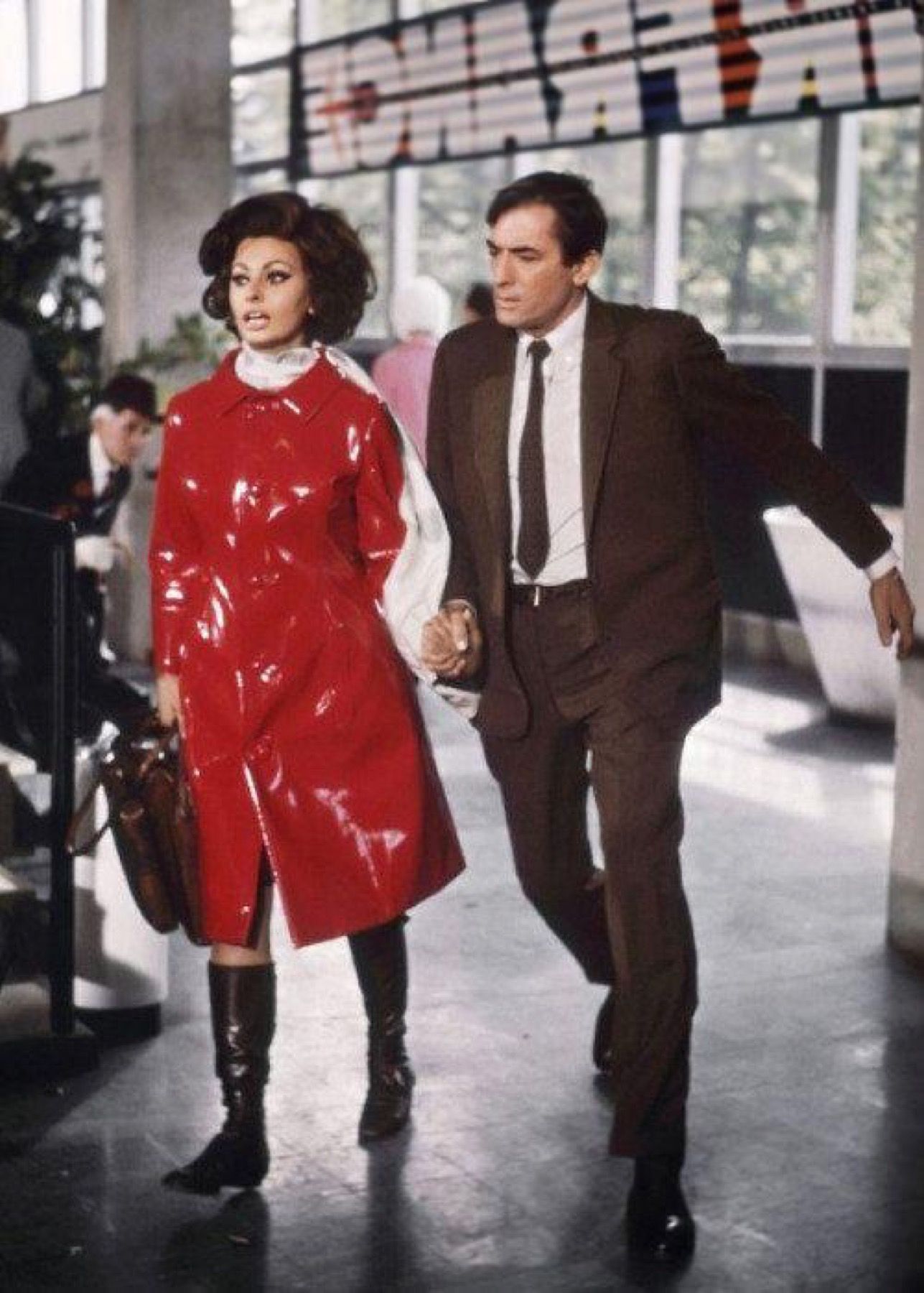
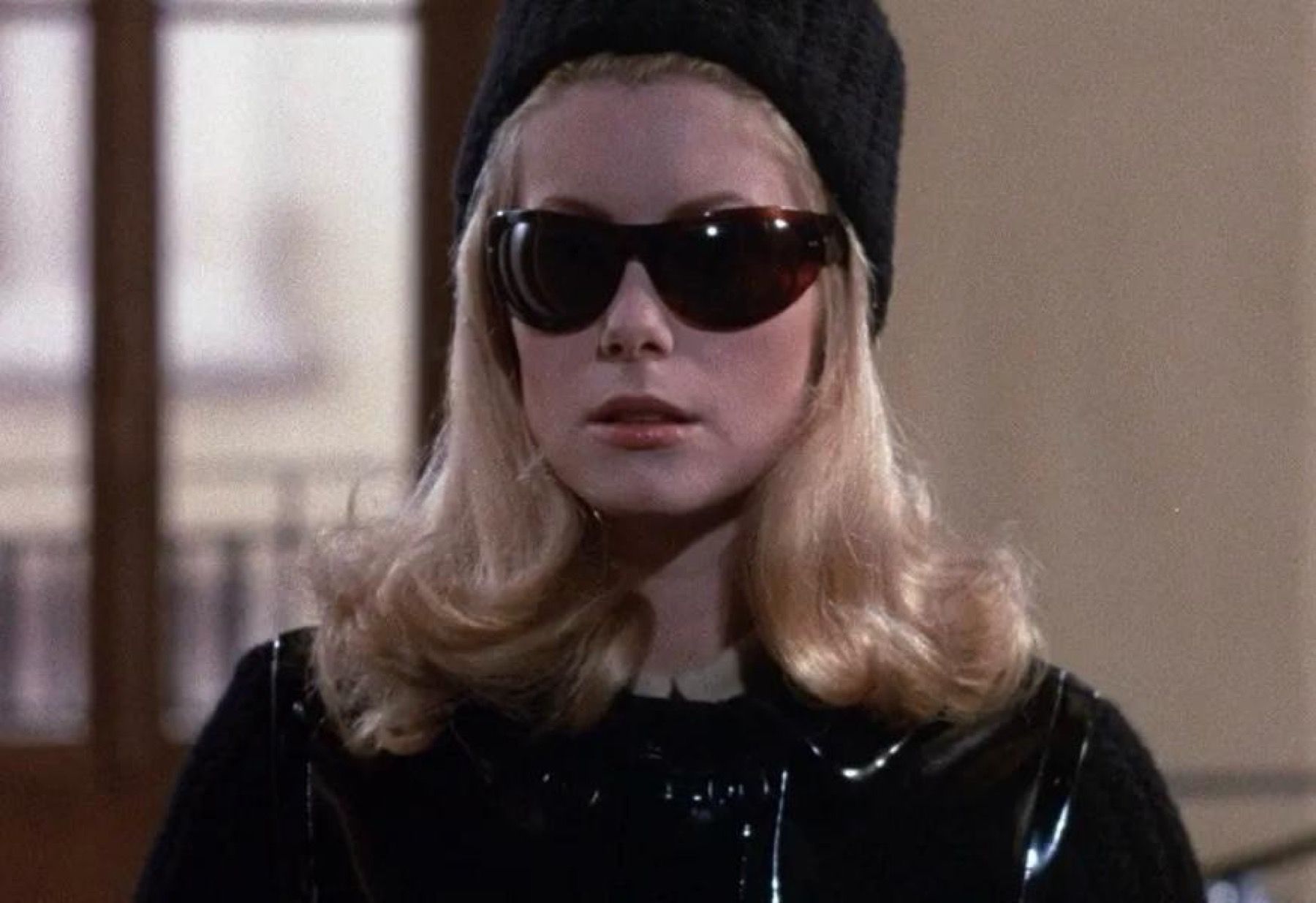
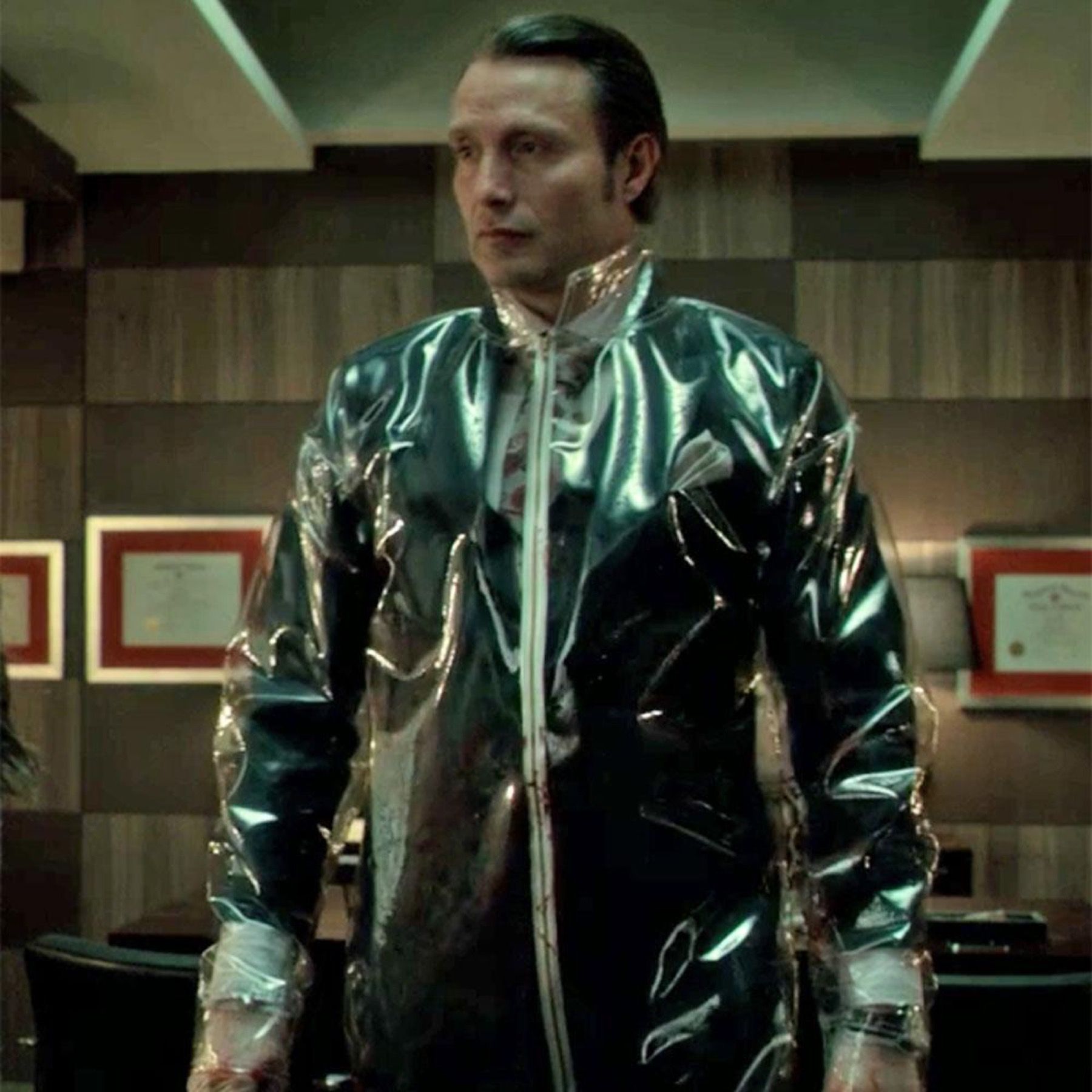
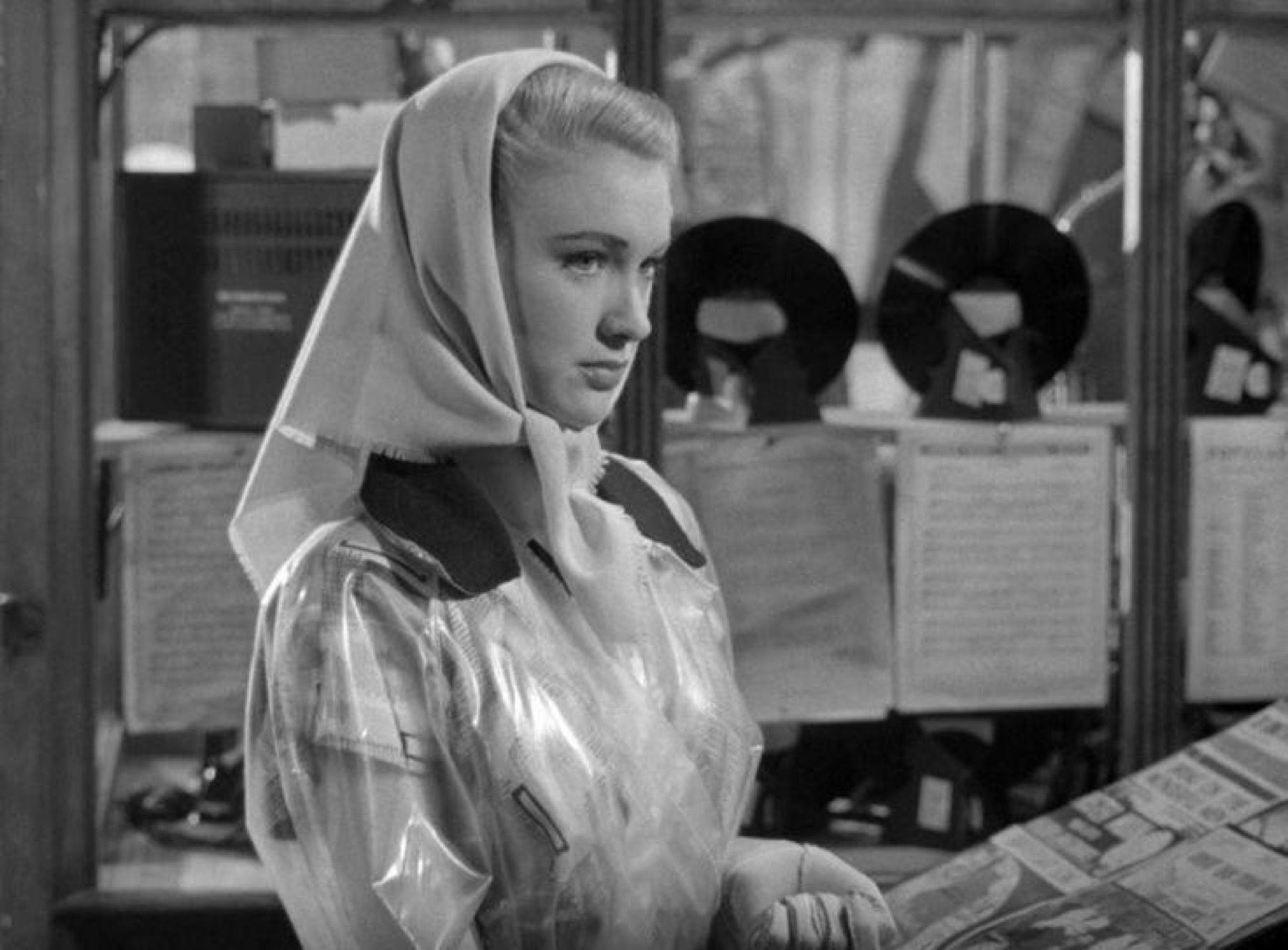
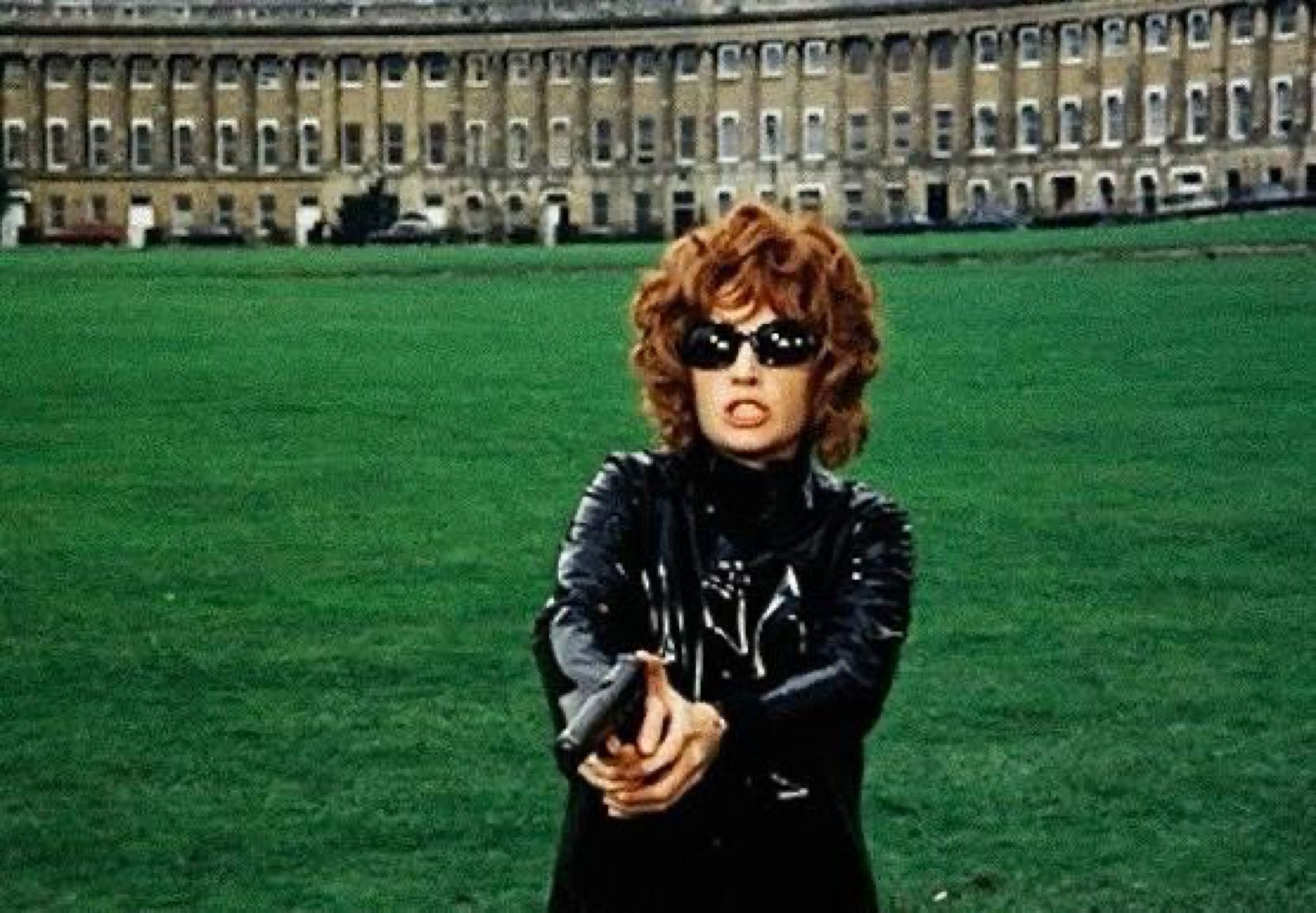
The mythologising of this garment also happened thanks to cinema. In the legendary musical Singin' in the Rain, the protagonists brighten Hollywood’s grey streets dancing in the rain in their iconic yellow raincoats, while the atmosphere of It Always Rains on Sunday is of an entirely different kind, where the raincoat worn by Susan Shaw sinks into London melancholy. In the 1960s, however, the garment changed skin and became a symbol of emancipation and mystery: think of Sophia Loren in Arabesque with her red vinyl trench, Catherine Deneuve in Belle de Jour, or Monica Vitti in La ragazza con la pistola wearing a sort of PVC trench to portray an ironic and sharp femininity.
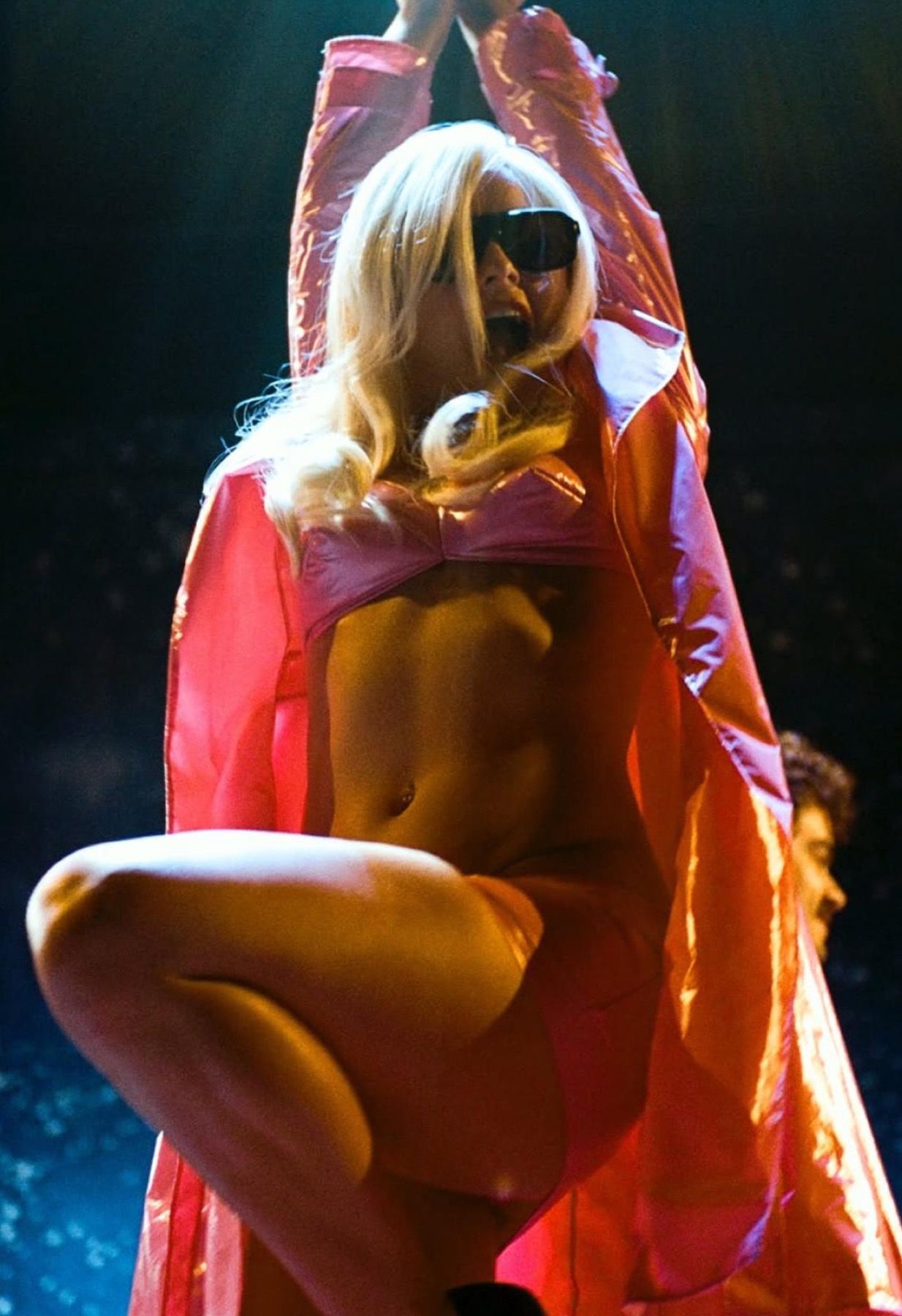
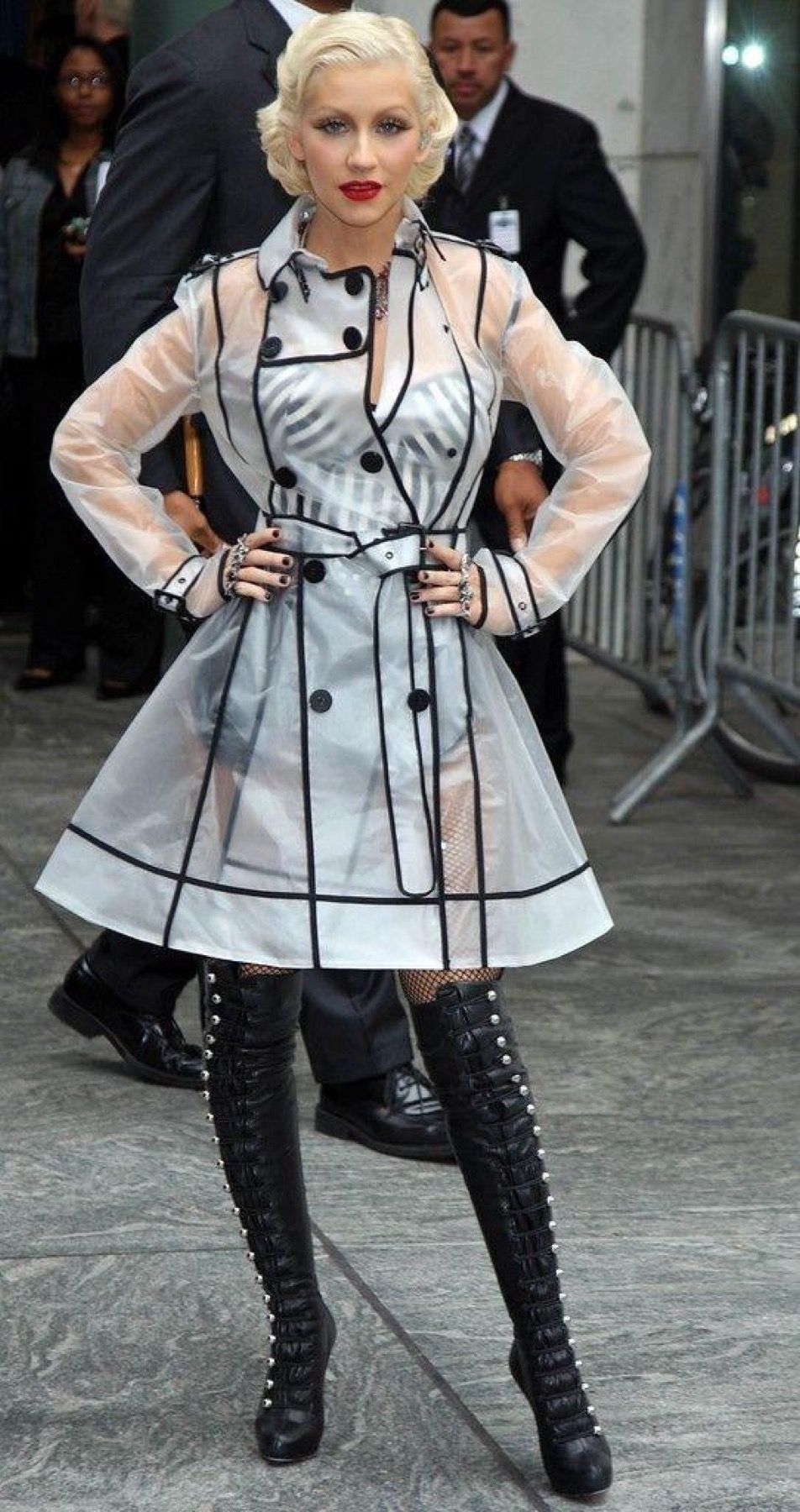
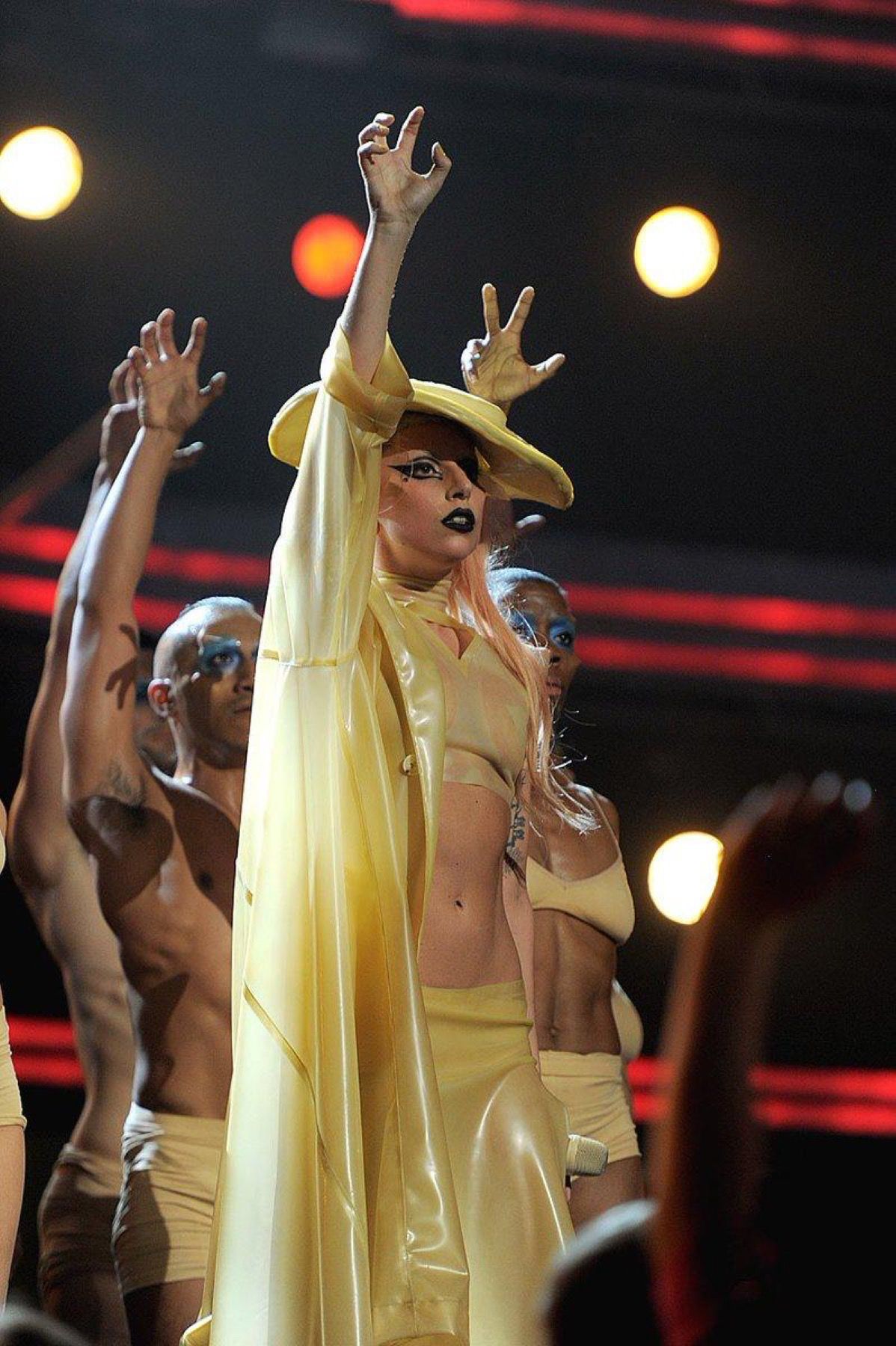
With the rise of dystopian and postmodern genres, plastic turned darker: in the Matrix trilogy, Carrie-Anne Moss made the garment a symbol of cyberpunk; in American Psycho and Hannibal, the transparent raincoat became the perfect look to avoid getting stained with the blood of murder victims, all the way to the noir magnetism of Charlize Theron in Atomic Blonde. From stage to street, the plastic coat has been and still is the perfect garment for those who want to shine under the spotlight: Kylie Minogue and Christina Aguilera know this well, having often worn transparent or vinyl coats during performances.
The look worn by Lady Gaga at the 2011 MTV Awards remains memorable: the singer chose a sort of trench made from latex purchased from a bus company that used the material to cover its seats. More recently, the raincoat has returned to the favour of new pop girls such as Addison Rae and Sienna Spiro, and it has also been worn by Ye and Bianca Censori in several couple looks.
Raincoat on the runway
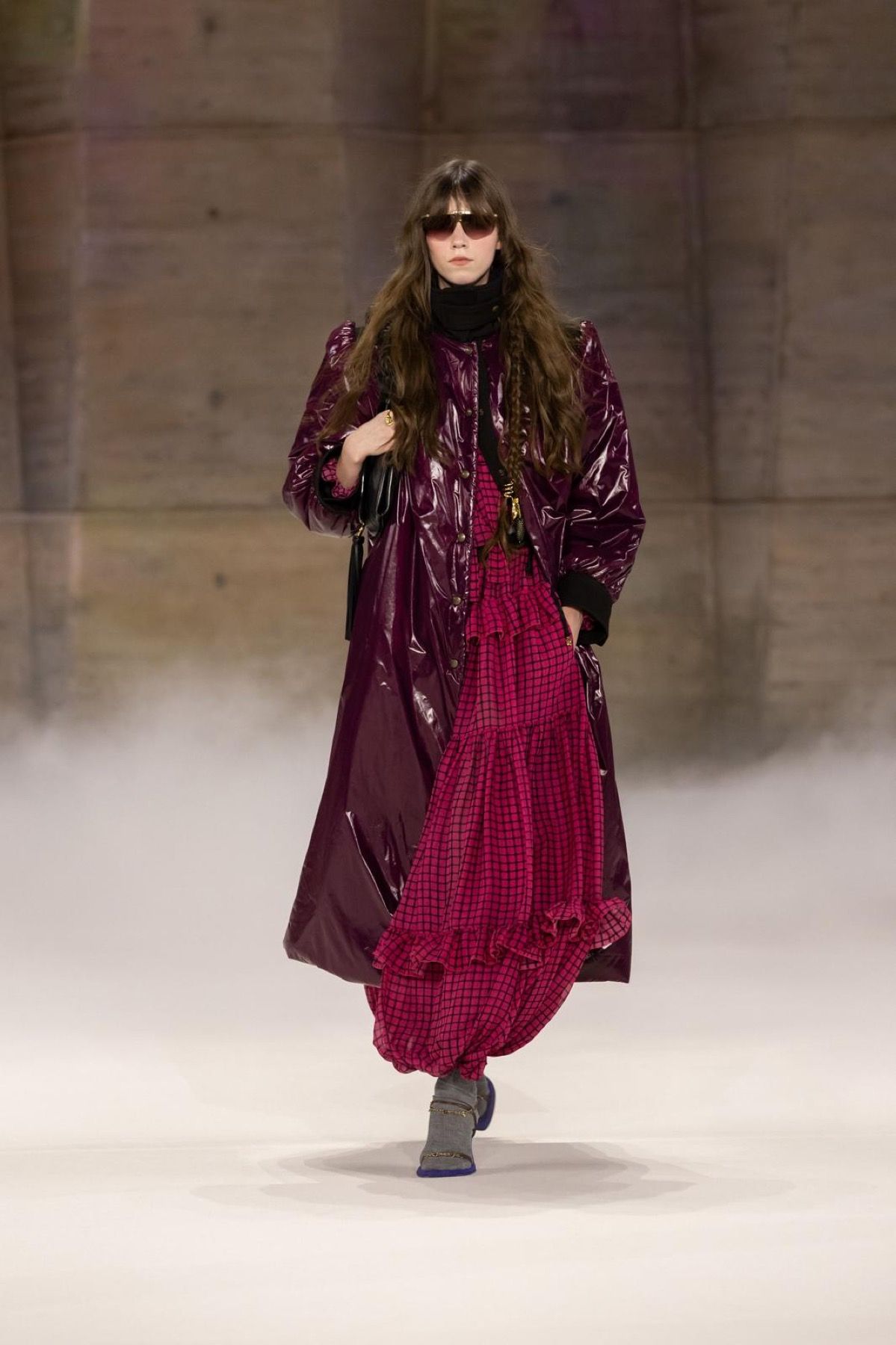
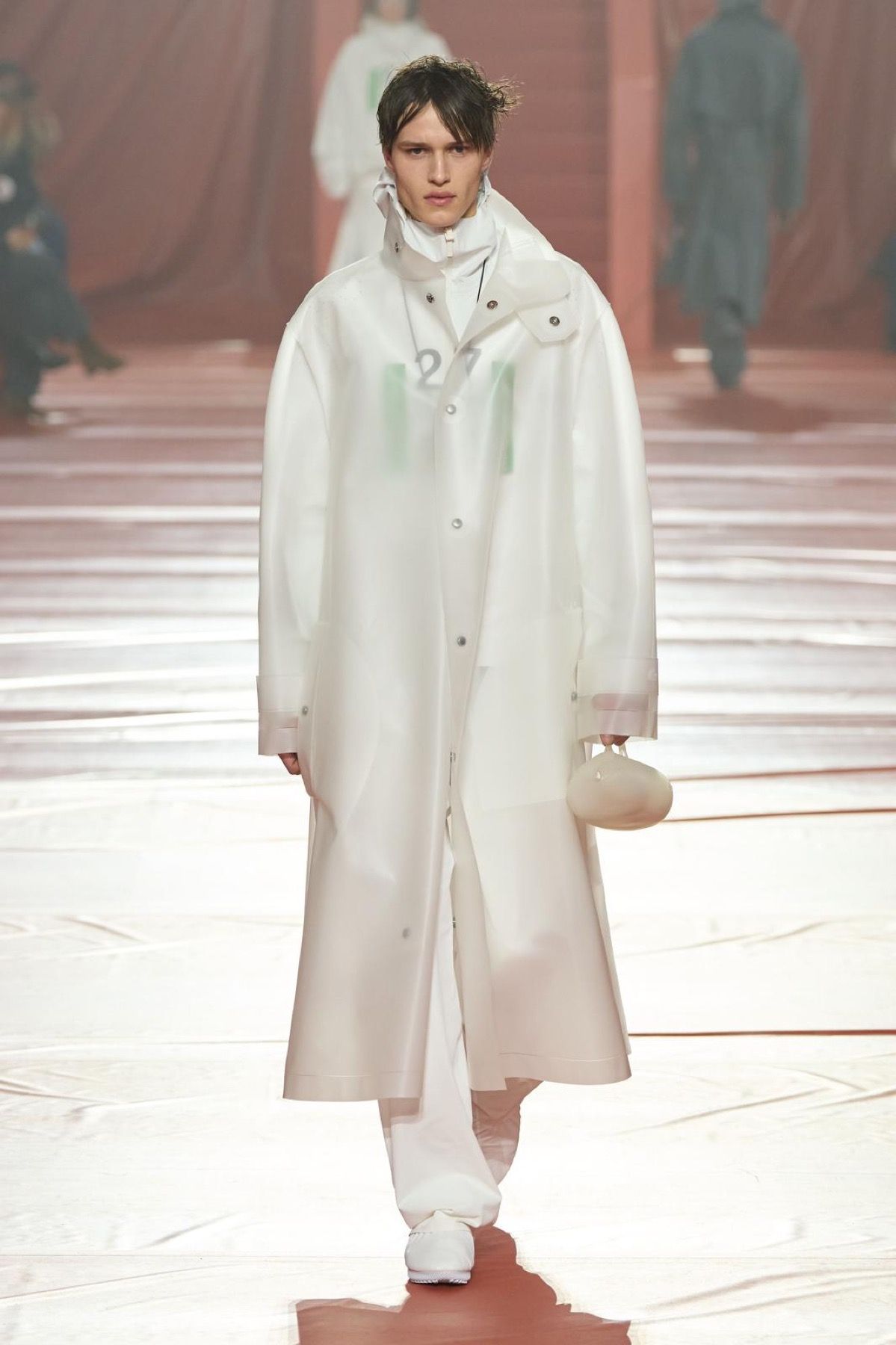
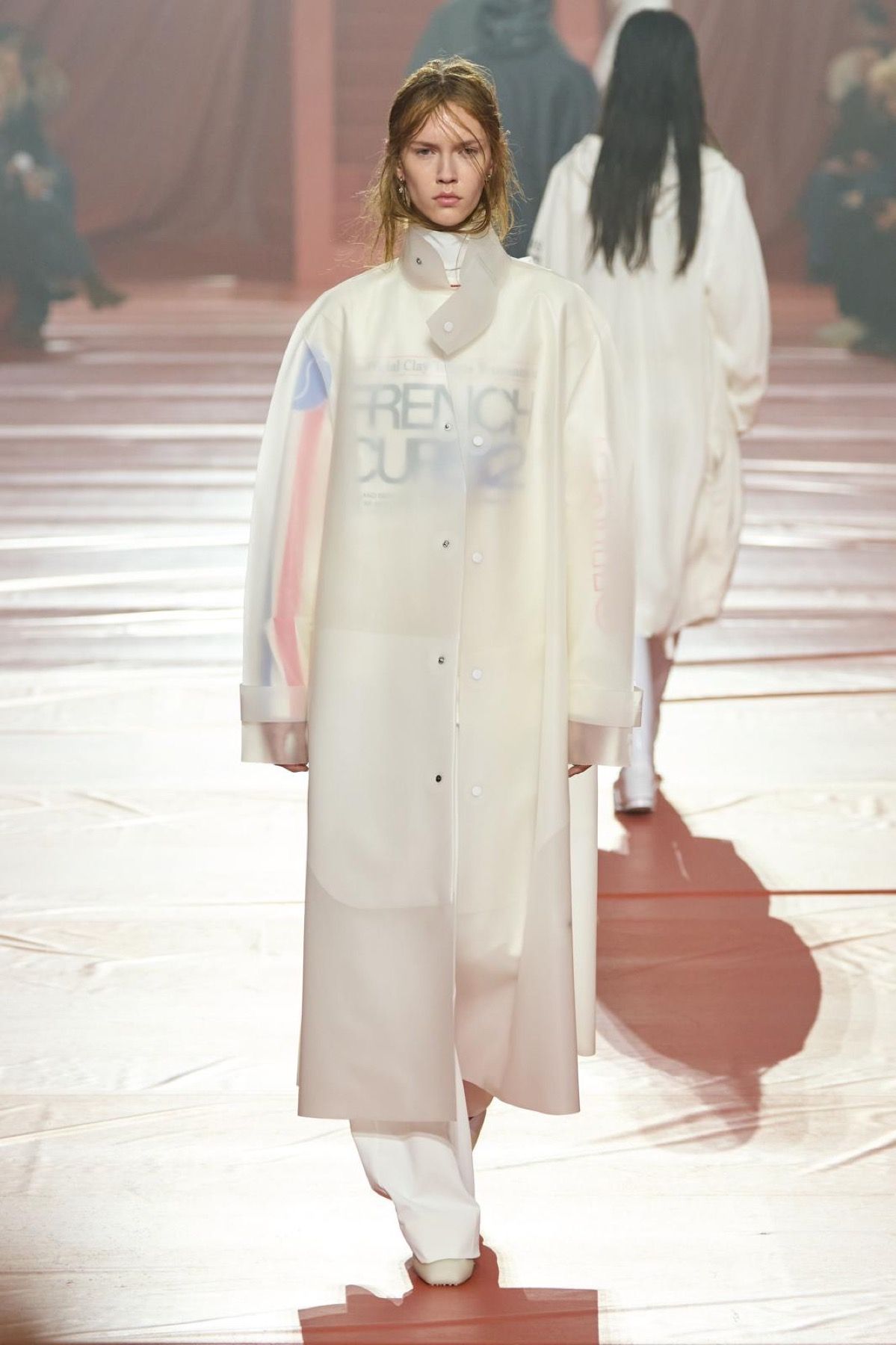
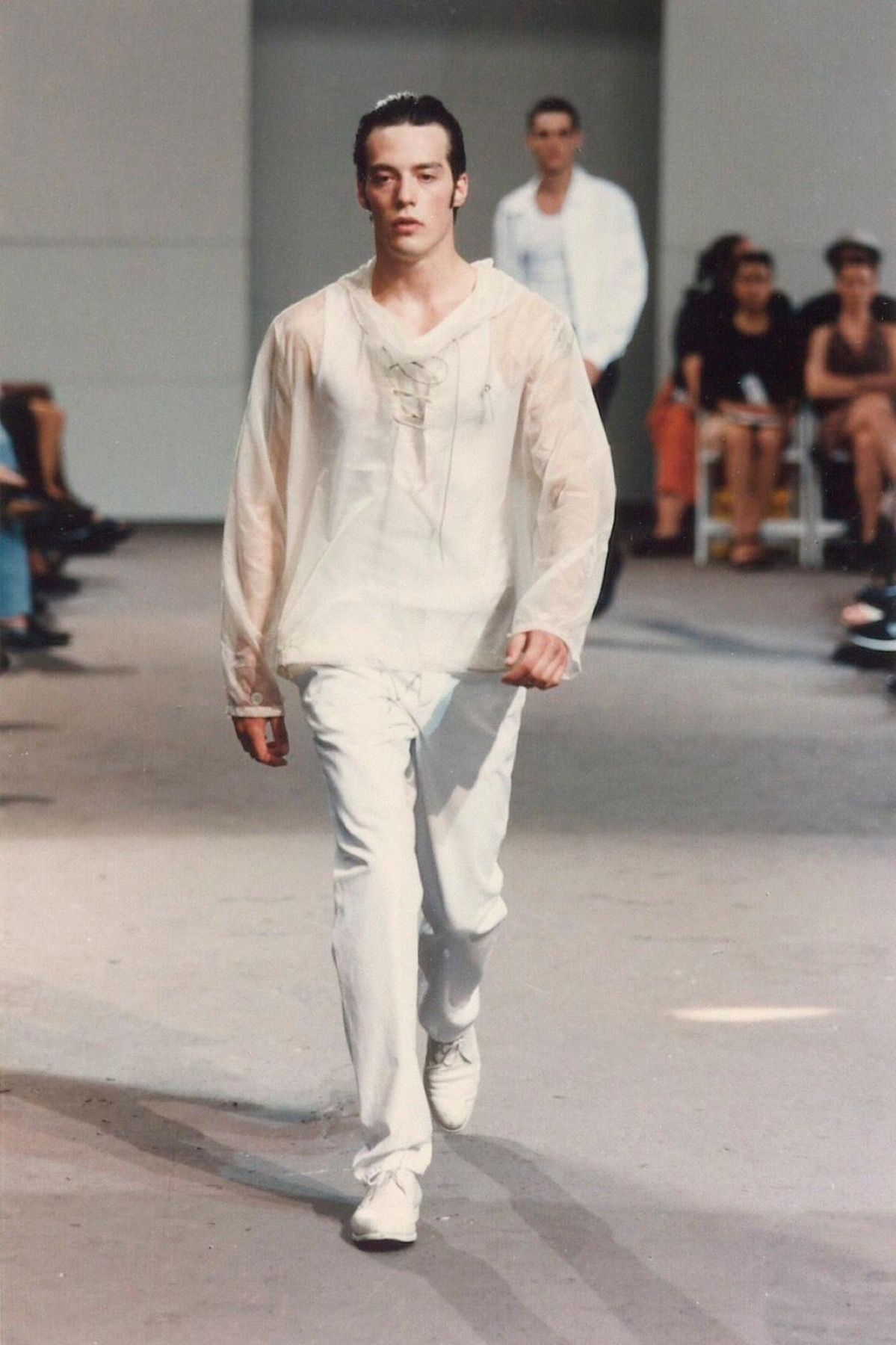
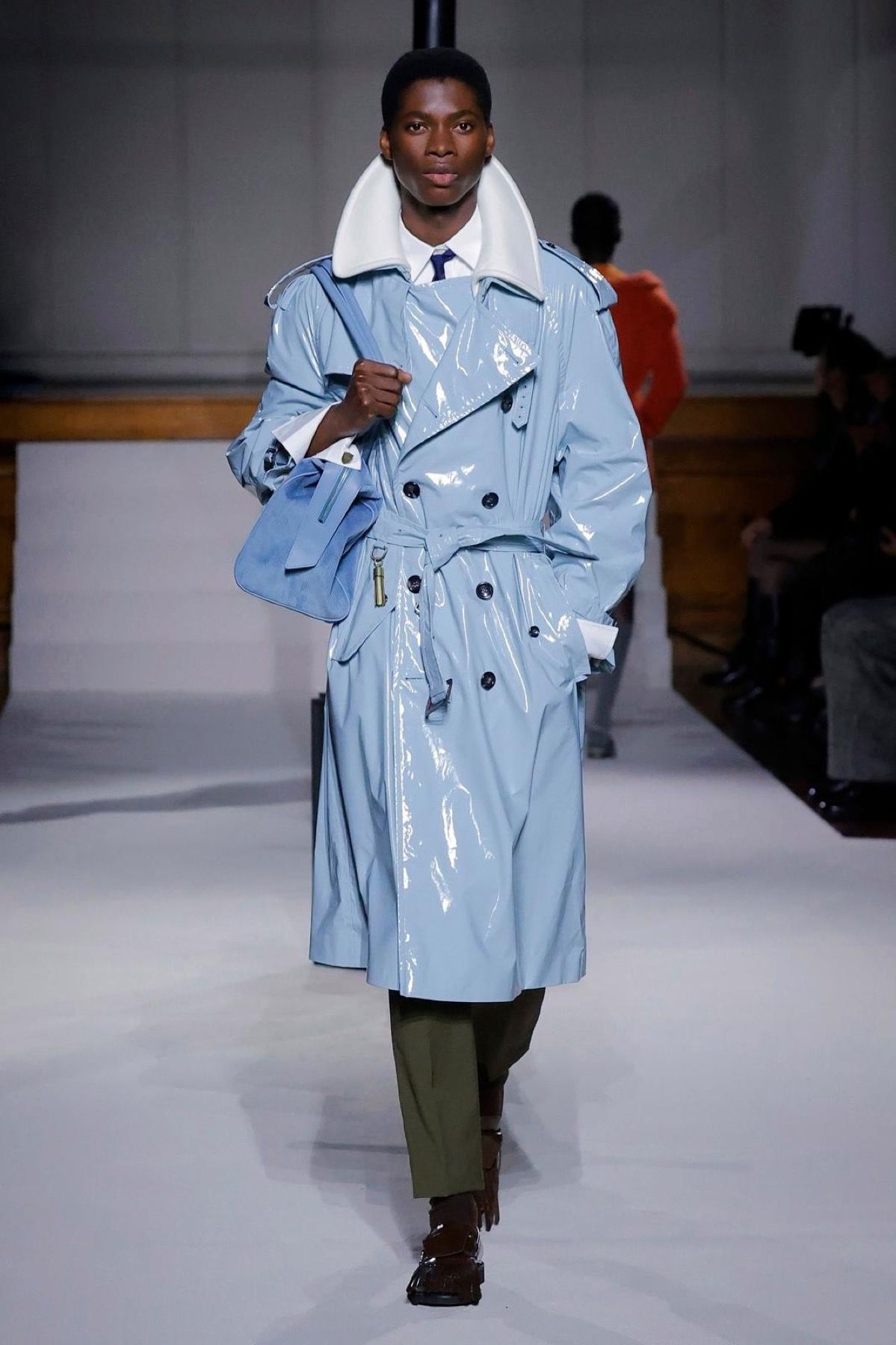
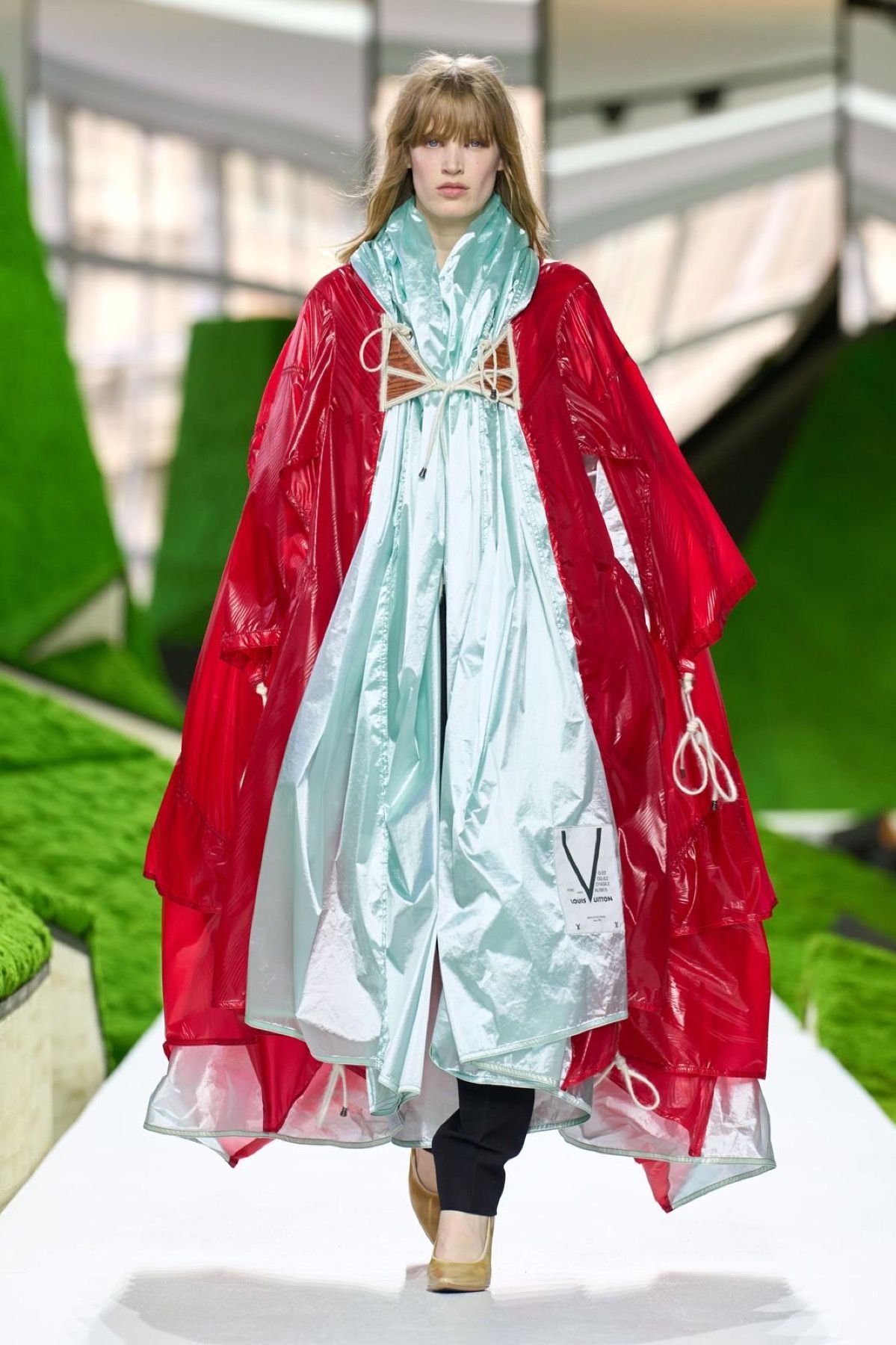
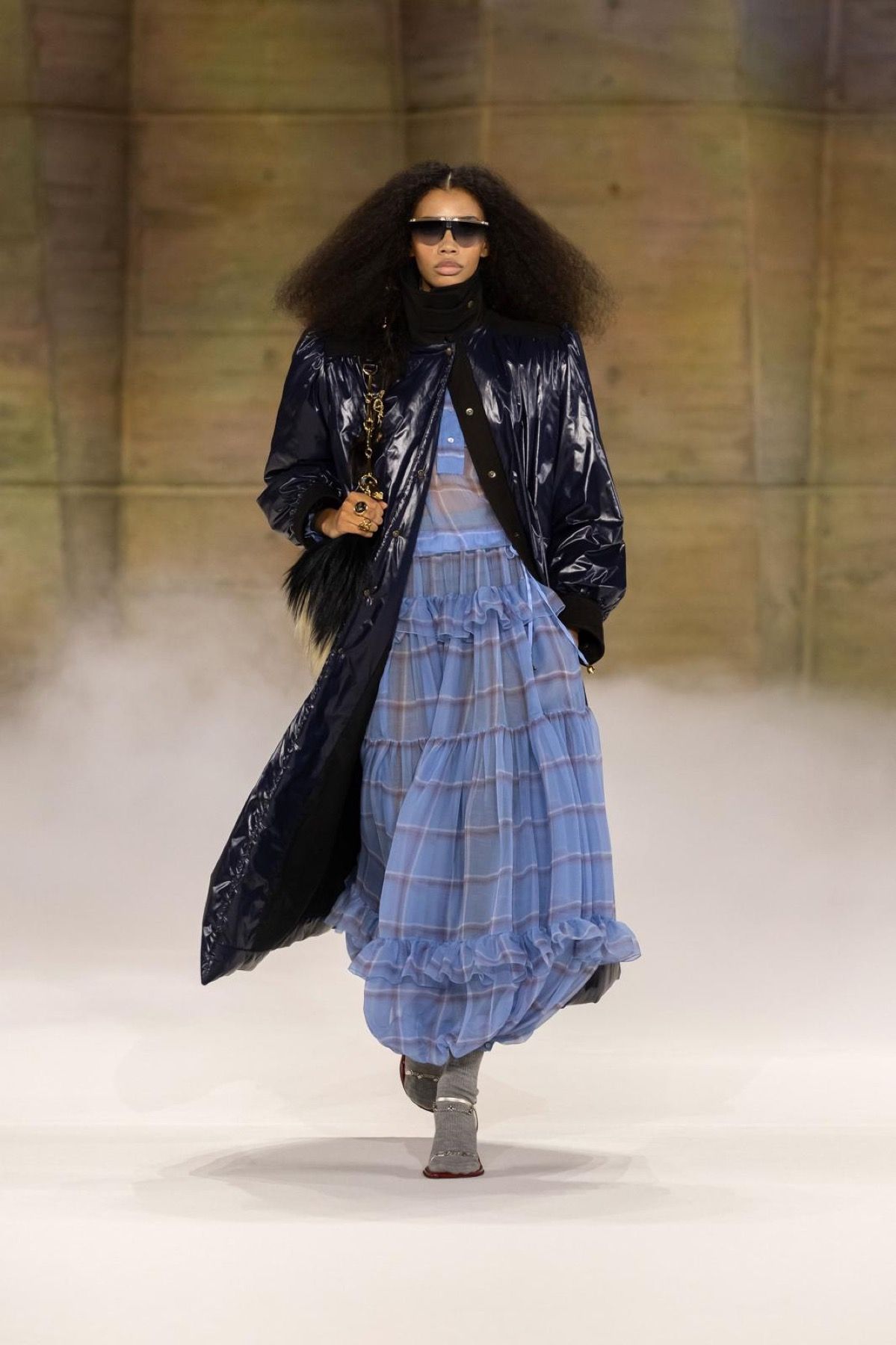
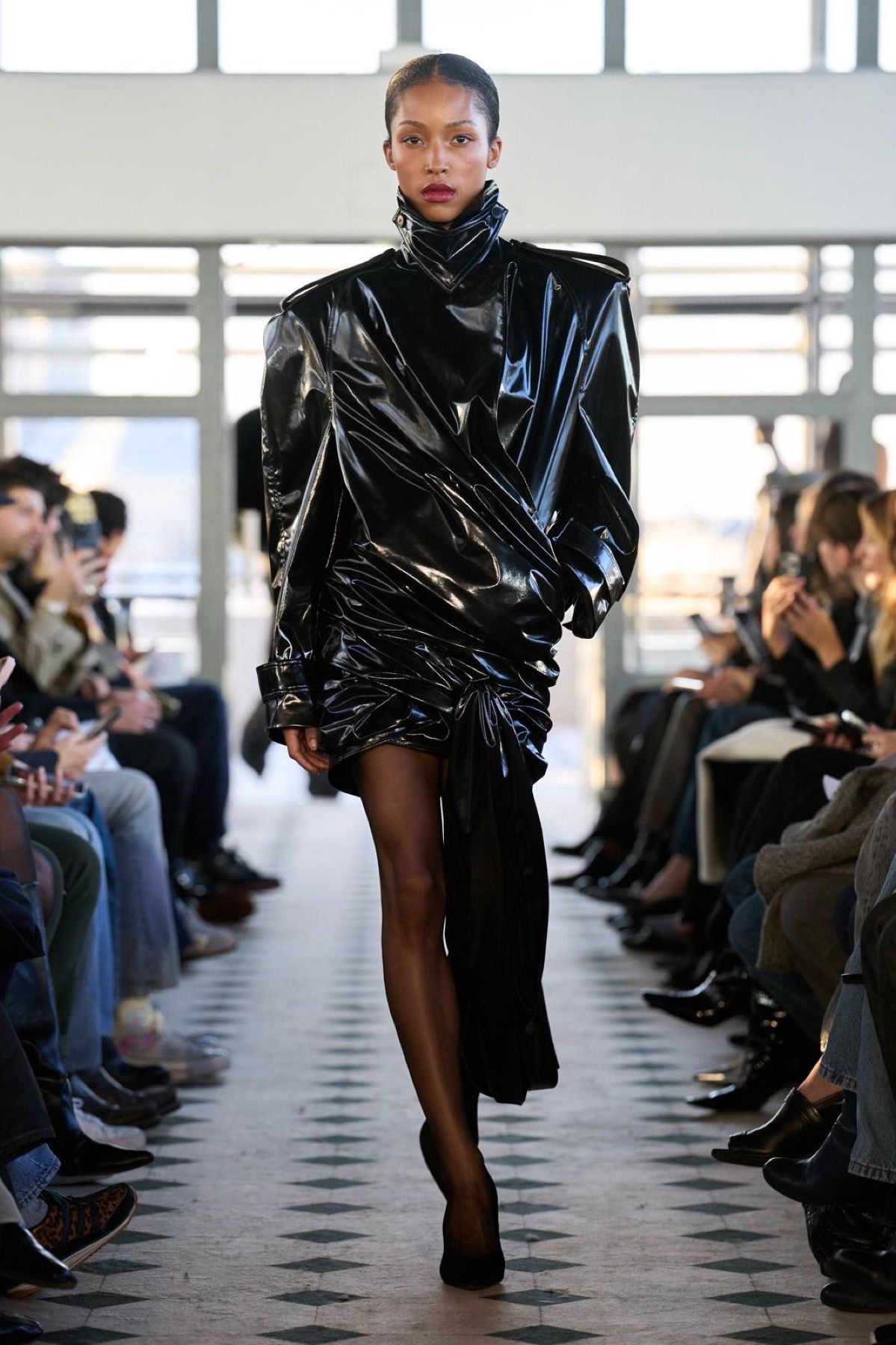
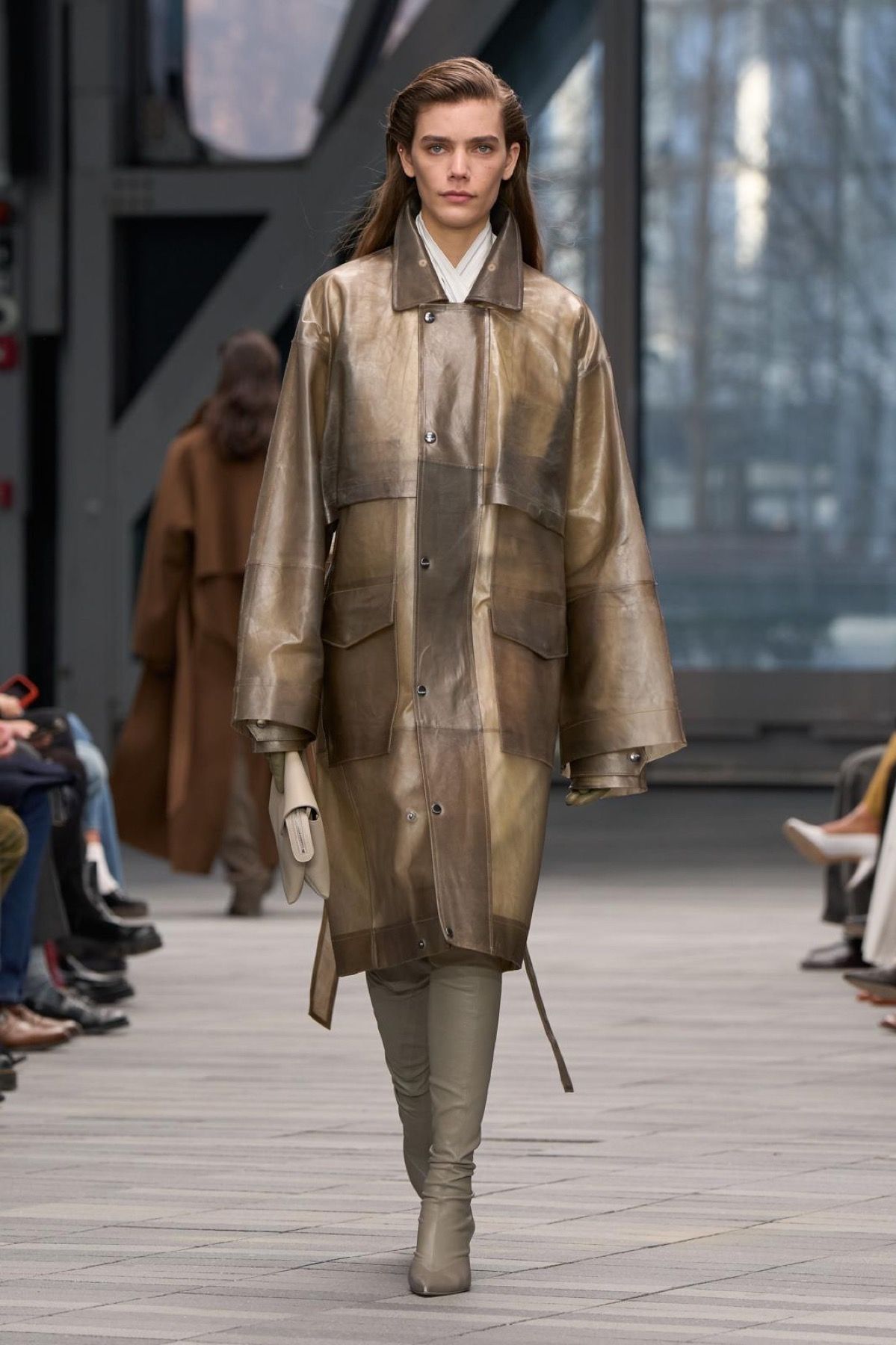
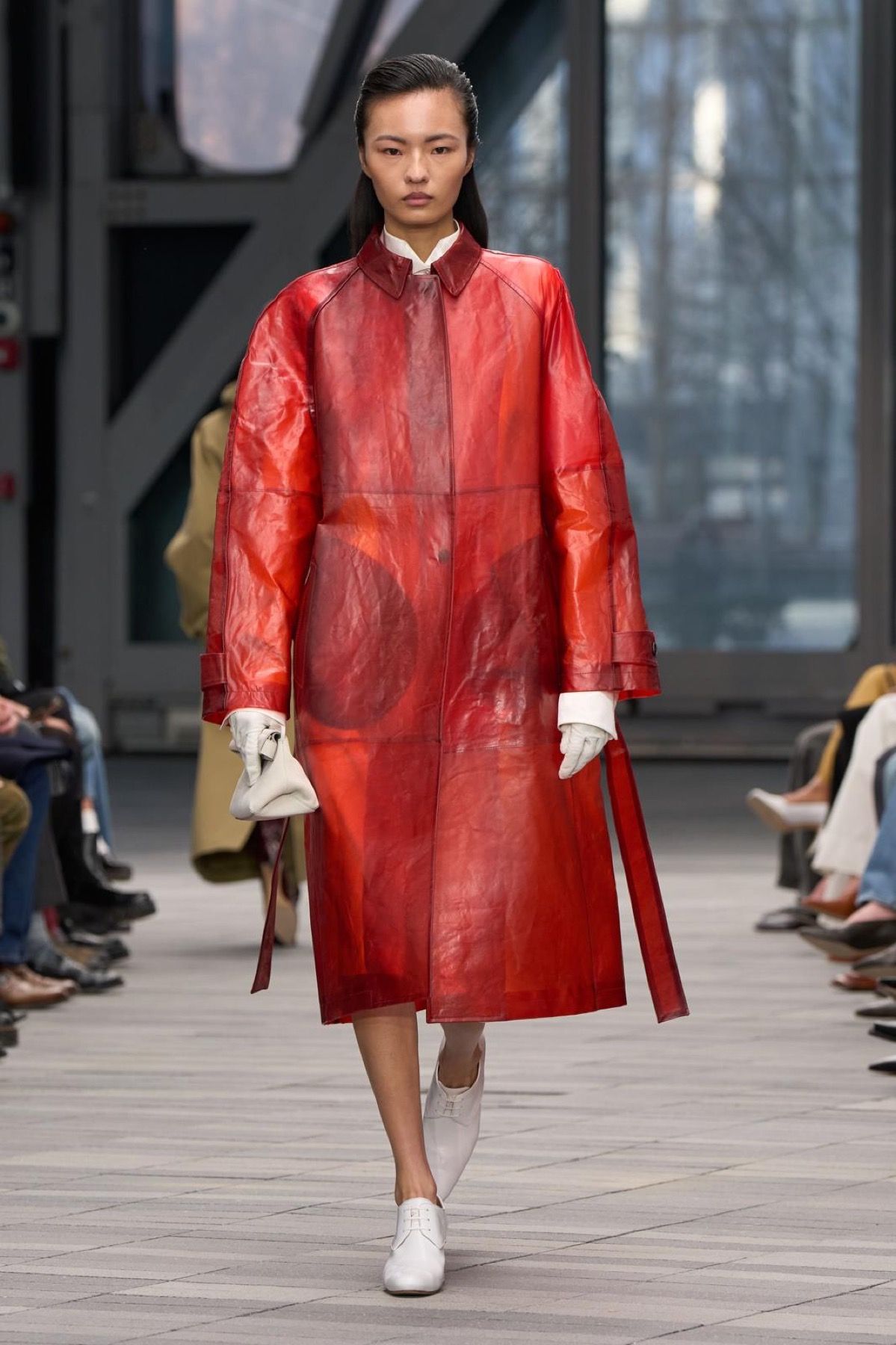
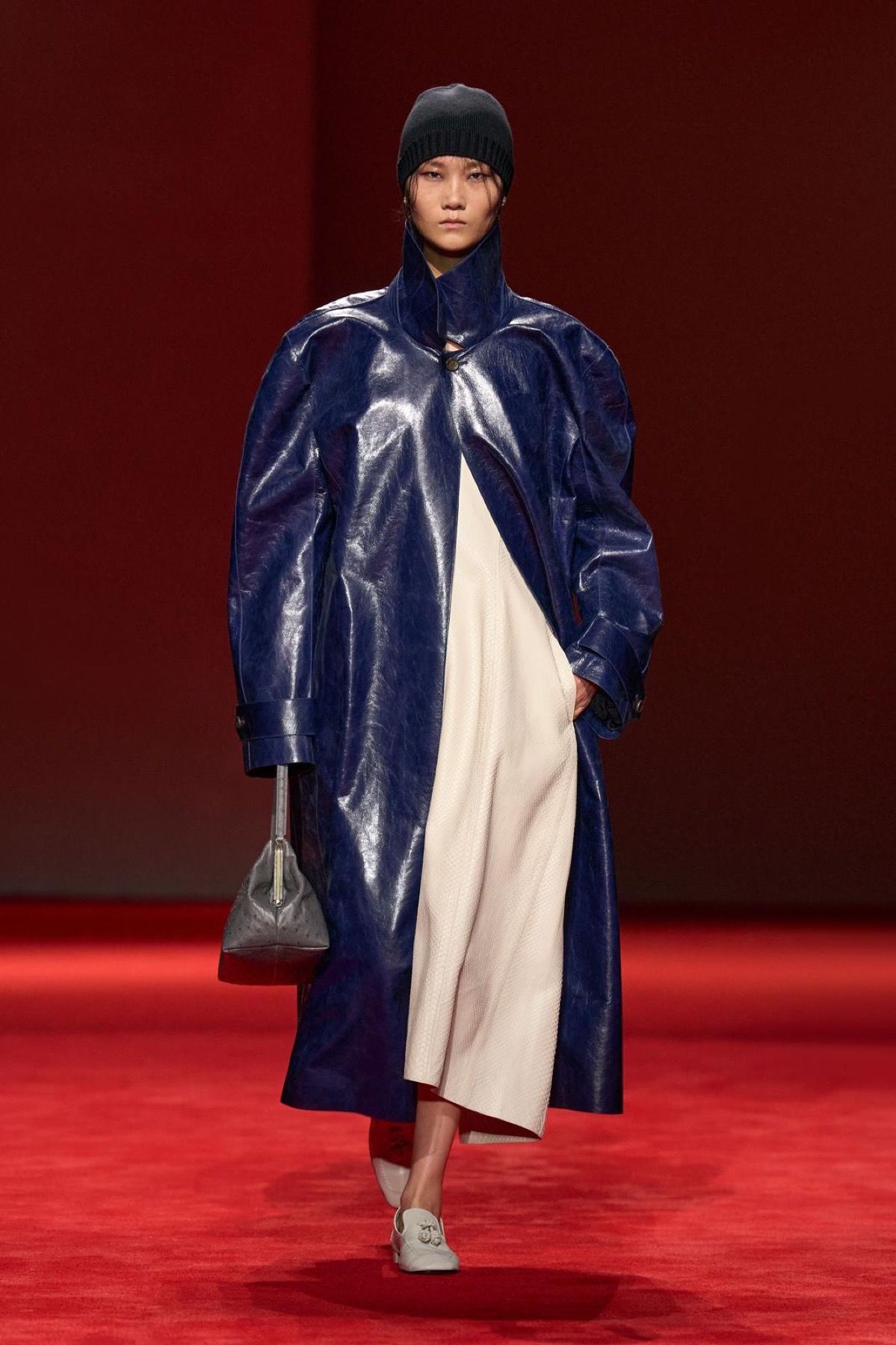
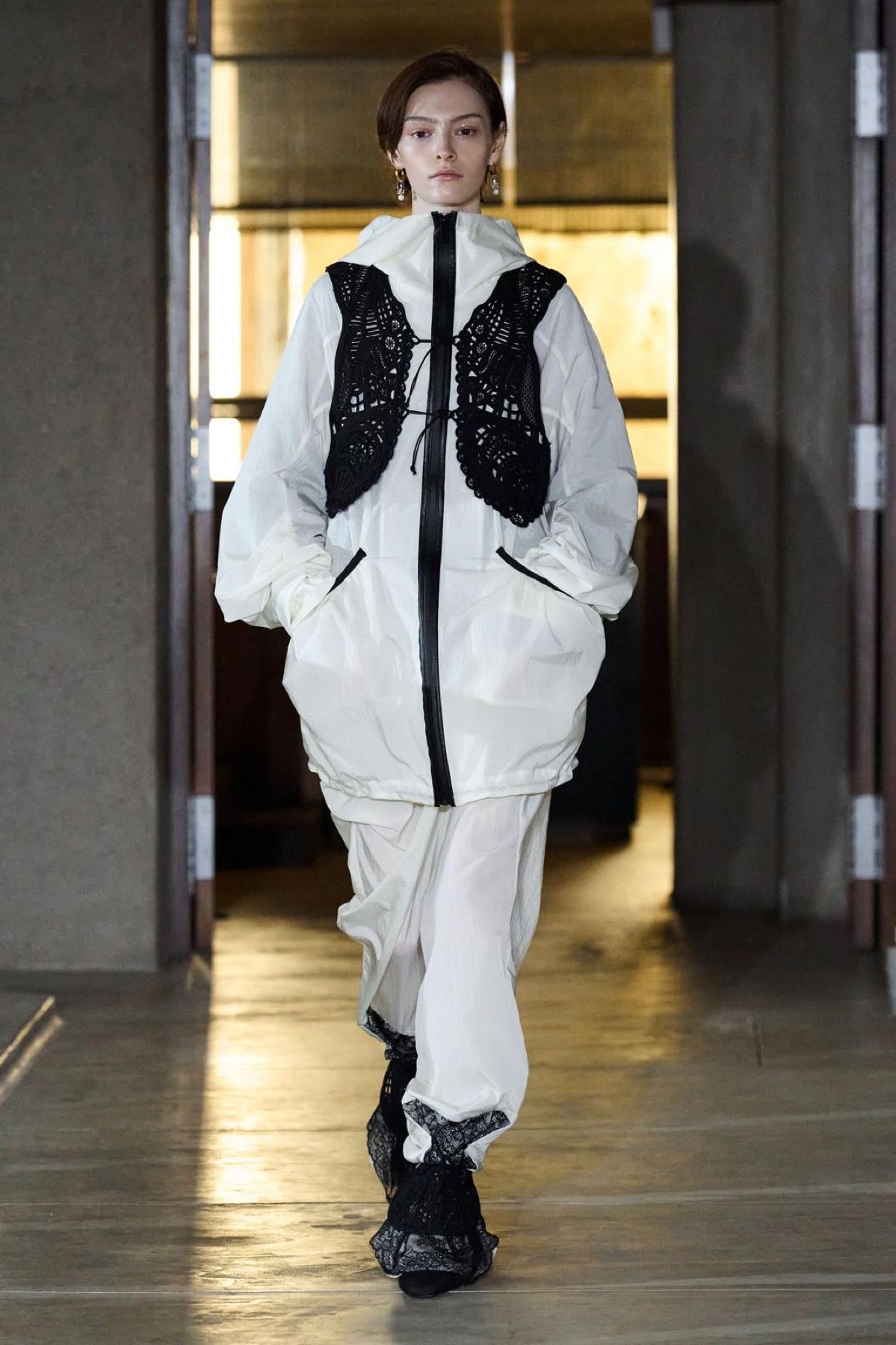
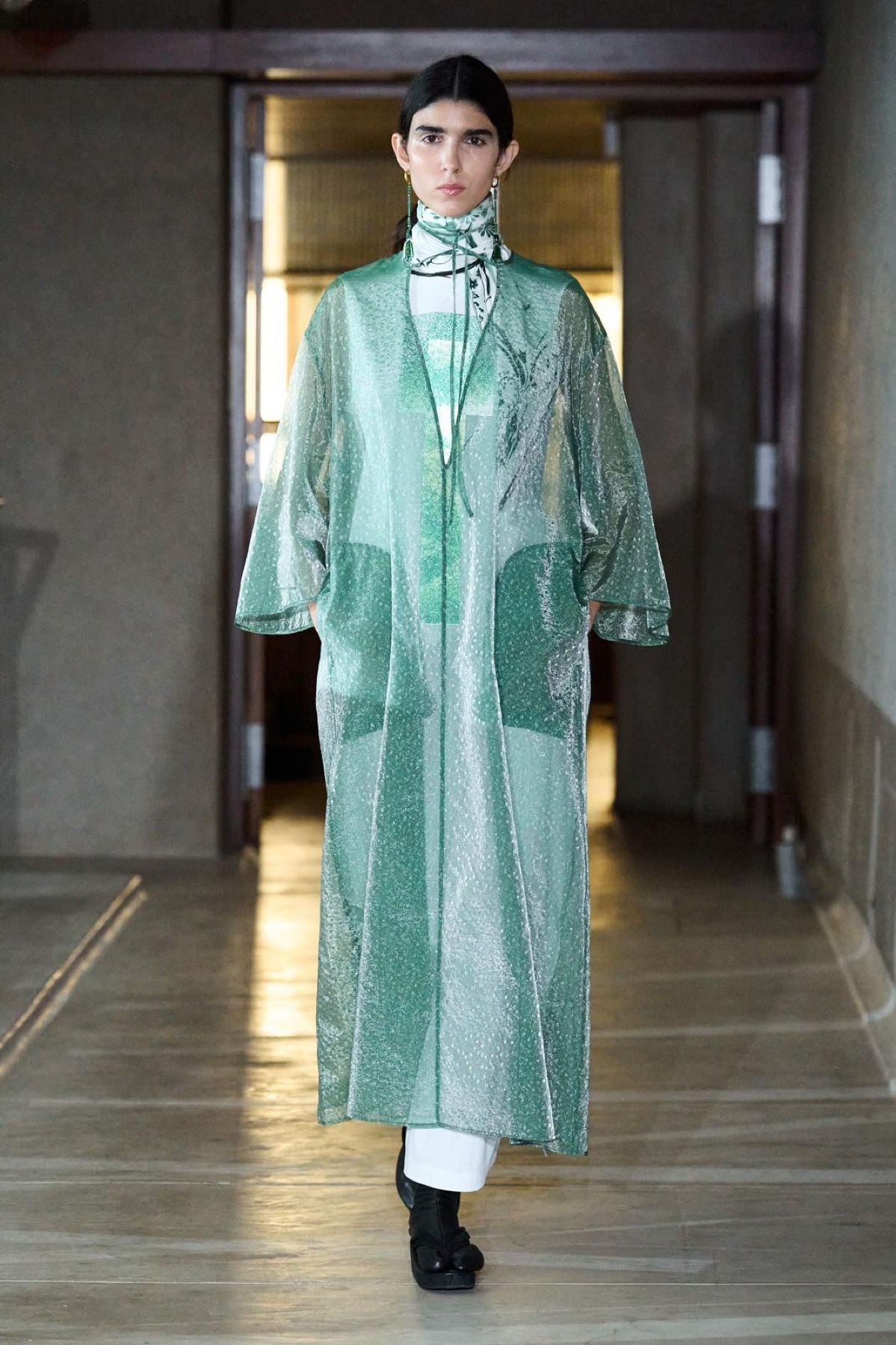
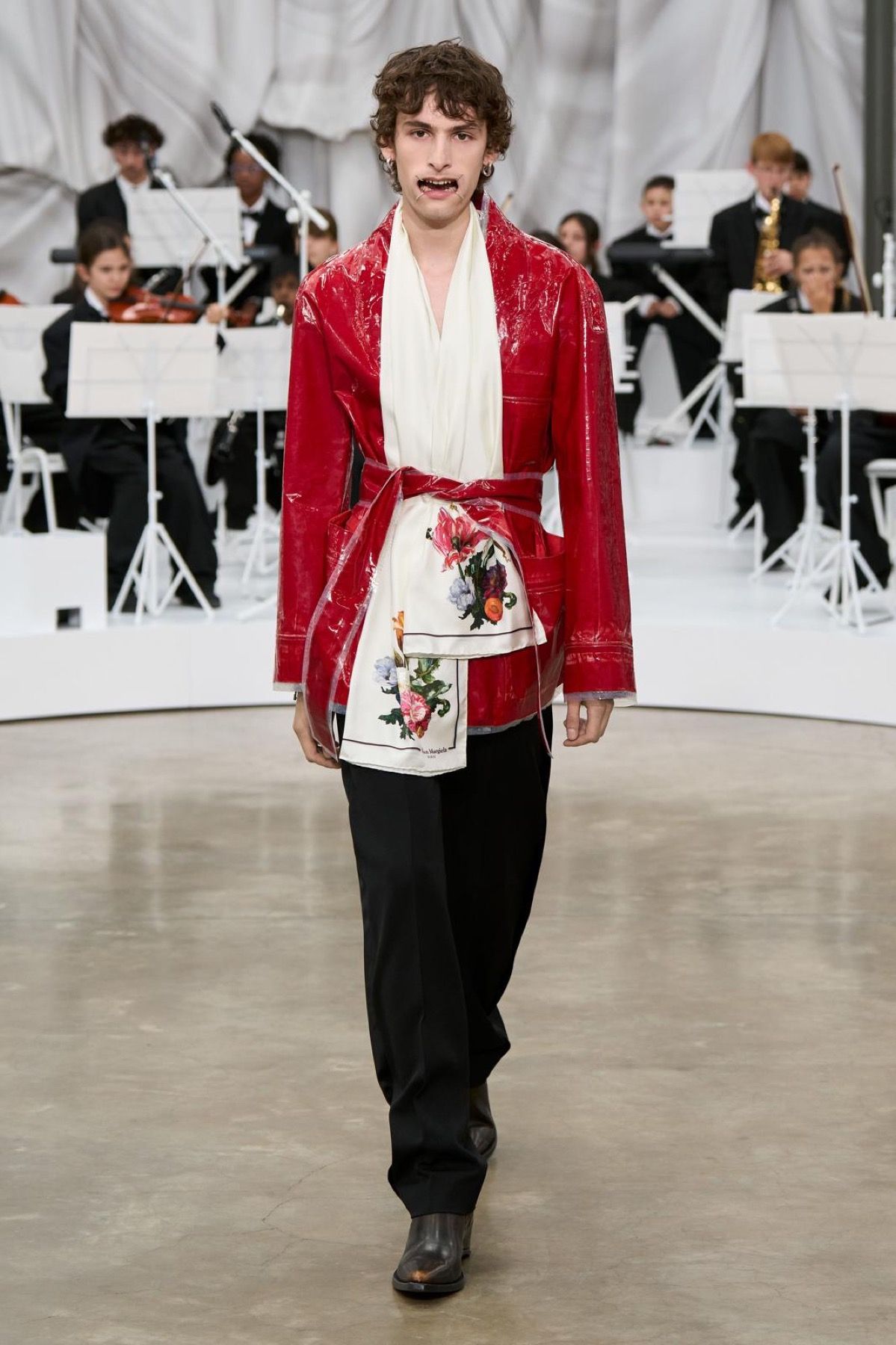
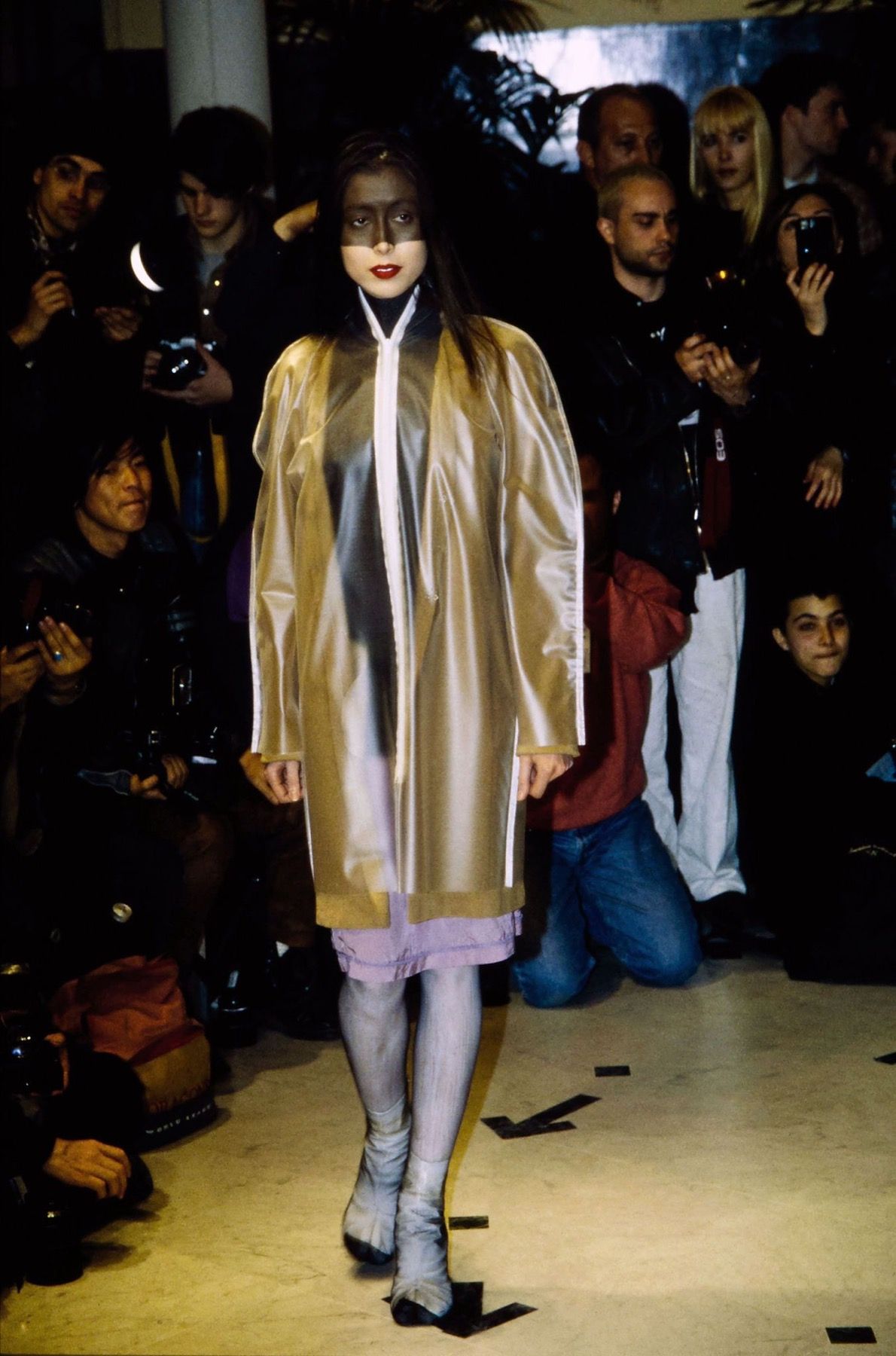
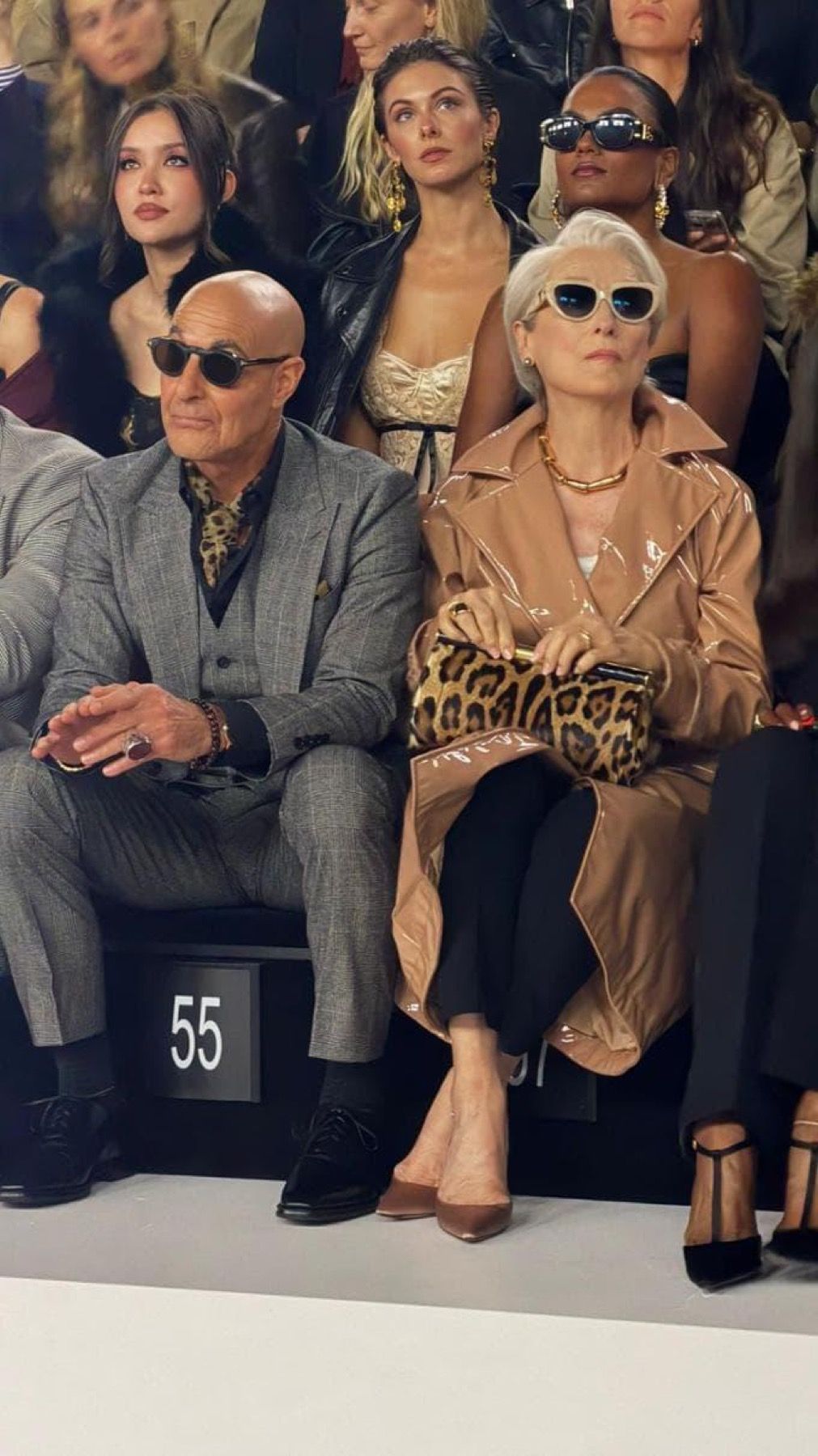
Already during the Spring Summer 2026 shows, some designers had chosen to bring back glossy and transparent coats. We remember the memorable entrance, which instantly went viral, of Meryl Streep as Miranda Priestley, attending the Dolce & Gabbana front row wearing a nude vinyl trench, or the first summer collection for Maison Margiela by Glenn Martens, in which the designer chose to plasticise several robe coats. For the winter season, Kent & Curwen included classic vinyl trenches, while Lacoste created transparent white raincoats resembling medical or laboratory uniforms.
The brand Mame Kurogouchi plays with the garment’s technical attitude by contaminating it with lace gilets, while Burc Akyol prefers to crumple an antisocial vinyl jacket that transforms into a kind of mini dress. In New York, Veronica Leoni explores for Calvin Klein the sex appeal evoked by coloured transparent coats, very 1990s, while Chemena Kamali, for her latest winter collection at Chloé, proposes long raincoats with 1980s silhouettes. Nicolas Ghesquière for Louis Vuitton also sent down the runway a sort of storm cape recalling those worn by tourists on rainy days, while at Bottega Veneta some leather coats were so glossy that they created a plasticised effect.
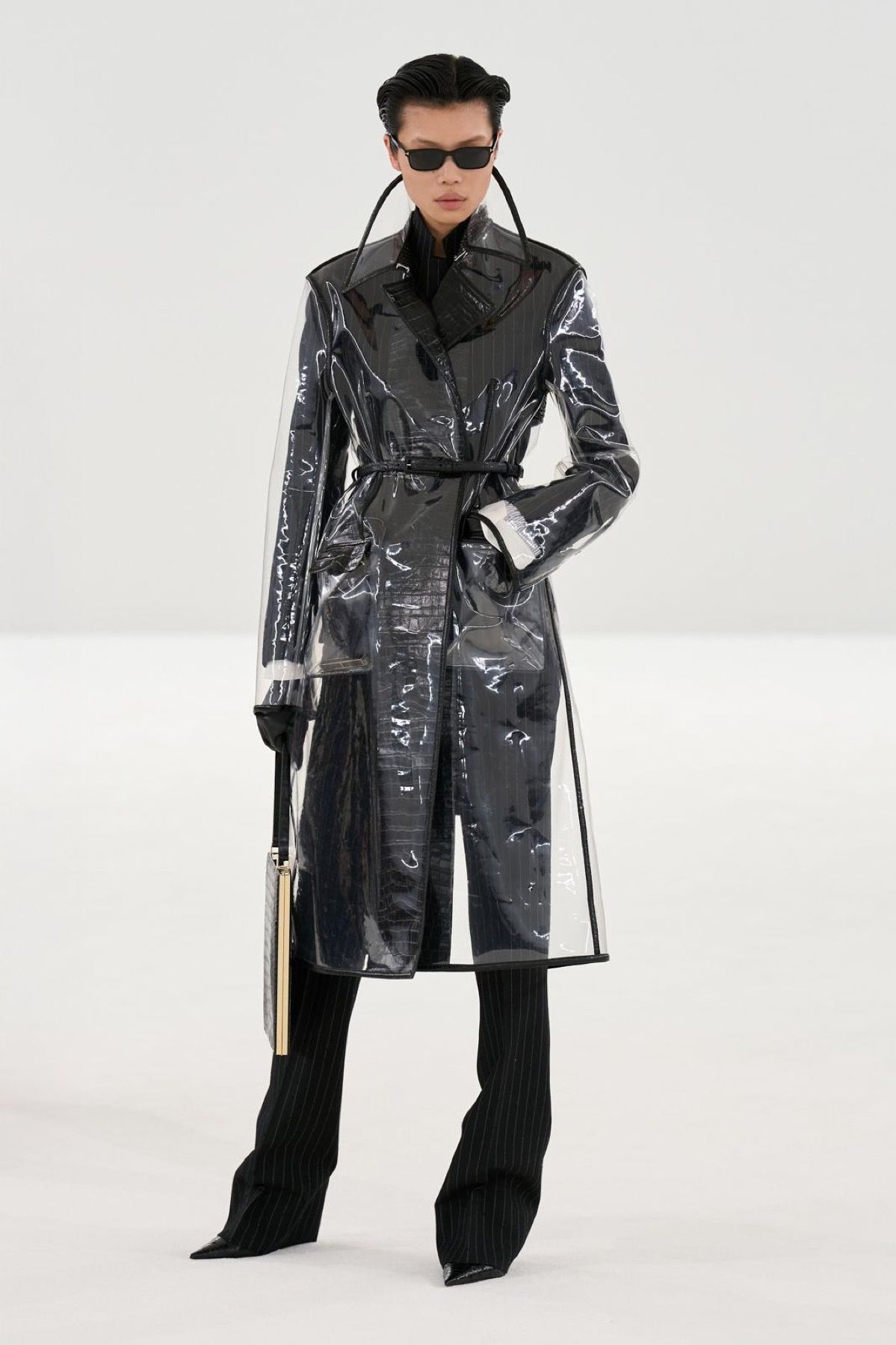
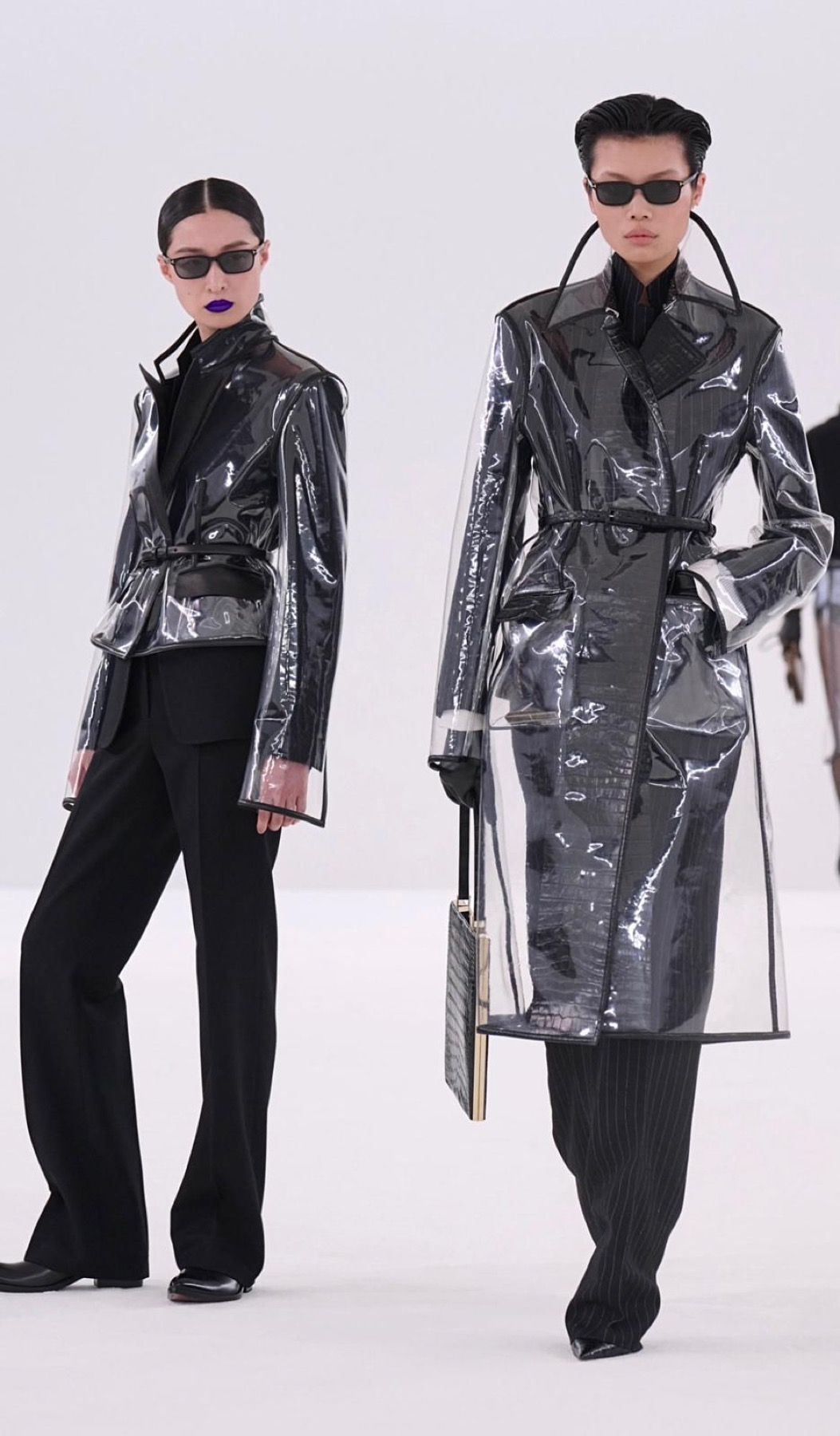
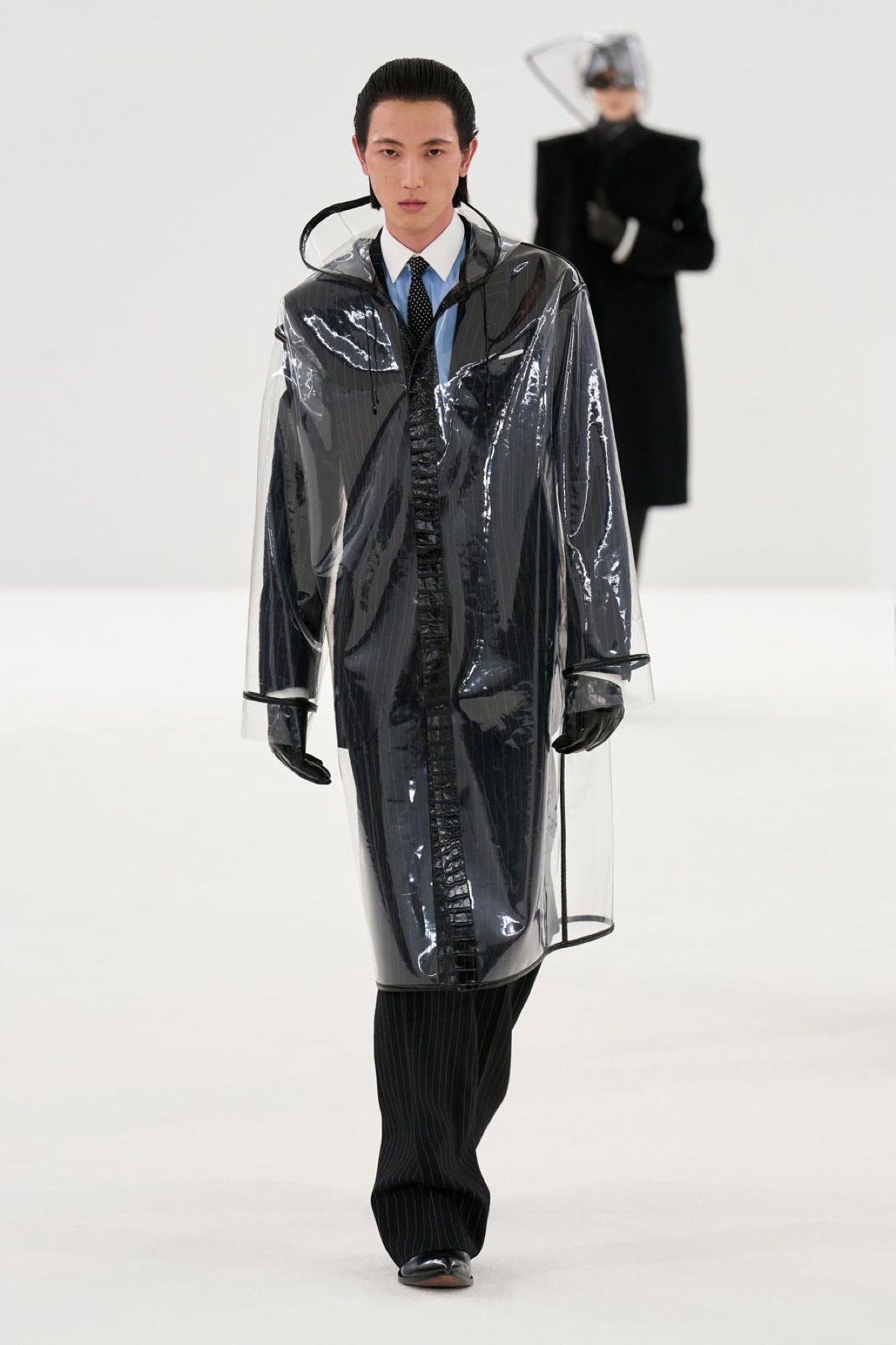
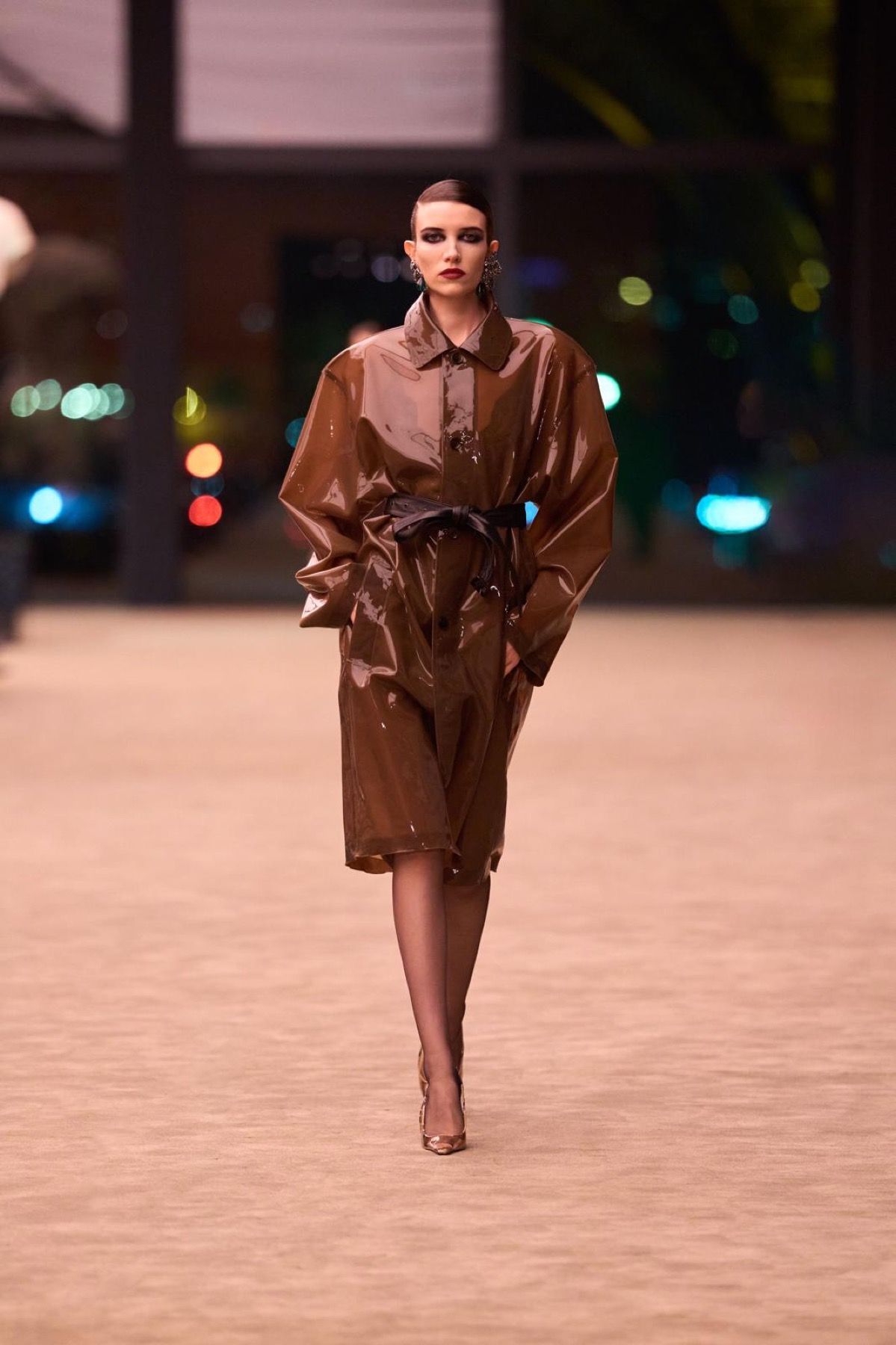
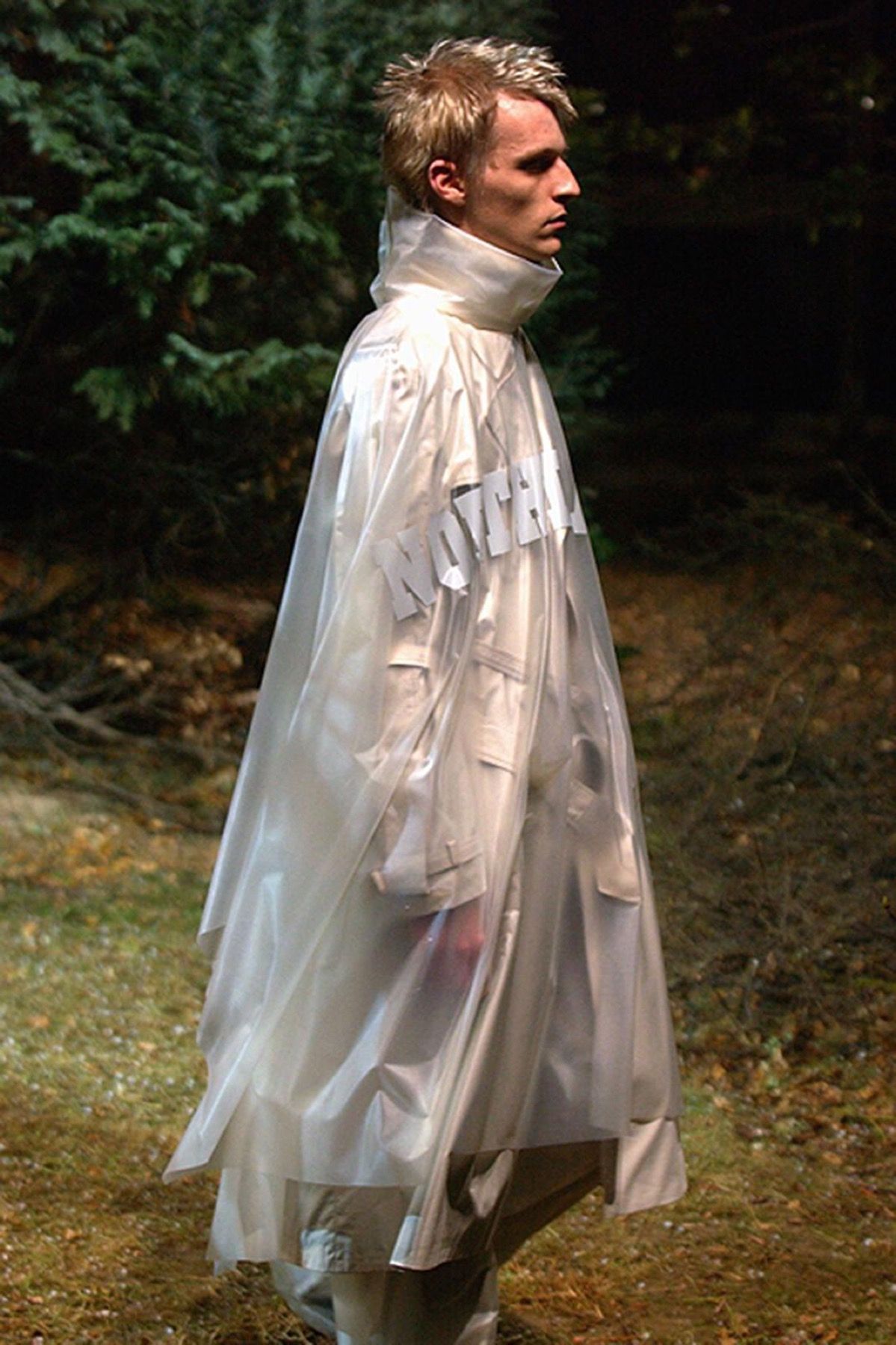
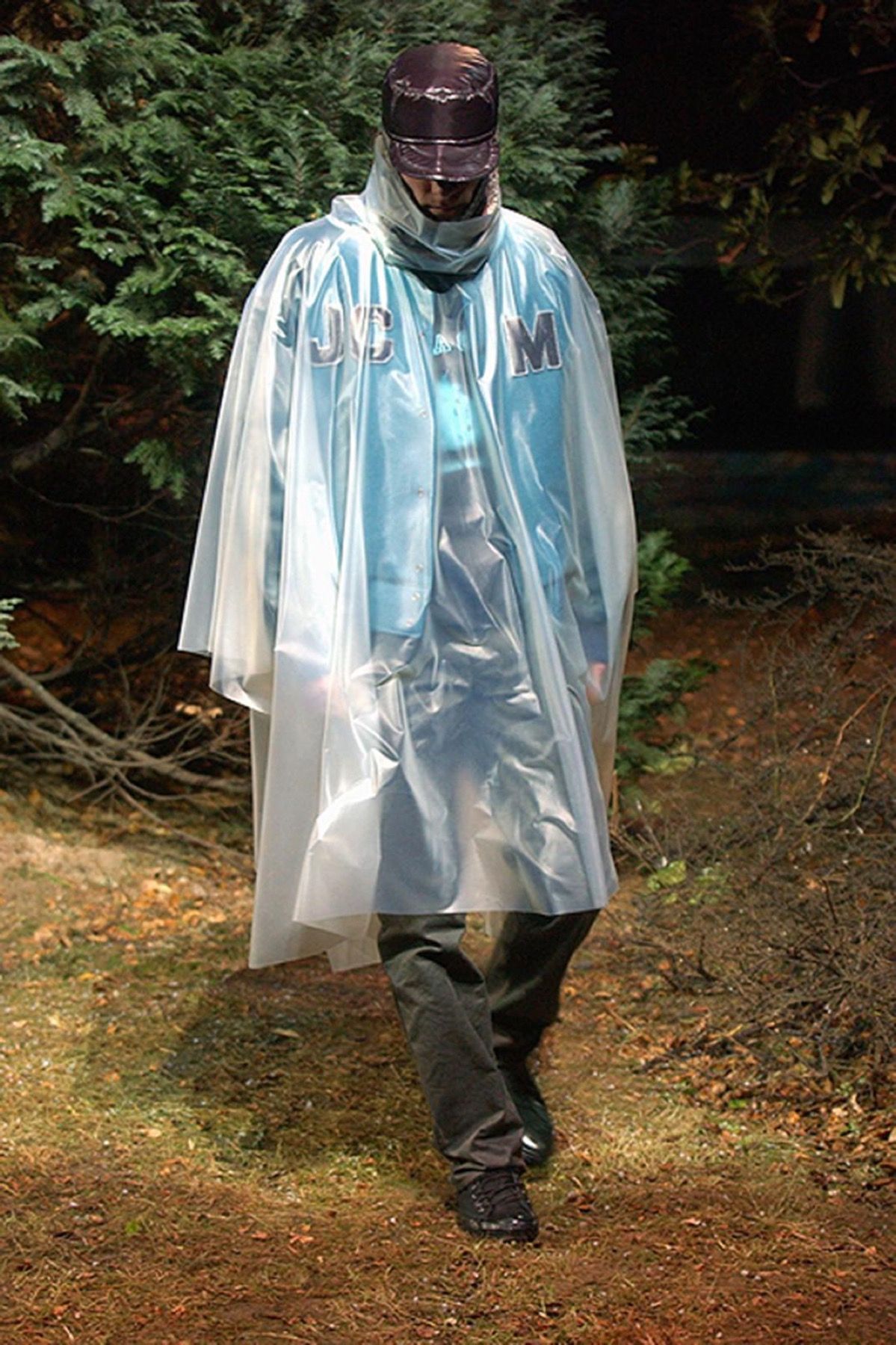
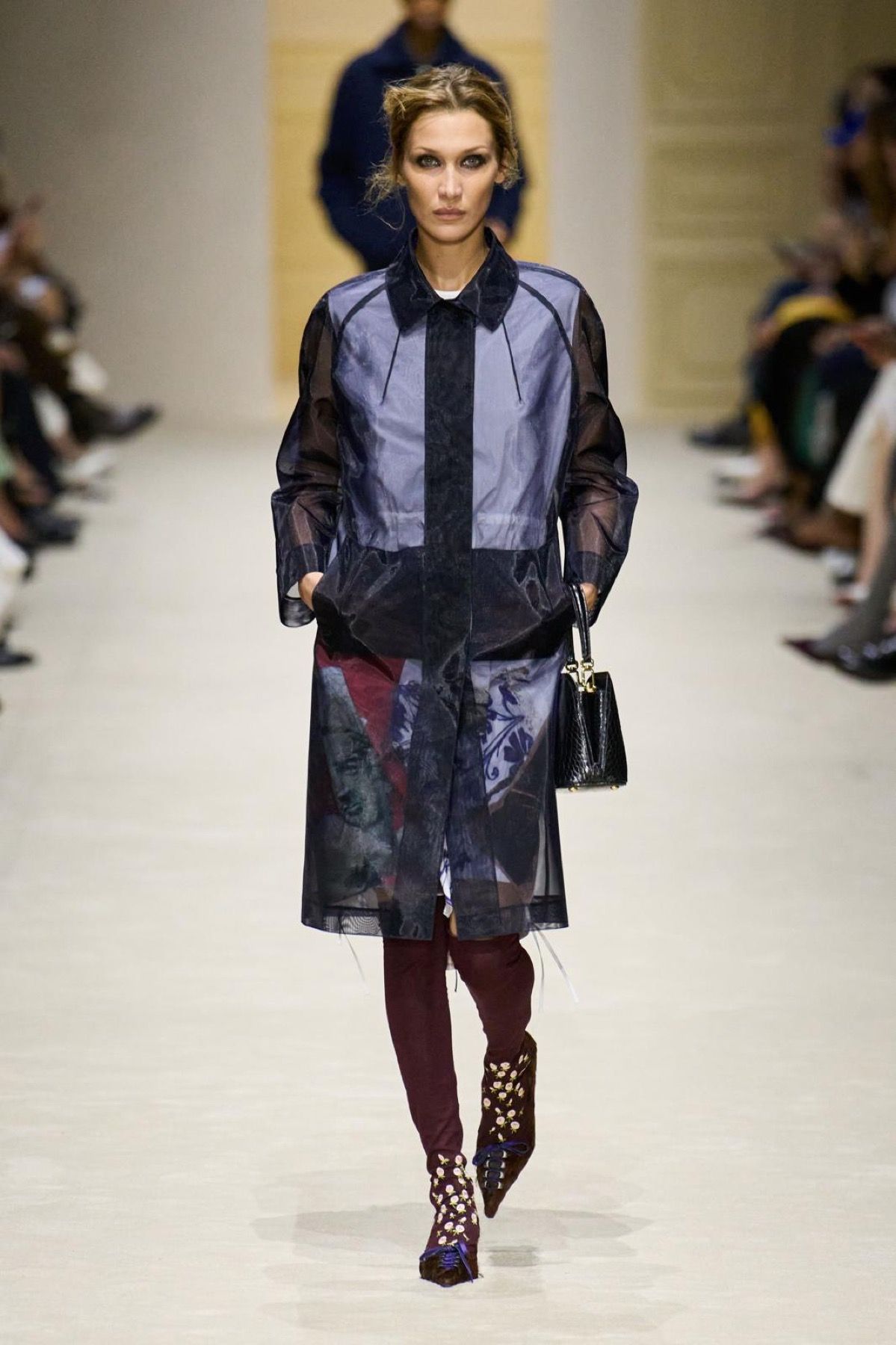
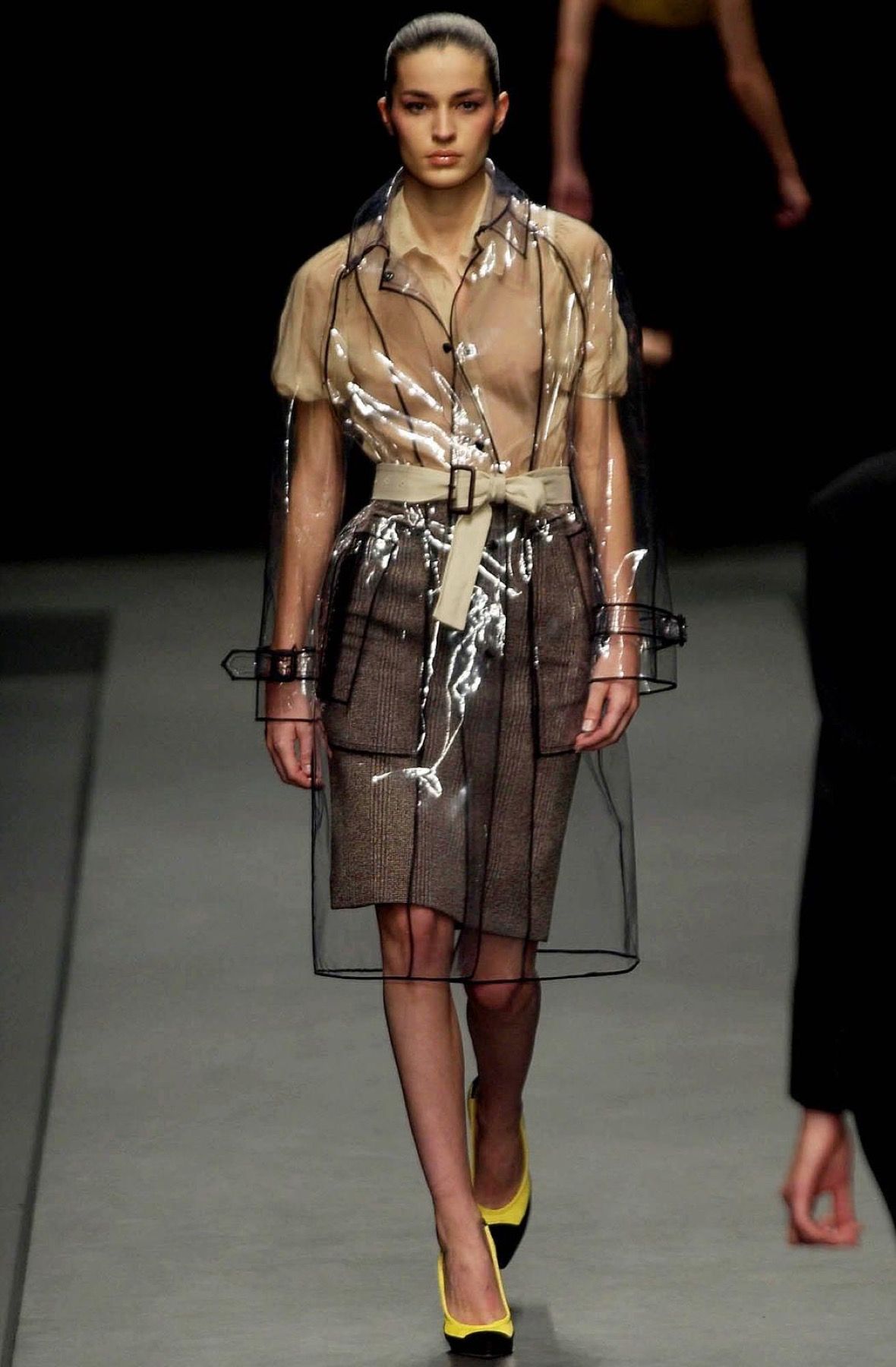
The latest Paris proposals brought the garment back by reviving its erotic and perverse imagery: Haider Ackermann, for his latest collection at Tom Ford, reinterpreted the transparent coat of serial killer Patrick Bateman in American Psycho, paired with pinstriped suits and leather gloves, while Anthony Vaccarello, in his latest fashion shows for Saint Laurent, reflected on the idea of sexiness and nudity by sending down the runway in the SS26 collection structured trench coats in thin transparent nylon and, for the latest winter collection, glossy rubber coats that winked at several historic shots by Helmut Newton.
For Miuccia Prada and Raf Simons, meanwhile, this garment is ideal for those who want to dress "in layers" and play with layering: in Prada FW26, the designers proposed transparent coats in silk organza that, rather than simulating a synthetic finish, focused on a sophisticated play of veils and transparencies. Wearing the plastic raincoat is therefore a bold style choice, but caution is needed: the line separating a high fashion reference from a “shopping bag” effect is as thin as plastic itself.