




















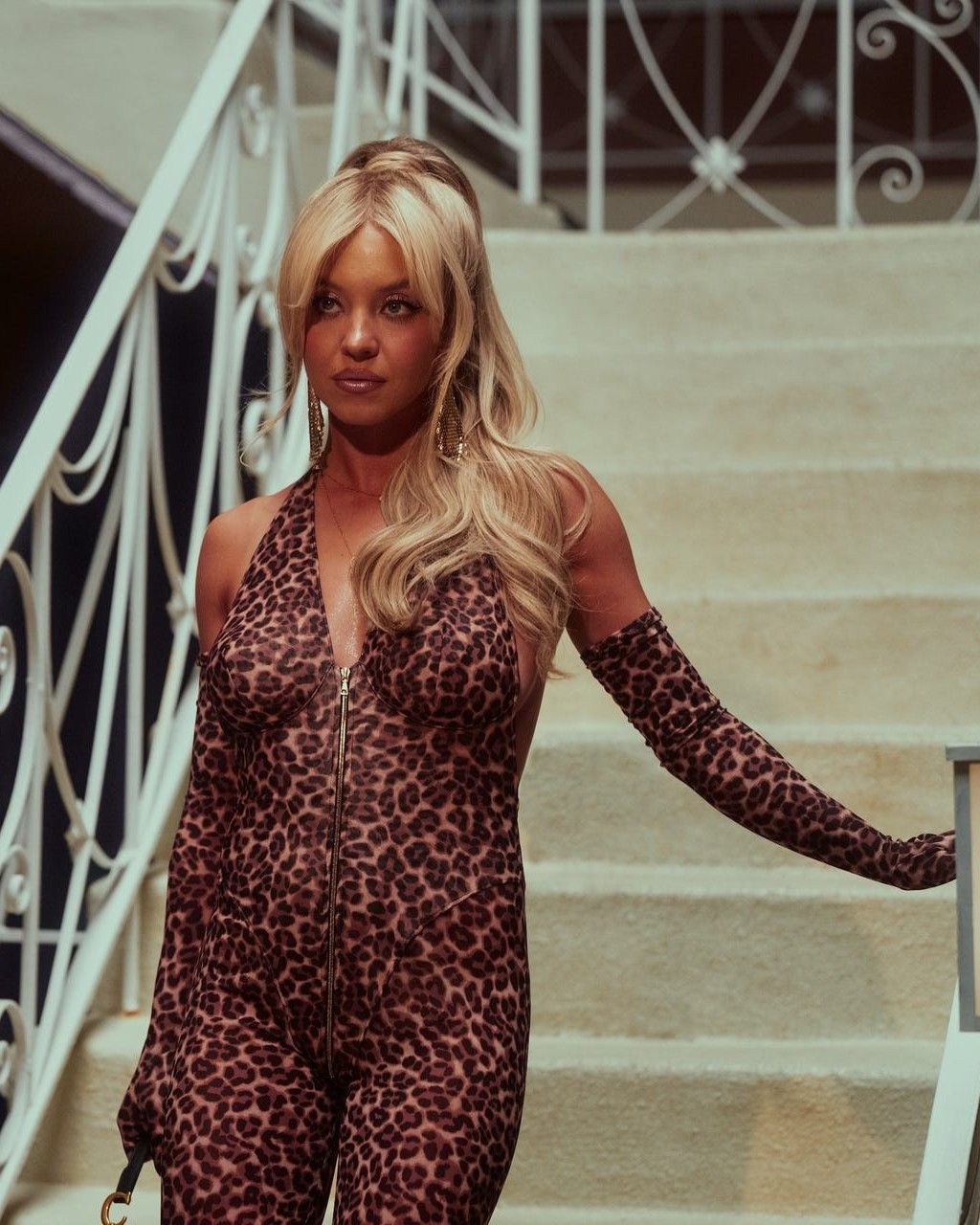
Does “Euphoria” really glamorise sex work? On the difference between representation and aestheticisation
A very controversial point of the third season of Euphoria is that almost all the female characters, as well as the events of the plot itself, are too tied to a spectacularization of sex work. From Rue acting as a “madam” for the strippers at Alamo, to Jules becoming an escort and being kept, to Cassie who instead wants to launch a career on OnlyFans and, finally, to Maddie who acts as the manager and social media manager for the latter. In addition to the protagonists, we have also seen the tragic and devastating stories of Angel and Kitty, two of the girls belonging to the pimp Alamo who meet a sad fate. And this without mentioning the characters of Faye and Magick.
On social media, many were rightfully shocked by the scenes and content dealing with this theme, accusing Sam Levinson of glamorizing exploitation and human trafficking. Not least, much focus was placed on the fact that sex work was being discussed without framing this representation in the context of the story. But what is the context?
Why is Sam Levinson obsessed with sex work?
The first topic to discuss is the most general one, namely why in Euphoria and especially in the third season there is this overabundance of sex, exploitation and human trafficking, displayed female bodies and so on. Given that the women of Euphoria also have other jobs, and given that the series has a whole series of tone and writing problems, it is clear that with this season Sam Levinson wanted to tell the story of the seedy underbelly of celebrity culture in Los Angeles. The third season of Euphoria works better if read as the camp satire of a superficial and cruel world rather than as a documentary on the life of Gen Z.
Indirectly and also imperfectly, Levinson tells how difficult it is to make it in a celebrity world infested with criminals and loan sharks, with ambitious starlets who sell themselves to advance their careers and individuals who at all levels exploit their ambition by acting as “brokers” between those who want to make it and those who dole out promises in exchange for favors, let’s call them that. All the characters find themselves on the margins of success and wealth but are in reality poor, in debt and in many cases in the middle of Faustian pacts with rich and/or violent men who offer a form of salvation in exchange for subjugation that can have various names. It is all very aestheticized by direction and cinematography, but never presented as desirable.
But the series does not exalt this subjugation, nor the fate of the characters: except perhaps Lexie (who is in fact proudly a virgin) everyone is portrayed as animals in a trap, people who are desperately struggling. Some, like Rue, ended up trapped due to a series of twists of fate; others like Cassie and Nate are victims of their own illusions; others like Jules and Maddie have their own autonomy but are victims of structural prejudices and discrimination, of gender, ethnicity or class. And if sex is so present it is because in celebrity culture (but also in the world of music and fashion) sex is often both a shortcut and a bargaining chip for under-the-table deals.
The OnlyFans issue
I’m not sure if this season of euphoria is “good” but it’s definitely making an interesting point about sex work. We’re encouraged to view it as liberating when we talk about the middle class girl striking it rich on only fans. Maddy might be using Cassie but we don’t feel the… pic.twitter.com/9Bo4QCRVrJ
— Gay Interrupted (@TwinkTheory) May 5, 2026
Especially in the first episodes, the character of Cassie launches a career on OnlyFans making herself the protagonist of a series of role-playing games openly described as humiliating by the series itself. Over the course of the episodes these attitudes are criticized both by those who read them as a form of prostitution/pornography, and by those who take OnlyFans seriously (like Maddie) and see only Cassie’s incompetence and the superficial notion she herself has of the platform and of the work. In general, Cassie is presented more as pathetic or desperate than sexy and desirable. It is Maddie who is desirable, and we never see her too naked.
It is clear, however, that Cassie represents the phenomenon of individuals who are not sex workers but who decide to throw themselves blindly into the job. On the one hand, therefore, Maddie’s criticisms of Cassie make it clear that this activity is more complex than that. And the fact that Maddie herself makes money as an OnlyFans manager actually adds a touch of realism, as it corresponds to what real Italian OnlyFans creators have told nss magazine in the interviews of the digital cover Future Porn. On the other hand, Cassie’s responses to the criticisms leveled at her by Nate and her sister-in-law clearly clarify in a short, simple but clear way that OnlyFans is a real job, that it is different from prostitution, that there is a market and that in certain cases it does not even include actual explicit sexual intercourse.
A criticism rightly put forward by Dazed, which interviewed real sex workers, and which can really be subscribed to is the representation of OnlyFans creators as “dumb influencers” when in reality a career on the platform requires a whole series of commitments on the level of community management and content creation that is not strictly sexual, which are not present here. In general, OnlyFans sex workers tend to have a very clear and balanced view of their work, which requires a solid rationality. Even if one can argue that Cassie’s character represents the naivety of those who believe they can make easy money by posting photos, a thing common to many amateurs on the app.
“That scene” in Alamo’s strip club
@inspectorgadgetttttt Euphoria episode 4 season 3 had us on the edge of our seats, realisations are coming to the surface for rue as she realised the grass isn’t always greener. And she may be working for someone WAY worse than Laurie. #euphoriatheorys #euphoriaspoilers #kittylikestodance #alamobrown #fyp EXECUTION! 2 (SLOWED) - Dkzinx GG & SCRXXCH
In the fourth episode the character of Kitty arrives who, in addition to working as a stripper, is also a sex worker in the most literal sense of the term. As a “test” to be hired by Alamo, Kitty has to offer her services to a group of men drunk on champagne and she drugs herself with ketamine to numb her senses. Too bad the ketamine in question is the fake one brought by Rue and the girl finds herself forced to face the entire situation in total lucidity, suffering a considerable shock. When Rue asks her if anyone is forcing her to do that job, she answers evasively and the episode launches a new plot development.
The function of that scene, which however does not dwell more than necessary on the sexual details, is surely to shock. And it succeeds. But this shock serves as a character development moment for Rue, to whom Alamo has asked to monitor the scene through the closed-circuit cameras and who comes out horrified by the vision. It would therefore be wrong to say the scene exalts this kind of situations when instead it paints them as clearly tragic. It is remarkable that, in the editing of the scene, the sense of degradation perhaps involves the men themselves more than Kitty’s character, who is instead shown as a figure with whom to empathize and with whom, in fact, Rue empathizes right away, then getting herself into trouble.
And the fact that Alamo’s Silver Slipper club is a real hell for women is not something that is hidden. A huge part of this season’s plot develops around the fate of one of Alamo’s young women, Angel, who is “taken to rehab” when she becomes problematic. It is Rue herself who takes her to a place that is clearly not a rehab where it is not clear what the woman’s fate will be, even if it is clear that it will be a very tragic fate.
An imperfect series nonetheless
I loved as much as I hurt watching Kitty in last night’s episode. Kudos to #Euphoria for refusing to glamorize sex work and screw anybody who says it’s "just work." pic.twitter.com/XWSDHAPqNn
— Archive (@Archive9746) May 4, 2026
Even if, in the way the story is told, sex work seems like a narrative tool that Levinson uses to talk about a greedy and hyper-sexualized society, there is no doubt that the author of the series overuses this tool, as he also did in The Idol. And the series itself is not, let’s repeat, a perfect product, quite the opposite. But it is an effective product: viewers follow it, articles are written about it and, for those who were not fans of high school atmospheres, the third season is easy to follow.
Many criticisms, however, stopped at discussing individual scenes from the trailer or the first episodes, without dwelling on the fact that every shocking moment is actually commented on internally by the characters and is framed in a tragic and very dramatic light. Levinson does not absolve his pimps, his dealers and his sexual predators, quite the opposite. The only scene that glamorized sex work, that of Rue in Mexico, still served to represent the wrong first impression that the character had of this world, an impression that is completely demolished in the subsequent episodes. And every line of dialogue that qualified sex work in one way or another is a line of dialogue that we have all already heard in the real world. It is remarkable, however, that the series almost always makes things clear, while exaggerating in inserting sex everywhere.
The notable phenomenon, rather, is that for which the American audience does not distinguish between “representation” and “glamorization”, getting indignant because a certain topic is discussed without considering how it is discussed and in what larger narrative context. Without any doubt, this season has cast a completely raw and frightening light on the world of human trafficking and its exploitation, perhaps timidly approaching what in the real world Epstein, Weinstein, P. Diddy and all the others did. Surely, however, after the fourth episode of Euphoria we will not only not look at a strip club with the same eyes, but we will die of fear if we hear Rosalía whistling in a bathroom.