






















Jelly has never been so cool In the era of AI and hypertech, we're going back to real matter
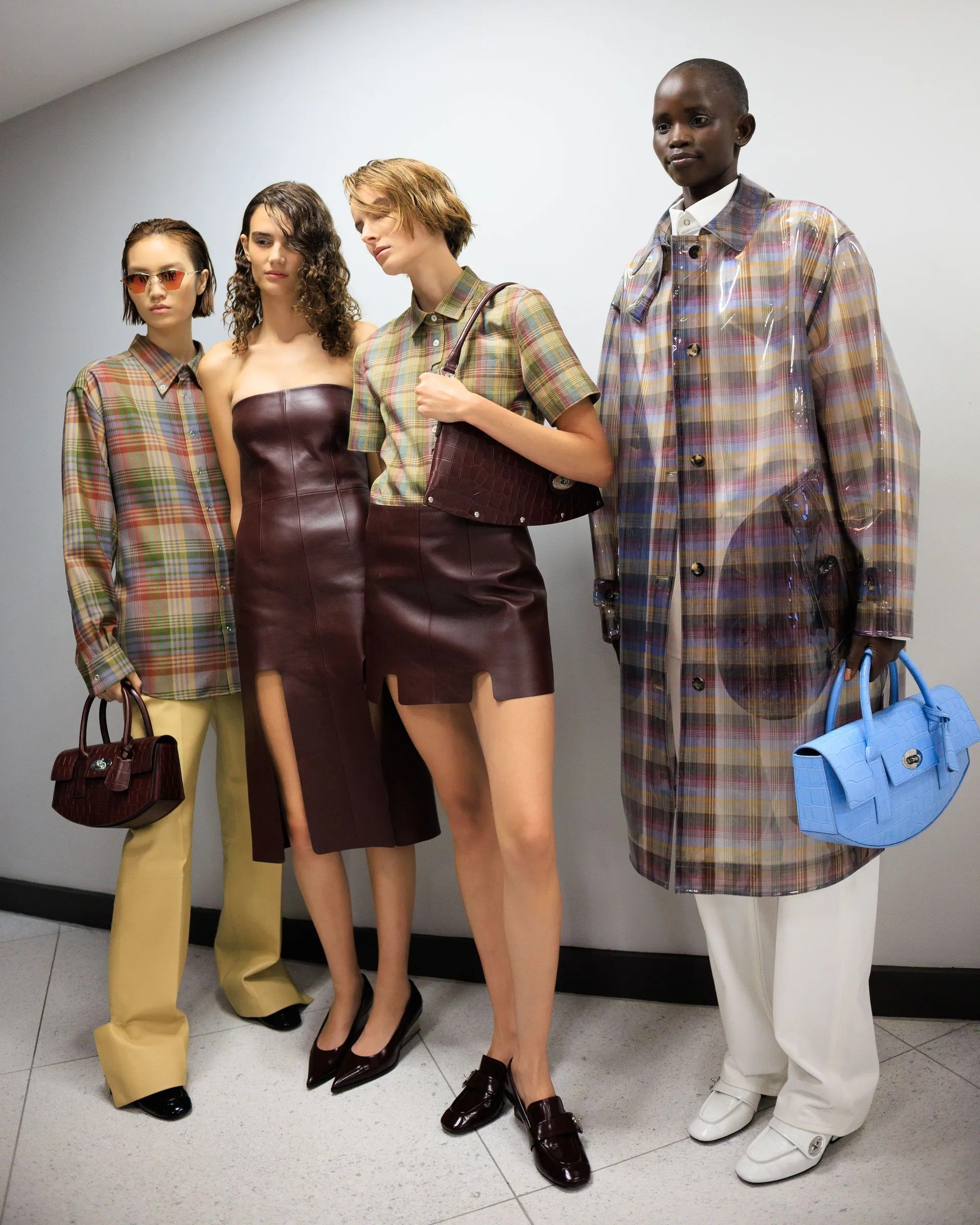
The first sign that the trend was actually gaining ground came last summer, with the increasingly insistent spread of jelly shoes (or “granchietti”, as we like to call them in Italy) on the streets of fashion capitals and on social media. An anachronistic comeback that brought PVC back into everyone’s mouth. But while until a couple of seasons ago the material, made from a mix of salt and petroleum but now also available in eco version, was explored by designers and fashion houses only for footwear, as in the case of Chloé, The Row and Bottega Veneta, this summer gelée has also conquered other areas of the wardrobe, from accessories to clothing.
To see the flourishing of PVC as a new trend material with your own eyes, you just need to take a walk through New York, Paris or Milan, search for the term “jelly” on Vinted, or observe what is currently walking the runway during Fashion Week. Online, it has already been declared «the summer of jelly,» but let’s try to better contextualize this cultural signifier.
The Jelly Firkin
@9folds a lil preview of the jelly firkins dropping today at 6pm paris time <3 #fashiontiktok #bags #pinterest EVERYTHING IS NEVER ENOUGH by INJI - INJI
To notice the now-bloomed love between fashion and PVC, you just need to take a walk through New York, Paris or Milan, search for the term “jelly” on Vinted, or observe what is currently walking the runway during Fashion Week. On the streets, models and fashion insiders wear transparent colored plastic shoes that, at first glance, evoke such a strong sense of discomfort that they seem more like a fetish than fashion; online, Vinted and some of the coolest vintage shops in Paris are full of Jelly Firkin - which is not the name of a drag queen, but a bag made of plastic and rubber.
Born as an affordable alternative to Hermès’ extremely expensive and unattainable handbag, the Firkin is a bag made of TPU or PVC that mimics the design of the Birkin, without premium leather or waiting lists. It is not a dupe, as stated by the founders of Firkin World, an independent London brand that produces them: the Firkin is «a category of its own.»
«Plastic bags are not trying to be Birkins» - Firkin World comments in a description of the accessory published on its website - «They are not made by Hermès, they do not use leather, they do not cost five figures, and they age differently. They are their own thing. But they exist inside the same broader cultural moment, and people often arrive at them by first searching for ‘Birkin’. That is why we wrote this guide: to clear up the relationship, not to muddy it.»
Dupe or not, it is still an accessory that became famous precisely because of its similarity - in both name and look - to the iconic bag created by Hermès together with Jane Birkin. And there is no need to overthink why it is so popular with Gen Z: it is cheaper (on Firkin World it is sold for about 200 euros each, though it is possible to use a couple of convenient discount codes) and certainly more playful than the “original” counterpart, thanks to its transparent effect that makes it particularly customizable.
The Jelly Shoes
jelly shoes everywhere sneak peek of saint laurent men ss27 today pic.twitter.com/IahTldm2pf
— cara (@joyrgirl) June 23, 2026
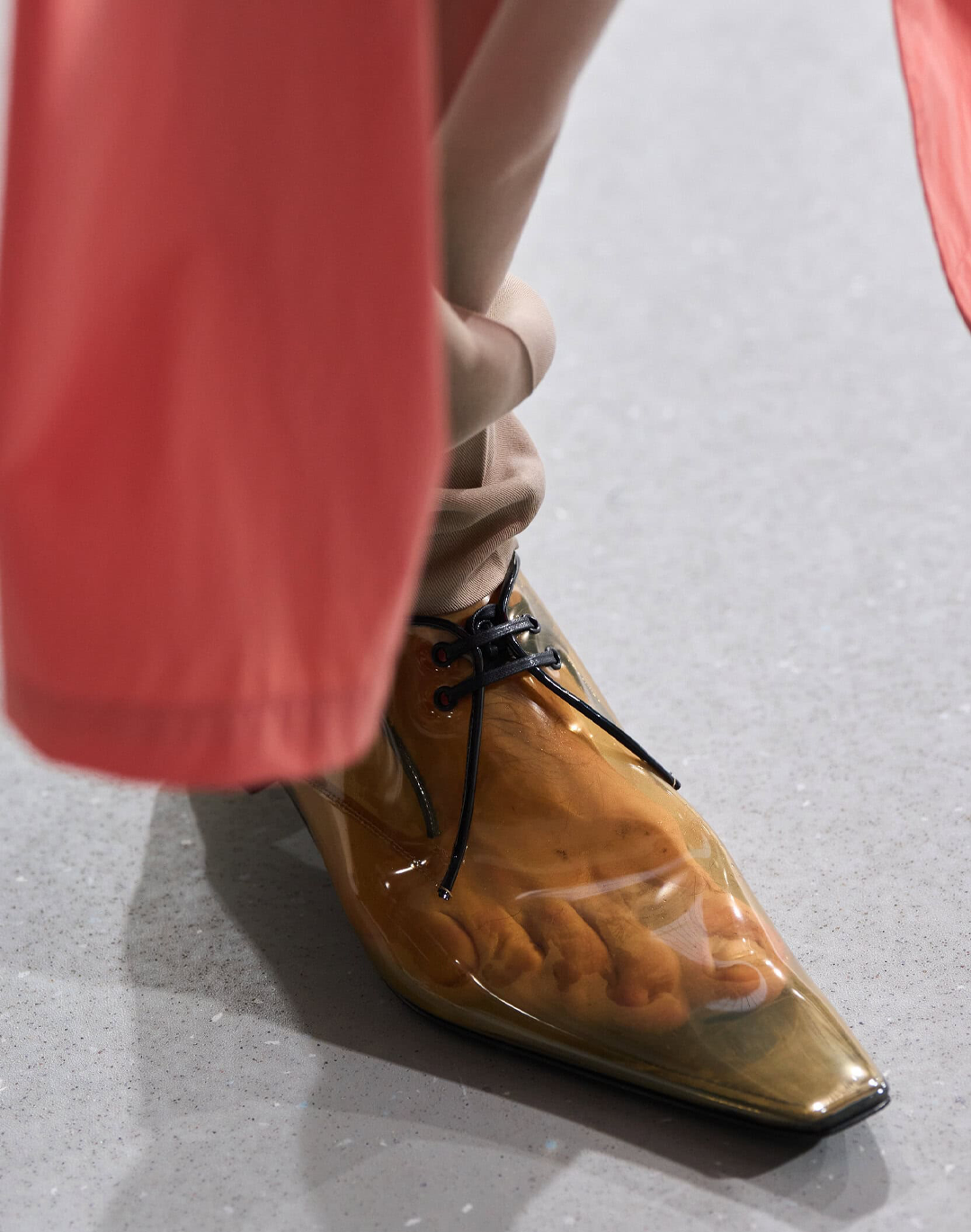
Even Jelly Shoes continue their steady rise, public outrage from skeptics aside. After last year’s proposals from Chloé, The Row and Bottega Veneta, which interpreted the trend in their own way through heeled flip-flops, mesh ballet flats and clogs respectively, other brands have also introduced gelée shoes. The most discussed was Saint Laurent, which just these days, for SS27, sent models down the extremely hot Paris runway wearing sharply pointed (very sharply pointed) fully transparent lace-ups.
This was clever: a clear jelly bootie at #Loewe that can be worn with different color liners depending on your outfit. When you change your clothes, you change your socks but not your shoes. Economic! pic.twitter.com/AmYTXAIJfW
— Vanessa Friedman (@VVFriedman) October 3, 2025
Loewe, for FW27, instead explored the trend without exposing uncomfortable feet, but by creating ankle boots with kitten heels in PVC to be paired with special colored socks. «And they only cost $1,000! So smart, so economically-friendly!», sarcastically remarked a user on X as soon as they were presented to the public - and they were not entirely wrong, since they were later put on sale for $1100.
A Matter of Touch
@polyesterzine If you’ve been hit with a slew of jelly Firkins by your Vinted algo, you’re not the only one… The current it bag for girlypops is the latest in a long line of jelly-textured and transparent fashion trends But what does that tell us about how we live now??? Head to the usual to find out!! Words: Isobel Slocombe #jellyfirkin #polyesterzine #jellybag #summer2026 #trends original sound - PolyesterZine
Behind this strange trend there are already several theories. Trend forecasters and journalists around the world have seized the opportunity: seeing the explosion of such an unusual material on luxury runways (as well as a Gen Z trend that goes against the sustainability ideals that have long been associated with younger generations), they have started analyzing it in search of the reason behind its success.
PolyesterZine, for example, explains that while «In late medieval devotional culture, transparency was presented as a spiritual condition» and artistic representations of translucency were associated with divine light and paradise, today the trend has little to do with spirituality. Instead, it is entirely materialistic, explains author Isabel Solcombe: «The Summer of the Jelly’, by contrast, is on the surface, largely self-curated. We are choosing to be seen through.» On TikTok, meanwhile, some creators argue that the main drivers of the success of gelée accessories are nostalgia and a recession indicator, to use the digital term of the year.
There is, however, an explanation that perhaps escapes everyone and makes the trend much simpler than it seems. Alice Malaret, a food designer who has made jelly desserts a signature of her studio Douceurs Capitales, said in an interview with nss: «We spend our time on our phones, clicking on a glass screen,» so anything more tactile than a screen «brings us back into contact with our sensitivity.« Perhaps the real reason for the success of jelly accessories in 2026 is precisely this: tired of AI and of those who tell us that new technologies are the only thing worth investing in, we are turning to everything that is more tactile. Colorful jelly desserts, plastic shoes, transparent bags that reveal the everyday objects we carry with us.