







































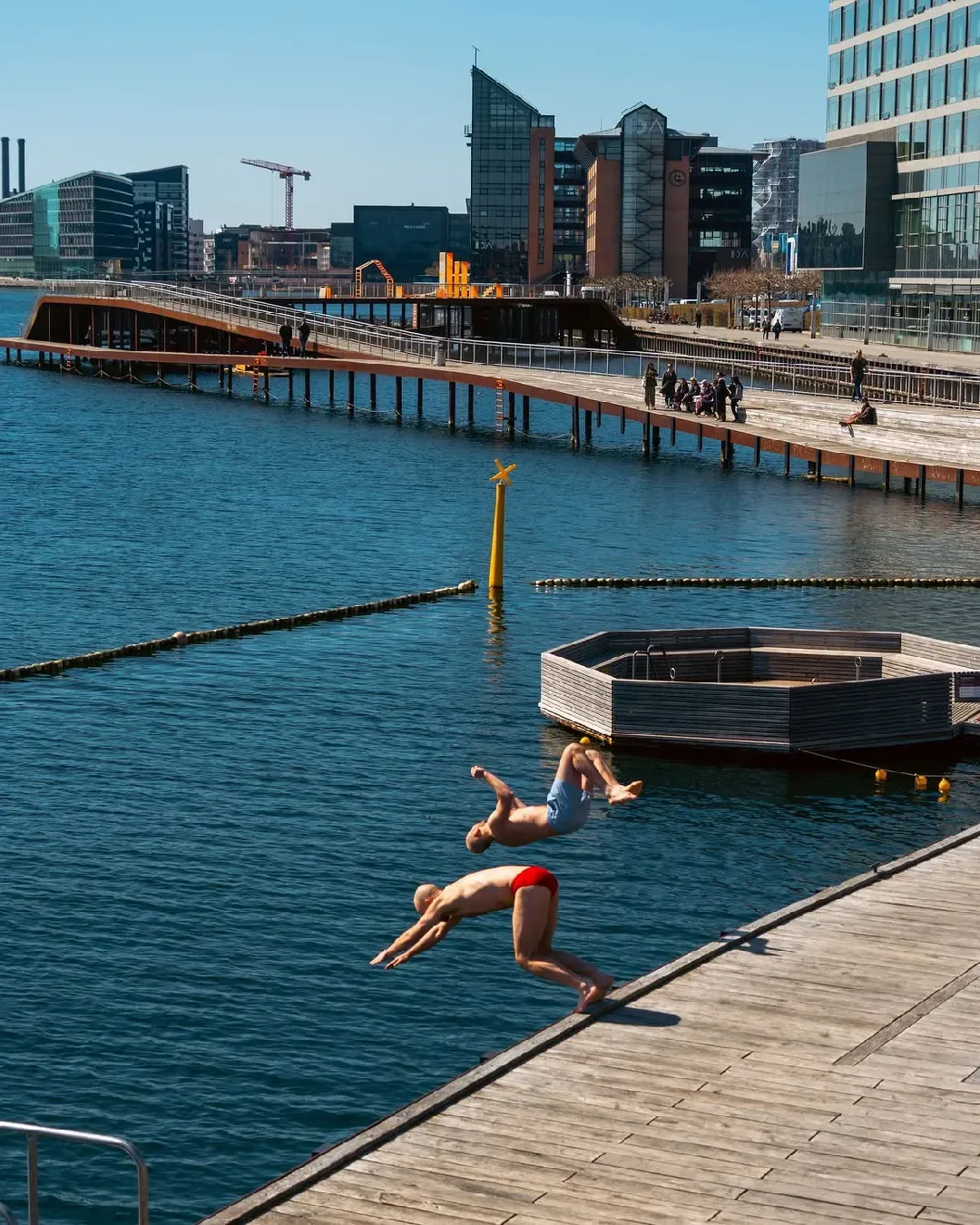
Copenhagen is once again the world's most liveable city According to the Global Liveability Index 2026
The Economist Intelligence Unit (EIU), an organisation affiliated with the British newspaper The Economist that focuses on economic analysis and research on countries, markets and cities, has published the Global Liveability Index, an annual ranking active since 2011 that measures liveability in more than 170 major cities around the world.
The ranking is the result of analysing hundreds of indicators grouped into five main areas: socio-economic stability, healthcare, culture and environment, education, and infrastructure quality. The 2026 edition sees Copenhagen in first place for the second consecutive year, while Damascus, Syria, brings up the rear — though Tehran, Iran and Kyiv, Ukraine have also fallen to the bottom of the rankings as a result of the ongoing wars in those two regions. Among the cities that have made the most notable progress over the past year is New York, which since last November has been governed by Zohran Mamdani, a highly pragmatic and charismatic figure from the progressive wing of politics.
The 10 most liveable cities in the world
@thegirlstripto Save this video if you’re travelling to Osaka 10 things to do in Osaka #osaka #osakajapan #thingstodoinosaka #osakathingstodo #osakanamba #osakatravel #osakajapan /Stay With Me - 松原みき
According to the new report from The Economist, the world's most liveable cities are spread predominantly across Europe, Australia and Japan. Vienna, which held the top spot for three years before being overtaken by Copenhagen, remains in second place, followed by Melbourne and Sydney in Australia, Zurich (which has nonetheless dropped three places compared to 2025) and Geneva in Switzerland, Osaka in Japan, Adelaide and Vancouver — the sole Canadian entry — and rounding out the top ten, Tokyo.
Copenhagen's initiative to promote sustainable tourism
@mariadjonsson Welcome to the first episode of “Romanticize life in Copenhagen on a budget” My first tip to explore and enjoy Copenhagen on a budget, is to check out CopenPays free activities this summer! At Banegaarden you can get a FREE meal when you help collect trash in the area (annonce bc of earlier partnership). How cool is that? Stay tuned for more activities and things to do in Copenhagen on a low budget! #copenhagen #københavn #copenhagenguide #lifeonabudget #budgettravel #sommer #romanticizeyourlife #romanticizinglife #CapCut Kiss Me - Sixpence None The Richer
The Danish capital scored 98 out of 100 on the index, achieving the maximum score in three categories: healthcare, stability and infrastructure quality. The city has long been attracting attention for its quality of life, and it comes as no surprise that visitor numbers are on the rise.
In response to the city's growing popularity, the Copenhagen tourism board launched the CopenPay programme: the project, launched in 2024 and still running today, consists of a series of rewards aimed at tourists who are mindful of their impact on the city and the surrounding environment. In short, visitors who, for example, pick up litter or get around the capital by bicycle can receive small rewards, such as free admission to participating venues, complimentary meals or drinks, among other things.
In the past, the National Gallery of Denmark offered a workshop teaching visitors how to create sculptures from the plastic waste they had collected for the occasion. Alternatively, anyone who could show they had arrived at CopenHill — an artificial ski slope built on top of a new waste-processing facility — by train or bicycle was entitled to a free run down the slope.
How is Copenhagen coping with overtourism?
Across Europe, a growing number of cities are feeling the effects of overtourism. Amsterdam, for instance, has launched campaigns to discourage people from visiting, while Paris and Barcelona have introduced restrictions on short-term rentals. Other major destinations are considering measures similar to those adopted by Venice, which in 2024 introduced a paid entry ticket for visiting the city during certain periods of the year.
Although Copenhagen's situation differs from that of the destinations most severely affected by overtourism, the Danish capital has chosen to tackle the phenomenon by focusing on incentives rather than restrictions. The goal of the CopenPay project is to encourage visitors to adopt behaviours more in keeping with those of the city's residents, who have always been particularly mindful of sustainability and reducing their environmental impact — a contrast that is quite evident when compared with the majority of tourists who visit the city. According to its promoters, the initiative aims not only to make tourists' experience in the city more responsible during their stay, but also to foster positive habits that can be maintained once they return to their home countries.