
The surrealist turn of luxury heels During the last fashion month, shoes stole the spotlight from clothes
Judging by the collections presented during the recently concluded fashion month, understanding where fashion is headed requires more than just looking at jacket cuts or skirt lengths — you need to focus your attention above all on footwear. At the latest fashion shows, shoes — particularly heeled ones — with singular designs and refined shapes have taken to the runway: some decidedly eccentric, others more conceptual, but all capable of stealing the scene from any outfit. So why are luxury brands pushing so decisively toward more surrealist footwear?
Less norm-shoes, more freaky shoes
According to recent analyses by Vogue Business, the explosion in demand for freaky shoes responds first and foremost to a specific economic dynamic: faced with the sales decline hitting the luxury handbag market, shoes represent a more financially accessible entry point, allowing brands to win back the precious aspirational customer segment. The shoe thus ends up acting as a true "manifesto detail" for a collection: a single pair of shoes allows the buyer to appropriate the imagery — and the status — of a brand without having to purchase its entire wardrobe. For the maisons, moreover, pushing the constructional complexity of footwear means showcasing their artisanal virtuosity, transforming an accessory into a concentrated expression of pure manufacturing mastery.
This choice simultaneously erects a technical barrier against counterfeiting, making these designs almost impossible for the fake market to replicate. Beyond the financial aspect, there is also a purely stylistic reason: an extravagant heel radically transforms and, above all, "adds character" even to the most minimal and normcore look, confirming that the formula "basic clothes + wild shoes" still works. Nor should the strictly media-driven nature of the trend be underestimated: within a hypersaturated digital landscape, the outlandish shoe functions as a formidable thumb-stopper — a high-visual-impact piece of content that brands exploit by dedicating entire posts and reels to close-ups of runway footwear details.
Whimsical heels and historical footwear
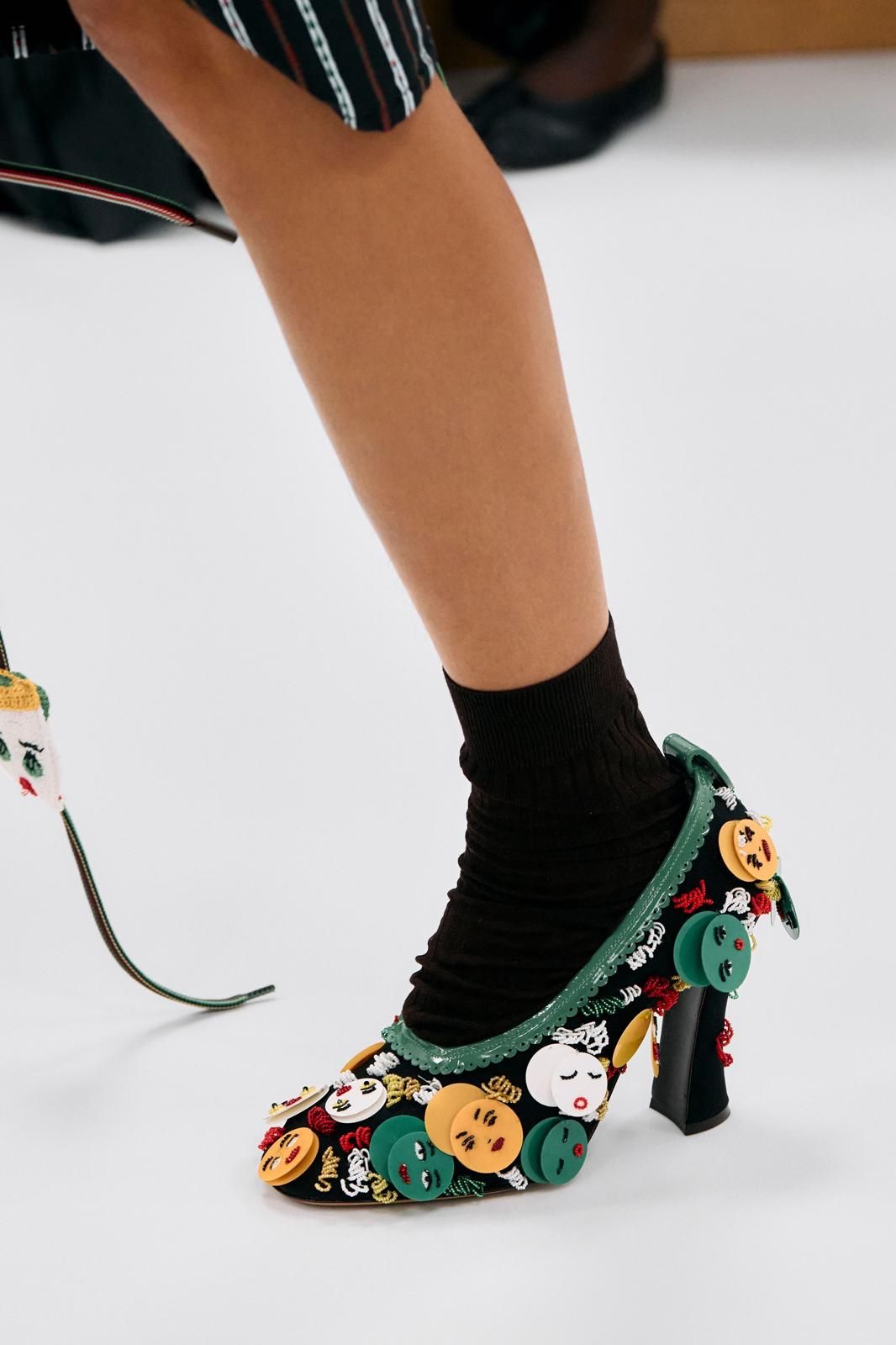
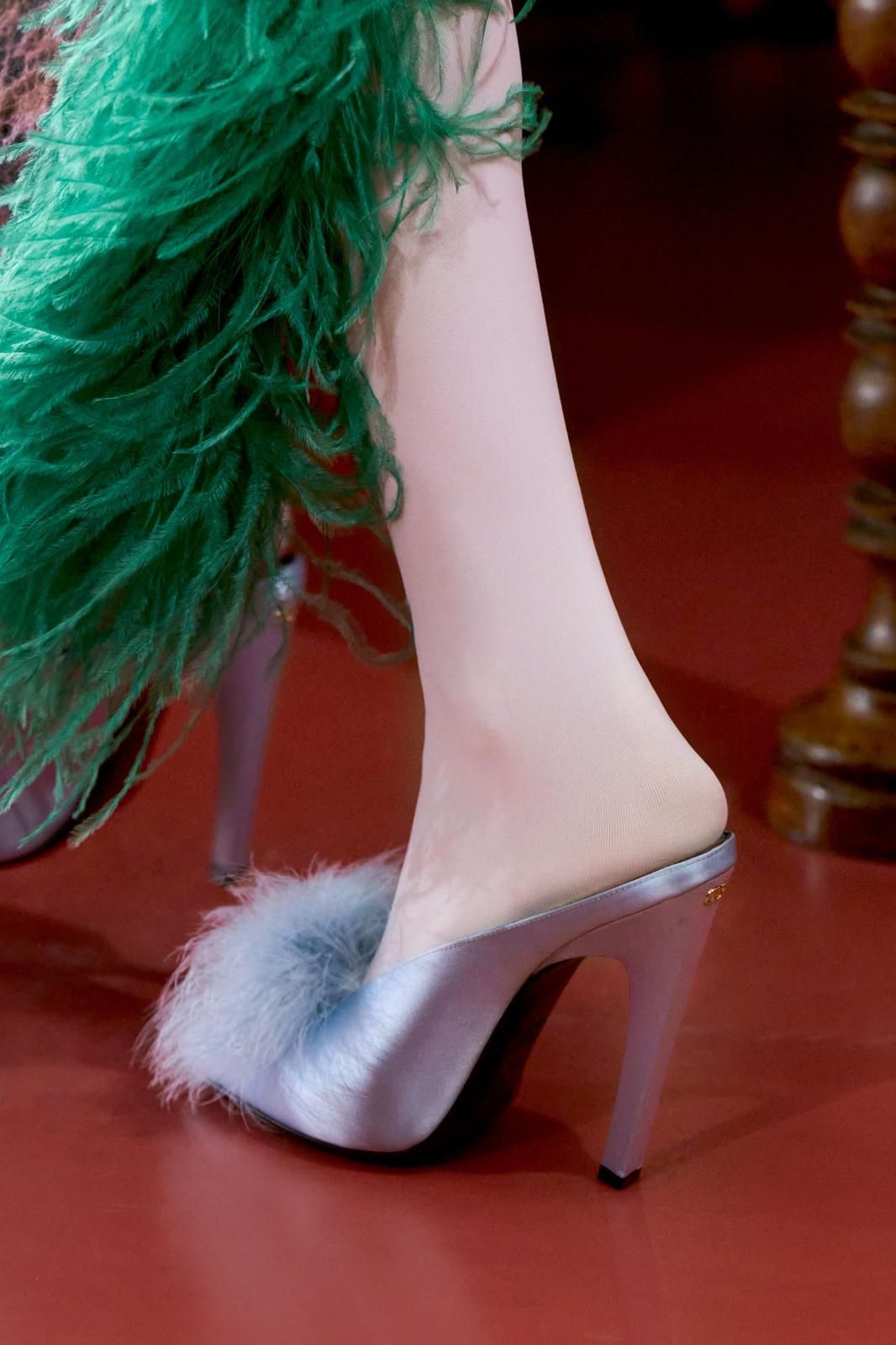
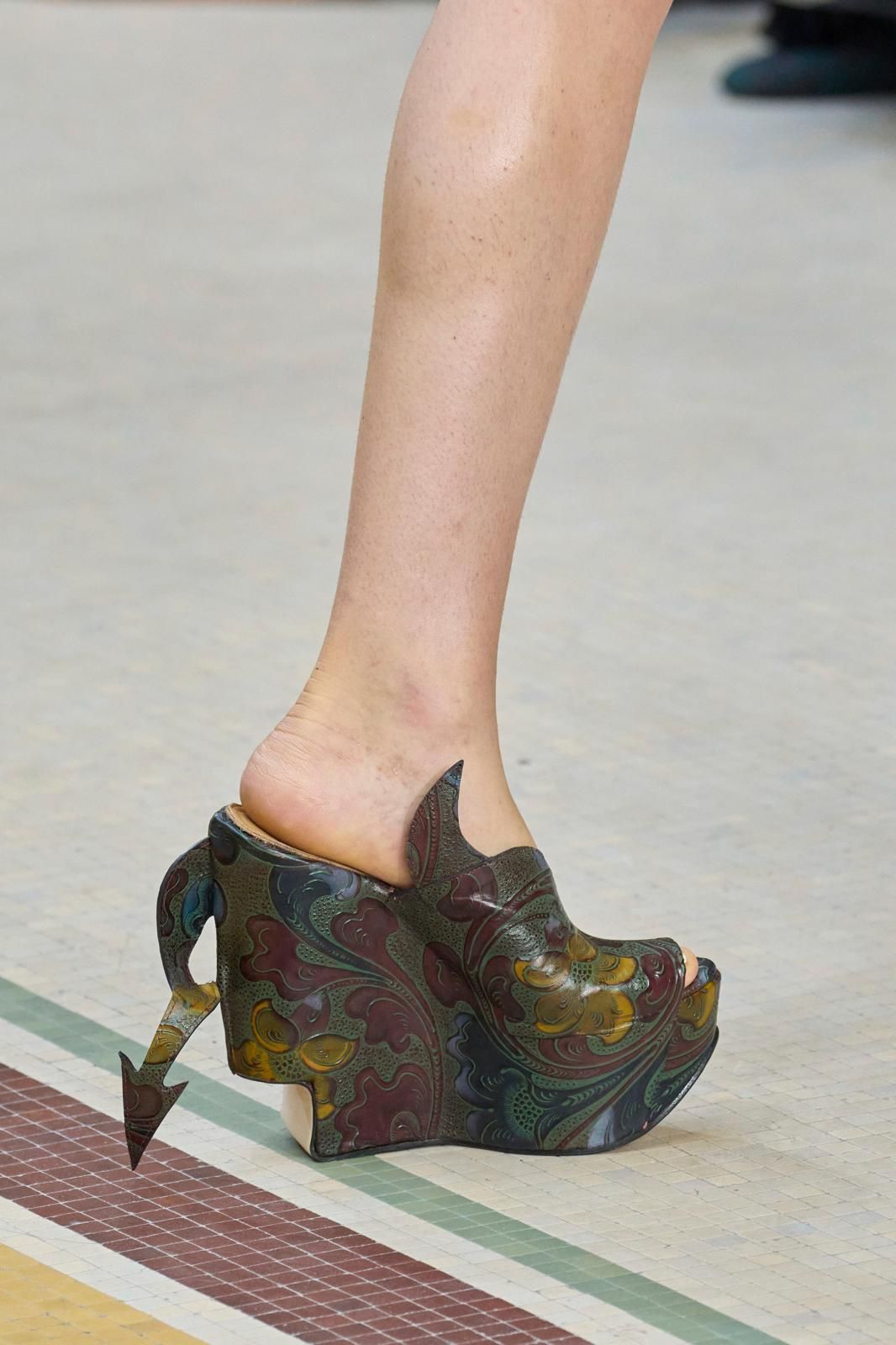
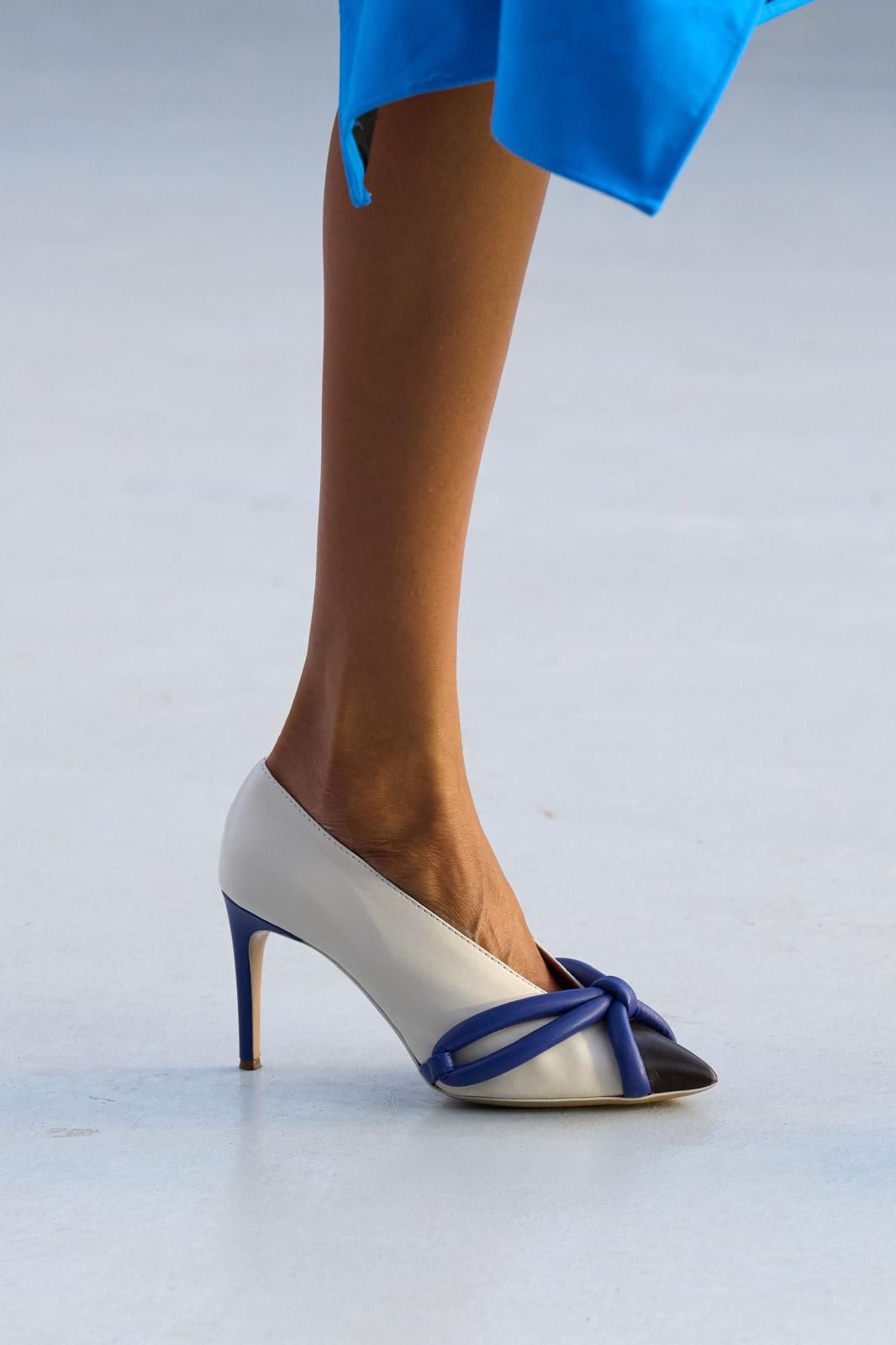
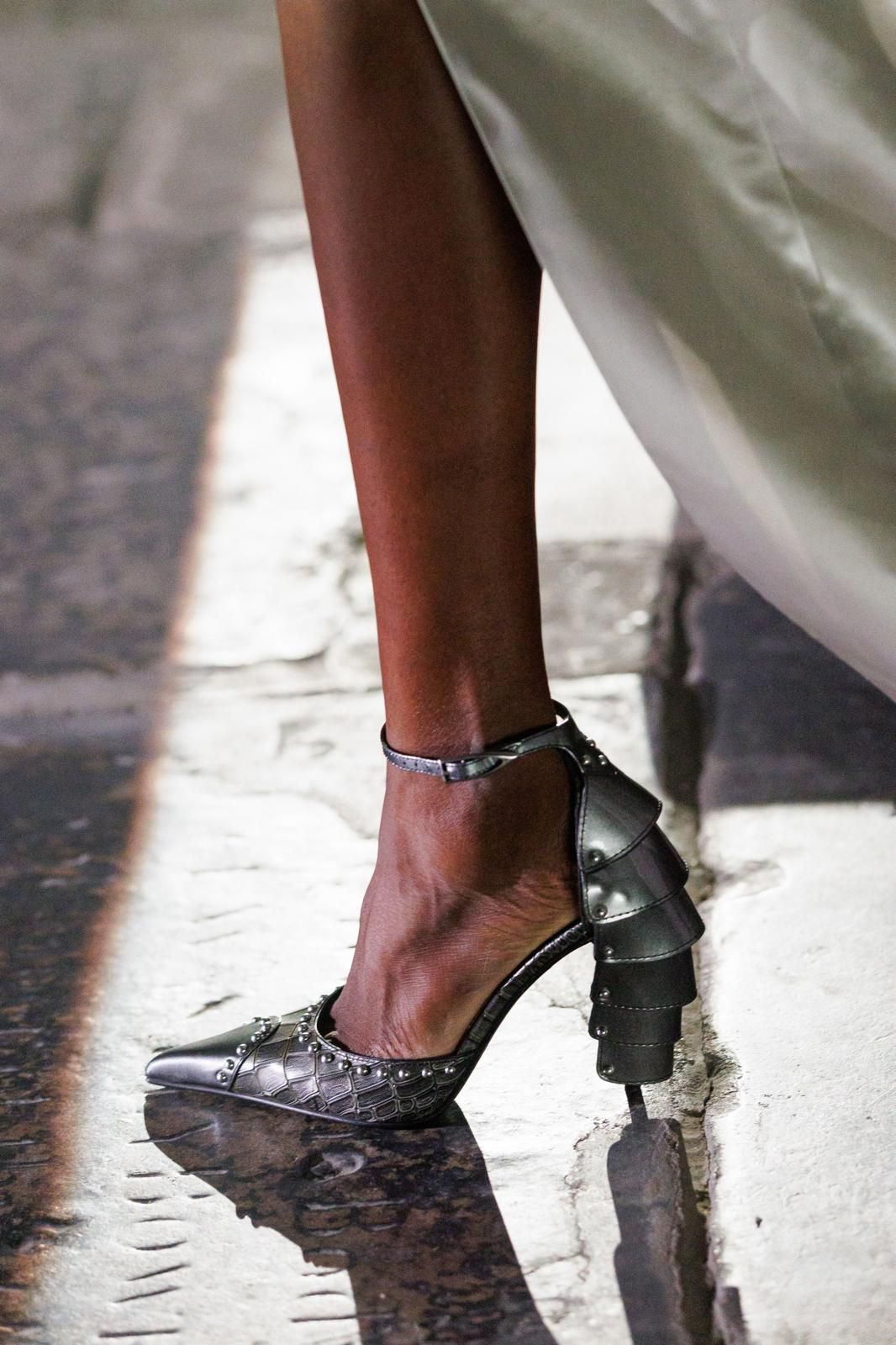
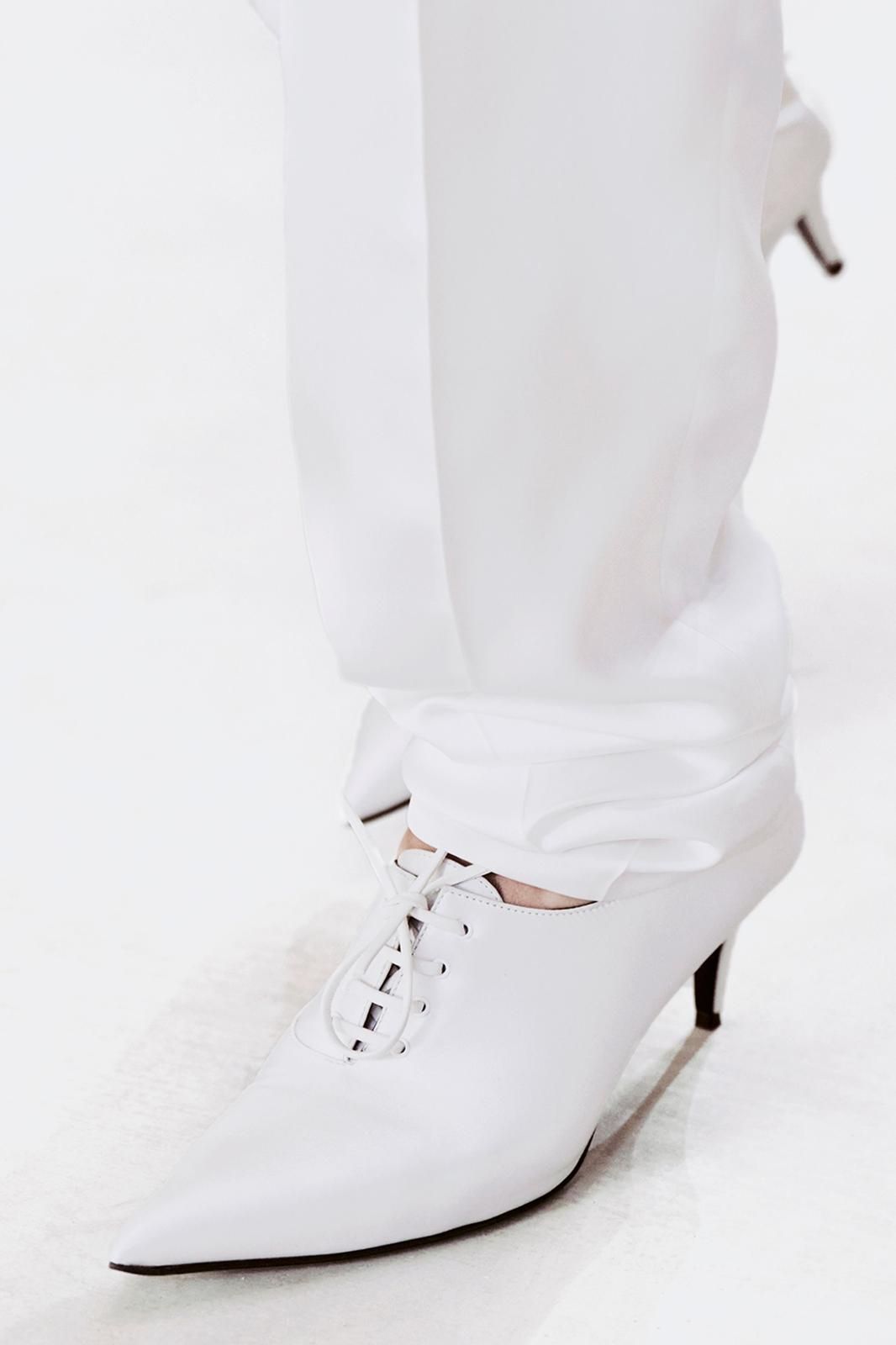
Within the universe of surrealist heels, several distinct aesthetic strands can be identified. The first observable in recent collections falls under whimsical aesthetics, where heels are born from a fantastical, playful, and at times fairytale-like imagination. From Thom Browne's butterfly-heeled shoes and ladybird-toed pumps to Burberry's SS27 décolletés with dangling emoji charms, these designs tap into so-called dopamine dressing: the tendency of brands to use bold shapes, details, and colors to boost the wearer's mood and evoke positive emotions. In several cases, sources of inspiration range from the sacred to the profane: Dolce&Gabbana, for instance, proposes rosary-bead heels and boots that appear to be modeled on the structure of a papal mitre, while Andreas Kronthaler for Vivienne Westwood creates wedges reproducing a devil's horns and tail.
Staying on an ironic and carefree note, Moschino brings to the runway décolletés adorned with bows in a "plasticine" effect, while McQueen revives a shoe reminiscent of a medieval knight's armor. On that note, several brands have drawn inspiration from historical footwear: Acne Studios, for example, opts for shoes that look as though they were stolen from Marie Antoinette's wardrobe, while Hodakova proposes a hybrid between a classic English monk strap and a Louis XIV-style block-heeled shoe. At Valentino, Alessandro Michele sends retro-flavored mules down the runway — worthy of an old Hollywood diva — and Michael Rider for Celine's SS27 revisits the jazzy zizi shoes à la Gainsbourg, transforming them into refined heeled pumps.
Opulent surrealism
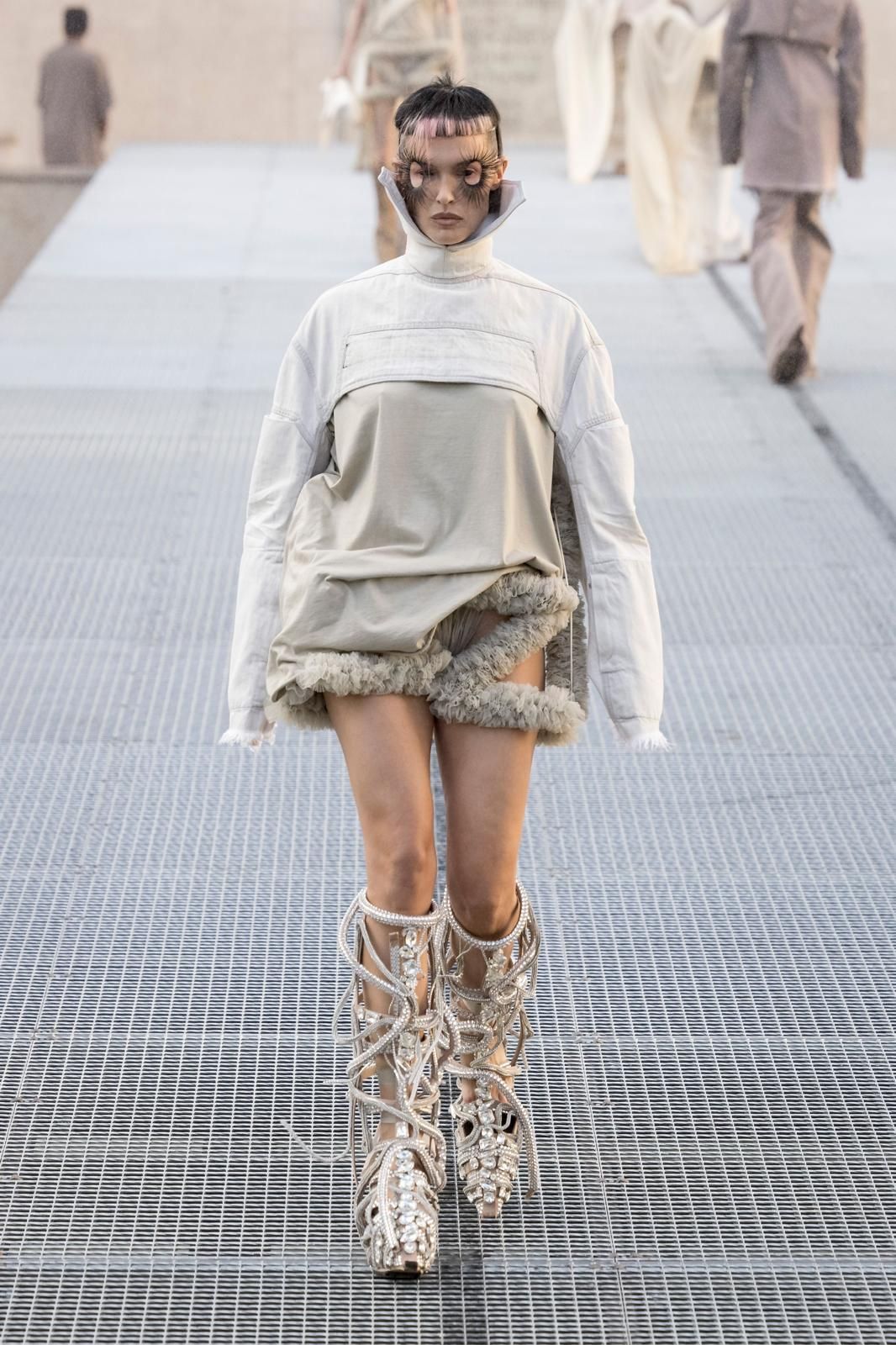
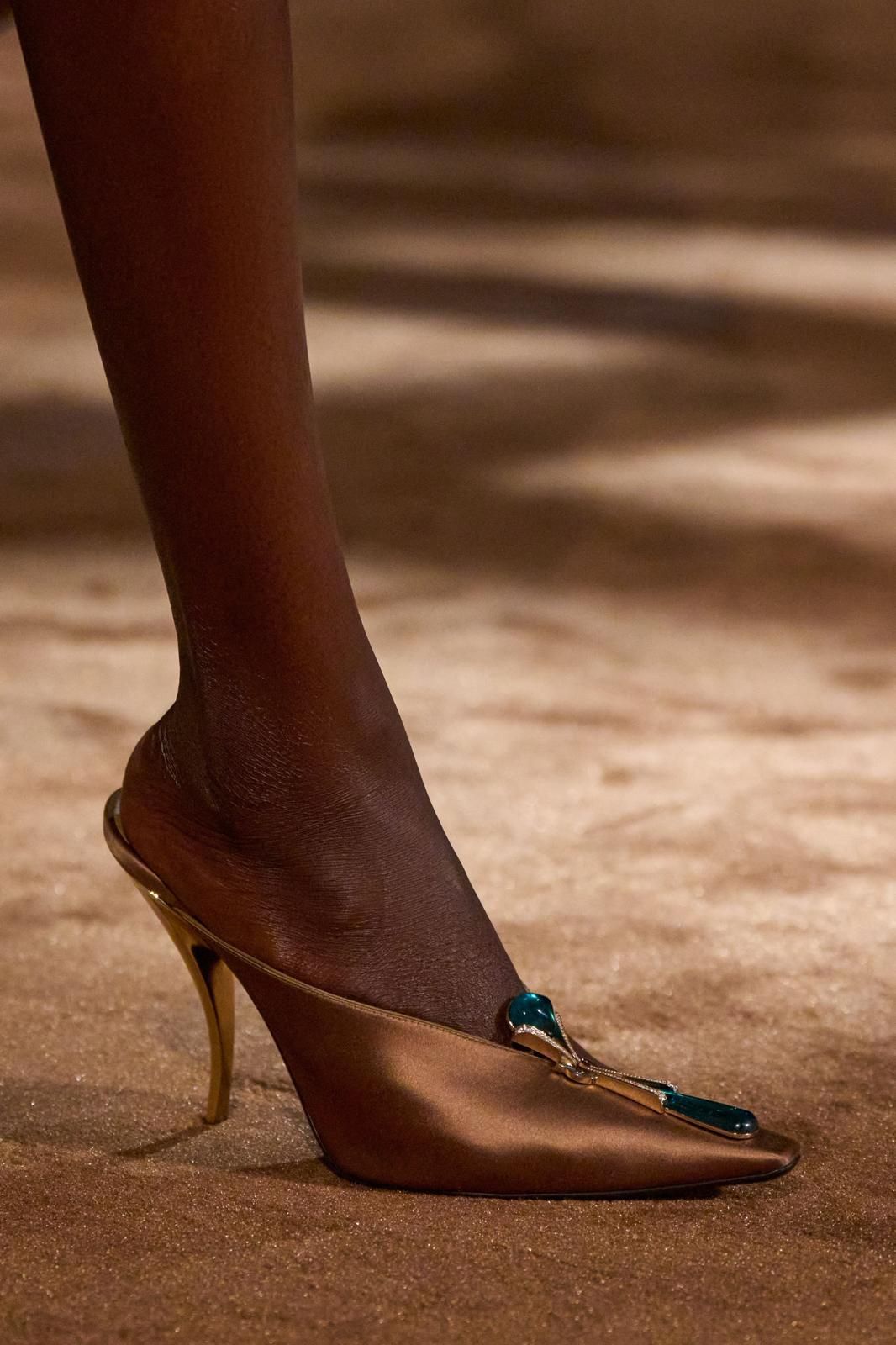
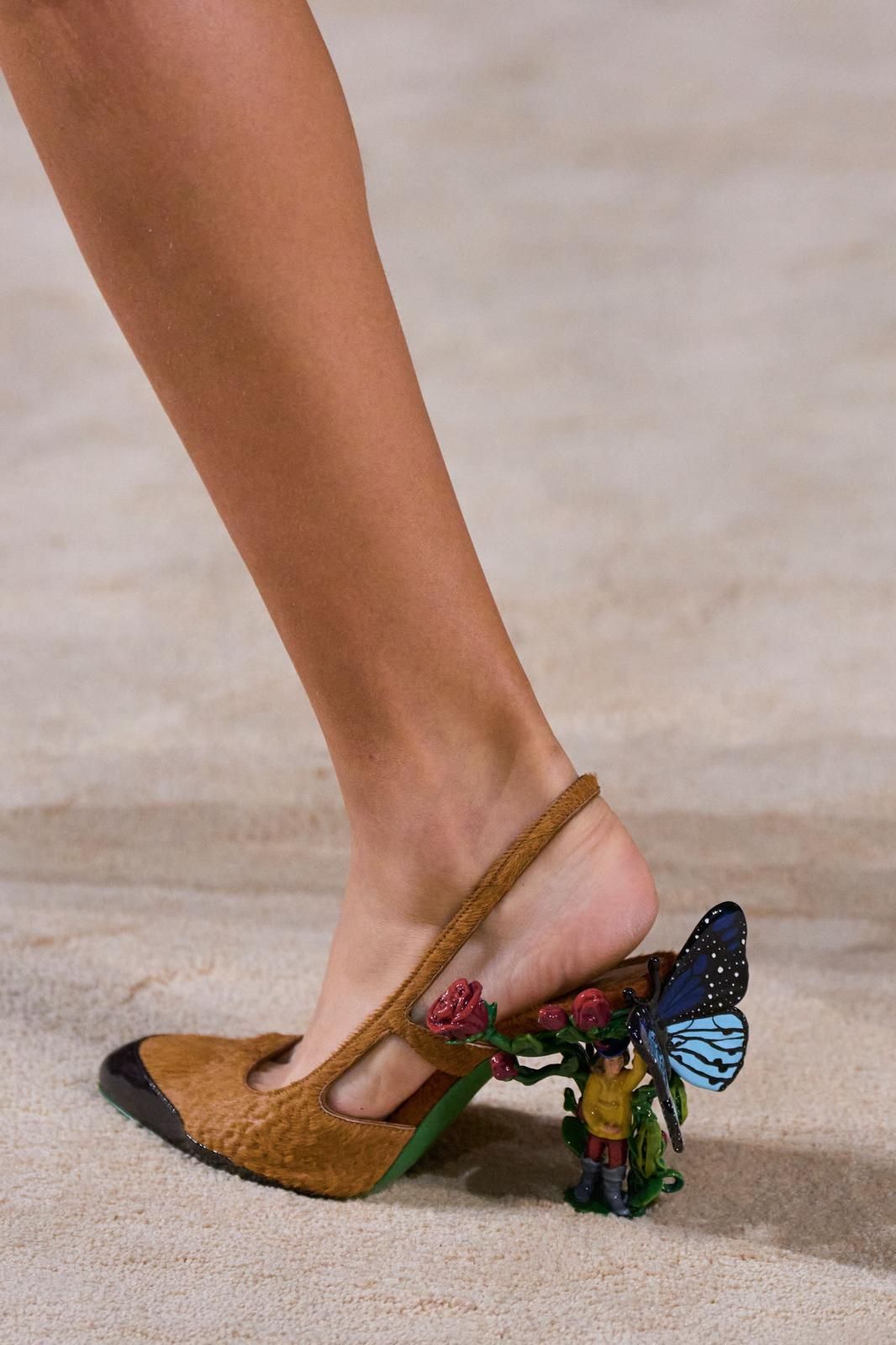
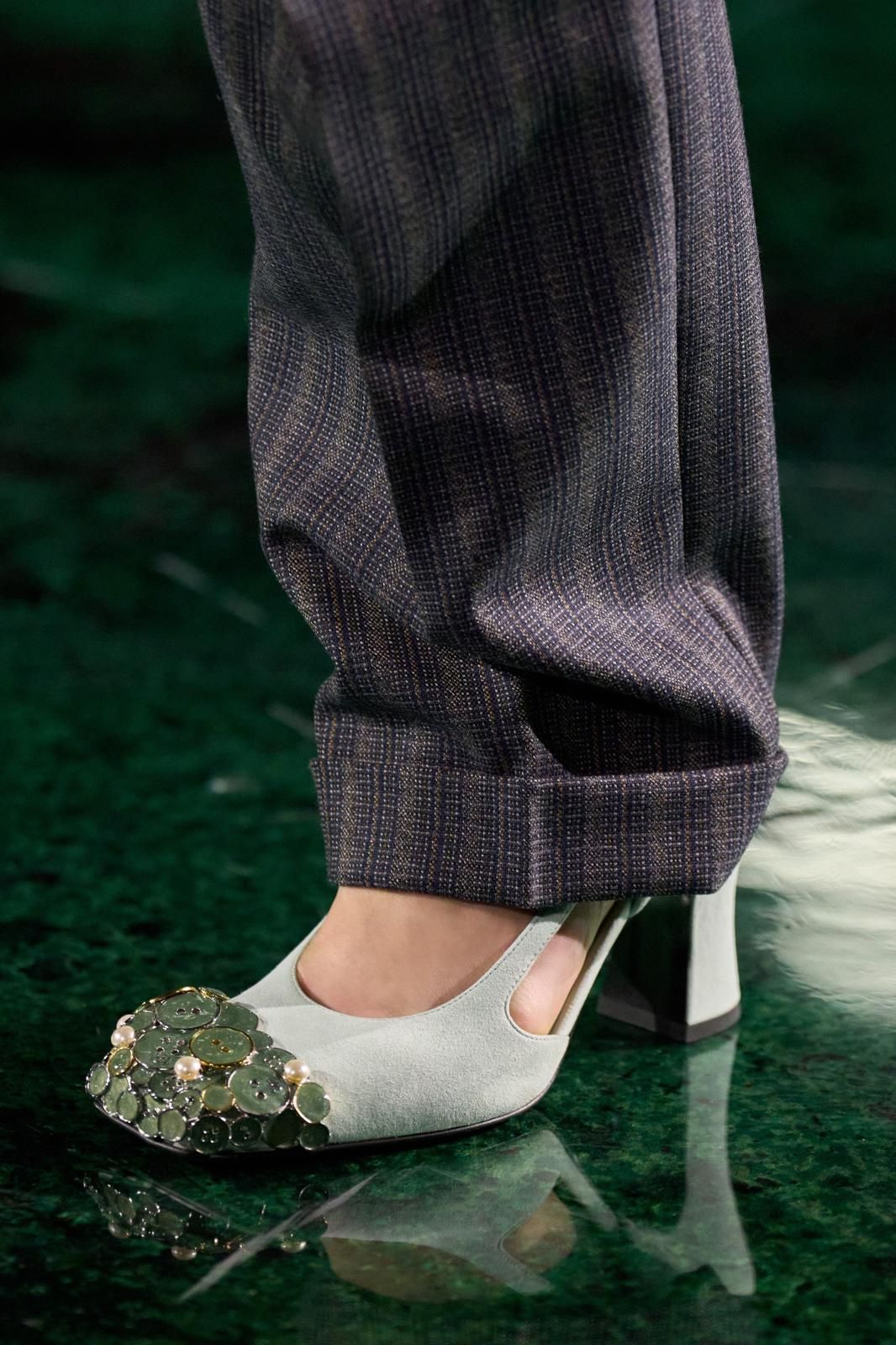
The return of surrealist heels can certainly be traced back to the work of Matthieu Blazy, who since taking the helm at Chanel has given free rein to his imagination in footwear: think of the two-tone shoes presented in his debut collection that sold out instantly, the fairytale-inspired — almost Disneyesque — designs from his most recent Couture show, right through to his latest ready-to-wear collection, where we find heels adorned with baroque friezes, sometimes covered in buttons at the toe or decorated with playing card symbols such as spades and hearts.
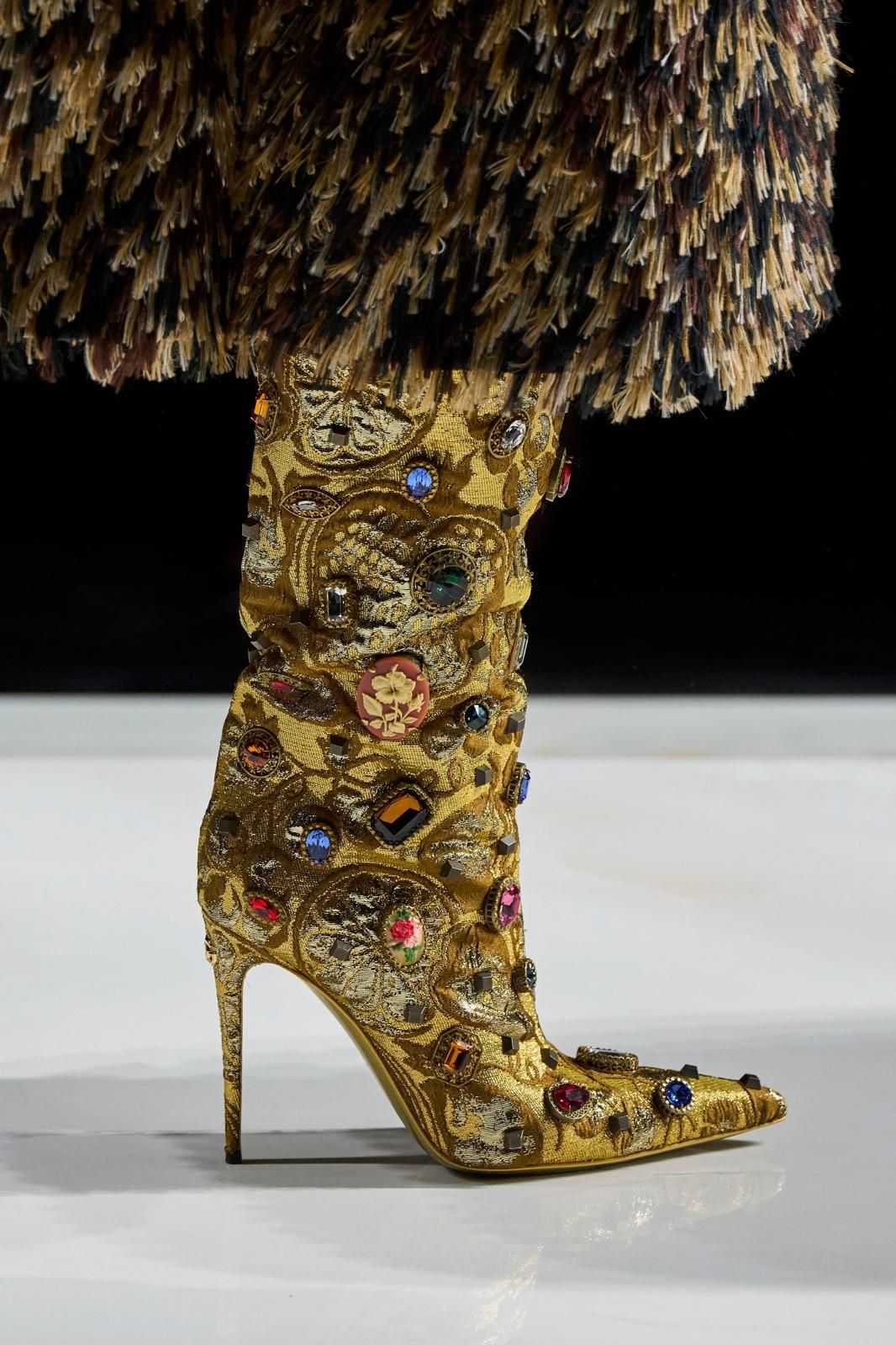
This opulent surrealism, of which Blazy has been the trailblazer, has influenced other creatives who have transformed their footwear into genuine pieces of fine jewelry: witness the décolletés with golden serpent heels from Saint Laurent, the pointed satin shoes embellished with droplets and rhinestones from Ferragamo, and the sculptural boots encrusted with strass and crystals from Rick Owens's latest fashion show.
Pump heels and conceptual heels
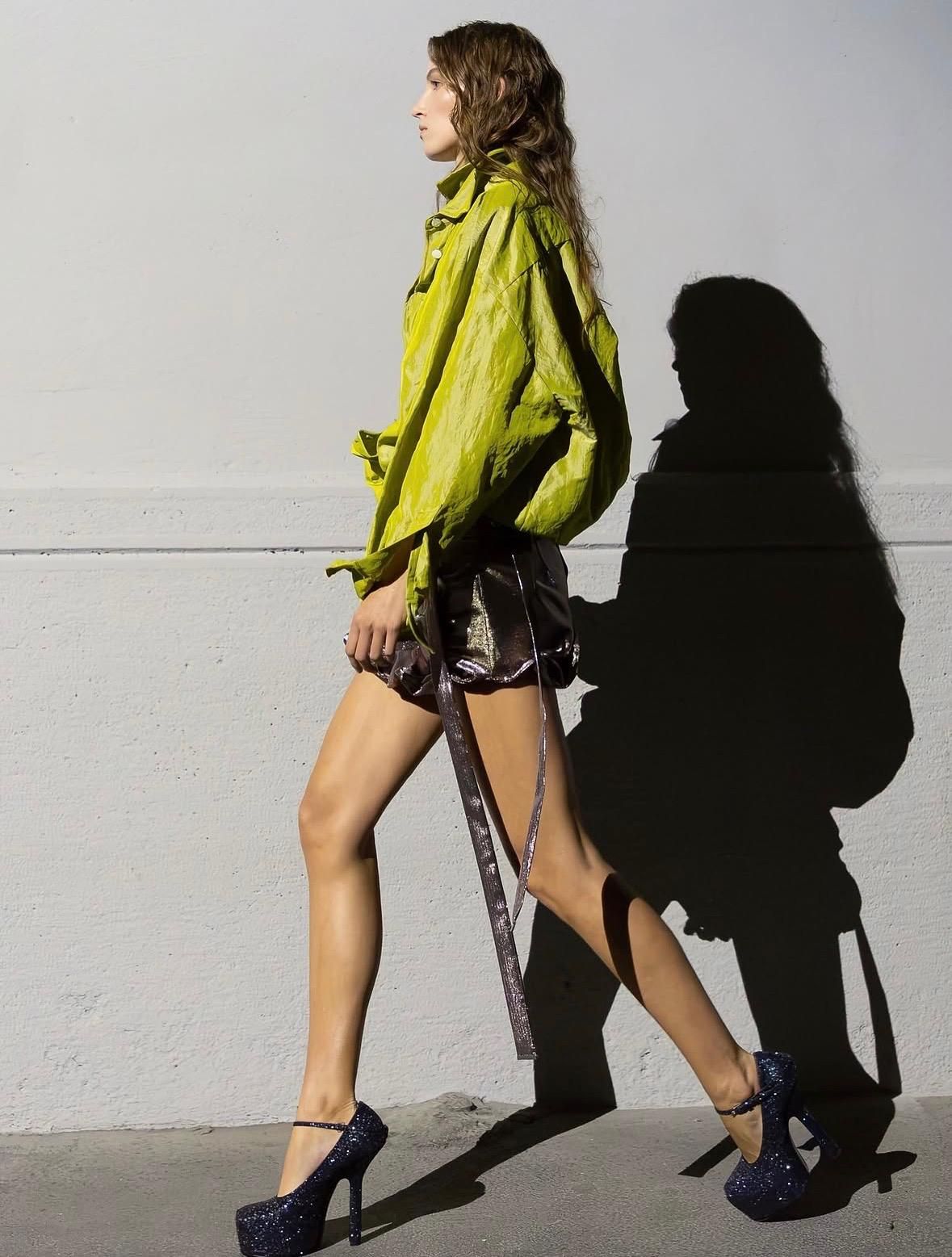
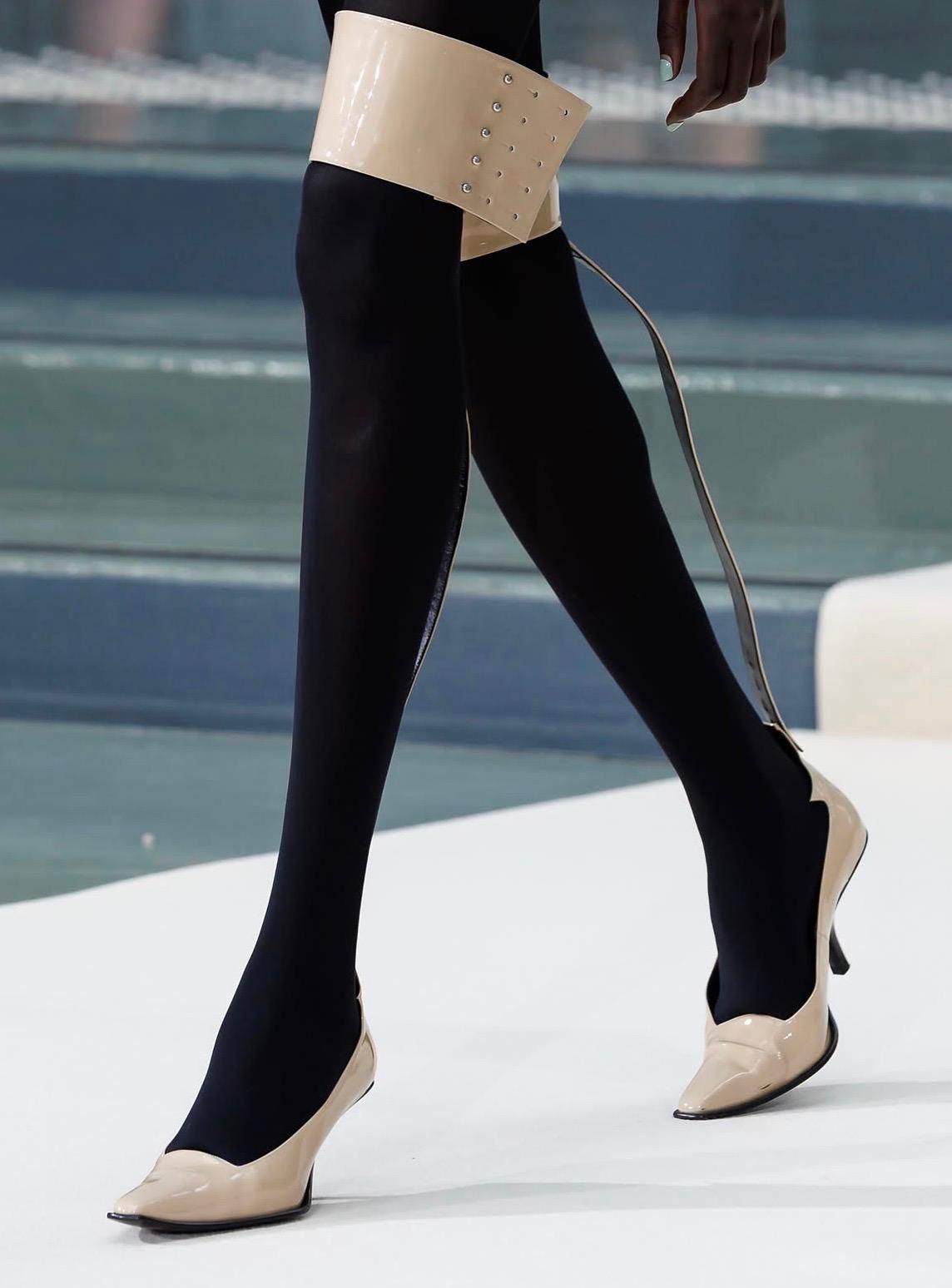
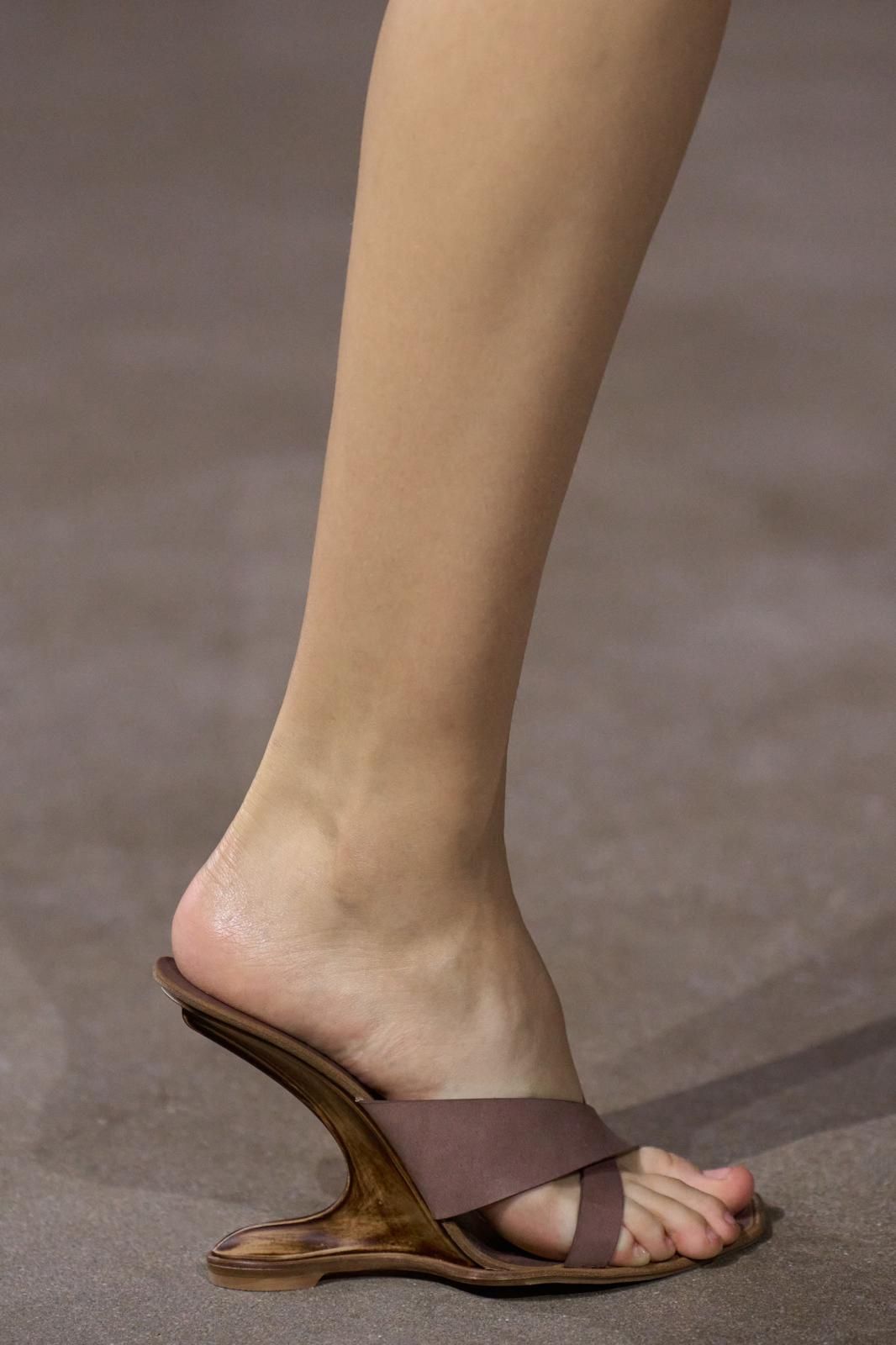
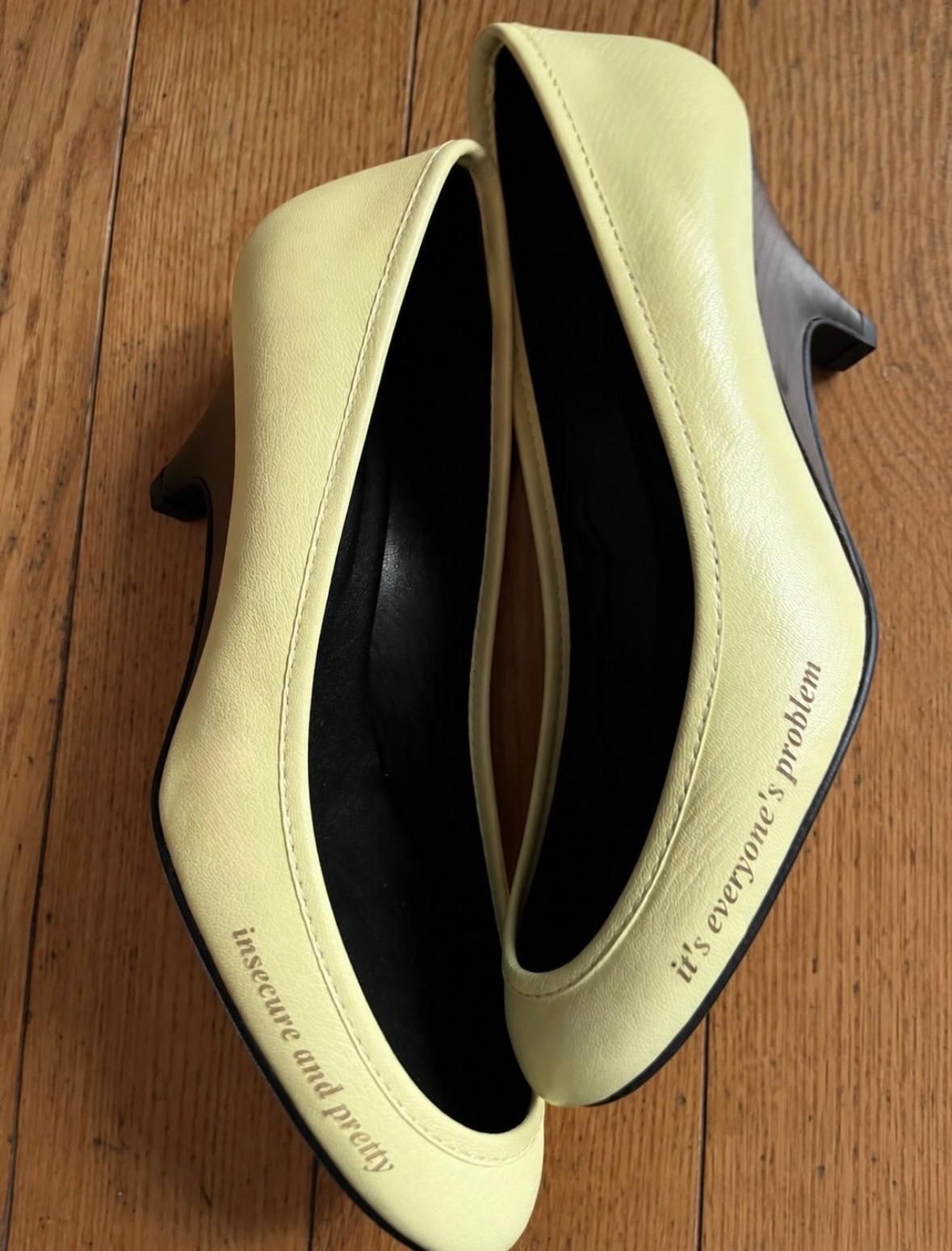
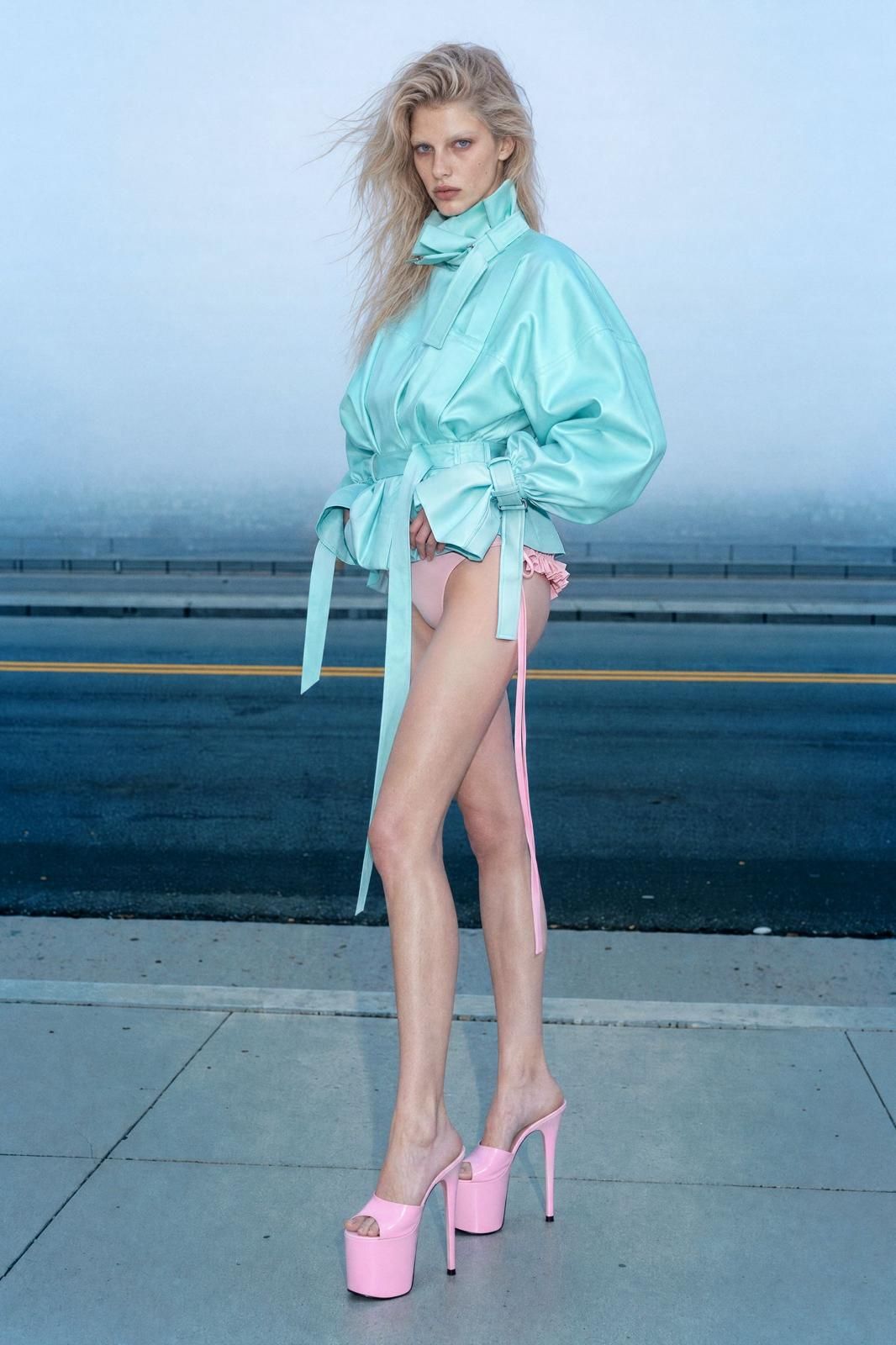
Another clear signal of this renewed interest in freaky shoes is the return of bold platform heels: on the runways we have seen them in velvet or covered in glitter at The Attico, in the form of shocking-pink stripper heels at David Koma, while Nicola Brognano, for his latest show at 7 For All Mankind, has revived the appeal of pump heels — also known, somewhat ironically, as "ankle-killer" shoes.
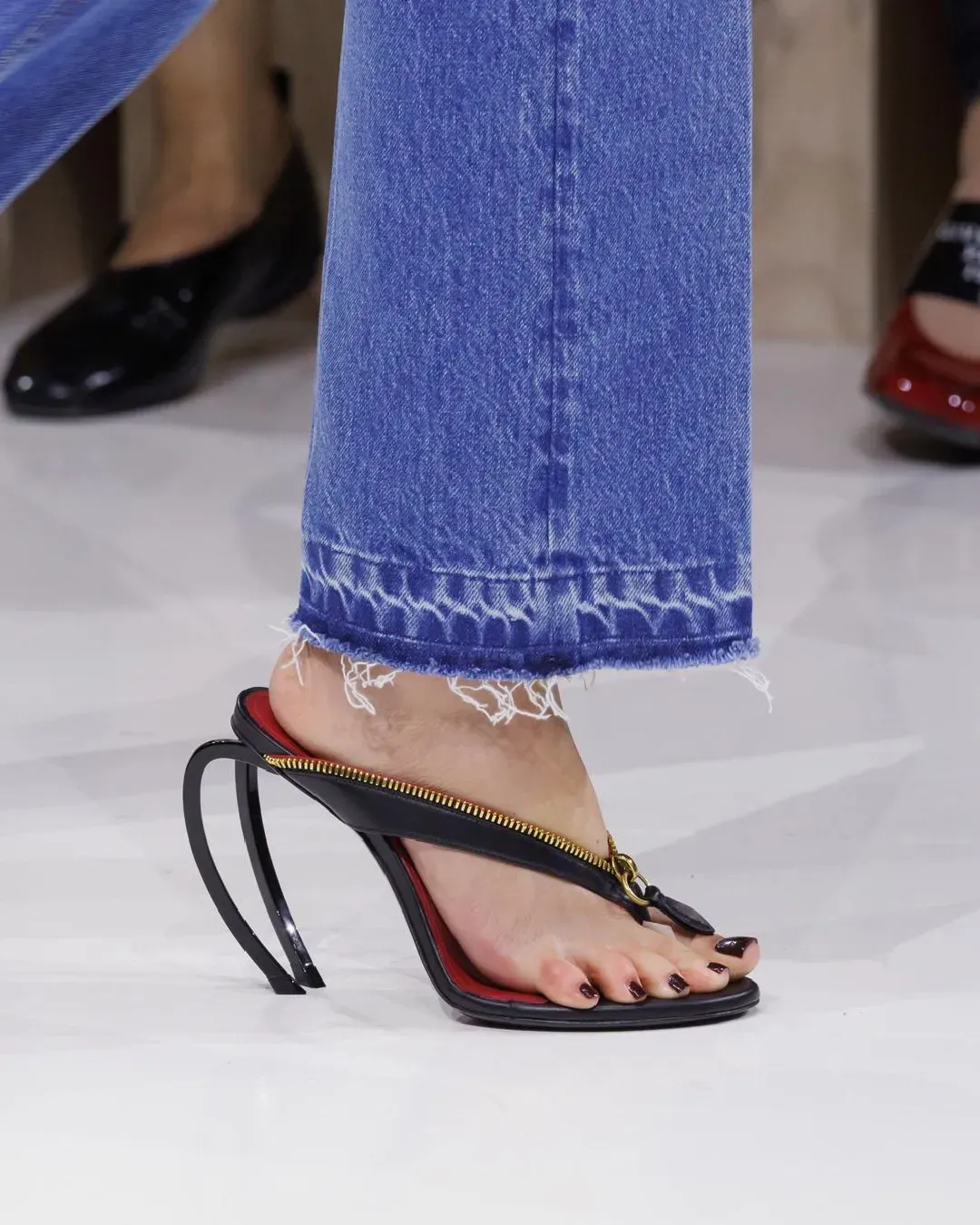
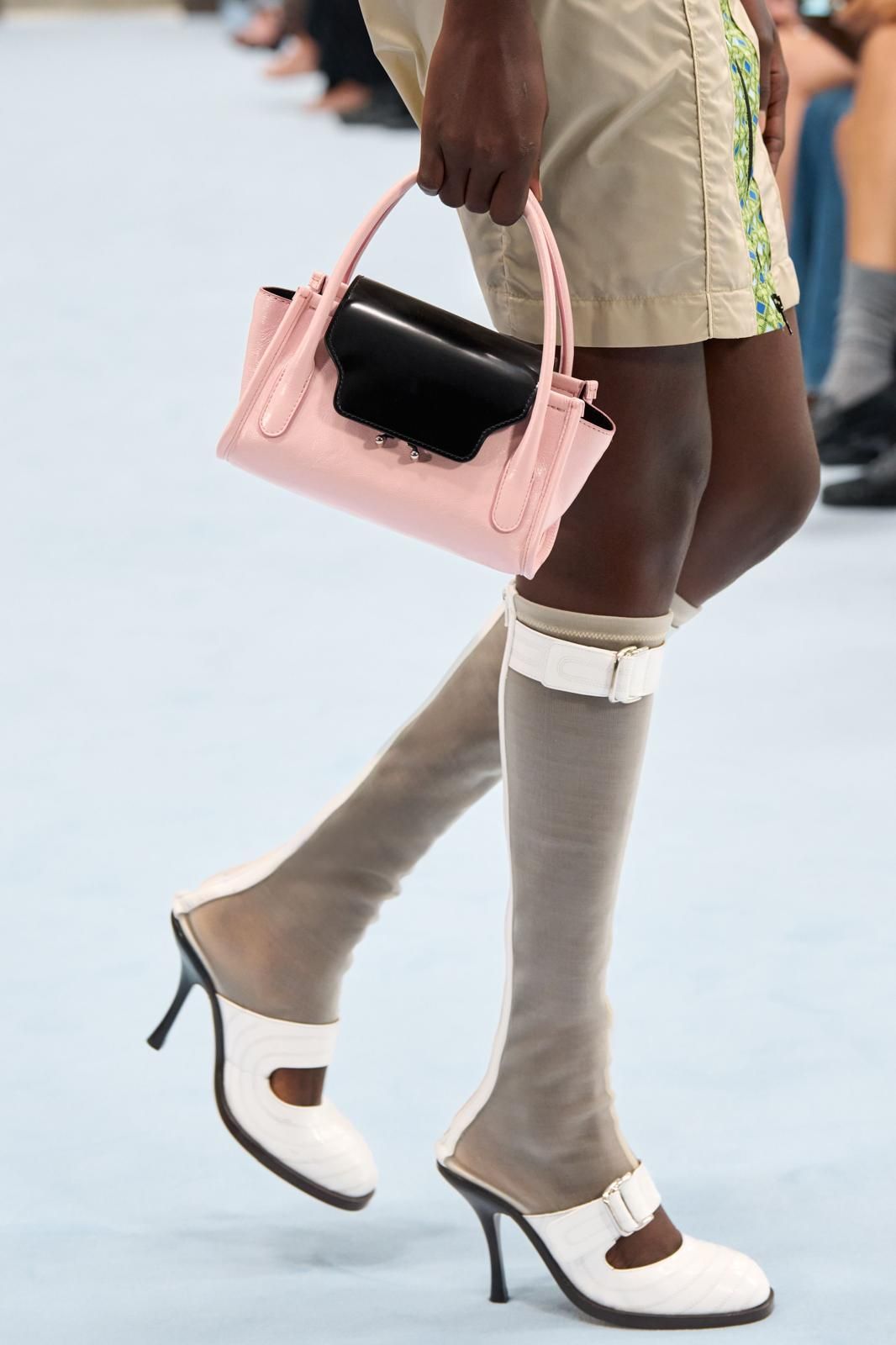
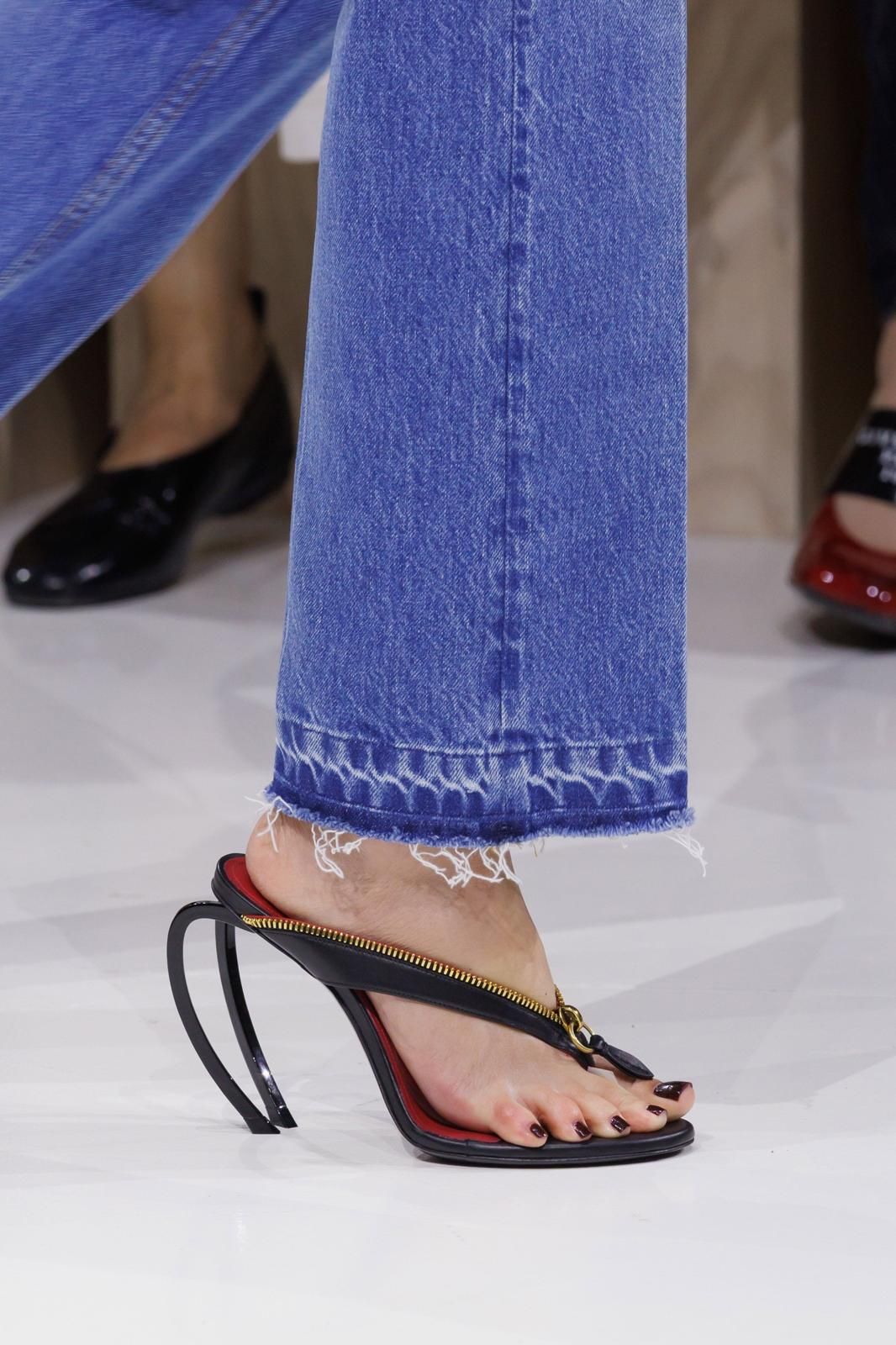
Finally, the tendency of some brands to propose architectural heels with a more conceptual design has not gone unnoticed: just think of Givenchy's zip-stilettos with curved heels, Paloma Wool's ultra-décolletés inspired by Margot Tenenbaum, or the Victoria Beckham designs whose shape appears to mimic the legs of refined antique wooden tables. Experimentation is equally present at Marni, where we find Mary Janes with an integrated stocking, and in a similar vein, Julie Kegels reinvents patent leather décolletés that connect to a long back strap, giving life to a kind of deconstructed boot.
A collectible object
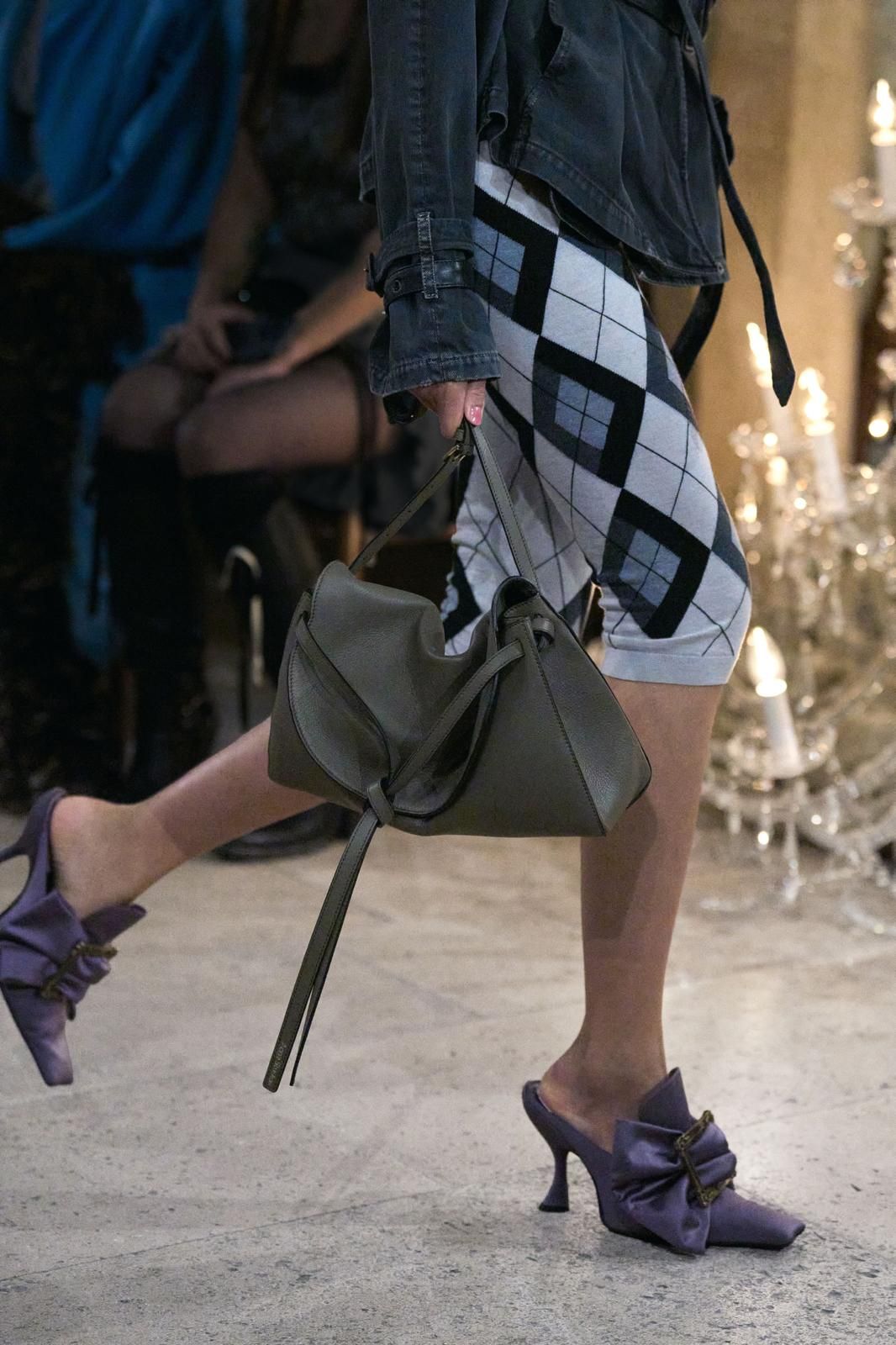
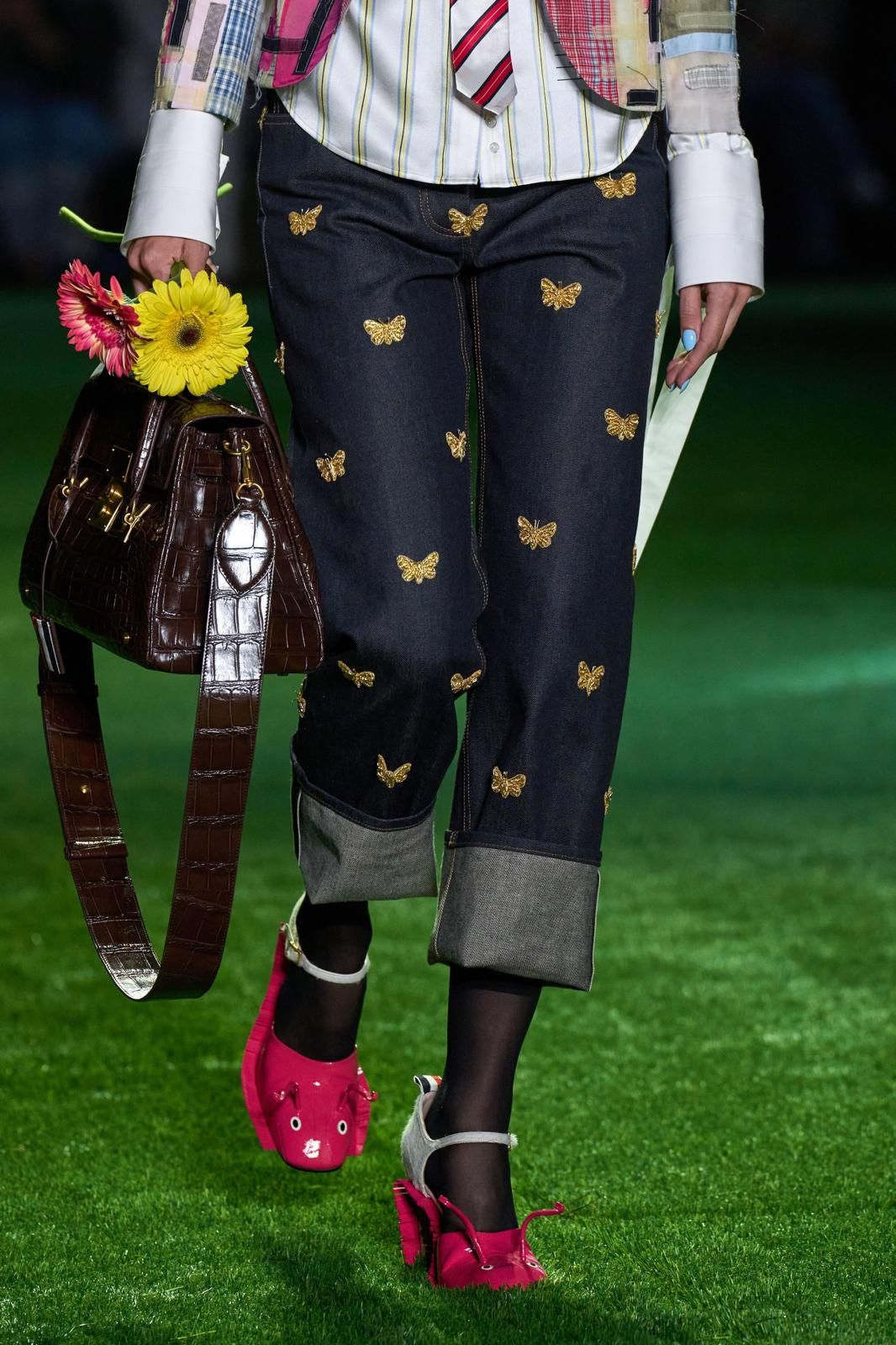
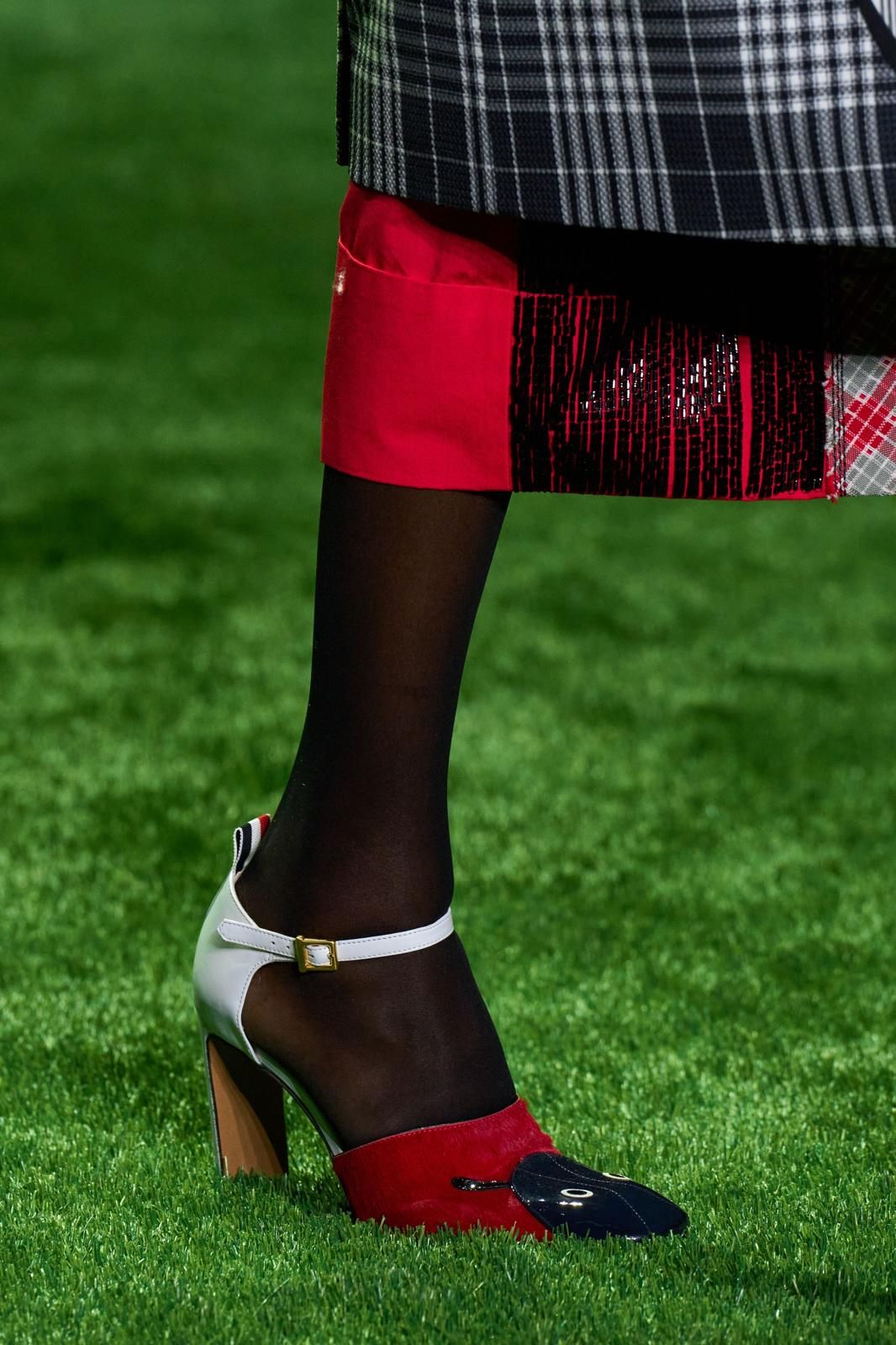
Viewing the heeled shoe as an object of experimental design — conceived to redefine the silhouette and even alter the perception of the human body, rather than to serve a purely practical function — is certainly not a recent invention. Looking back at fashion history, the prestige of many maisons was consolidated not so much through the garments shown on the runway as through the architectural constructions placed on their models' feet. The heel has been, and remains for many designers, far more than a mere accessory: it is a space through which designers attempt to push beyond the boundaries of the possible.
This is attested by creations that have entered the realm of myth for their extreme and dangerous design: Vivienne Westwood's super elevated gillies, Alexander McQueen's armadillo shoes, and John Galliano's bubble heels are perfect examples. In other cases, rather than surrealist heels, it would be more accurate to speak of genuine sculptural geometries balanced between the fetishistic and the grotesque: think of the celebrated pointe ballet flats with stiletto heels designed by Christian Louboutin in collaboration with David Lynch, the gravity-defying heel-less shoes by Noritaka Tatehana, and more recent examples such as Rick Owens's kiss boots and cantilever heels.
These objects, perpetually suspended between torture and seduction, have transcended the dimension of the runway to become genuine museum artifacts within the infinite archive of costume history. It is precisely for this reason that among the main drivers of this return to surrealism in luxury footwear, there may also be the maisons' deliberate choice to fuel the collector's market. In recent years, within the high-end resale market, a strong resurgence of interest has been recorded in sculptural heels and, more broadly, in archive shoes.
This trend is also confirmed by the Luxury Resale Market Report, which highlights how the attraction to quirky, limited-edition products is a cornerstone of the luxury resale market's growth — a market set to surpass 104 billion dollars by 2035. In this light, brands are operating on a dual temporal track. On one hand, they are catering to the immediate desires of a clientele seeking increasingly eccentric footwear; on the other, they are playing ahead of the curve by proposing both reissues of vintage models and shoes with exclusive designs. The latter are conceived from the outset as genuine miniature works of art, destined for the fashion collectors of today and tomorrow: unique pieces to be treasured in one's wardrobe, to be monetized in the future on platforms such as Vestiaire Collective, or — in the case of the most precious décolletés — to be won at specialist auctions.