
We have entered the era of the designer-talent When fashion turns into entertainment
«You have to work on six projects at a time», preached Virgil Abloh to anyone who asked for his advice. Diversification, for the founder of Off-White™, was the most effective trick to ensure that the creative flow remains uninterrupted and continuous. He also suggested that the best thing for a designer is to train across different disciplines, moving from film to fashion, from interiors to painting. Abloh always emphasized that productivity and artistry must work together, as one feeds the other. In 2026, designers seem to have taken his words quite literally, starting parallel careers as talents.
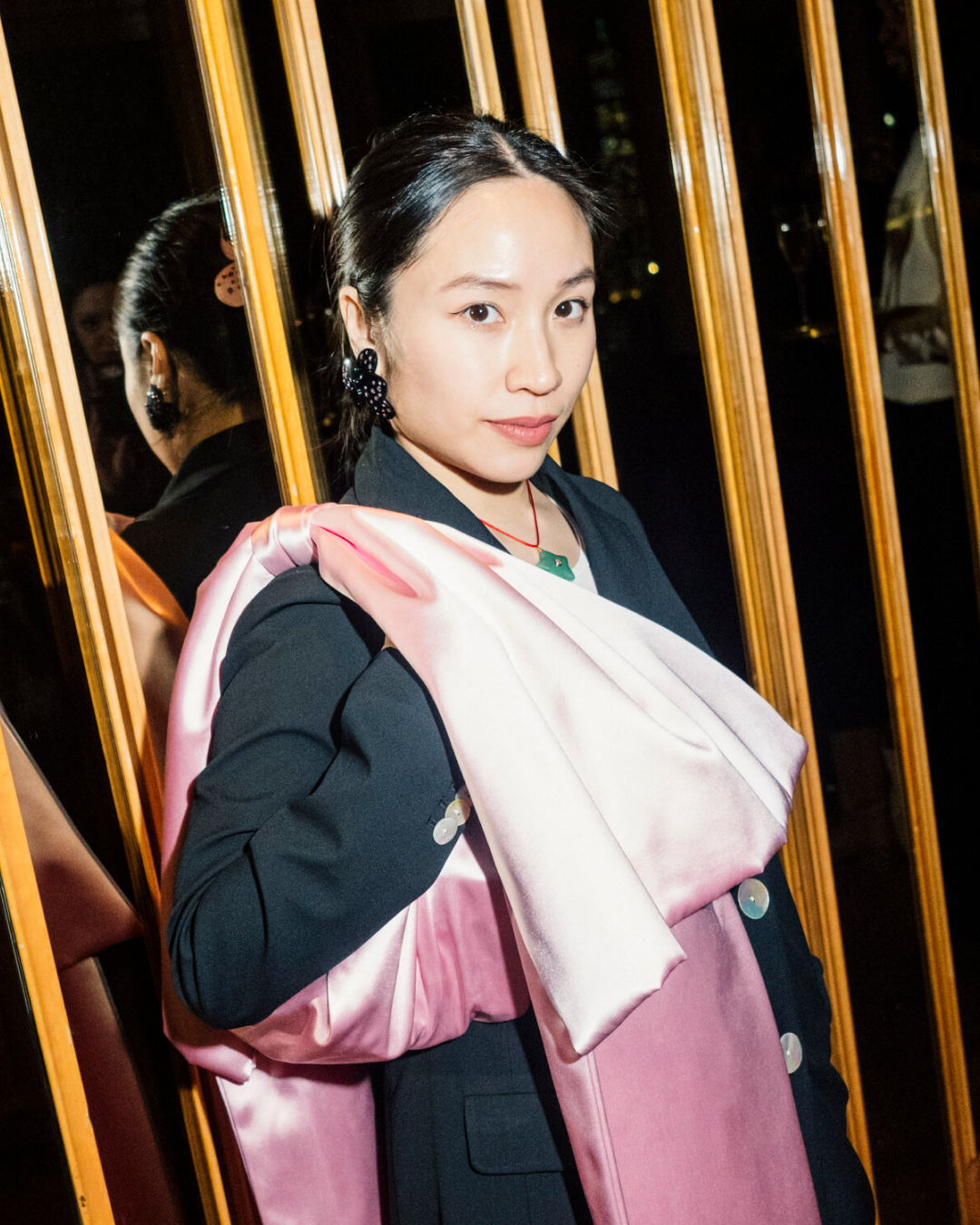
Sandy Liang
A few days ago, the New York-based designer known for her love of bows and pink skirts Sandy Liang announced her entry as a talent into the agency Lighthouse Management & Media. Her brand is also joining the partnership, entrusting the management of all its future collaborations to the talent agency. This strategic move represents a radical shift for the company and its founder, who since 2014 has managed to remain independent even during periods of deep crisis across the entire sector.
For Lighthouse Management & Media - based in Los Angeles, California, and primarily focused on film and music, with talents ranging from Jennifer Aniston to Petra Collins, from Olivia Rodrigo to Mark Ruffalo - Sandy Liang represents a goldmine. In just over ten years, the brand has built a cohesive niche following, so much so that any collaboration with other brands (such as Vans, Gap, or Beats) quickly becomes viral on social media and sells out in a short time. Beyond having a strong appeal among younger fashion generations, the brand is also favored by the media, having appeared season after season in all the major industry magazines.
But Sandy Liang’s story, while unique in its blend of female empowerment and community, is far from isolated.
And other designers with talent contracts
Over the past three years, more and more talent agencies have turned their attention to the world of fashion. At first, it wasn’t entirely clear how they would develop the activities of designers under contract, given that these designers are already tied to the brands for which they serve as creative directors. But the latest engagements of today’s most prominent designers - such as Jonathan Anderson, who in addition to collaborating for years with Uniqlo has also designed costumes for several productions by Luca Guadagnino - make it clear that the work of a designer now extends far beyond the runway.
In December 2024, Anderson signed with UTA, United Talent Agency, one of the most prestigious agencies in Beverly Hills, which represents figures such as Timothée Chalamet, Emma Chamberlain, and Sombr. Just a year earlier, UTA had launched a fashion division that also includes Riccardo Tisci, the Italian designer known for his creative direction at Givenchy and Burberry, as well as for shaping the image of Lady Gaga and Madonna.
Meanwhile, CAA, Creative Artists Agency, based in Los Angeles and primarily focused on entertainment, sports, digital media, and the arts (representing Zendaya, for example), manages creatives such as Tom Ford, who left fashion to focus on filmmaking, as well as Tommy Hilfiger and Daniel Roseberry, the American designer who has been creative director of Schiaparelli since 2019.
The star system of creative directors still exists
@str____eam The rule of 6 by Virgil Alboh #virgil #virgilabloh #offwhite #art #design #culture #louisvuitton #kanyewest #ye #donda original sound - stream
The growing interest of talent agencies in fashion designers and creatives shows how the industry has become an integral and nourishing part of the entertainment industry. Alongside music and cinema, fashion has become a media-driven experience that follows all the rules of show business, from the rise of new stars to competition turned into spectacle.
At the same time, the relevance of creative directors and designers goes beyond their work. Their iconic status - particularly in the case of Sandy Liang and Jonathan Anderson - is no longer limited to the runway or to the eyes of fashion insiders, but spills over into the star system. In the past, the fashion industry already revolved around the fame of designers like Gianni Versace and John Galliano, but without social media or a constant media narrative centered on their lives, the public couldn’t become as obsessed with their creative personas as they are today. That came later, with documentaries and archive pages.
While for agencies, working with designers who have viral media power like Sandy Liang is a stroke of luck, the decision by designers to turn themselves into talents may stem from a key shift at the top of the fashion industry. At a time when both luxury and independent brands are facing a crisis set to redefine how the sector has operated so far - due to wars in strategic countries and shrinking consumer demand - attention within companies is shifting away from the centrality of the designer toward efficiency, consumer focus, and process optimisation.
In this context, the figure of the designer, founder, and creative director takes a back seat. To maintain their relevance in an industry that waits for no one, designers today tend to become talents themselves. In this way, they can dedicate themselves to the much-cited «six projects» theorized by Virgil Abloh, relying on the support of agencies that, accustomed to managing actors and musicians, already know how to navigate the system.