






























Why isn’t anyone talking about how much money AI needs? We’re talking about several million dollars per day, which is why the industry is seeking massive investments
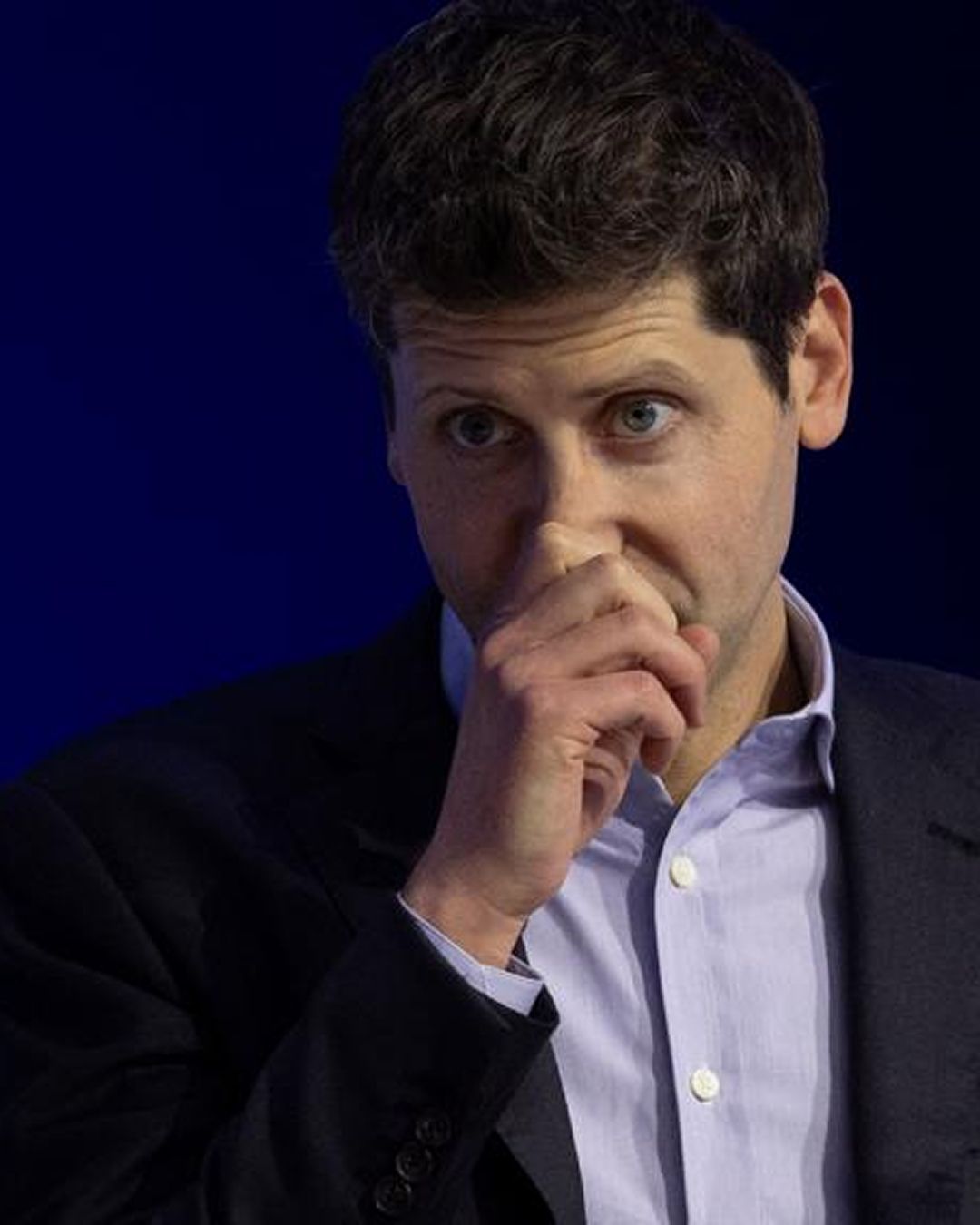
Recently, OpenAI has officially abandoned its non-profit status — that is, as a company without profit motives — to become a fully private corporation. OpenAI’s corporate restructuring is not just a symbolic move but aims to facilitate new investments and allow its founder, Sam Altman, to acquire an equity stake in the company. This change, along with Altman’s growing influence over OpenAI, may have strained relations with some of the company’s long-time members.
Among them is almost certainly Jan Leike, who led a project focused on AI system safety and who — due to OpenAI’s new corporate structure — decided to move to Anthropic, the company behind the Claude chatbot, founded in 2021 by former collaborators of Sam Altman. For the same reason, not long ago, Chief Technical Officer Mira Murati also left the company. In fact, of the eleven people who founded OpenAI in 2015, apart from Altman, only Polish computer researcher Wojciech Zaremba remains.
The somewhat unexpected success of ChatGPT has made OpenAI the most closely watched tech company in the field. At the same time, however, it has triggered a race for investments in AI, making competition within the industry increasingly fierce — a phenomenon that has affected OpenAI itself.
Why AI Requires So Much Capital
As reported by The Information, Sam Altman’s company had already begun talks with investors and funds to raise new capital. OpenAI needs these funds to develop new, more efficient language models and, above all, to cover the operational costs of existing ones. According to recent estimates from Forbes, OpenAI is investing around $15 million per day just to maintain Sora2, the new and more advanced version of its artificial intelligence system capable of generating videos from simple text prompts.
Even the CEO of Anthropic, Dario Amodei, has admitted that the total cost of training some language models is around one billion dollars — and industry experts expect that figure to rise to as much as ten billion dollars in the coming years. The internal changes across the AI sector, with OpenAI leading the way, must therefore be seen in the context of this ongoing pursuit of capital.
OpenAI’s Strategy to Attract More Investment
Sam Altman telling investors he may need as much as a $100 billion to make AGI pic.twitter.com/HXC8dJvSwP
— @goth (@goth600) June 12, 2023
It’s no coincidence that the company led by Sam Altman recently unveiled "o1", its first language model capable of answering particularly difficult questions and performing far more complex reasoning than before. The launch also seems designed to strengthen negotiations with investors and to demonstrate how, in the coming decades, artificial intelligence will be able to carry out tasks that until recently seemed unimaginable.
Altman has stated that the imminent arrival of what he calls the “age of intelligence” will be comparable, in terms of societal impact, to the Industrial Revolution. However, for that to happen, it will be essential to drastically reduce the cost of computation — that is, the total of computational resources, from chips to servers to the energy needed to power them, which make AI model training and operation possible.
According to OpenAI’s founder, only a steady and increasing flow of investment can sustain this process; otherwise, AI risks becoming a resource accessible almost exclusively to the world’s most powerful economic entities.
What to read next

"Maxxing" has been named the word of 2026
The announcement was made by Dictionary.com, which every year draws up a ranking of the latest linguistic trends

Why are there so many AI political propaganda videos?
We asked Donatella Della Ratta, communication professor at John Cabot University