







































Amazon is laying off a lot of people Here's why
Amazon has made official a new wave of layoffs that will involve around 16,000 employees across the United States, Canada, and Costa Rica. The measure comes just a few months after the reduction of about 14,000 jobs announced last October, extending and reinforcing a process of reorganization that has been underway within the company for years. An operation of this kind had long been expected: several outlets had anticipated the news, and both workers and industry analysts considered the staff cuts imminent. The layoffs are in fact part of a medium- to long-term strategy through which the company aims to reduce its operating expenses and reallocate resources toward areas deemed more strategic, in particular the development and integration of artificial intelligence into its services.
Amazon’s downsizing phase stems from some strategic choices made by the company in previous years. During the pandemic, in fact, the company had significantly expanded its workforce to cope with the extraordinary increase in demand for its services. With the return to more ordinary levels of consumption, between 2022 and 2023 the company began a series of heavy staff cuts which, indeed, are still ongoing today and which overall have led to the dismissal of nearly 60,000 employees – the largest in the company’s history.
Where does the wave of layoffs come from?
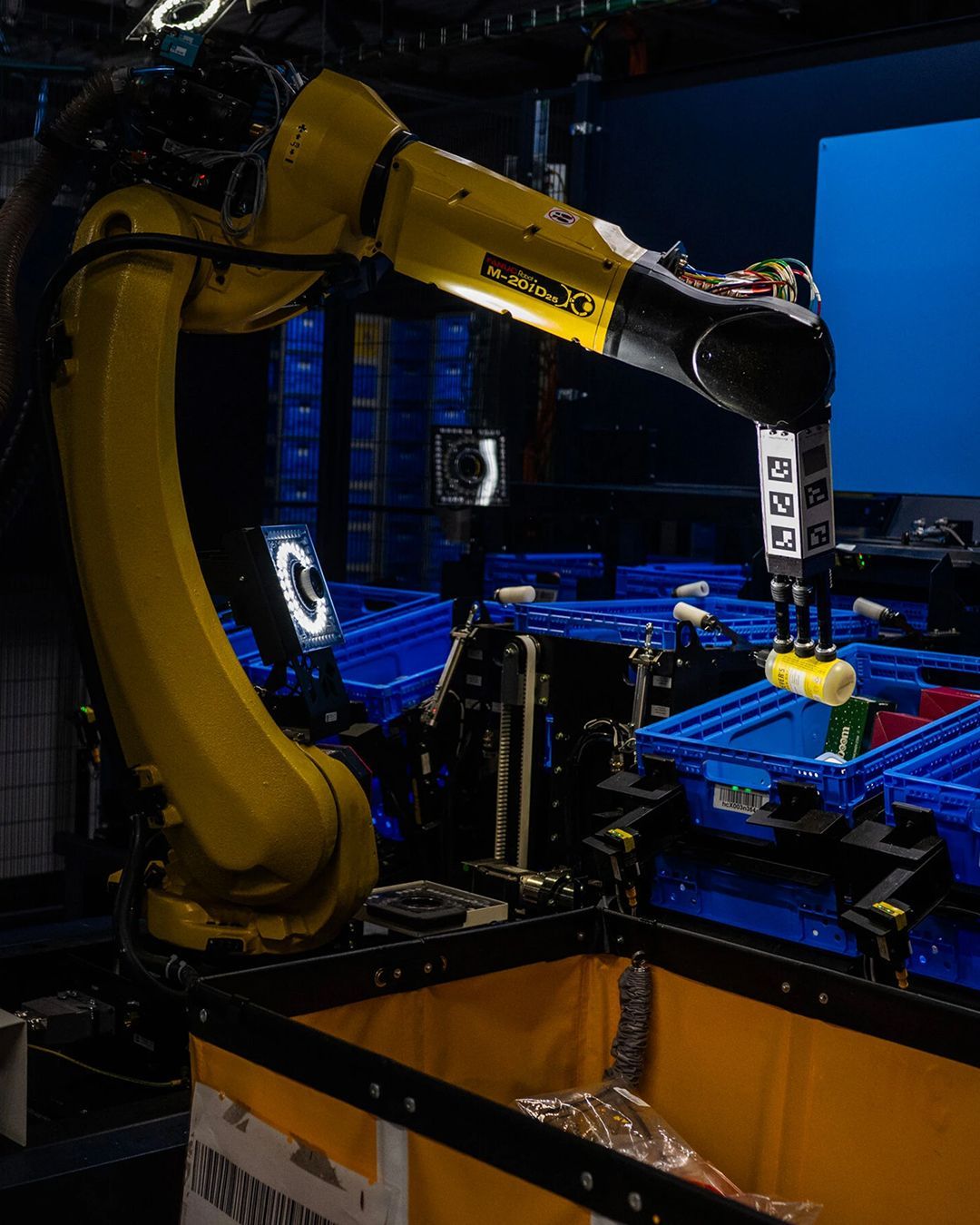
The recent layoffs have primarily affected office staff and technology departments, including many engineers, while for the time being warehouse clerks and manual workers have been excluded. The latter represent the largest share of Amazon’s employees, as the company employs about one and a half million people globally. However, according to what was reported by the New York Times, the company is reportedly considering – over the long term – the gradual replacement of more than half a million jobs with robots, thus aiming to reduce manual tasks as well through the increasing adoption of systems based on artificial intelligence.
Amazon's recent layoff rounds:
— Morning Brew (@MorningBrew) January 28, 2026
• January 2026 16,000
• October 2025 14,000
• March 2023 9,000
• January 2023 8,000
• November 2022 10,000
57,000 cuts in just over 3 years. pic.twitter.com/3xktXuinvT
Last year Amazon announced that it had surpassed one million robots employed in its facilities – with increasingly significant consequences for the organization of work and the company’s logistics processes: not by chance, according to the Wall Street Journal, in the near future the group’s warehouses could reach a number of robots comparable to that of human employees.
Amazon has been working on these technologies for over a decade, and today about 75% of its deliveries are supported by automated systems. The turning point came in 2012, when the company acquired Kiva Systems, a company that had developed robots capable of moving autonomously within warehouses, retrieving products from shelves, and transporting them to shipping stations, reducing time and physical strain.
How do robots work inside Amazon?
Initially, the robots present in Amazon’s warehouses were used mainly to handle heavy loads and large quantities of unpackaged goods – an activity that is particularly difficult and dangerous for workers. Over time, however, Amazon has introduced increasingly advanced robots, capable of carrying out more precise and complex operations, which has favored their gradual spread – also contributing, at least in part, to containing the high turnover of staff in the company’s facilities, where employees’ working conditions have often been judged excessively degrading.
The adoption of robotics and artificial intelligence systems does not affect Amazon’s entire network of facilities in a uniform way. Only some of the newly built and more technologically advanced centers – such as the one in Shreveport, Louisiana – are heavily automated: in smaller or more peripheral warehouses, by contrast, daily tasks have largely remained similar to those of previous years. It cannot be ruled out, however, that – as the company’s CEO Andy Jassy said last year – improvements in work efficiency due to the adoption of artificial intelligence will further reduce the number of employees the company will need, further rationalizing workforce management.
What to read next

Why are there so many AI political propaganda videos?
We asked Donatella Della Ratta, communication professor at John Cabot University