




































Pasta is the most popular food at the Olympics And athletes don’t hesitate to point it out on social media
At the Olympics, pasta has long been a daily and quantitatively significant presence. For Milano Cortina 2026, it is estimated that around 600 kilos per day will be consumed in the facilities dedicated to athletes’ accommodation and catering. Pasta is a food particularly appreciated by professional athletes because it provides a high energy intake and is, at the same time, easily available and quite versatile. Today, in short, for many Olympic athletes pasta is an essential element of their dietary regimen. Yet it hasn’t always been this way: for many years, in fact, at the Olympics the role now played by this food was mainly filled by proteins.
This is the result of a shift that began in the 1960s, when some scientific studies demonstrated the effectiveness of carbohydrates as the main source of energy to sustain prolonged training sessions. Since then, pasta has become widespread in professional sport, replacing the habit of consuming large quantities of protein before competitions. For example, American freestyler Alex Hall, Olympic gold medalist in 2022, has said that he eats pasta regularly, preferring shapes that retain a certain firmness – the greater digestibility of al dente pasta is in fact a fundamental aspect for those who train, especially at altitude.
Enthusiasm for pasta at Milano Cortina 2026
During Milano Cortina 2026, many athletes did not hide their satisfaction at being able to eat pasta-based dishes in the country where this food is most deeply rooted. Not by chance, several competing athletes described this opportunity as a genuine pleasure, going beyond mere nutritional necessity – as reported by American skeleton racer Mystique Ro to the New York Times, stating that she particularly enjoys spaghetti and fettuccine.
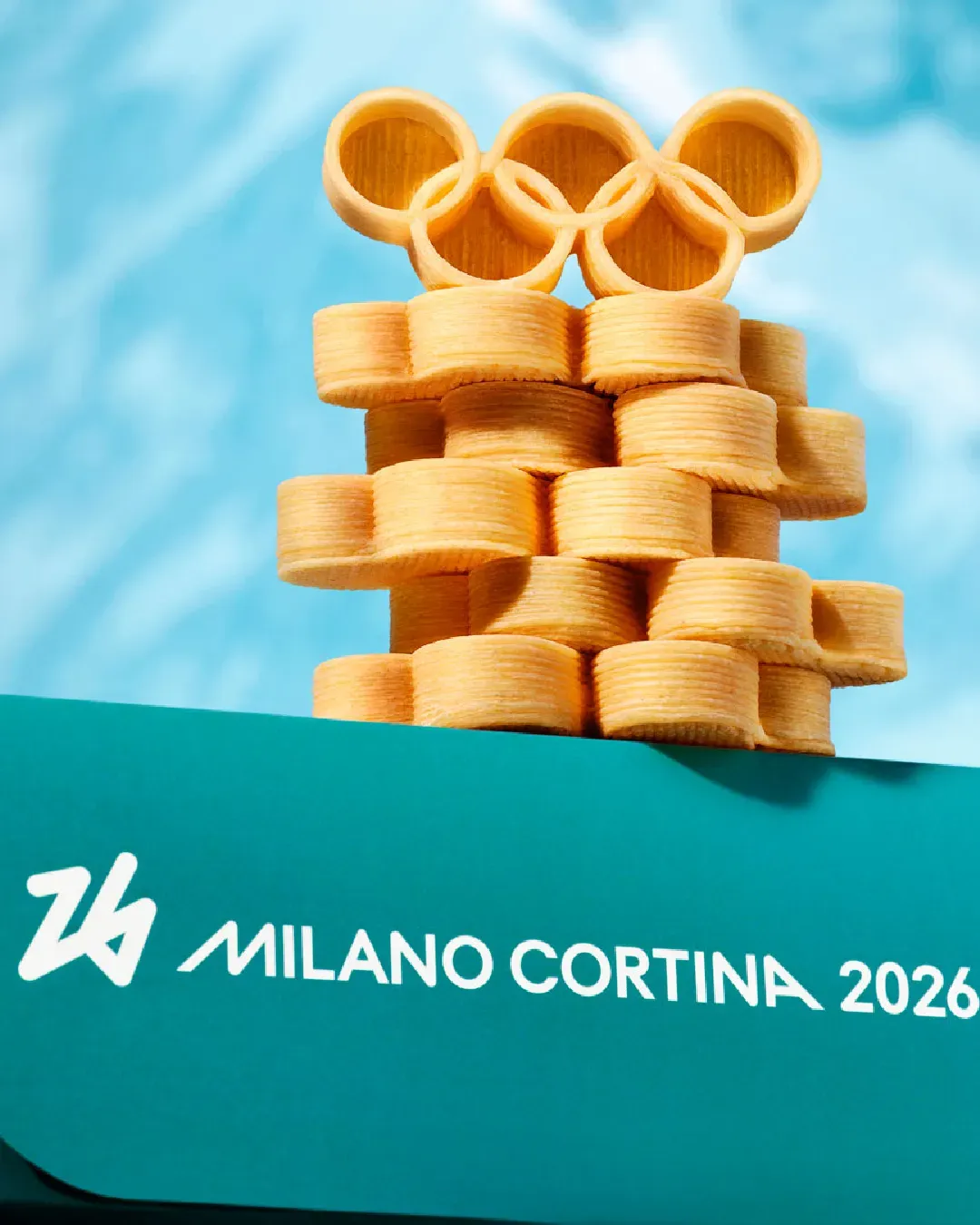
On the occasion of Milano Cortina 2026, the International Olympic Committee wanted to emphasize the symbolic role of pasta by presenting a special shape inspired by the Olympic rings, very similar to “ruote” (also known as “rotelline” or “ruote di carro”) – a type of short dried pasta quite widespread in Northern Italy and beyond. At the same time, several venues offered dishes dedicated to the event: for example, the restaurant chain Miscusi added a preparation designed to celebrate the Olympics to its menu, while the well-known Verona-based brand Buns offered a series of burgers created in collaboration with some of the most interesting restaurants in the cities hosting the Games, including Sandì in Milan.
How is the food at the Olympics?
At the Paris 2024 Olympics, the food offering of the Olympic village had been the subject of strong criticism: several athletes complained about the lack of ingredients deemed essential, and the portions were also judged insufficient. Some delegations, such as the British one, therefore chose to reorganize independently, setting up their own kitchens and dedicated chefs in order to have greater control over the quality and quantity of meals.
In the case of Milano Cortina 2026, on the other hand, there have so far been no controversies. Quite the opposite: numerous athletes have shared photos and videos of the dishes served on social networks, highlighting the generous portions and the variety of the offering. The international press has also pointed out how the Italian organization managed to avoid the problems that emerged in Paris, focusing on simple, recognizable dishes designed above all with athletic performance in mind.
The overall management of the food sector at Milano Cortina 2026 is coordinated by Elisabetta Salvadori, Food & Beverage manager of the respective foundation: Salvadori has explained in various interviews that she defined the menus together with nutritionists and sports consultants, following an approach explicitly oriented toward physical performance, in compliance with the guidelines provided by the International Olympic Committee, with particular attention to food safety and traceability. Judging by the accounts of many athletes, however, the result achieved also seems very positive from the point of view of taste.
What to read next
Soon, only 150 cars will be able to access the Dolomites
To protect the area from overtourism