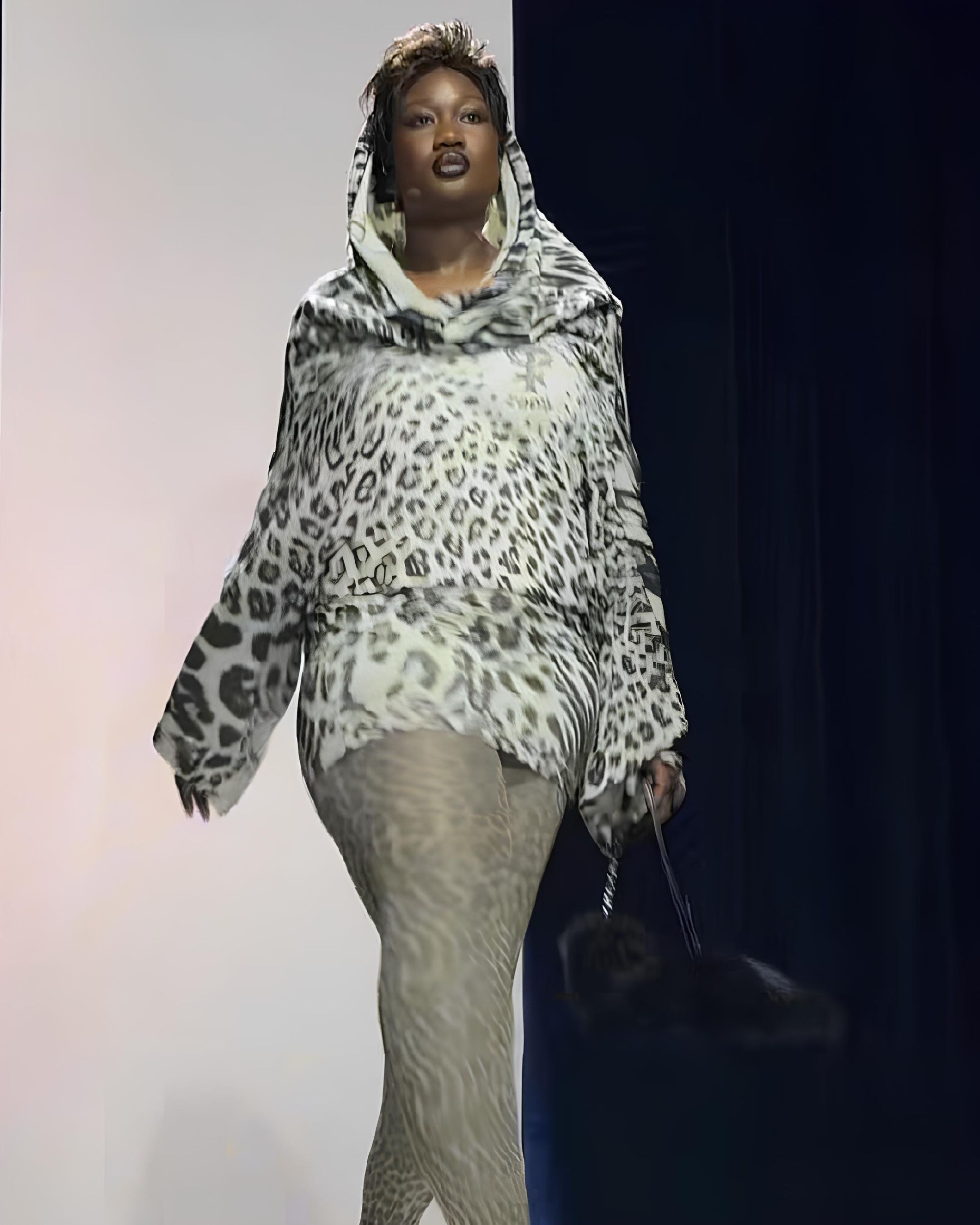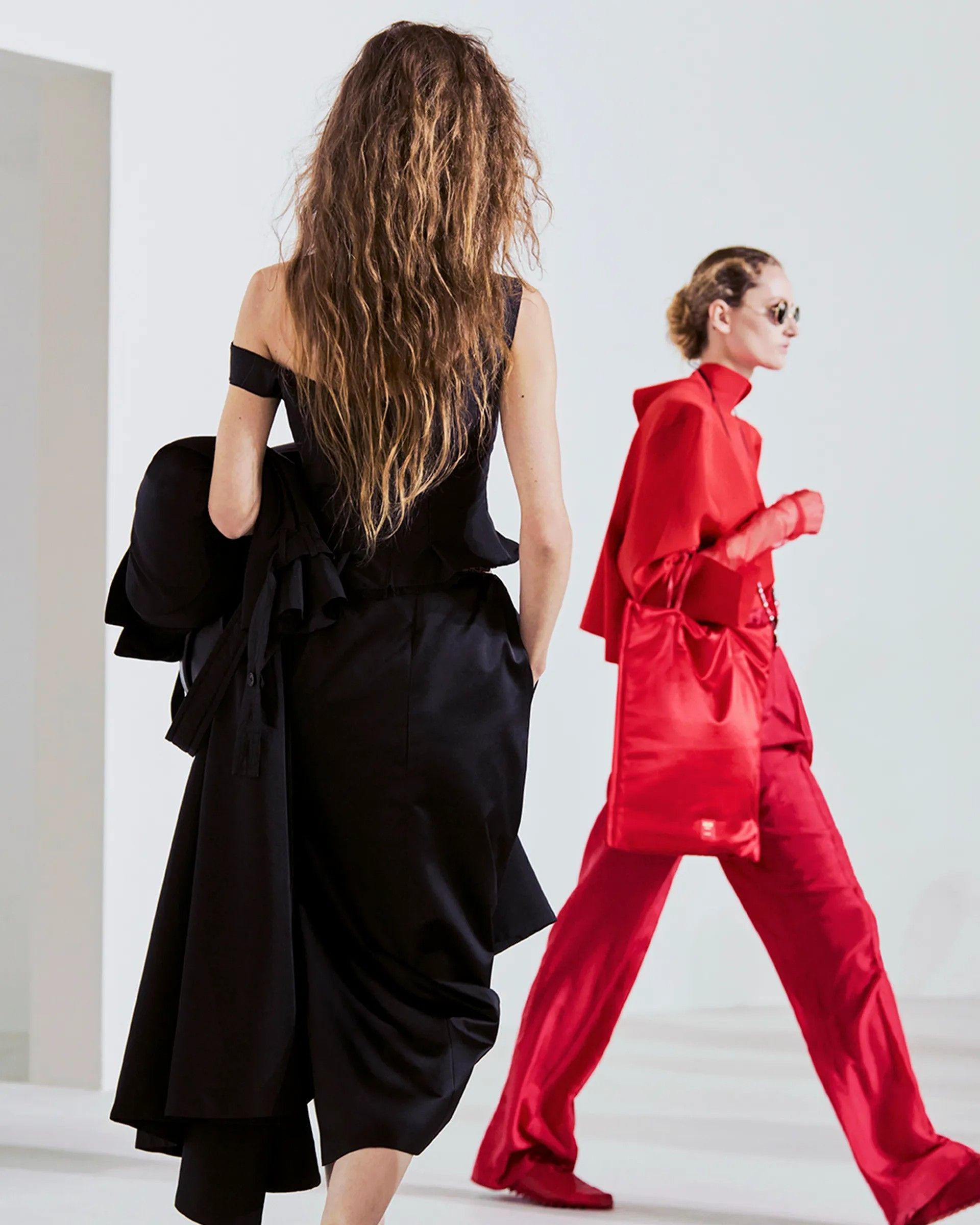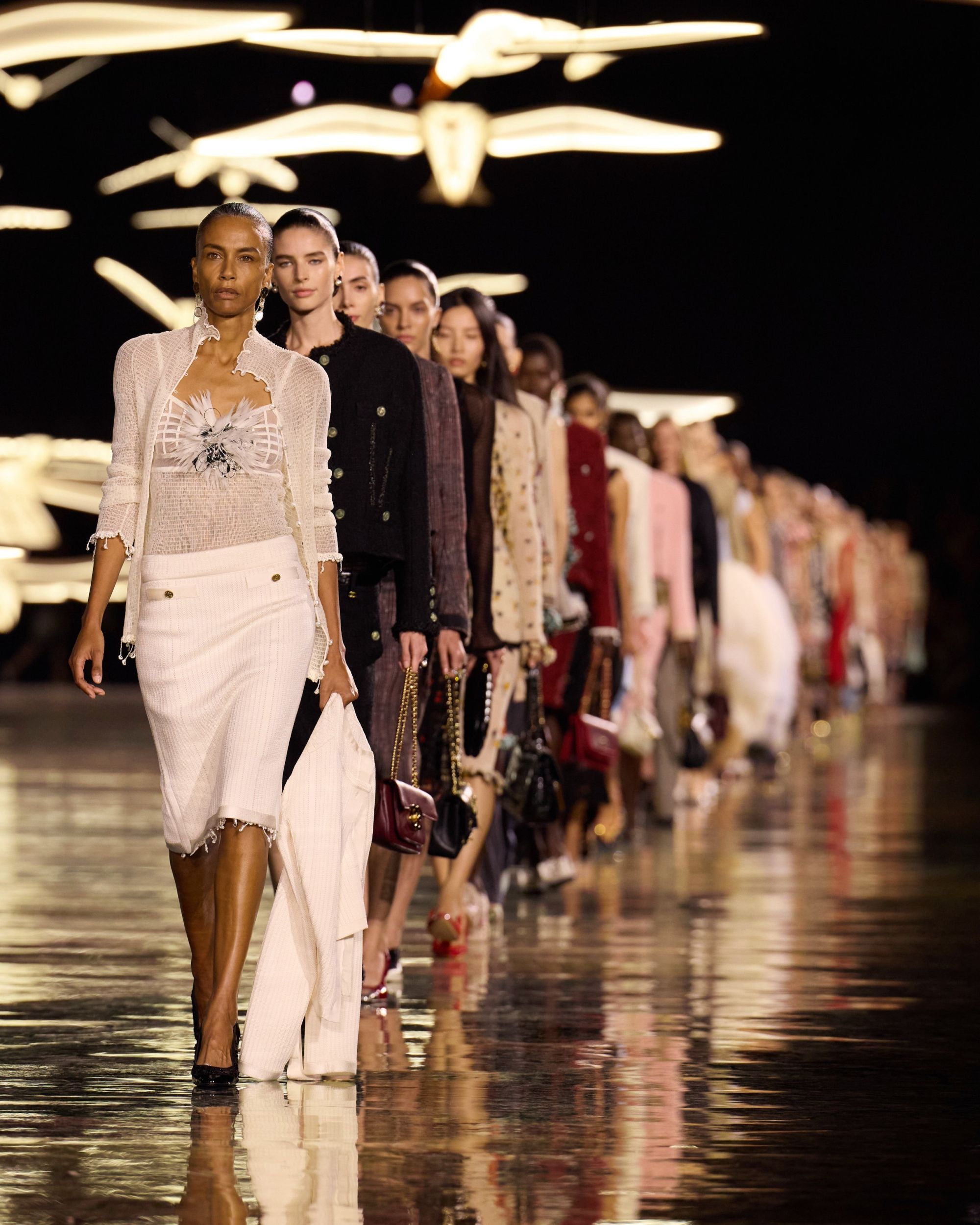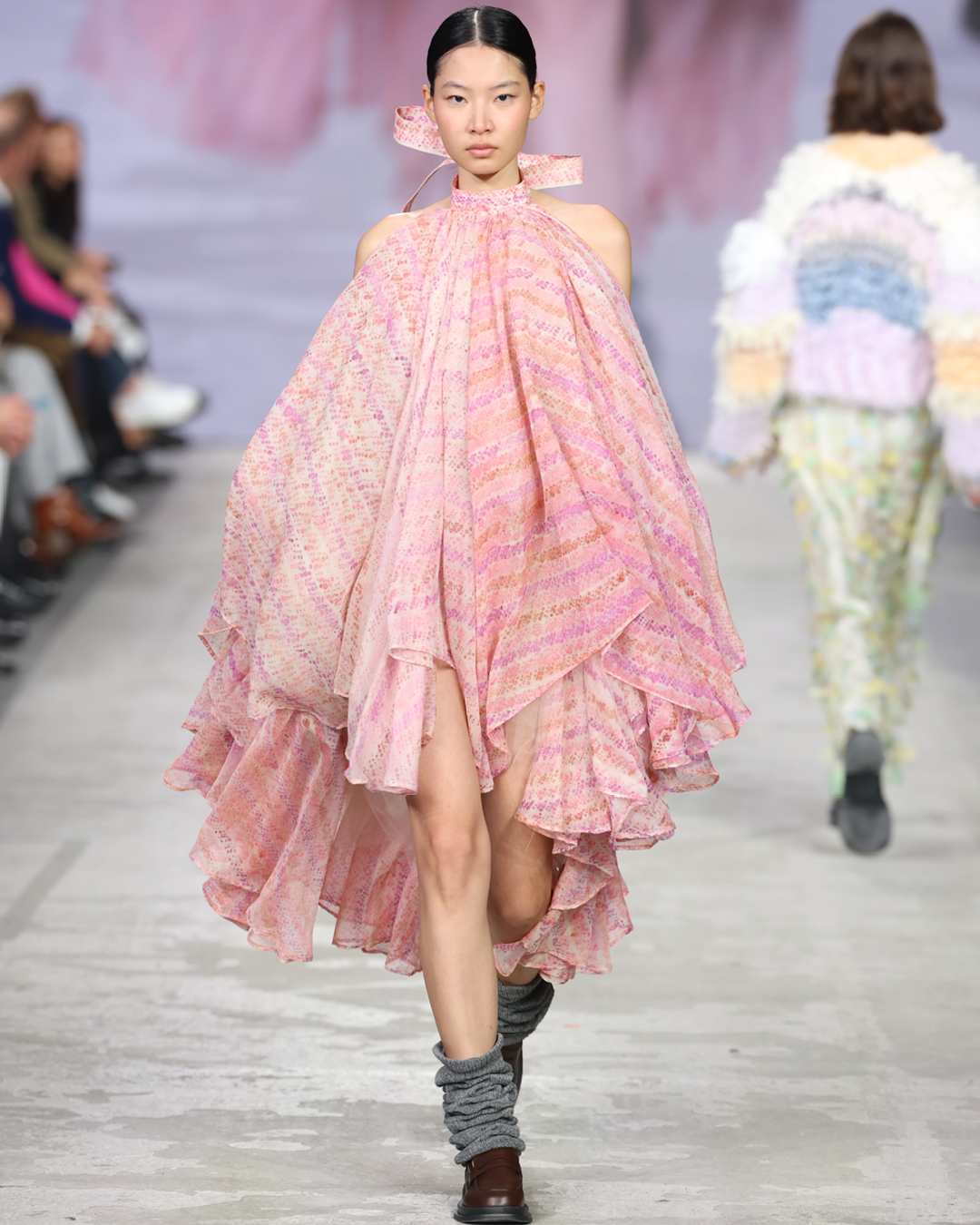
























At NYFW, the female version of the Hedi Boy has arrived Nicola Brognano brought indie sleaze to the runway for 7 For All Mankind
Do you remember those ultra-viral photos of Keira Knightley around 2008, walking around London hand in hand with Jamie Dornan? The ones where she’s wearing a pair of low-rise bootcut jeans, with blue-trim underwear peeking out at the waist, paired with a sheer white blouse, a black shrug, and a linen scarf casually knotted around her neck. The archetype of the late-2000s cool girl: the one in 7 For All Mankind jeans, a little disheveled during the day but always ready to slip into sky-high platform heels under a silk mini dress for a night out. This is exactly the energy that Nicola Brognano chose to bring to the runway for his debut at 7 For All Mankind during New York Fashion Week FW26.
Nicola Brognano’s debut
After being chosen as the successor to Anna Molinari at the creative helm of Blumarine, a brand where he worked for four years, last December Brognano was announced as the new creative director of 7 For All Mankind, becoming the first Italian to lead the historic American premium denim brand. And yet, paradoxically, there was little denim on the runway, or at least it wasn’t the true focus of the conversation. Rather than the protagonist, denim acted as a quiet fil rouge, while attention from both the press and social media centered on the imagery surrounding the debut.
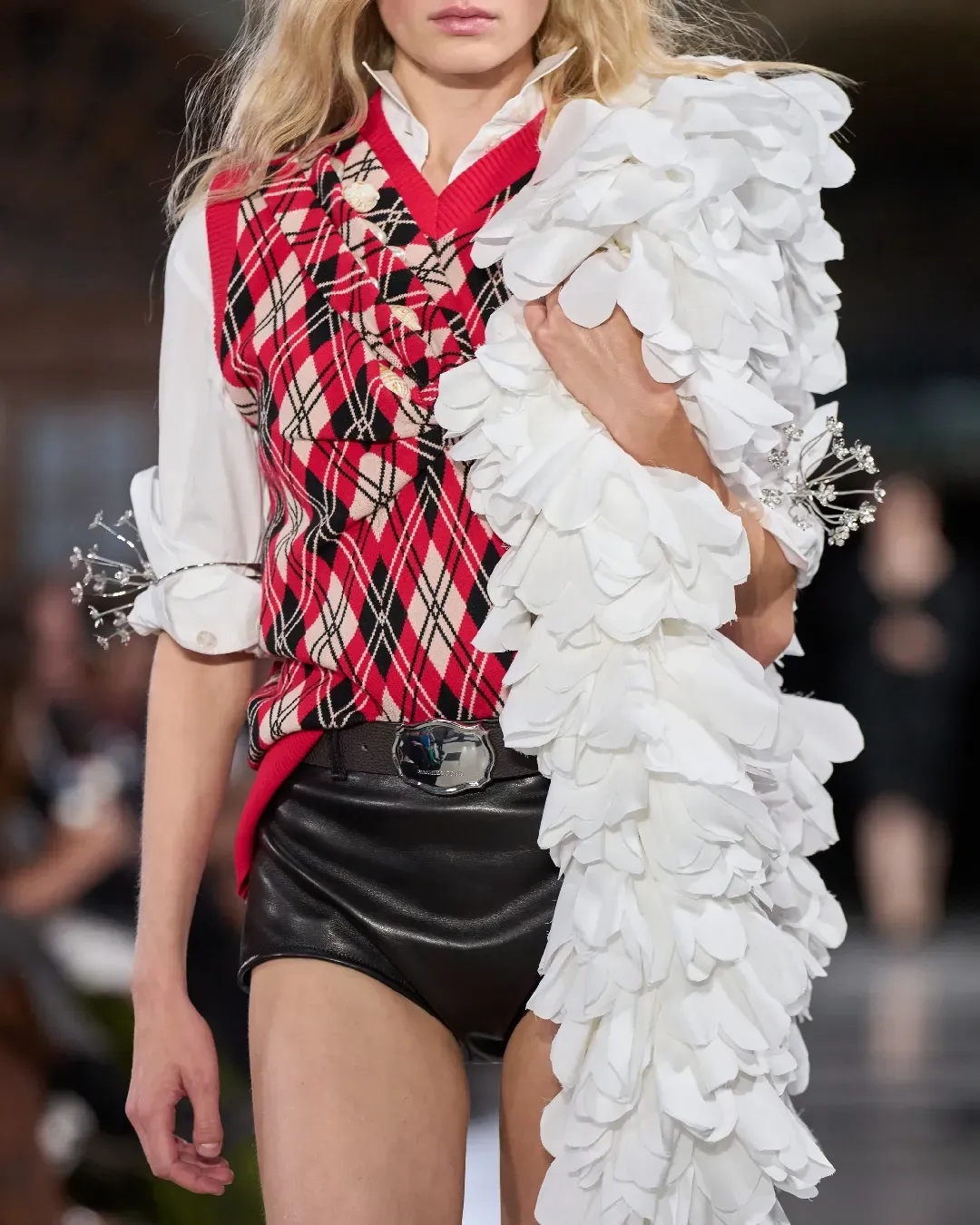
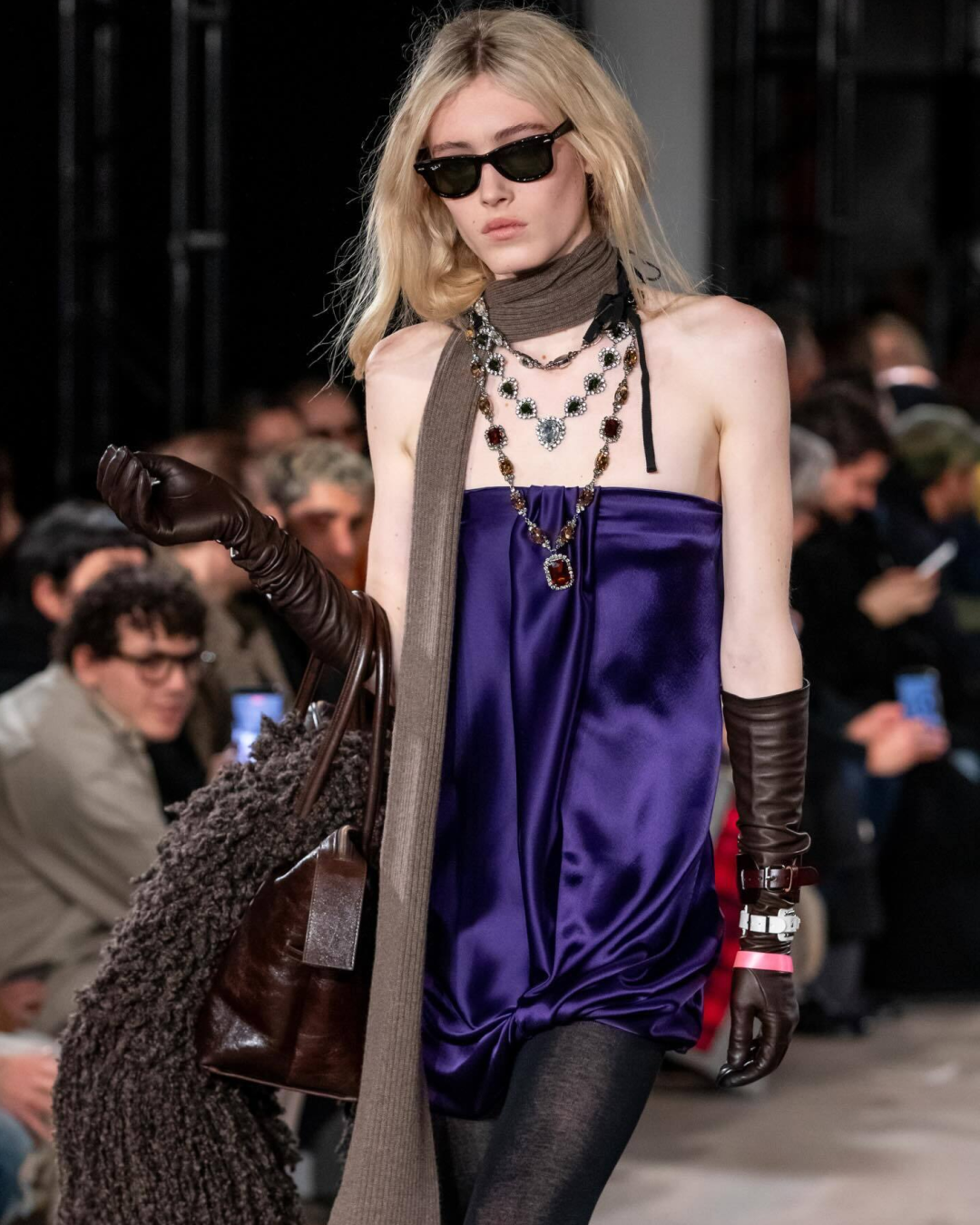
The most convincing looks weren’t those defined by skinny jeans, but the mini dresses, the oversized yet cropped biker jackets, and the deliberately maximalist, sleazy accessories, all capable of immediately evoking a specific era. As the designer himself told MF Fashion, the woman of this collection has “a rock’n’roll attitude, a rebel girl who doesn’t take herself too seriously.” The detail of the nylon bracelet—the kind worn at clubs, festivals, or even backstage—sporting it on every model, worked as a sign of continuity between night and day, between partying and everyday life.
Brognano himself told W Magazine that “the collection speaks about it-girls who go out in the morning and come back the next day wearing the same outfit, with a Starbucks coffee in hand and the bracelet from the night before still on their wrist.” The indie sleaze woman thus returns as a direct response to the minimalist clean girl and the cult of quiet luxury that dominated the post-pandemic period. If the icons once were the Olsens of The Row, now they are the front-row Olsens, the ones tabloids used to call “good girls gone bad.”
The future of 7 For All Mankind
7 for all mankind fw26
— lunika (@fashionitgirl) February 15, 2026
what a collection, the styling makes it hundred times more impressive, fashion feels so nostalgic pic.twitter.com/B9LvEl5dyf
But will a viral runway show be enough to revive the perception of 7 For All Mankind? After all, while the brand was a cult favorite for Millennials in the early 2000s, for Gen Z it remains largely unfamiliar; it is no longer perceived with the same spontaneity with which its Sevens were worn in the early years of the new millennium. In his interview with MF Fashion, Brognano explained that showing was essential precisely to win over a younger audience: the historic customer, deeply loyal to denim, won’t be lost, but younger generations often don’t know the brand or associate it more with a vintage imaginary than a contemporary one.
The collection, he said, “doesn’t replace anything, it adds” and aims for a real, competitive wardrobe, with carefully calibrated prices and styling that doesn’t sacrifice accessibility. Still, it will take far more than a single show to truly relaunch 7 FAM’s perception on a broad scale, especially when considering the competitive landscape and the consumption dynamics shaping fashion today.
In recent years, several Y2K or early-2000s brands have attempted to claw their way back with different strategies. Some, like Miss Sixty and Blumarine, have experienced a genuine cultural and market revival thanks to Gen Z’s interest, while others have faced far deeper challenges, as in the case of Topshop. For 7 For All Mankind to return to a position of relevance—and, above all, to a measurable growth in market numbers—it will require consistency in future collections and a narrative rooted in the contemporary imagination, not solely reliant on nostalgia, even if, for now, it has worked—and worked well.
What to read next
Now Phoebe Philo Wants You to Dress Avant-Garde
With Collection F, the designer plays with silhouettes in an entirely new way
5 key trends from Paris Fashion Week SS27 Women's
What we'll be wearing next summer, according to the fashion of the Ville Lumière
The best street style looks from Paris Fashion Week SS27 Women's
La Ville Lumière steps back into the spotlight