



















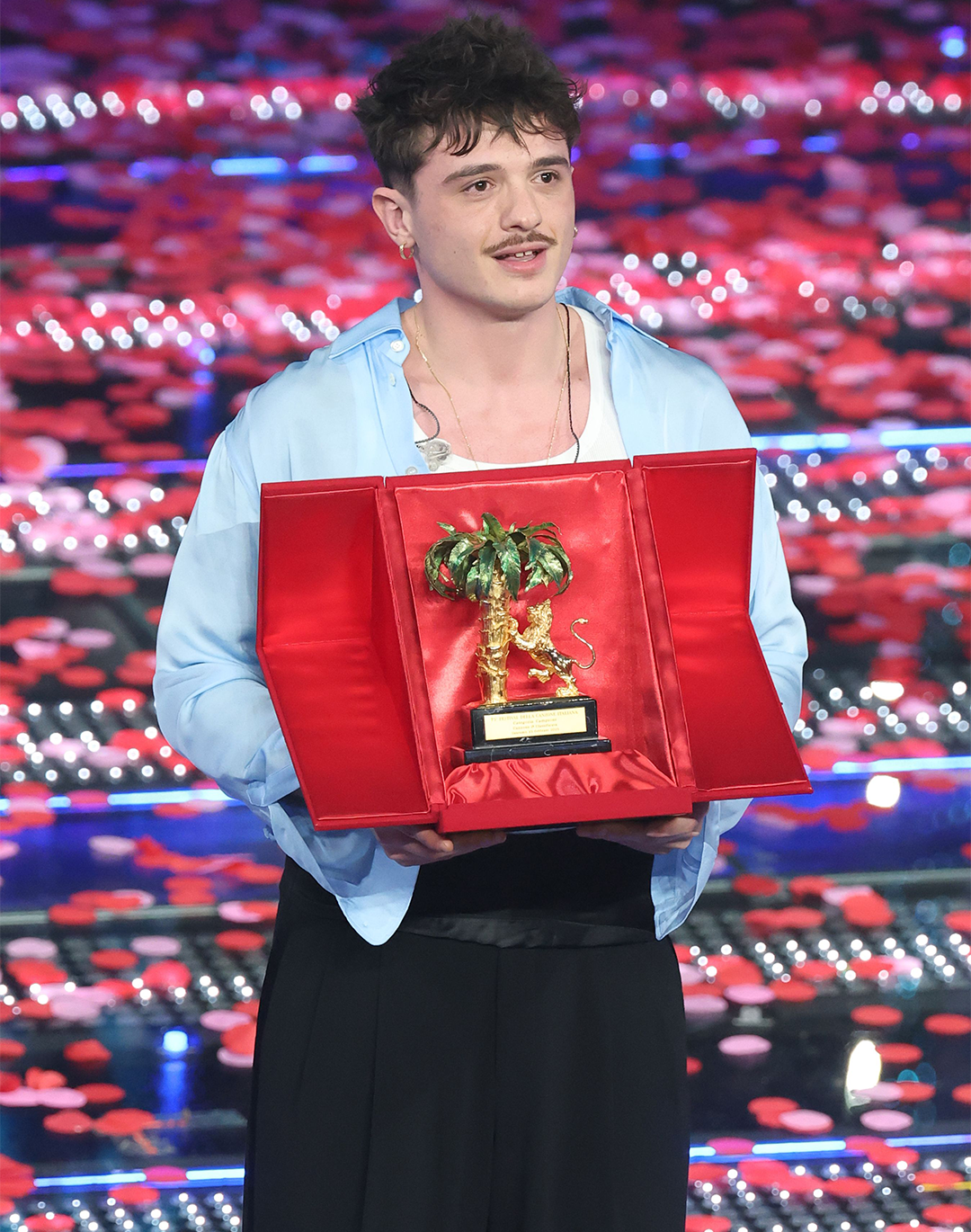
Nobody wants to win Sanremo This year, it's better to lose
The Sanremo Festival is an enormous showcase. Today more than ever, it covers different genres and different audiences and can truly play a decisive role in determining an artist’s success or failure. But are we sure that winning the Sanremo Festival is always a good thing, and that it isn’t starting to become counterproductive? Because taking part is one thing, but winning and carrying all the weight and responsibilities that come with that victory is another.
If you are an emerging or little-known artist, the Ariston stage allows you to reach a much wider audience than you could without that boost, but sometimes this stroke of luck can generate an unexpected virtuous cycle.
Winning is not always necessary
“Ermal, si punta alla vittoria o al premio della Critica?”
— ile(@itscheggee) February 13, 2026
“No, io non punto a niente, punto solo a fare un bel festival come si dovrebbe fare”
papà li hai DISTRUTTI#ErmalMeta #Sanremo2026 pic.twitter.com/gCFNkCABRg
Take the case of Lucio Corsi last year. The singer-songwriter had always produced good music – his first album dates back to 2017 – but people only began to notice his talent after his eccentric performances at Sanremo. He did not win the Festival, yet his career benefited significantly. An even more striking case is that of Tananai, who at his first participation in 2022 actually finished last, consequently becoming an idol for countless listeners.
Winning the Festival can paradoxically be risky. Because once you win, it is as if you are officially declared the best in Italy. It is true that the Festival theoretically rewards the best song and not the singer, but this recognition is automatically transferred to the performer. As a result, expectations toward them increase dramatically, as do the chances of being hated by fans of those who did not win (and the year Geolier took part and came second is a good example). The pressure Sanremo singers face today is so intense that it risks making artists collapse psychologically and physically.
The price of success
@lostmediait Dopo la vittoria di Angelina Mango a Sanremo 2024, inizia il declino silenzioso: firmacopie infiniti, flash, insonnia, disturbi alimentari e una pressione che la divora. Il 17 maggio arriva l’annuncio — tour annullato per “tutelare la propria salute mentale e fisica”. Molti la definiscono viziata, ma dietro c’è una ragazza stremata da un successo troppo veloce. Dopo mesi di silenzio, il 16 ottobre 2025 Angelina torna con Caramè: nessuna promozione, solo sincerità. Un disco che racconta la caduta e la rinascita, e che ricorda a tutti che scegliere di fermarsi, a volte, è l’unico modo per ricominciare davvero. #angelinamango #angelinamangoalbum #angelinamangocarame #angelinamangosanremo #angelinamangoolly suono originale - Lost Media
Sangiovanni, for example, was one of the first victims to openly declare it in the post-Sanremo 2024 period. But he is not the only one to feel the problem. Artists’ mental health has now become an openly discussed topic. Since music consumption has become measurable in extreme detail, the obsession with numbers has grown increasingly intense. Music is now mainly a battle of figures: what matters most is the number of streams, views (on YouTube, Instagram, or TikTok depending on the reference generation), concert tickets sold, and sold-out shows (whether genuine or not).
The case of Angelina Mango - winner in 2024 - is emblematic. After her Sanremo triumph and subsequent participation in the Eurovision, the artist released an album and began touring across Italy and Europe. In a short time, she had to stop: «I need to stop because I want to take care of myself by putting my health first and because I want to be not only my voice, but also yours. For this reason, together with my team, I decided that for now I cannot continue my live shows» she declared in October of the same year.
Last year, instead, it was Olly who spoke about suffering from the many attacks received on social media and on TV after his victory at the Sanremo Festival 2025. People said all sorts of things - that he was a «miracle case», a «nepotism pick», or even that his victory had been decided by powerful interests, since he was yet another winner belonging to the roster of influential manager Marta Donà. After some initial hesitation, Olly ultimately gave up participating in Eurovision, freeing himself from an additional source of stress. Indeed, what until just a few years ago was seen as the fastest route to international success (think of the Måneskin case in 2021) has, within a few years, become more of a burden than an opportunity.
Is Sanremo political?
Levante sull’Eurovision: «Se vincessi Sanremo non andrei». La protesta contro la partecipazione di Israele: «Non si può far finta di niente»https://t.co/jmTScwbqkV
— Open (@Open_gol) January 25, 2026
This year, a certain political weight has been added to the burden of the Sanremo Festival and Eurovision. The controversy over whether or not to participate in Eurovision 2026 erupted even before knowing who will win the Italian contest. It was sparked by a statement from Levante who, when asked about it, declared: «If I were to win Sanremo, I would not participate in Eurovision. It is an event far more politicized than people think. Since a country involved has recently caused enormous tragedies and an ongoing genocide, we cannot pretend nothing is happening. I never have. I can’t bring myself to go to the ‘thief’s house’».
@francescaniespolo.it SANREMO 2026 rischia il caos per una clausola mia vista. La Rai vuole che le case discografiche rispondano dei gesti degli artisti. Giusto o esagerato? #sanremo #sanremo2026 #rai #gossipitalia #festivaldisanremo Oh No - Kreepa
As of today, the Sicilian singer-songwriter is the only one to have taken such a clear stance on the issue. The other competing artists have remained vague, adopting a middle position: some hiding behind the fact that they do not expect to win and will think about it if the time comes, others imagining the possibility of still bringing a positive message to an international stage.
The fact is that today, winning Sanremo and participating in Eurovision is a political act that cannot leave anyone indifferent. Many artists fear finding themselves in this delicate situation, caught between the judgment of the public, which always expects morally acceptable behavior from its idols, and giving up major visibility - something their record labels certainly do not want to miss.
The issue of censorship
@antoniomascoli Ecco come hanno fatto involontariamente un favore a @Ghali durante la cerimonia d’apertura delle Olimpiadi #ghali #milanocortina2026 #olimpiadi #olympics audio originale - Antonio James Mascoli
As Greta Valicenti pointed out in Billboard Italia, there is no third way: thinking of participating in Eurovision while bringing a pro-peace message in favor of Palestine, as some have suggested, is a utopia. Eurovision officially presents itself as an apolitical event, and therefore its extremely strict regulations prohibit any behavior even remotely linked to political support for a specific country. Yet, censorship itself is already a political act, one of the most violent. We all saw what happened to Ghali during the opening ceremony of the ongoing Winter Olympics: ignored by the cameras and not even mentioned by the Rai commentator.
@halilnabu EUROVISION IS OVER. IT’S OFFICIALLY COLLAPSING. Follow for more #Eurovision2026 #EurovisionCrisis #CancelEurovision2026 #IsraelEurovision #EBU Suspense, horror, piano and music box - takaya
Those with a good memory will recall that something similar had already happened at the Eurovision 1974. That year Italy was represented by Gigliola Cinquetti with a song simply titled Sì. Expectations were high, as she was at the time our only winner - ten years earlier with Non ho l’età (per amarti) - yet there was a political issue. The title of the Italian song was considered risky in those days, which coincidentally preceded the referendum on repealing the divorce law. This led Rai to broadcast the event only afterward, on delay.
At Eurovision, politics is not allowed
unica cosa rilevante e di cui parlare dell'eurovision: LE BANDIERE PALESTINESI NEL PUBBLICO MENTRE SI ESIBIVA 1sr4el3 che non dovrebbe essere su quel palco. pic.twitter.com/AhumjRUu0E
— (@yleniaindenial1) May 15, 2025
Returning to the present: at Eurovision 2024, Swedish artist of Palestinian-Lebanese origin Eric Saade - performing as a guest - was excluded from the official opening videos because he had brought on stage not a Palestinian flag, but a harmless symbol such as the keffiyeh. It therefore appears evident that participating today in an event that bans any symbol and/or expression of solidarity toward a country where a genocide has taken place is a political act. And Levante is right in saying that Eurovision has always been far more politicized than people think. The exclusion of Russia and the participation of Ukraine in 2022 were and remain political acts, just as the participation of Israel and the exclusion of Palestine from the event are political acts.
The fact that Eurovision’s official sponsor is a well-known Israeli beauty brand is another political act. Consequently, today even winning Sanremo and going to Eurovision is one. And as such, it will be judged by an audience that now has an enormous megaphone compared to the past. Whoever wins Sanremo this year will find themselves in a very difficult situation. Perhaps, this year, it really is better to lose.