

































In Gus Van Sant's "Dead Man's Wire," one man takes on power alone Based on a true story, the film tells the story of a criminal played by Bill Skarsgård
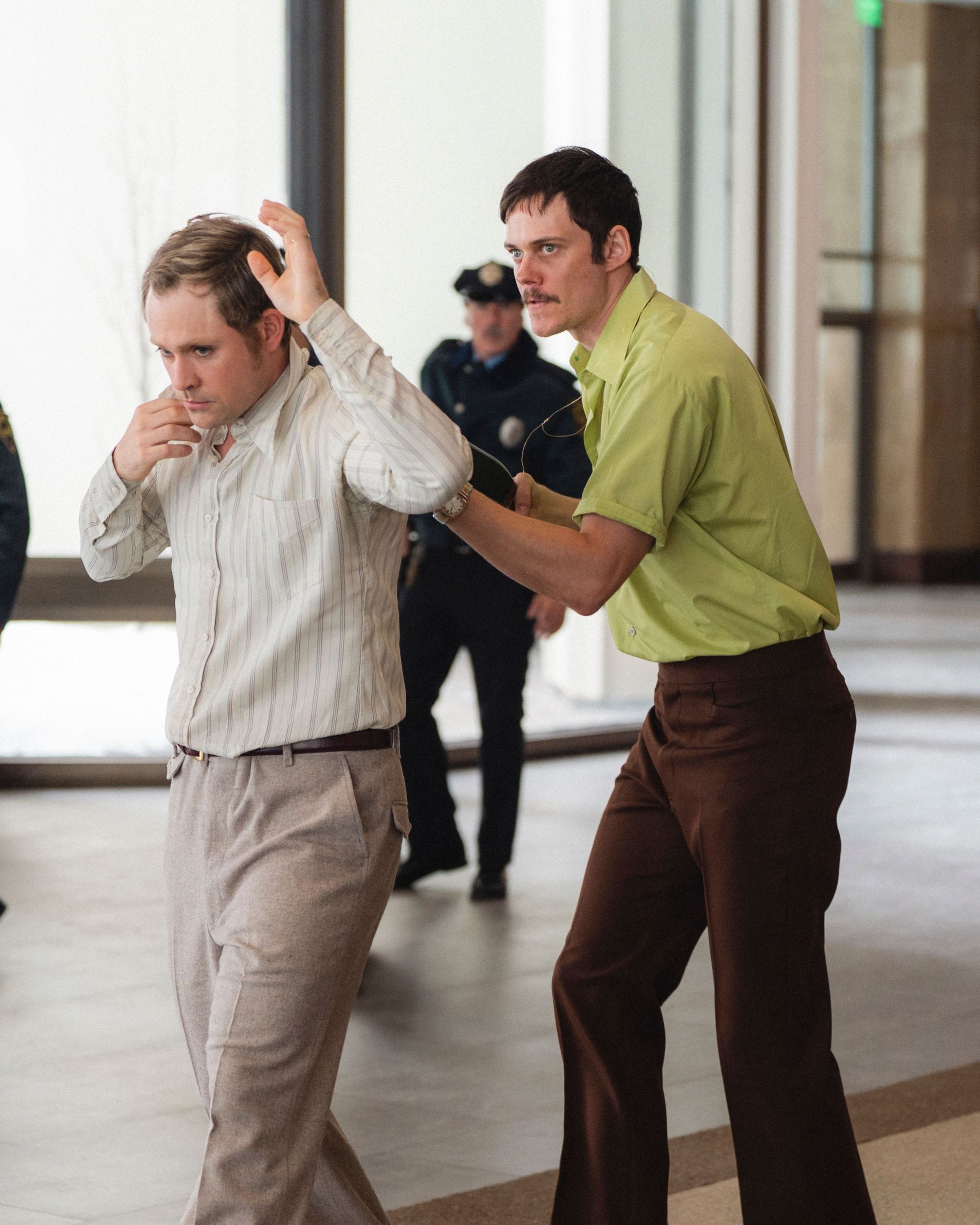
There is a man who has nothing to lose. A rather clever man, with a vision, screwed over by a bank that now has to compensate him with a $130,000 mortgage. However, a decent person who has pursued redemption his entire life and, so desperate as to have no other solutions, kidnaps a mortgage broker and demands 5 million in exchange along with public apologies.
The story is that of Anthony Kiritsis and it really took place in February 1977 in Indianapolis, followed by the press which would play an active role in the account and in transmitting information between the kidnapper and the outside world. An echo that continued the following year when John H. Blair received the Pulitzer Prize for Breaking News Photography, a shot that comes back to life in Dead Man's Wire by Gus Van Sant from a screenplay by Austin Kolodney, presented out of competition at the Venice Film Festival.
What is the film about?
The image is a key element in the film by the director from Louisville, where the shooting took place; a continuous reference between reality and fiction whose medium was the television broadcasts aired to report what was happening and which then filled newspaper articles with words and photos. All cues from which Gus Van Sant draws to create connections between the past of the event and the present of its cinematic re-presentation, reinforcing the power of a camera whose impact Kiritsis had grasped to the point of demanding public apologies, placing the issue of his debt on an ethical and moral level.
Humiliated in his private life, deprived of the possibility of seeing his own investment bear fruit to enrich those who were already sufficiently wealthy, the protagonist of Dead Man's Wire (and his real-life reference) places right and dignity on the same level. Intertwined like the device around his hostage's neck which, if he tries to escape or if someone tries to hit Kiritsis, automatically pulls the trigger (hence the film's original title, Dead Man's Wire). An affront to an honest citizen who, as such, demands virtuous compensation equal to the economic one, which he hopes to obtain through the tool used to reveal the truth: the eye of the camera and the destination of its images on television.
One against all
Dead Men's Wire in theaters tomorrow! pic.twitter.com/YsTvGa7o9i
— Sᴋαяѕɢåяɗ, BɪƖƖ. (@skarsgarden_) January 16, 2026
If already demanding apologies from a powerful man seems like a titanic undertaking, making them public and seeing him admit he was wrong becomes one of Hercules' labors. This is how Dead Man's Wire quickly shifts the audience to the protagonist's side, a good and exalted Bill Skarsgård, telling of the exploitation of power that acts and thinks it can squeeze the proletarian class to the last drop, remaining unpunished. Anthony Kiritsis turns a kidnapping into a case, not just a crime story. A strong gesture, but not for its criminal aspect, rather for making the injustice suffered by one individual everyone's business. Having made people participate by telling the story first arriving in viewers' homes and, almost fifty years later, on the big screen.
A small, almost invisible, though in fact useless revenge of the weakest. Whose story, after the kidnapping, went as it went: Kiritsis was arrested and deemed psychotic, thus taken to a mental health institution, though he was released almost ten years later with the State having no other proof that he was a danger to society. But in its revisitation in other forms (before the film there was the 2022 podcast American Hostage with Jon Hamm's voice) it can at least demonstrate that the man was in fact right.
What to read next
«Club Kid is a once-in-a-lifetime opportunity», interview with Jordan Firstman
Everything about the directorial debut of the American actor and screenwriter
"Cambogia" teaches actors that you have to care about your own characters
Valerio Lundini's directorial debut premiered at the Rome Film Festival
In "The Debut" Julianne Moore gives a masterclass in acting
The film, premiering at the Rome Film Fest, hits theaters on January 1, 2027