























Lana Del Rey and that Incredible resemblance to Sylvia Plath In “White Feather Hawk Tail Deer Hunter” it was enough to put her head in the oven
It’s only been 48 hours since the release of Lana Del Rey’s White Feather Hawk Tail Deer Hunter, which, together with Henry, Come On and Bluebird, anticipates the new album arriving in just over three months. And judging by the rumored title, Stove, the project seems—according to many—to allude to the figure of Sylvia Plath, who remains a constant presence in her musical journey and helps consolidate the myth of Lana Del Rey as the poet of contemporary love. But is that really the case?
What does Sylvia Plath have to do with it?
lana del rey has released the music video for her new single ‘white feather hawk tail deer hunter’ pic.twitter.com/rHeGuRpioh
— NOVA (@iriptheslitt) February 18, 2026
The parallel between Lana Del Rey and the poet, who died by suicide in 1963, did not emerge today. Back in 2019, on the album Norman Fucking Rockwell!, Lana sang: “I've been tearing around in my fucking nightgown / 24/7 Sylvia Plath.” It’s no coincidence that years ago, on Reddit, a user wrote: «I love Lana, I consider her a poet. [...] I love poetry and the work of Sylvia Plath. She and Lana are one and the same and both are incredible writers. I’m convinced Lana is a huge fan of Plath». A statement that is rather telling of a shared sensibility: both transform vulnerability into language, suffering into form.
The rumored title of the new album, Stove, has reignited the association with Sylvia Plath, who died in 1963 by taking her own life using the gas oven in her kitchen. The reference feels immediate, even if unspoken. In White Feather Hawk Tail Deer Hunter, Lana sings: “Take my hand off the stove / Know how absolutely bad I’m with an oven.” The oven thus becomes an ambiguous image: a domestic object that nods to a traditional—and retrograde—feminine imaginary, but also a symbol of self-destruction. After all, the singer has always been able to create short circuits in which her pin-up aesthetic coincided with tormented love stories, depression, and suicide.
A circle closing
The track also opens with an introduction that may sound familiar to jazz enthusiasts. The atmosphere recalls the 1964 version of Laura performed by Ella Fitzgerald, the famous jazz standard written in 1944 by David Raksin for the noir film of the same name, which revolves around the apparent murder of a young woman—independent and sophisticated—in 1940s New York. Themes of obsession, the construction of the female image, and idealization are common both to the film and to Lana Del Rey’s musical imagination.
From an artistic standpoint, this moment also marks a new phase in her evolution. In 2012, with Born to Die, Lana built a baroque pop universe shaped by hip hop beats and a contemporary pin-up aesthetic. With Ultraviolence, the shift was toward a more rock and psychedelic sound; with Norman Fucking Rockwell!, her writing became more essential, closer to folk and soft rock, and more authorial. In recent years, she has explored country sounds and ballads. White Feather Hawk Tail Deer Hunter seems to gather this entire journey in a way that feels coherent and deeply expressive.
A new era
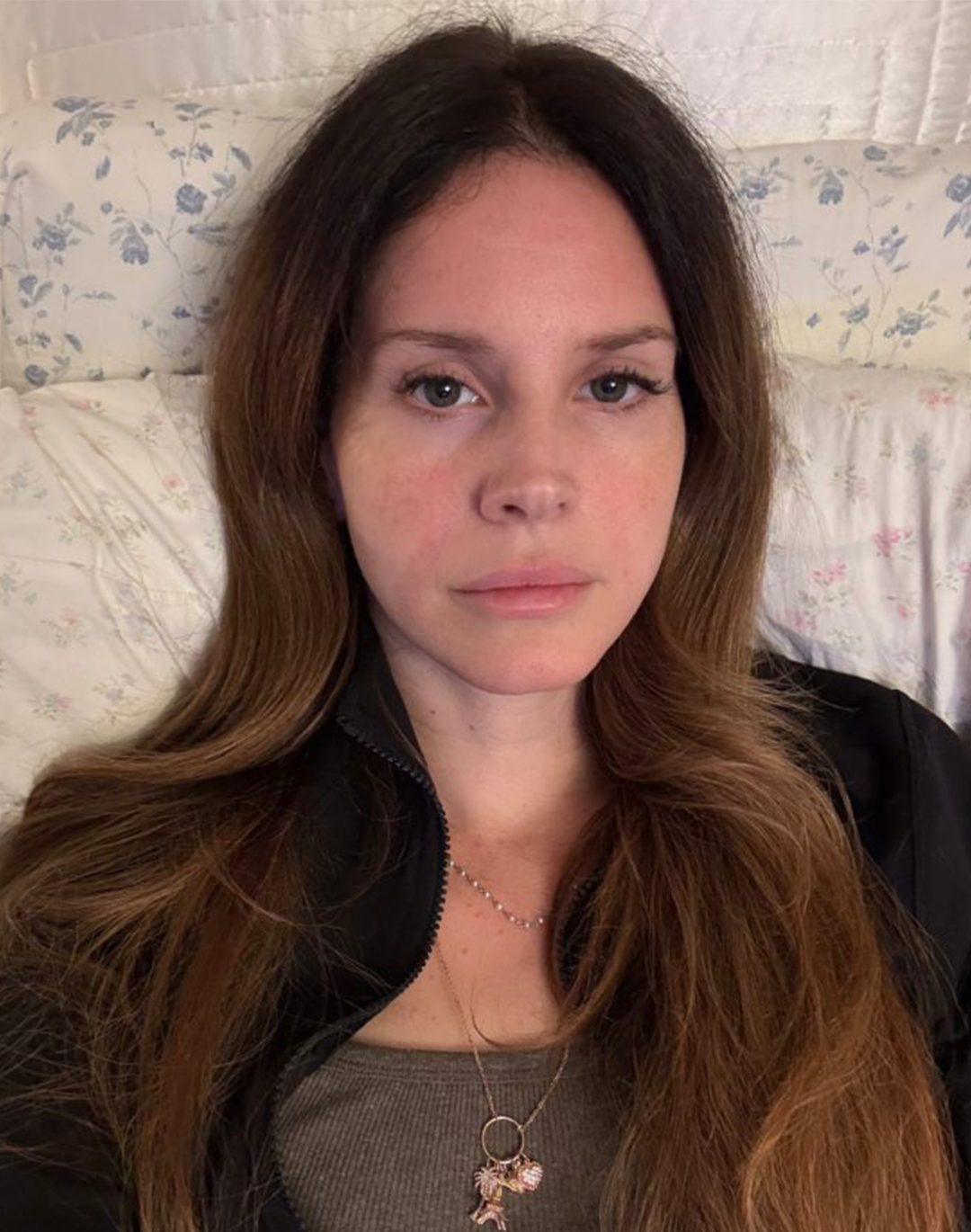
The aesthetics of the video is analog, recalling the vibe of the first works, in line with the covers of the latest albums and photos for printing, which are selfies taken with the iPhone. The atmosphere is intimate and homely, with fake snow, a night garden and vintage cartoon inserts, such as Betty Boop. There is something gothic, ritual and almost enchanted. If in 2012, in Blue Jeans, Lana sang about an ex-boyfriend, compared to James Dean, who had abandoned her to chase money and drugs, leaving her in her pain (and despite this, she will continue to love him). Or in Cola, sang:"My pussy tastes like Pepsi Cola / My eyes are wide like cherry pies / I gots a taste for men who are older / It's always been so it's no surprise". Today, however, it tells a more private, more adult, less mythologized dimension, so much so that it includes her husband Jeremy Dufrene, to whom she sings: "We're a match, he's just in my bone marrow".
It’s giving Sylvia Plath pic.twitter.com/9K9xucXEzR
— Lana Del Rey Charts (@Rafaels04484304) February 18, 2026
The bond with Sylvia Plath is not a mere imitation, but a connection that arises spontaneously and almost inevitable. What the two artists have in common is a poetics of vulnerability, the constant tension between aesthetics and pain, and a form of performativity of trauma that makes language and image. However, there is a crucial difference: the poet died tragically suicidal, marked by a deep depression; Lana sometimes recalls the gestures and aesthetics of pain, perhaps with an ambiguous lightness, appropriating an imaginary, and a suffering, which do not belong directly to her.
Plath unmasked the idealized female image from the inside, demolishing it with lucidity and precision; Lana Del Rey, instead, stages it, amplifies it, transforms it into an obsessive, sometimes cinematic and melodramatic pop imaginary. It is precisely in this gap that the similarity between the two constantly resurfaces: the pain becomes a show and the vulnerability becomes iconic. Who knows what other surprises Lana Del Rey - Betty Boop, contemporary Sylvia Plath, Lizzy Grant or what we want to call her - she still has in store for us.