






























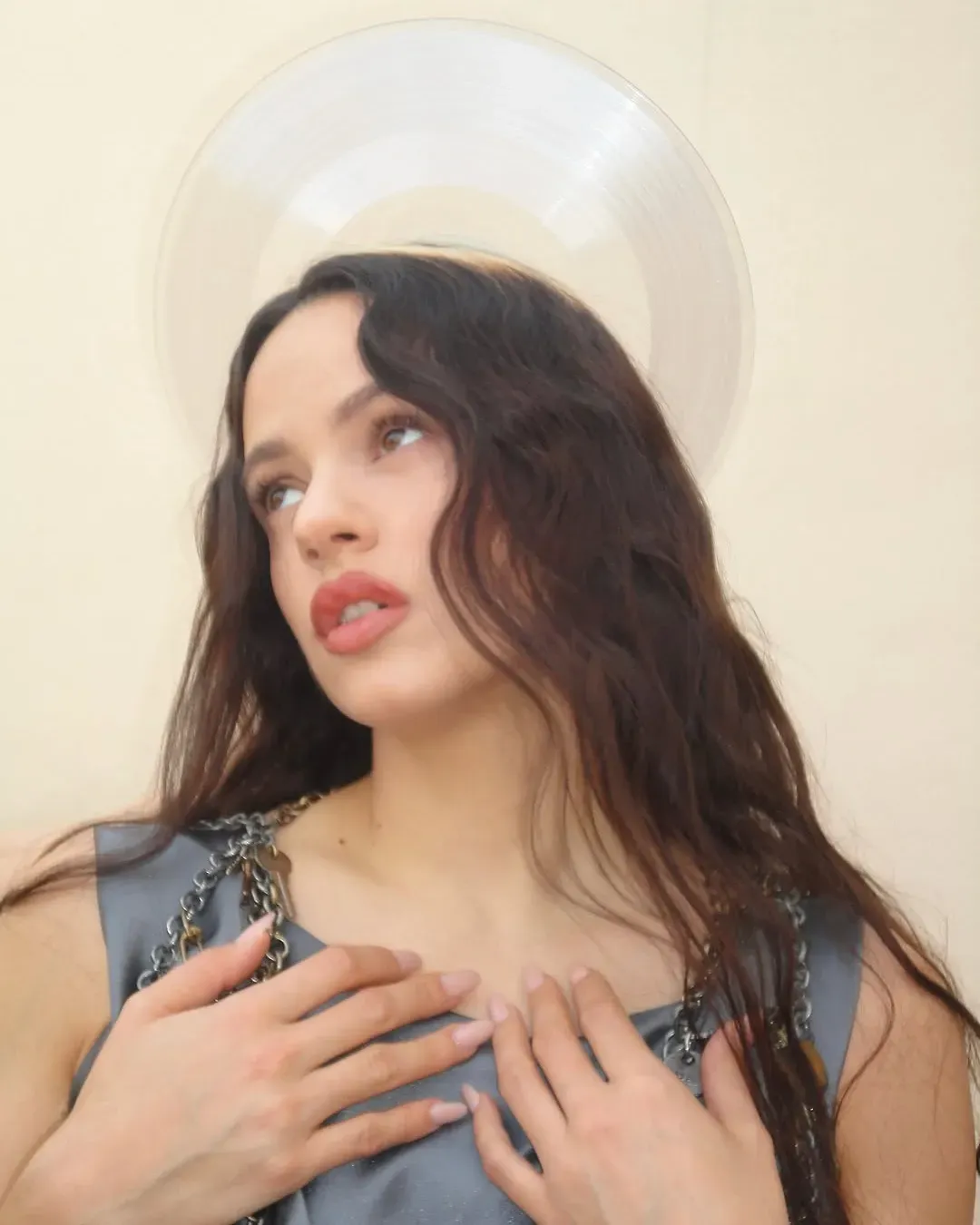
All the saints and nuns mentioned by Rosalía in “Lux” In addition to Saint Rosalía, of course
Sung in 13 different languages – 14, if you can tell the difference between Spanish and Catalan – LUX, the new album by Rosalía, is making a lot of noise, also because, as NPR wrote, it seems to have been made by an artist who «comes from everywhere and lives everywhere at once.» Among the various influences mentioned in pre-release interviews, in addition to the novels of Brazilian writer Clarice Lispector and the feminist theories of Simone Weil and Ursula K. Le Guin, there are many hagiographies, stories of saints or figures comparable to them in other cultures and religions from all over the world. Specifically, Rosalía stated that the album centers on the concept of «female mysticism» and, in particular, on how saints have dealt with lust, mortality, and the fallible nature of human beings. After all, the nun’s habit on the cover left little room for doubt.
Saint Teresa of Jesus in Reliquia
Rosalía cantando “RELIQUIA” en #LOS40MusicAwards pic.twitter.com/JiTIugCYXG
— ROSALÍA LATINOAMÉRICA (@rosalia_latam) November 7, 2025
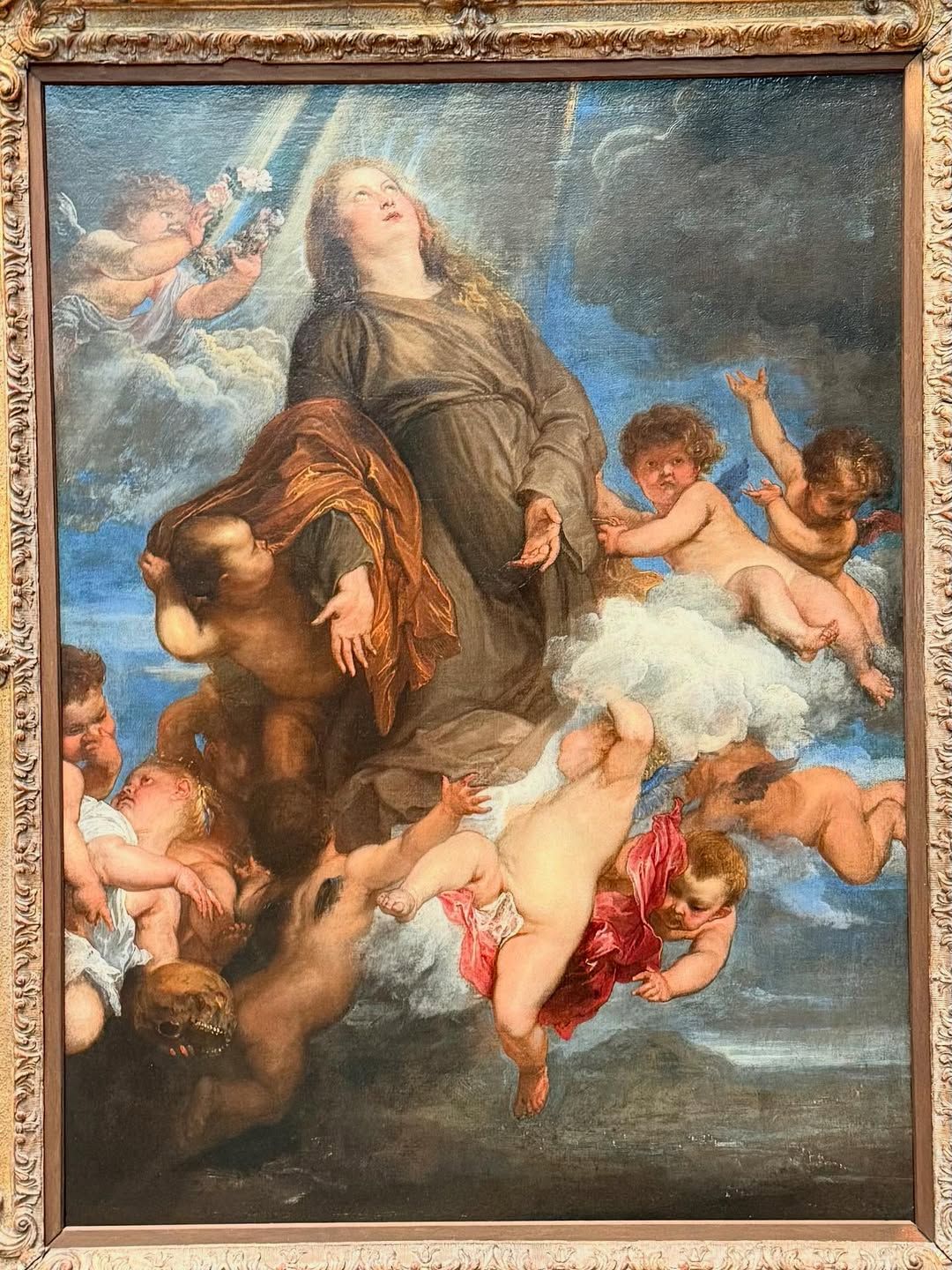
After the opening track Sexo, Violencia y llantas, which introduces the central theme of the sacred/profane dualism, the first song referencing the life of a saint is Reliquia. In Christian tradition, the concept of a relic refers to any bodily remains or objects belonging to a person venerated as a saint. In Rosalía’s song, it is represented first by the heart and then by the entire body of the singer-protagonist. The declared inspiration is Saint Teresa of Jesus, a Spanish nun and mystic better known as Saint Teresa of Ávila (1515–1582), whose limbs were amputated, divided, and turned into relics after her death, just like her heart, which is still kept perfectly preserved at the Monastery of Alba de Tormes (Salamanca).
Saint Teresa of Ávila in Divinize and Sauvignon Blanc
This idea of the body as a religious relic expands in the next song, Divinize, in which «Each vertebra reveals a mystery» and the spine becomes a rosary to pray upon. The story of Saint Teresa of Ávila also inspired the song titled Sauvignon Blanc, in which Rosalía renounces material possessions - «I’ll throw away my Jimmy Choos, I’ll let my porcelain fall / And I’ll give away my upright piano» - emulating the saint’s decision to rid herself of all material things in order to follow another path in life.
Ryōnen Gensō in Porcelana
rosalia cantando en japonés en “porcelana” pic.twitter.com/a7tPfAkPzG
— focu ‘ranni (@luxificado) November 7, 2025
Returning to the first movement of the album, with the song titled Porcelana, Rosalía makes one of her many space-time leaps, catapulting us to another continent and another era. The flamenco-hip-hop of Porcelana is inspired by the life of Ryōnen Gensō, a Japanese nun and poet of the 17th century, whose personal story deeply moved the Catalan singer. Born in Kyoto in 1646 to an ancient noble family, Ryōnen Gensō was renowned for her beauty and intelligence. After becoming a nun, she tried to enter a temple to dedicate herself body and soul to deeper Zen studies, but she was rejected because of her beauty, considered too much of a distraction for the other students. In response, Gensō burned her own face out of pain. One of her works that has been passed down to us is the poetic account of her self-disfigurement:
Once, for my amusement at court, I burned orchid incense;
now, to enter Zen life, I burn my face.
The four seasons pass naturally in this way,
but I do not know who I am amid the change.
In this living world
the body I abandon and burn
would be pitiful
if I thought of myself
as anything other than firewood.
The verse of Rosalía’s song translated from Japanese tells the same experience:
I’ll ruin my beauty before you ruin it
You think I’m strange? It’s a natural gift
I am the queen of chaos because God decided so.
Sun Bu'er and Miriam in Novia Robot
An incredibly similar story is the one that partly inspired Novia Robot (a track available only in the physical version of the album, not in the digital one). The song focuses on the story of the Taoist master and Chinese poet Sun Bu’er (1119–1182), who intentionally ruined her beauty by pouring boiling oil on her face to avoid harassment and violence from men during a journey she undertook alone from Shandong to Luoyang.
However, this is not the only source of inspiration for the song, which ends with a verse in Hebrew, roughly translated as: «I was born to rebel / And I rebel to be reborn / If pressure creates diamonds, why don’t we all shine?» It was inspired by an important figure in Jewish culture, the rebellious prophetess Miriam. Mentioned in the Holy Scriptures, she is the sister of Moses and the author of the hymn sung with other women when the people of Israel crossed the Red Sea and Pharaoh’s troops were drowned in its waters by God’s wrath. It is one of the oldest poetic compositions in Jewish history: «I will sing to the Lord, for he has triumphed gloriously; the horse and his rider he has thrown into the sea.» (Exodus 15:20–21[1]).
Saint Francis and Saint Clare of Assisi in Mio Cristo Piange Diamanti
Mío Cristo Piange Diamanti by Rosalía pic.twitter.com/FtxPim9dAG
— daf jurídico bad bunny (@versacethv) November 7, 2025
The last song of the first movement, Mio Cristo Piange Diamanti, immediately became very famous in our country because it is sung entirely in Italian. Rosalía explained that in this case the choice of language was deliberate, as the song refers to the relationship between Saint Francis and Saint Clare of Assisi, specifically the idea of relationship as friendship and mutual support, non-possessive love, and spiritual union without physical contact, elements often cited in hagiographic studies of both figures. From this come verses such as «My dear friend / Love that is neither chosen nor allowed to fall / My dear friend / With you, gravity is graceful and grace is grave» (likely a reference to La pesanteur et la grâce by Simone Weil).
Hildegard von Bingen and Vimalā in Berghain
In the second movement, there are three key female figures repeatedly mentioned by Rosalía in various interviews. The first is the German abbess Hildegard von Bingen, the inspiration behind the single Berghain. The title, rather than referring to the famous Berlin club mentioned in several reviews, directly alludes to the original meaning of the German word, «grove» (hain) of a «mountain» (berg). As Rosalía herself said, «It means a group of trees in the forest, and I feel like we all have these labyrinths in our heads, these forests of thoughts where we can get lost.»
Von Bingen was famous for her divine visions, which she vividly described as the sensation that «the heavens opened and a fiery light of extraordinary brilliance came to permeate my entire brain and inflame my whole heart and chest.» Similarly, the German verse in the song reads, «The flame pierces my brain / Like a lead teddy bear / I keep many things in my heart / That’s why my heart is so heavy.» But Rosalía also cited as an inspiration the Indian nun Vimalā, one of the first women to write in the Therīgāthā, an ancient collection of Buddhist poems written by nuns. In her interview with Popcast, Rosalía said she was particularly struck to discover that Vimalā was also a prostitute and by how this sharply contrasted with our Western conception of holiness.
Saint Olga of Kiev in De Madrugá
rosalía at lux listening party in barcelona. she easily creates the most artistic and atmospheric stages for her releases. this is so beautiful. pic.twitter.com/8fGsHLRcTz
— (@moto444ngel) November 6, 2025
The same goes for Saint Olga of Kyiv, who lived in the 10th century and inspired the singer in De Madrugá. In an interview with the Guardian, Rosalía explained: «She was considered a saint because she brought many people into that religion. But in reality, she was an assassin: when her husband was killed, she took revenge and killed many men. It’s incredible that someone like that can become a saint. In different religions, contexts, and cultures, sainthood is understood so differently.» In De Madrugá, Rosalía sings some verses in Ukrainian to evoke the fervor of Olga of Kyiv: “Я не шукаю помсти/ помста шукає мене (I’m not seeking revenge/ revenge is seeking me).”
Joan of Arc in Jeanne and Saint Rosalia of Palermo in Focu 'ranni
Only in the physical version of the album do we also find the famous story of Joan of Arc, evoked in the French-sung track Jeanne, and that of her namesake, Saint Rosalia of Palermo, sung in Sicilian in the song titled Focu 'ranni (great fire). The «santuzza,» as she’s called by the people of Palermo, is famous and venerated for the miracle through which she saved the city from the plague in 1625. But what most struck the singer was her human story and the fact that she fled from the altar before her wedding to devote herself to God, living as a hermit. Did we miss Rosalía’s wedding? Probably for the best.
Rābiʿa al-ʿAdawiyya in La Yugular
así se siente escuchar “la yugular” #lux pic.twitter.com/PG3gHBxgQS
— ִֶָ (@sabrimilia) November 6, 2025
The last figure to be mentioned in this mystical feminine circle appears in what is probably the album’s most significant song due to its high symbolic value. The track is titled La Yugular, and the mystic referenced here is «the mother of Sufism», Rābiʿa al-ʿAdawiyya. The song can, in a sense, be considered a first, elementary theological exploration of Islam. The title is inspired by a verse from the Qur’an that says God is closer to you than your jugular vein, which Rosalía cites in the song’s opening line: «Tú que estás lejos / Y a la vez más cerca / Que mi propia vena yugular.»
The power of the song lies in expressing, in its own way, the Islamic idea that we are all one soul. That’s what Rosalía tries to say with the verse «Yo quepo en el mundo y el mundo cabe en mí / Yo ocupo el mundo y el mundo me ocupa a mí» (I fit into the world, and the world fits into me / I occupy the world, and the world occupies me). She explained it publicly to the NYT: «I exist in the world, and the world exists within me. I hope my love is plural and infinite. Just as I am here and everything can be here. How can I explain that in a song? I tried. That’s what you can find in ‘La Yugular.’ That’s what it’s about.»
The concept of paradise in LUX
The Arabic verse contained in the song من أجلك أدمَّر السماء، من أجلك أهدم الجحيم، فلا وعود ولا وعيد, “For you I would destroy the heavens, for you I would demolish hell, without promises or threats,” is linked to an anecdote about the life of Rābiʿa al-ʿAdawiyya, which, like many things about her life, borders on legend: one day, Rabi’a was seen running through a street in Basra, carrying a burning torch in one hand and a bucket of water in the other. When asked, «O Lady of the Afterlife, where are you going and what does this mean?» she replied, «I want to burn Paradise and extinguish Hell so that these two veils will disappear and His servants will worship Him without hoping for rewards or fearing punishments.» Rosalía also seems to want to move beyond the concept of paradise, which is why the song ends with a reflection by Patti Smith (mystic ad honorem) on the seven heavens: «Seven heavens. That’s not much. I want to see the eighth heaven. The tenth heaven. The thousandth heaven. You know, it’s like crossing to the other side. It’s just like going through a door. One door isn’t enough. A million doors aren’t enough.»
What to read next


Why are vinyl records being released incomplete?
Cut tracks, provisional mixes and missing songs: "Vinylgate" has swept up Charli xcx, Olivia Rodrigo and Raye