
































Will flying become a luxury? Bernard Arnault invests 800 million in private aviation
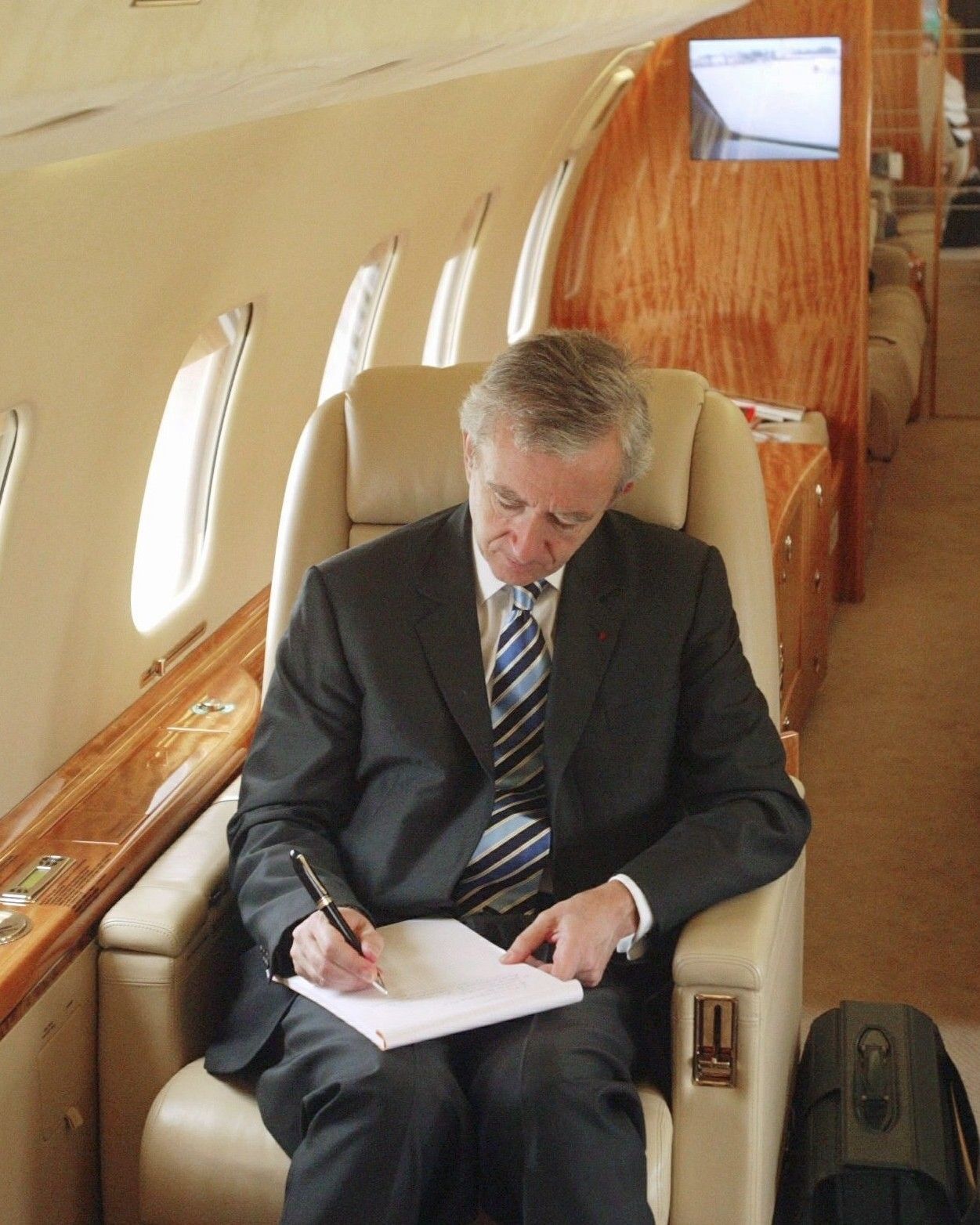
Luxury fashion may be struggling, but luxury travel is booming. Bernard Arnault knows it well: through L Catterton, his private equity firm, he invested $800 million in Flexjet, the world’s second-largest operator in the private aviation sector. The deal reflects the growing appeal of the private jet market, which continues to see strong global demand, especially among high-end clients. Also joining the funding round were KSL Capital Partners and banking group J. Safra Group – their participation confirms institutional investors’ increasing interest in private aviation, now considered one of the most stable segments in the luxury sector. The investment will allow Flexjet to strengthen its premium offering, expanding its bespoke services for clients, introducing tailored experiences and exclusive events, while positioning itself as a lifestyle brand and, presumably, making a measured entry into the growing luxury travel ecosystem taking shape within Arnault’s empire, which in recent years has also invested in trains, hotels, and spas. Flexjet currently operates a fleet of 300 aircraft and has announced plans to expand into the European market: a new private terminal in London and a partnership with yacht manufacturer Ferretti Group to design aircraft interiors inspired by luxury yachts.
This expansion reflects, as mentioned, the private jet boom that emerged during the Covid-19 pandemic, fueled by the growth of the fractional aviation model – a kind of “timeshare” system that allows clients to access private jets without the burden of full ownership. But this market growth, which is also reflected in rising ticket prices, doesn’t only affect the rich and ultra-rich – it concerns all European passengers. According to data published by the European Union at the end of June, and referring to the previous year, in 2024 air travel across the continent almost returned to pre-pandemic levels. Although the early months of the year still recorded small declines compared to 2019, from May onwards the decreases were under 5%, with August showing the smallest gap (-3.5%). Overall, almost 1.1 billion passengers were transported, an increase of 8.7% compared to 2023. Every EU country reported passenger traffic growth, with peaks in Hungary (+19.2%), Czechia (+18.9%), and Estonia (+17.8%). All of this confirms that air traffic in Europe is now close to fully recovering its pre-Covid volume. Yet a growing concern is hard to ignore: the cost of air travel.
The era of cheap flights in Europe really does seem to be over. Tougher carbon-pricing rules (ETS) coming in from 2024-26. Then net zero by 2050, costing airlines an estimated €820 billion. "Demand destruction" is inevitable, and part of the plan.https://t.co/wk9TSSZgyG pic.twitter.com/IFwxecBj5H
— Wessie du Toit (@wessiedutoit) May 27, 2023
According to estimates by the O.N.F., the National Observatory of Federconsumatori, only 43.2% of Italians will go on vacation this year. And for most of them, these will be short holidays: 54% of travelers have opted for stays between 3 and 5 days, often relying on friends or family for accommodation. One of the main reasons behind this choice is the increase in air transport costs. The sharpest price hikes have affected international and intra-European flights: the average cost of a round-trip economy ticket has risen by 14% compared to 2024, with peaks of +18% on routes like Rome-Athens. Flying within Italy is also more expensive: a 13% average increase, with notable peaks on routes like Milan-Palermo (+17%) and Milan-Olbia (+16%). Airlines attribute these increases to rising demand and higher operational costs, but it's not just about market dynamics. International tensions and ongoing armed conflicts are reshaping flight routes, forcing airlines to avoid entire regions now considered high-risk. The result is longer journeys, higher fuel consumption, and a heavier environmental impact.
There are currently multiple restricted airspaces around the world. The skies over Ukraine and large portions of Russia remain closed due to war. In the Middle East, countries such as Syria, Iraq, and Iran are either overflown with caution or avoided altogether. Further east, certain areas in Pakistan and India are also subject to rerouting, with a clear result: a flight like Helsinki-Tokyo can now take up to three and a half hours longer than before, resulting in increasingly high costs. According to a recent analysis cited by Il Post, some Europe–Asia routes require detours that lead to cost increases ranging from 19% to 39%, with carbon dioxide emissions rising between 18% and 40%, depending on the aircraft model used.
Volo in Sardegna con aeroitalia tariffa per bagaglio a mano 40€ a tratta, stiva 90€ a tratta, totale oltre 350€. Soluzione? 150€ (vi devono mangiare i coccodrilli) con borsa piccola e spedizione bagaglio corriere qualche giorno prima, andata e ritorno €50. Ryanair 3€ meno.
— MartaCene (@egos23) July 16, 2025
Another factor that will further impact future airfares is the transition to more sustainable fuels. Starting in 2025, the European Union and the United Kingdom will implement their first mandates on the use of SAF (Sustainable Aviation Fuel), with a minimum requirement of 2%, set to increase in the coming years. According to an analysis by ING Think, SAF can cost up to three times more than traditional kerosene, and since fuel accounts for 25% of operating costs, a 10% SAF blend by 2030 could increase operating costs by 2.5–5% – translating into an estimated 3–4% ticket price hike by 2030. In a world marked by conflict, economic instability, and future-facing transitions, flying will no longer be merely a matter of distance or time. It will increasingly reflect global fragility – and, more often, it may leave us grounded.
What to read next

This summer, you should wear tank tops on top of each other
Heat can do nothing against the power of layering

5 style mistakes to avoid as a tourist in Italy
After all, there's no need to make yourself recognizable every single time