
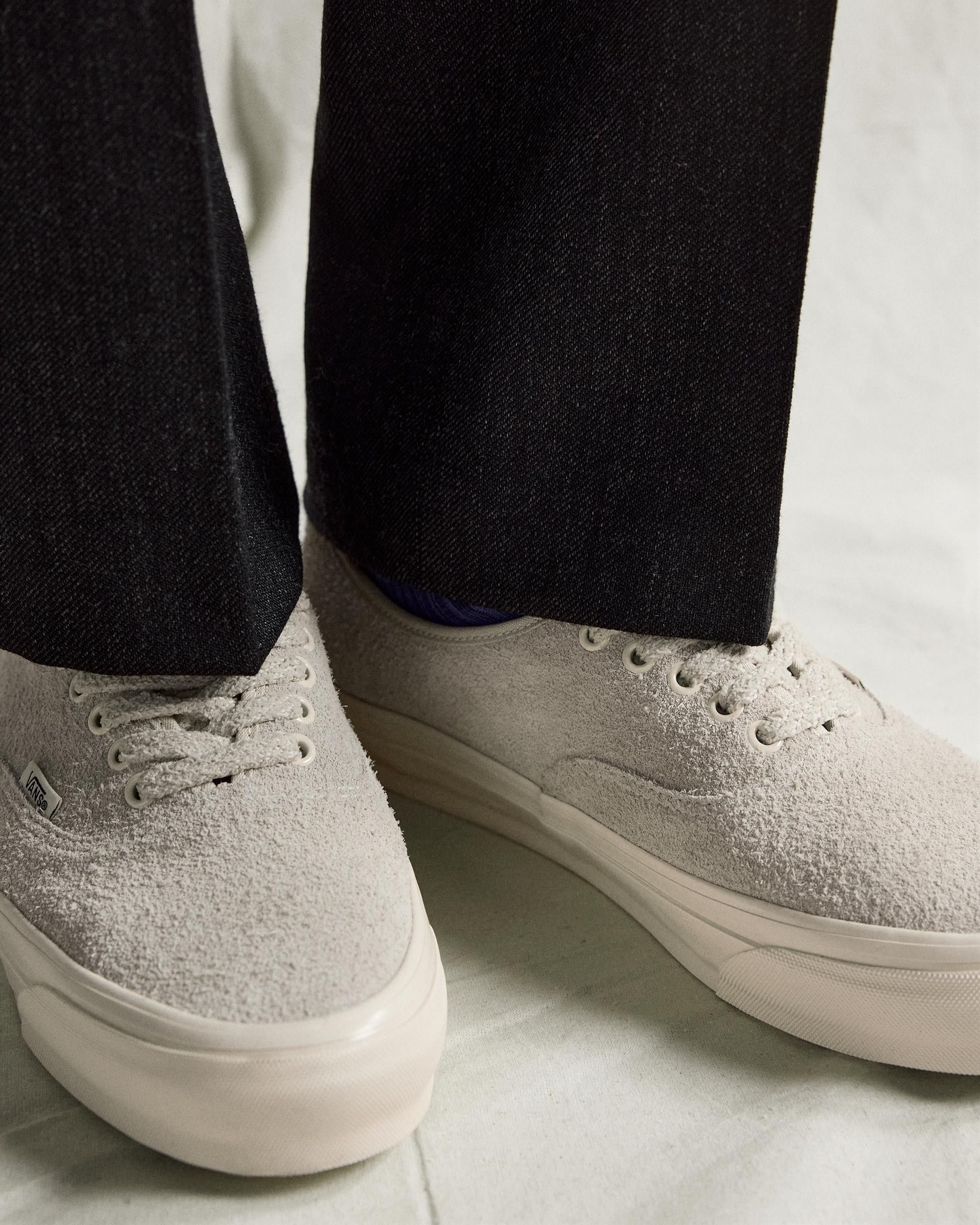
What do you mean Zara started selling Vans? The two brands have entered into an ongoing partnership
This week, some Vans sneakers appeared on Zara's website and app accompanied by a "coming soon" banner. This is quite curious, as it marks the first time the Spanish giant has sold another brand within its retail spaces, even if only digital ones. While one might initially assume that Zara and Vans are collaborating, that is not the case: Zara has struck a sales agreement with Vans as though it were a multi-brand store, with the goal of mutual commercial support. In practice, the news may seem minor, but in theory the implications are entirely fascinating: could this be the first step toward a multi-brand evolution for Zara? And above all: will this new strategy solve the brand's well-known footwear problem?
Jumping on the Bandwagon
The Vans sneakers that appeared on Zara's e-commerce platform number just three, all from the Authentic line. These are therefore the most basic, minimalist, and in some ways "least branded" models in the American brand's lineup. They are also very affordable, popular, and widely imitated models. Such a limited and controlled launch clearly indicates that the strategy is in a phase of cautious experimentation. As WWD explains, VF Corp is working on a relaunch plan for Vans which, along with Timberland, has seen positive results recently, to the point that some analysts have revised upward their valuation outlook on the conglomerate.
The idea, then, is to reach consumers who would not normally go out of their way to visit a mono-brand store or purchase online from the official website. Granted, Vans' basic models are among the most widely distributed sneakers in the world — they can be bought in countless stores across Europe — but the level of accessibility that Zara provides represents a superior platform, almost a bandwagon whose sheer scale decisively dwarfs all others, and one on which even the most widely distributed brands are ready to place their bets.
The Vans Authentic silhouette, moreover, has been heavily imitated by luxury brands such as Louis Vuitton, and so there is also a sense that the brand wants to reclaim ground by putting the original back in front of a larger number of consumers. As for Zara, this partnership brings a more subtle advantage: an elevation of their footwear offering, which is perhaps the one area where the brand, and fast fashion in general, has consistently failed to excel.
While Zara manages every season to sell a product that goes on to become iconic — whether a dress that makes you trip, a particular leather jacket, or a pair of jeans — shoes remain an impenetrable category. Today, even an informed consumer with an eye for quality might allow themselves a Zara purchase for a basic garment, something to wear without too much thought or expense, but actual shoes — whether sneakers, ankle boots, or loafers — are simply not something people go to Zara or other "department stores" to buy. But purchasing a pair of Vans from Zara's website could accustom customers to the idea of buying shoes from the brand, following the same logic by which, if they come from a collaboration with John Galliano or Willy Chavarria, even Zara's own shoes seem more acceptable.
Just the Beginning?
@spiritual.materialist that they feel relaxing is an understatement #zarastore #retaildesign #aestheticshop #slowfashion runway minimalist house music(1369360) - KAKKY
As mentioned, this agreement with Vans still appears to be in the experimental phase only. Which implies it could expand to other shoe models as well as to other pop brands such as Nike, adidas, Converse, New Balance, Puma, or Dr. Martens. Zara commands enormous traffic, both physical and digital, and reaches segments of the public that often do not frequent mono-brand stores or shop on official websites — making it a powerful discovery channel, capable of generating additional volume that is particularly useful during relaunch phases or periods of revenue pressure.
At the same time, it would allow brands to test the response of different market segments without having to invest in their own points of sale or dedicated marketing campaigns. It remains true, however, that associating with a fast fashion giant can weaken brand equity if a brand is aiming to elevate itself, and there is also the risk that traditional retailers, mono-brand stores, and official e-commerce channels could come to see Zara as a direct competitor. This is perhaps why Vans has made only three very basic styles available through Zara.
From Zara's and Inditex's perspective, the move would represent a strategic diversification. Selling a curated selection of other brands' products could attract more traffic, increase dwell time on websites and in stores, and strengthen the overall offering. Zara would transform into a kind of accessible marketplace, drawing closer in some respects to multi-brand distribution models, while retaining the speed and logistical efficiency for which it is known — all without, of course, blurring the group's identity.
In the medium term, two scenarios could unfold. If the initiative works without diluting brand image, lifestyle and streetwear brands could use fast fashion giants as a complementary volume channel, reserving their more premium products and special collaborations for their own circuits. If, on the other hand, dilution becomes apparent, the strategy will likely have no future. Which leads one to wonder: does there truly come strength in numbers?