
The glam-rock inspirations behind Emma Mackey's look in the new "Narnia" Greta Gerwig drew inspiration from David Bowie for her new film
Yesterday the trailer dropped for Greta Gerwig's Narnia: The Magician's Nephew, a new adaptation of the first book in C.S. Lewis's The Chronicles of Narnia. Set in the 1950s — a slightly different era from that of the original books — the trailer immediately showcased an aesthetic very different from the medieval fantasy look audiences had come to know through Andrew Adamson's hugely celebrated 2005 film, whose success made Tilda Swinton the screen icon she is today. It is precisely the character of Jadis, the White Witch — this time played by Emma Mackey — that has generated the most debate, as her look is closer to Josie & The Pussycats than to the antiquated costume of classic fantasy. But why?
A glam-rock fantasy
@nanass.id_ Cakep Banget sumpahh Our Queen Jadis... #emmamackey #jadis #Narnia #themagiciansnephew #aslan original sound - Remix_features
One very telling detail in the trailer is the presence, on the soundtrack, of Stairway to Heaven — a track that Led Zeppelin had virtually never licensed for any kind of film. This very clue, pointing back toward the '70s and rock music, is key to understanding the inspirations behind the new Narnia: a story of alternate universes, cosmic events, and mythology that Gerwig has chosen to tell in a new style, far removed from the folk medievalism of the past and closer to visionary science fiction and the retro-futurist psychedelia of the glam-rock era.
"I wanted a rock opera," Gerwig told Empire a few weeks ago. "Narnia is literally a world made of music. It's a world that comes to life through Aslan's song, and rock 'n' roll felt to me like a world made of music." Even the look of the lion Aslan — who will be voiced by Meryl Streep — is not that of an ordinary feline: he has differently coloured eyes and a face painted in a way that betrays the declared inspiration behind the design: David Bowie. And specifically the David Bowie of the Ziggy Stardust era — the "alien," futuristic Bowie, with zigzag coloured makeup across his face and glittering jumpsuits.
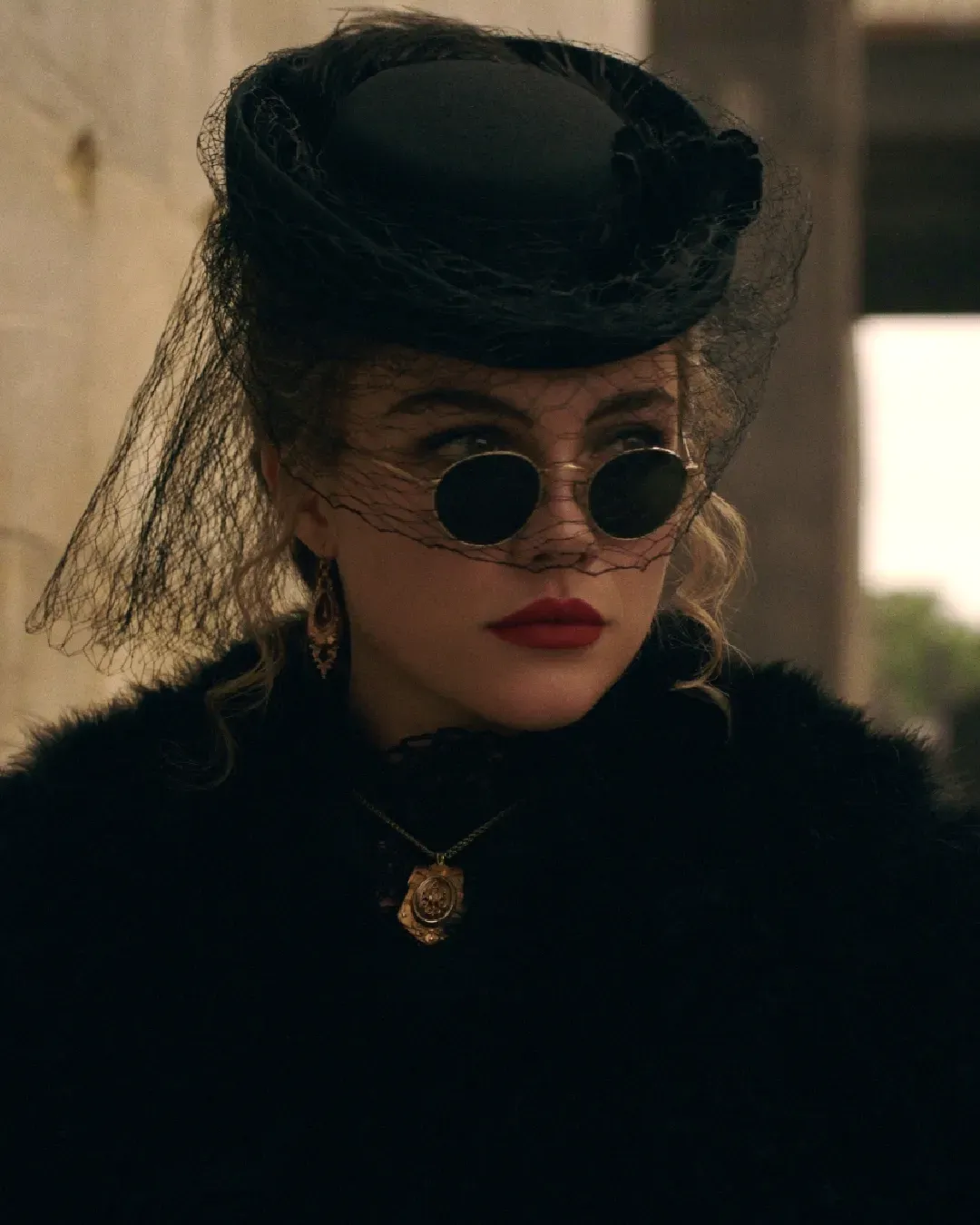
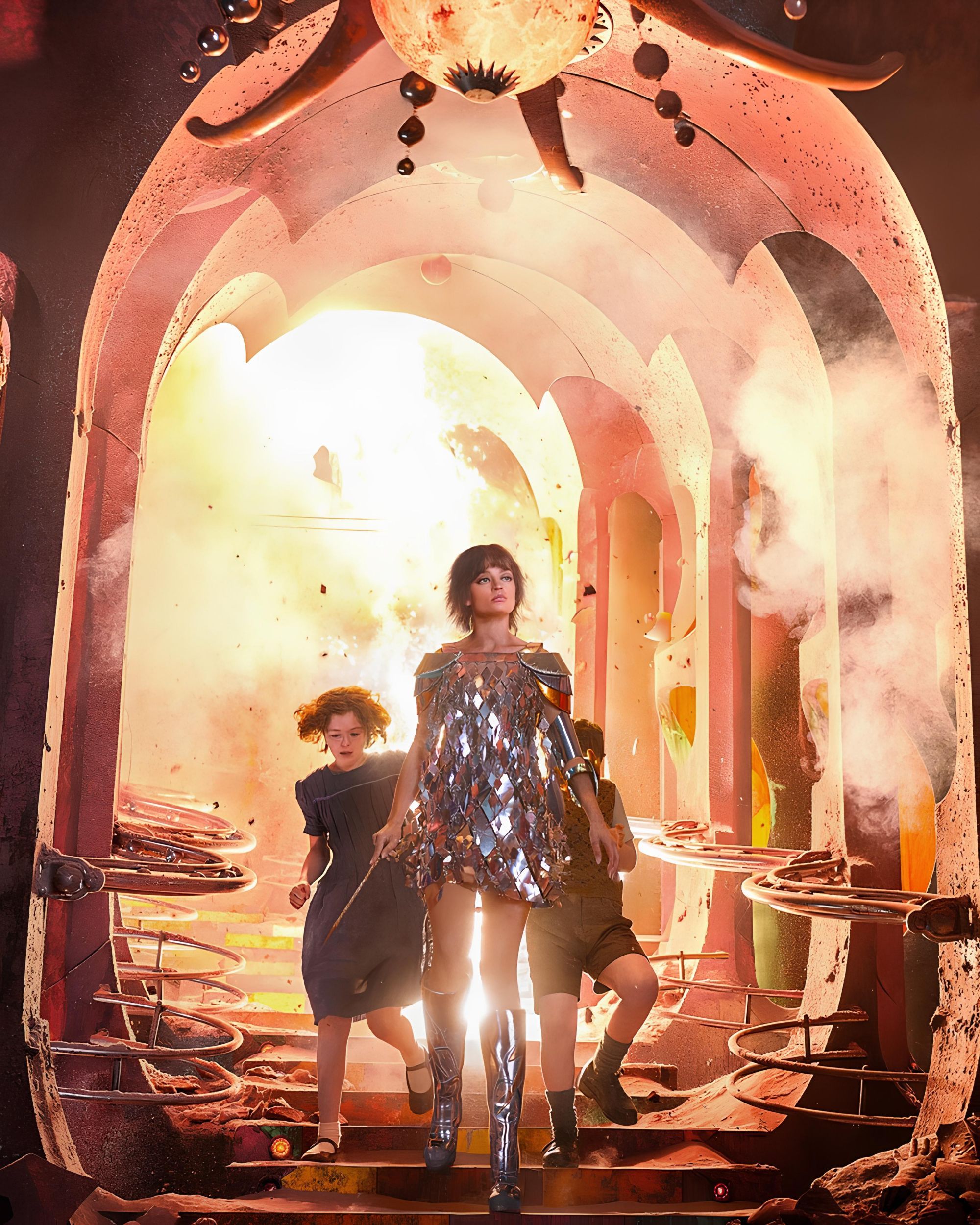
But, as mentioned, the most talked-about look of all is that of the White Witch, Jadis, whom we see in the trailer in both the traditional version everyone remembers — ice crown, long white gown, and cloak — and in her "new" version, wearing a metallic dress, that is, before her arrival in Narnia from another post-apocalyptic world she herself destroyed. And therein lies the point: while the world of Narnia, whose creation we will witness in the film, may still have a medieval feel, the true alternate world we will explore in this first story is more steampunk, made entirely of metal. But what are the inspirations behind Emma Mackey's look?
Paco Rabanne and retro-futurism
While the English 1950s and '60s depicted in the film are fairly ordinary and vaguely desaturated, both the Wood Between the Worlds (the transitional realm connecting the multiverse) and the parallel world of Charn, from which Jadis hails, are wildly fantastical and hyper-saturated. In some respects they recall the celebrated A Wrinkle in Time by Madeleine L'Engle and its adaptations, alongside weird fiction and the retro science fiction of Barbarella and Flash Gordon. Emma Mackey's dress seems to come straight from that era: an A-line dress from the '60s made of metal plates, worn with armour pauldrons on the shoulders — impossible not to think of Paco Rabanne.
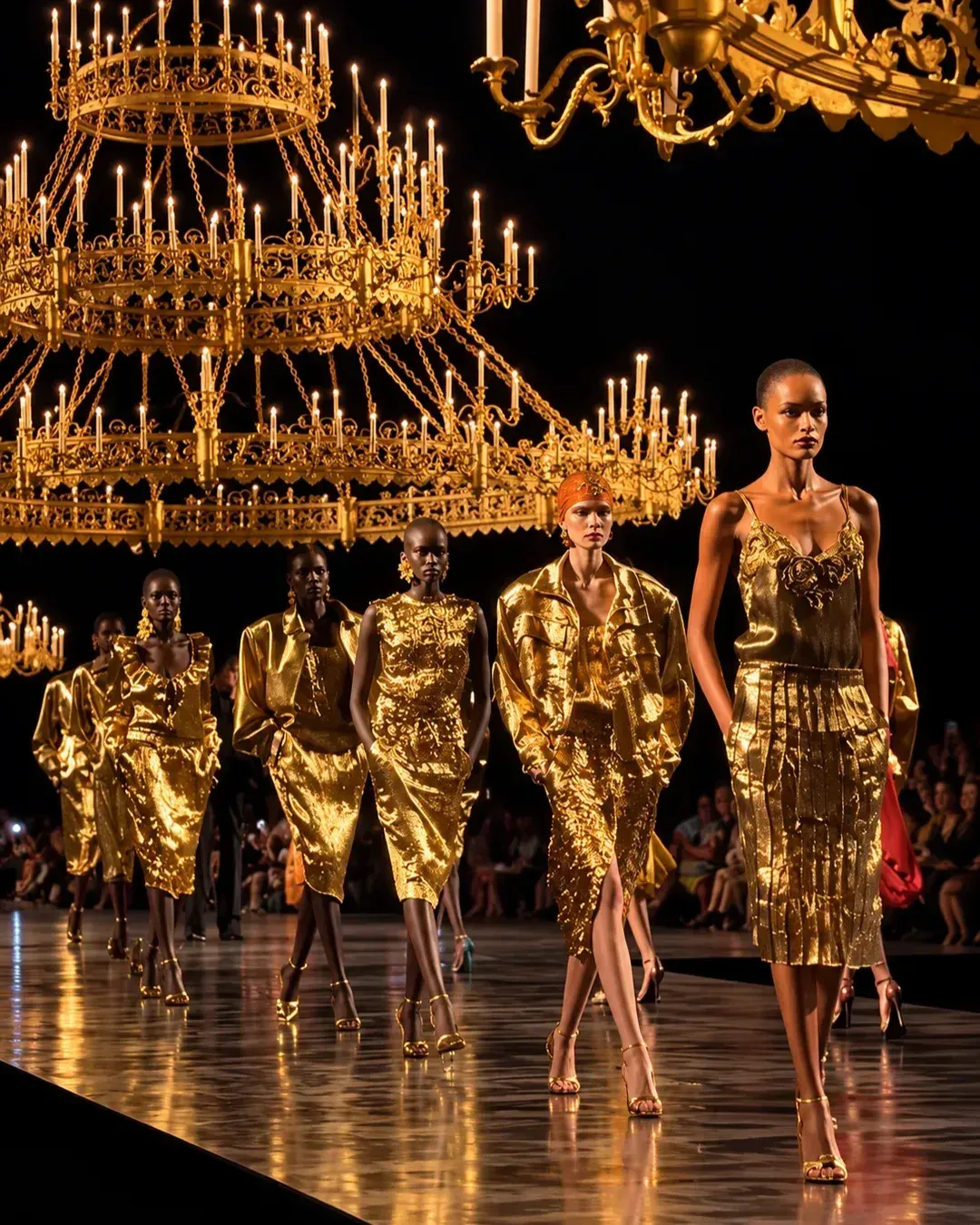
Rabanne's metal plate dress was presented in 1966 in Paris, in a collection called Twelve Unwearable Dresses in Contemporary Materials. With its success, his metallic dress evolved and remained at the cutting edge throughout the Space Age era, immortalised in the costumes worn by Brigitte Bardot in Contact, those of Audrey Hepburn in Two for the Road, and above all in Barbarella with Jane Fonda, a film for which Rabanne himself designed the costumes.
All references situatable between 1967 and 1968 — a good decade after the period in which Gerwig's film is set — and which therefore convey a futuristic yet not necessarily "technological" vibe that the director has chosen to imprint on her story. Mackey's makeup itself — glittery, with a Pierrot-style triangle effect, attributable to that Glam Clown aesthetic featuring cut crease, heavy eyeliner, and plenty of shimmer — paired with a Debbie Harry-esque bob, albeit raven-black, evokes that retro-futuristic, glam-rock world entirely.
Is it a good choice?
Emma Mackey - Narnia: The Magician's Nephew (2027) pic.twitter.com/YXFk0wrW8x
— Edwin de Reina (@glassycottons) October 13, 2026
The purists have already voiced their complaints about this shift, but in reality Gerwig's choice is a very intelligent and very inspired one. For years, contemporary fantasy has remained "trapped" within the aesthetic of Game of Thrones, which Amazon Studios sought to replicate in both the The Lord of the Rings series and The Wheel of Time. And the medieval aesthetic of Game of Thrones — even infused with a certain Byzantine vibe — has until now remained the most unassailable standard in the fantasy genre, locking it into a world of castles and knights to which Narnia itself had always belonged.
And yet the very opening book of Lewis's saga deals with concepts closer to science fiction — the multiverse, portals, parallel worlds. This is because, at the time The Magician's Nephew was written, the distinction between more medieval-style fantasy, pure science fiction, and the weird tales genre was far more porous than it is today. The choice to adapt this new franchise in a new visual language, detached from classic medieval atmospheres, therefore represents an opportunity that Gerwig has seized, as well as a chance to shift or expand the scope of the fantasy genre toward innovative and less tired territory.
Could this be a response to the fantasy fatigue of recent years? Time will tell — not least because, as noted, Mackey also appears in a traditional costume with cloak and crown after her "transfer" to Narnia. The attempt could work if one considers how Frozen, for instance, drew more inspiration from nineteenth-century Nordic style than from the Middle Ages or the Renaissance. And if the film series continues — as it should — we will have ample opportunity to see mythological creatures and classic magic. For now, with the Narnia trailer, we feel like we are finally watching something new.