
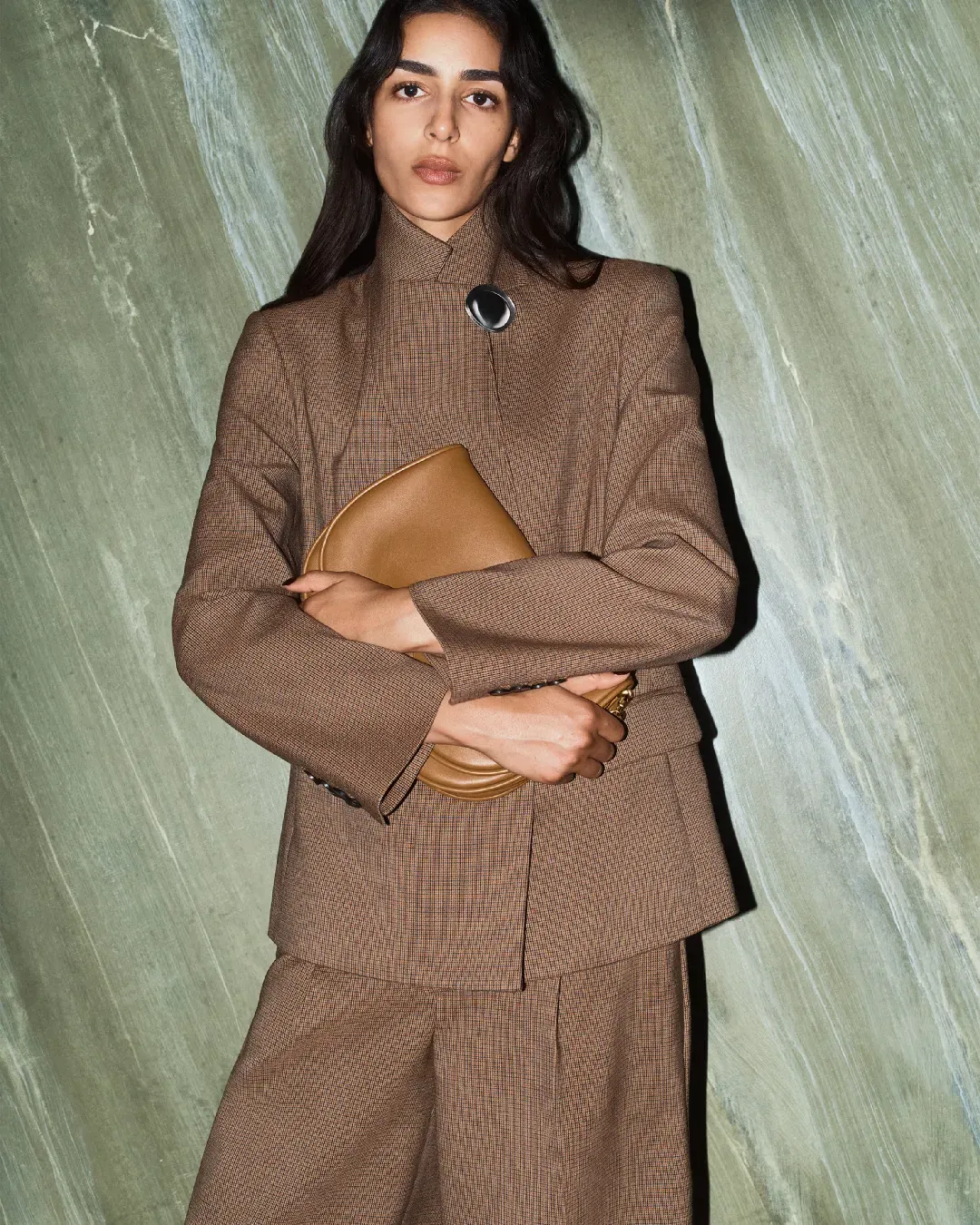
Now even Marks & Spencer supermarkets have an atelier How the "manufactured transparency" of European fast fashion is attracting new consumers
Ever since Zara announced 50 collaborations with leading figures from the worlds of art and fashion for its 50th anniversary, the retail industry has changed its tune. Not only that: it has started to aim a little higher, both in terms of product — hiring teams of tailors and designers, creative directors and artists — and in terms of communication, implementing a clear strategy across its social media channels.
This is the case with H&M, which this London Fashion Week invited none other than Nick Knight to design the brand's show (on the official calendar), and with Marks and Spencer, a chain selling clothing, accessories and food that in recent months has adopted a rather unusual advertising technique on TikTok. From content featuring the design team to in-depth videos on new collections, the British multinational seems to have transformed itself from an accessible retail chain into a creative hub. On TikTok, it showcases not just its products, but also the people who designed them, microphone in hand, deploying terms like "elevated, versatile, iconic, sculpted" to describe accessories and garments that cost, on average, between 30 and 50 euros each.
Consumers Who Want More
What makes the marketing strategy adopted by Marks and Spencer, H&M and Zara so significant is the consumer response. Rather than questioning the authenticity of the "new look" of the major fast fashion chains (which, thanks to this very rebranding, are no longer commonly referred to as fast fashion but rather as mainstream high-street retailers), people are embracing it wholeheartedly. Marks and Spencer has amassed nearly 200,000 followers on TikTok, and the videos featuring the chain's design team are the highest-engagement content on the account.
To better understand why consumers are responding so positively to this new strategy — this paradoxical manufactured transparency — we need to take a broader look at the fashion industry. Europe's high-street brands find themselves squeezed between two market segments this year: on one side, luxury, increasingly out of reach, driven by elitist storytelling and a sometimes deliberately opaque aesthetic designed to exclude those who "wouldn't get it"; on the other, the giants of Chinese ultra-fast fashion, Shein and Temu, which cannot seem to shake their poor reputations.
Shein was forced to lower its valuation in order to proceed with its IPO, while from 1 September a new tax on fast fashion purchases came into effect in France to discourage overconsumption. The new French tax will, however, apply only to e-commerce platforms such as Shein, Temu and AliExpress, and not to Zara, H&M and Uniqlo, since the latter, according to the office of the Minister Delegate for Ecological Transition, "are not comparable to Zara."
In short, the strategy of manufactured transparency is working extremely well for European fast fashion brands which, bolstered by their proximity to fashion capitals and their "clean" accessibility, are successfully appealing to that segment of consumers who can no longer afford any luxury item, not even the smallest ones. And whereas until recently the collections of Zara, H&M and Marks and Spencer featured the same trends and designs seen on the runway months earlier, consumers no longer have to settle for buying a dupe. Zara's new creative director really is John Galliano, and Marks and Spencer has a Head of Design who knows her craft. As for who actually stitched the clothes, how many were produced and the environmental impact of all these "partnerships" — those are questions we won't be asking too loudly.
What to read next

5 trends that Trainspotting anticipated Back in 1996
There is much more to the film than the famous Helmut Lang tank top
What do you mean Zara started selling Vans?
The two brands have entered into an ongoing partnership
These are the secondhand handbags that are worth the most in 2026
Searches for the Chloé Paddington have risen by 610%, but the real star of the secondhand market is Chanel