
























Is underwear still private? No longer a provocation, but a visual language
For years, underwear remained the invisible part of the wardrobe, something to be concealed and rendered neutral. Today, however, that language no longer returns unchanged: it has been reworked and normalized, losing its element of shock to become an everyday aesthetic code. A notable exception dates back to the early 2000s, when the logic was the opposite: low-rise waistlines and deliberately visible thongs transformed underwear into a highly intentional statement, often provocative and tied to a distinctly recognizable pop aesthetic. From there, the contemporary direction shifts entirely: underwear is no longer a visible exception, but an integrated presence within the look. Boxers, briefs, branded waistbands, and lingerie are no longer merely glimpsed, they actively structure the outfit.
Summer 2026 pushes the logic of underwear as outerwear to its peak, though in a softer and more everyday form, where the boundary between the intimate and the external dissolves without any overt declaration of rupture. It is no longer about provocation in the traditional sense of the word. Showing underwear is neither a “mistake” nor an excess: it is a normalized aesthetic choice, often incorporated into simple, clean, almost minimalist looks. It is precisely this absence of drama that makes it compelling.
Underwear as Part of the Visual Language
The key point is no longer the garment itself, but the way it is displayed. Underwear becomes a graphic surface: a waistband peeking above a pair of jeans, a striped boxer replacing traditional shorts. The result is a fashion system that no longer seeks to conceal its own construction; instead, it deliberately exposes it. Layers, seams, and edges become visible. The body is no longer completely “dressed”, but continuously traversed by different visual layers. Within this logic, the return of boxer shorts as outerwear feels entirely natural. As Vogue notes, the rise of boxers is one of the most emblematic examples of the wardrobe’s contemporary transformation: borrowed from men’s underwear and reimagined through womenswear and unisex fashion, boxers are no longer confined to the private sphere but have become a visible and intentional component of everyday dressing.
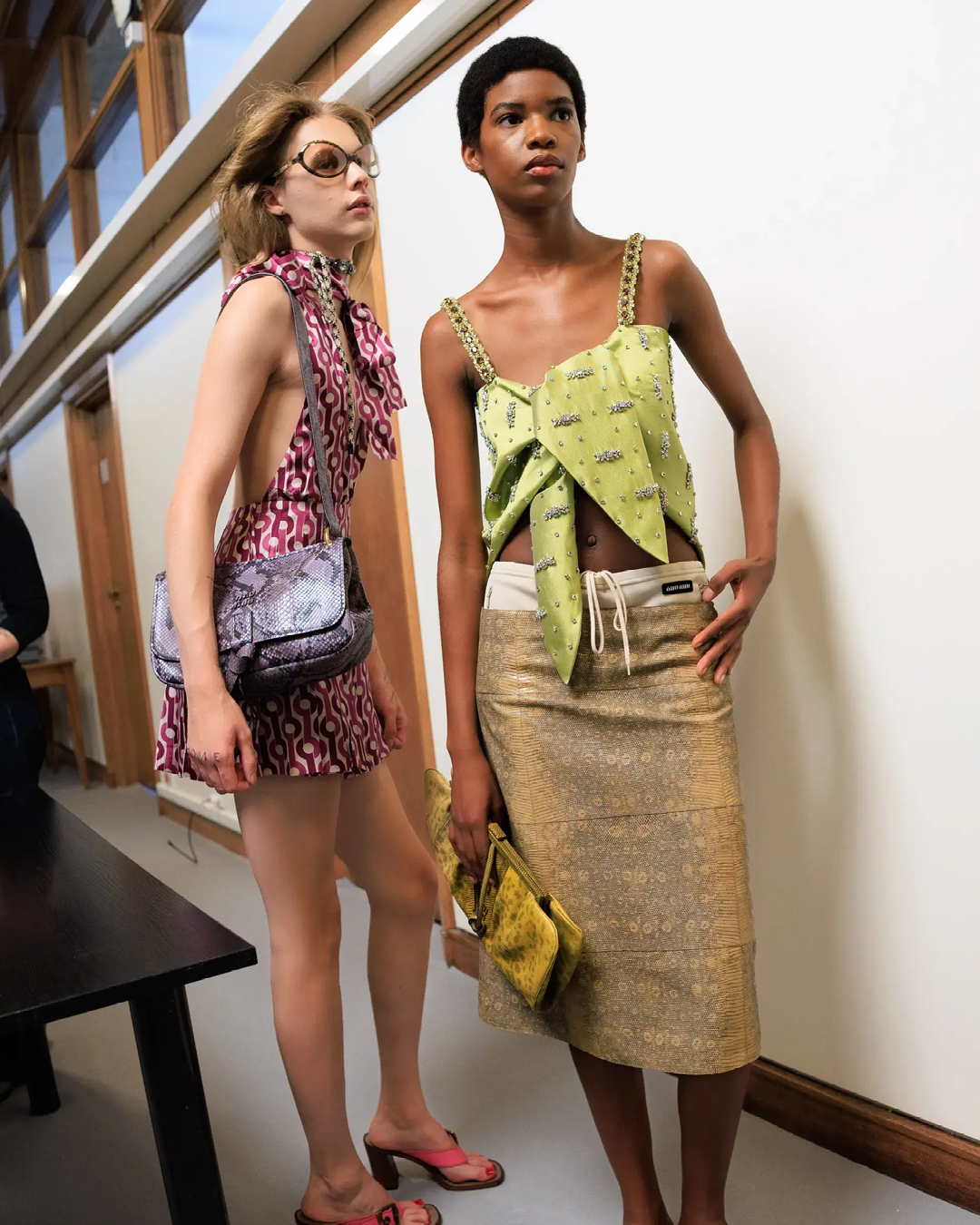
Their integration into daily styling has been accelerated by the runways of brands such as Miu Miu and Prada, which have normalized the presence of garments with an underwear-like aesthetic in public space. In this sense, the boxer is not a provocative detail but a cultural device that confirms the normalization of underwear, where the distinction between private and public is gradually dissolved through the construction of the look. Among all the elements of this trend, boxers have become its most recognizable and widely replicated symbol. Today, they are worn as genuine city shorts, their appeal rooted in ambiguity: conceived as underwear, they have been reinterpreted as a unisex, everyday, and highly versatile garment. They do not appear “designed” to be fashionable, and that is precisely what makes them desirable. After years of hyper-structured dressing, fashion seems to be searching for a form of engineered nonchalance.
A New Exposure of the Body
The return of the low-rise silhouette is not an isolated detail but an integral part of this phenomenon. The low rise reopens the visual space around the abdomen and hips, making the presence of visible underwear feel natural. Everything once considered something “to be hidden” becomes a graphic component of the look. Underwear is no longer an invisible foundation, but a second skin that contributes to aesthetic construction. This exposure no longer necessarily serves a provocative purpose. In many cases, it is simply part of a shared visual grammar, particularly among generations raised on social media and a constant flow of images.
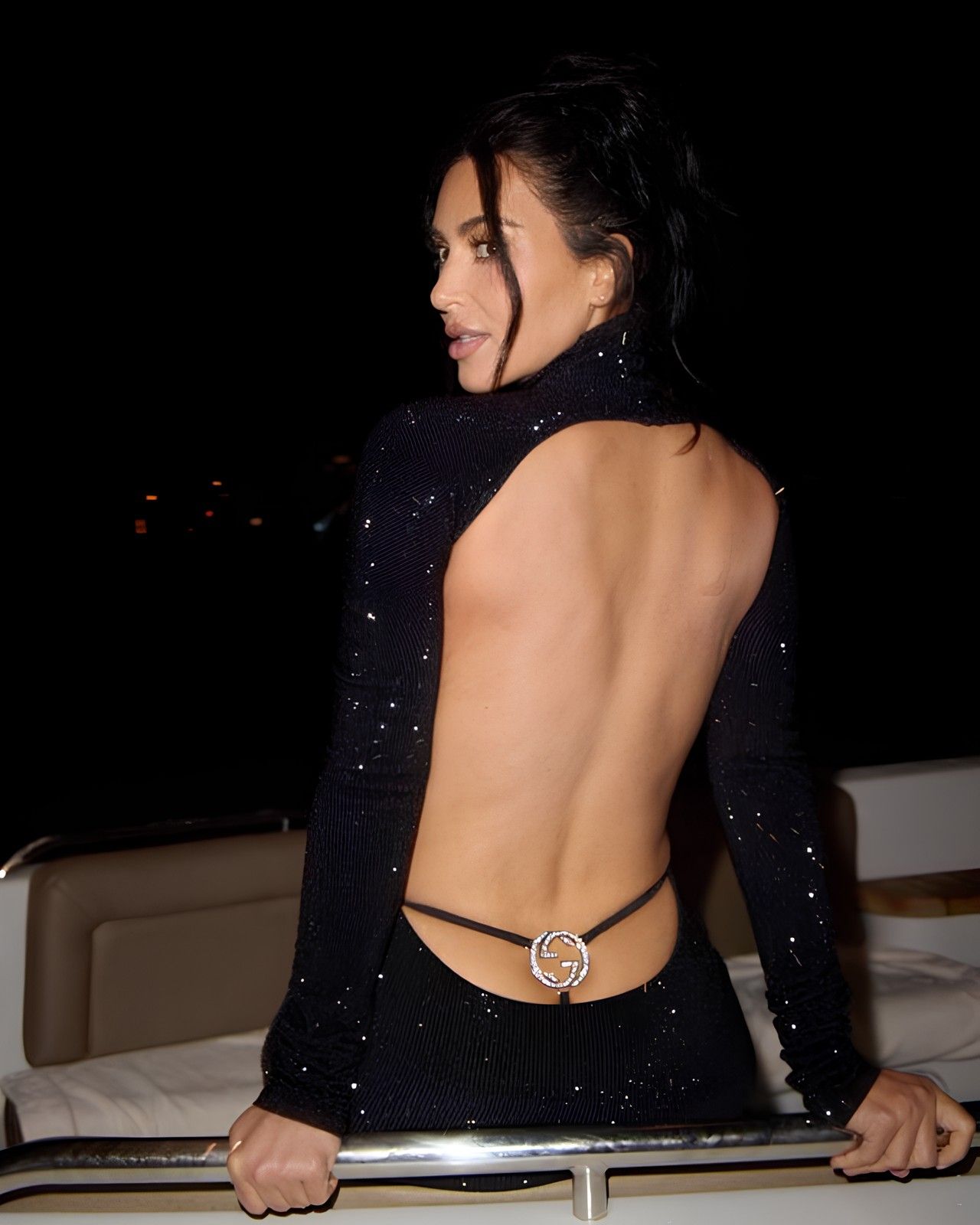
Alongside boxers, the visible thong has also returned, though its meaning has changed dramatically. While in the early 2000s it was often associated with an aesthetic of excess, today it has been absorbed into a more controlled visual language. The thong that emerges from low-rise trousers or subtly appears beneath sheer fabrics is no longer necessarily a scandalous gesture; instead, it functions as a stylistic detail. The transformation concerns not so much the garment itself as the cultural context through which it is interpreted. What was once considered shocking has become an aesthetic code.
TikTok and Instagram have transformed this phenomenon into a viral language. The conversation is no longer about collections or seasons, but about micro-aesthetics that circulate rapidly through short-form videos and highly replicable content. “Get ready with me” formats, outfit breakdowns, and everyday styling videos have brought attention to details that previously occupied a marginal role. The trend therefore spreads not as a static image but as a sequence of gestures. It is no longer simply about what is worn, but how it is presented in front of the camera. Within this ecosystem, the intimate detail becomes instantly recognizable, almost like a graphic sign, easily replicated and reinterpreted by anyone through an effortless lens.
From Shock Value to Visual Habit
The difference compared to the past is significant. In the early 2000s, visible underwear was often interpreted as excess, provocation, or a deliberately “trashy” aesthetic. It was a visual language associated above all with figures such as Paris Hilton and Britney Spears, who frequently showcased visible thongs, exposed bras, or lingerie integrated into their outfits as symbols of pop provocation and paparazzi culture. Digital culture has further accelerated the spread of the Y2K aesthetic, bringing back visual codes that were once considered excessive during the 2000s.
Alongside references to the early 2000s, another key influence in the contemporary reinterpretation of the body is the legacy of Alexander McQueen. In the collection presented in October 2025 by Sean McGirr, the brand explicitly revisited one of its most radical signatures: the bumster. The ultra-low-rise trousers originally introduced by Lee Alexander McQueen in the 1990s were reintroduced and reinterpreted through a contemporary lens, once again pushing the body toward a zone of radical exposure. On the runway, waistlines dropped dramatically, reactivating the tension between seduction and discomfort that has always been central to the maison’s language. It is precisely this transition, from rupture to continuity, that makes the phenomenon meaningful: what once destabilized the boundary between private and public now contributes to redefining it without any need for scandal.
Today, underwear exists within a completely different visual culture, one in which the overexposure of the body has already been normalized. Within this context, displaying underwear no longer breaks the rules; it operates within them. It is an internal variation of the same aesthetic system rather than a transgression of it. The result is a fashion landscape less interested in scandal and more invested in the construction of images that are instantly recognizable, shareable, and repeatable. The return of visible underwear is not simply an aesthetic revival but a sign of a broader shift in the way fashion constructs the relationship between the body, clothing, and visibility.
Boxers, briefs, and exposed waistbands are no longer hidden elements of dressing but active components of the contemporary visual language. They no longer define a boundary between inside and outside; instead, they make that boundary unstable. And perhaps it is precisely this instability, this continuous oscillation between the intimate and the public, that makes the trend one of the most representative of Summer 2026. When everything becomes visible, the question is no longer what is being shown, but what, if anything, remains truly private.