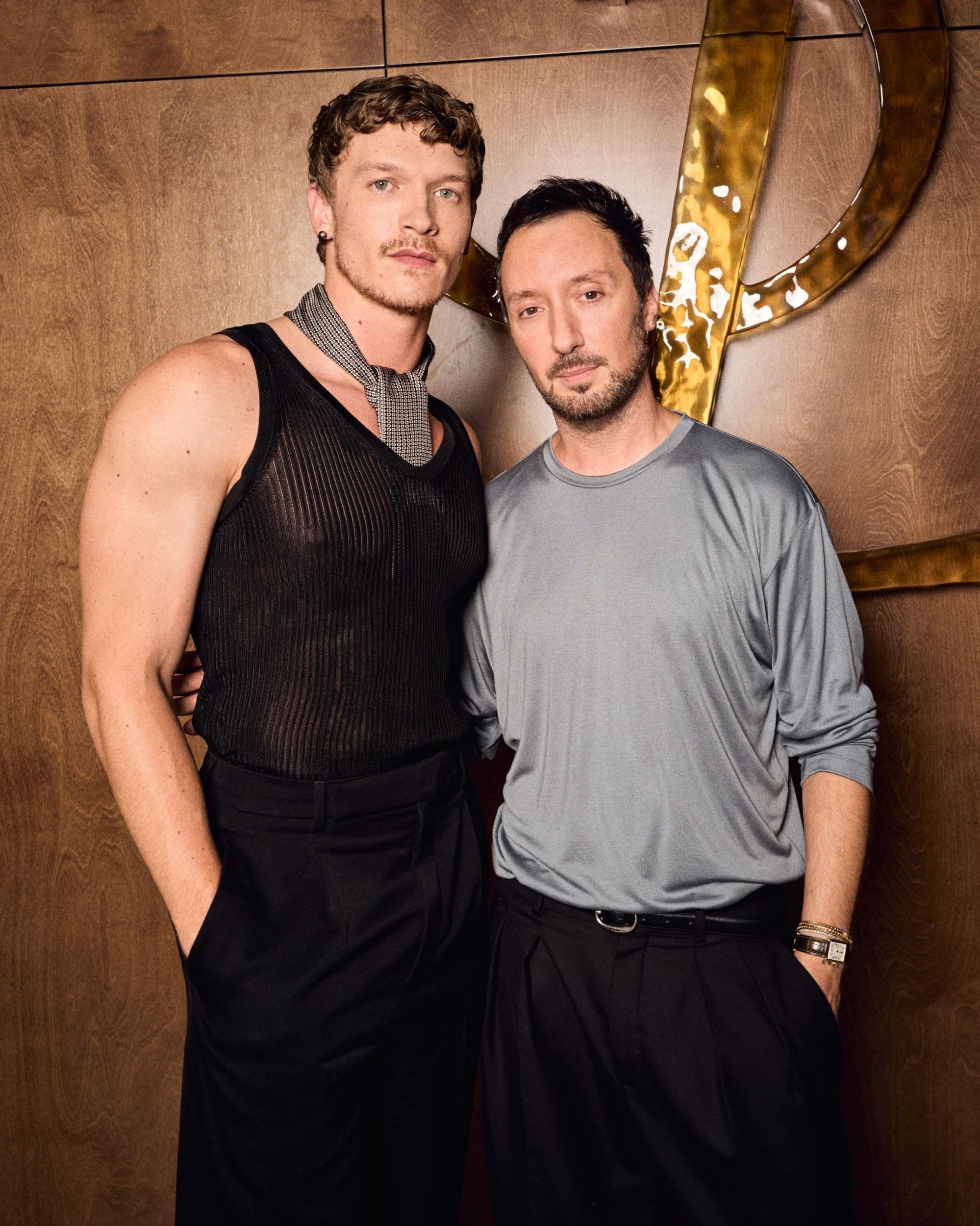





















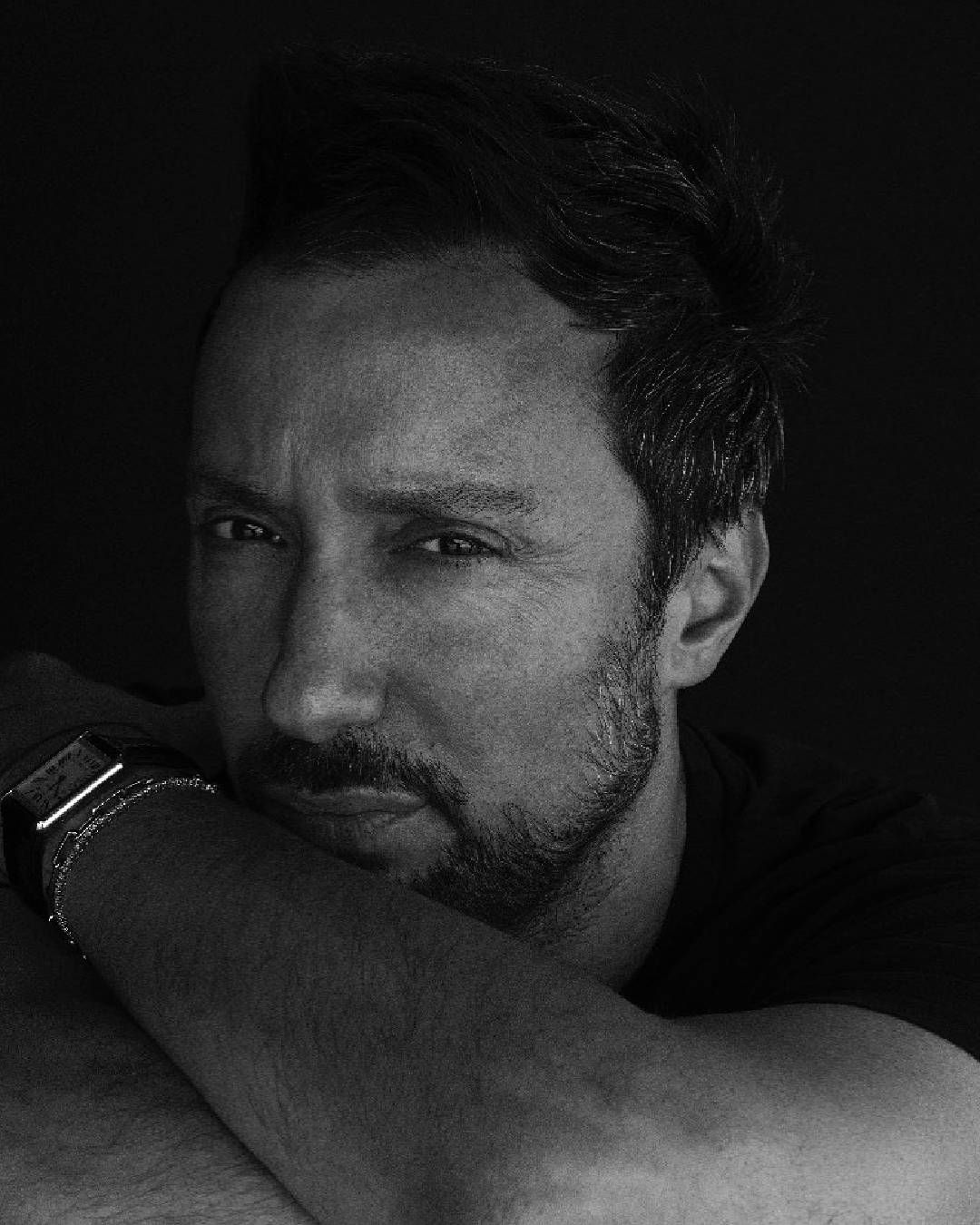
Anthony Vaccarello: Ten Years Redefining Saint Laurent In just one decade, Anthony Vaccarello has turned Saint Laurent into far more than a fashion house: a machine for fantasy
2016, a striking arrival after Hedi Slimane
When Anthony Vaccarello arrived at Saint Laurent in April 2016, the house was emerging from a pivotal era. Hedi Slimane had left a considerable mark, going as far as removing the historic “Yves” to retain only the Saint Laurent name. Stepping into that role was no small task. And yet, the Belgian designer seemed almost destined for it. A graduate of La Cambre in Brussels, the École nationale supérieure des arts visuels, Anthony Vaccarello stood out early on. In 2006, he won the Grand Prix at the Hyères Festival, an award known for spotlighting some of fashion’s most promising talents. Soon after, he launched his own label, already laying the foundations of what would become his signature: a rock-inflected, sensual womenswear wardrobe dominated by leather.
Five years later, after working under Karl Lagerfeld at Fendi, he won the ANDAM Prize. Among the jury members at the time was Pierre Bergé. The win went beyond prestige: it came with decisive financial support and cemented his position as one of the designers to watch. His shows during Paris Fashion Week quickly became must-see moments. Key figures from the Paris scene, from Caroline de Maigret to Lou Doillon, embraced his wardrobe. His brand was notably stocked at Maria Luisa, the cult boutique where the latest fashion obsessions of the moment took shape.
Within the space of a single year, he moved from the creative direction of Versus Versace to Saint Laurent. A dizzying leap, yet one that felt almost natural for a designer whose trajectory had long suggested a major house was in his future. He then put his own line on hold to devote himself fully to the Kering-owned label.
The rehabilitation of power dressing
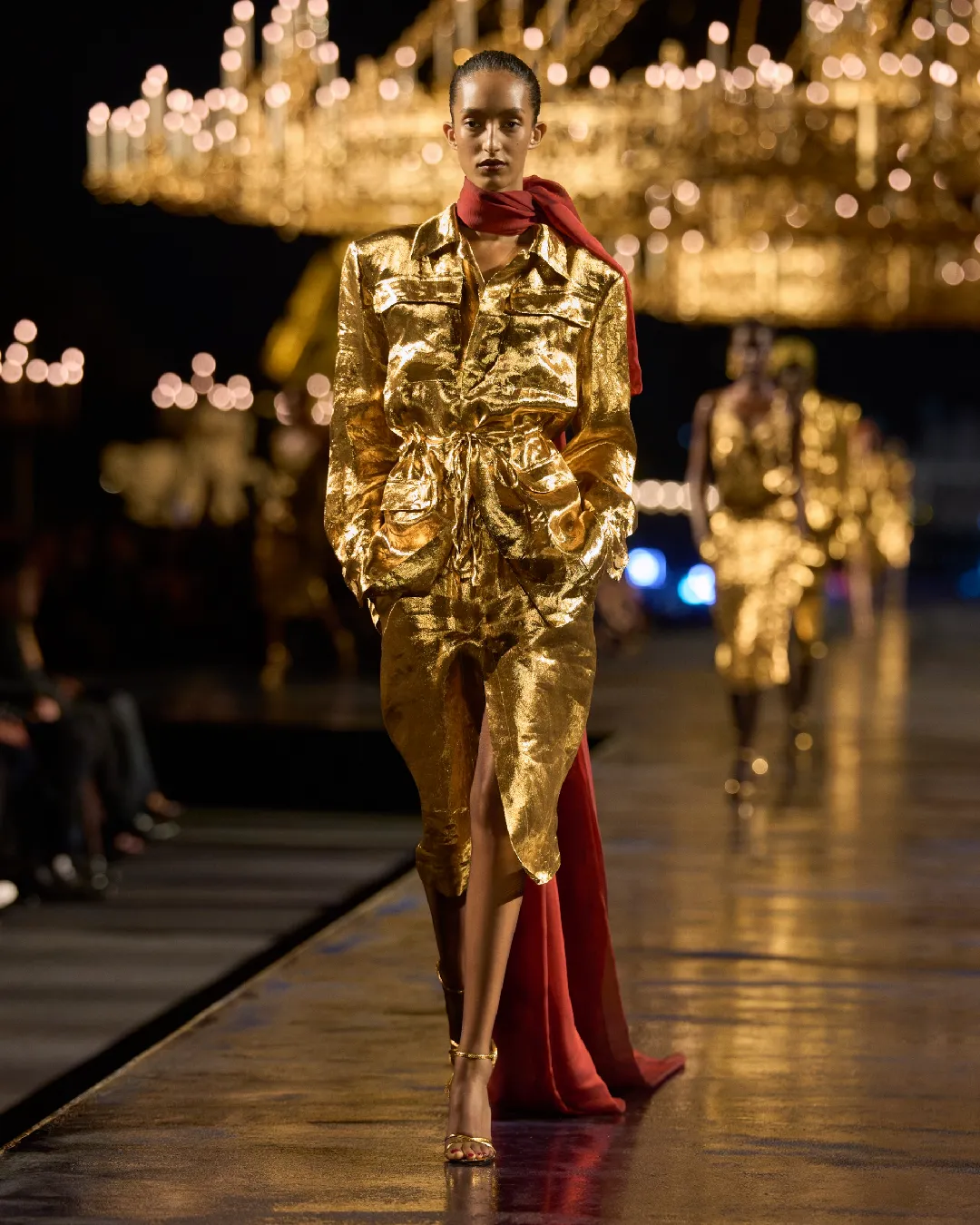
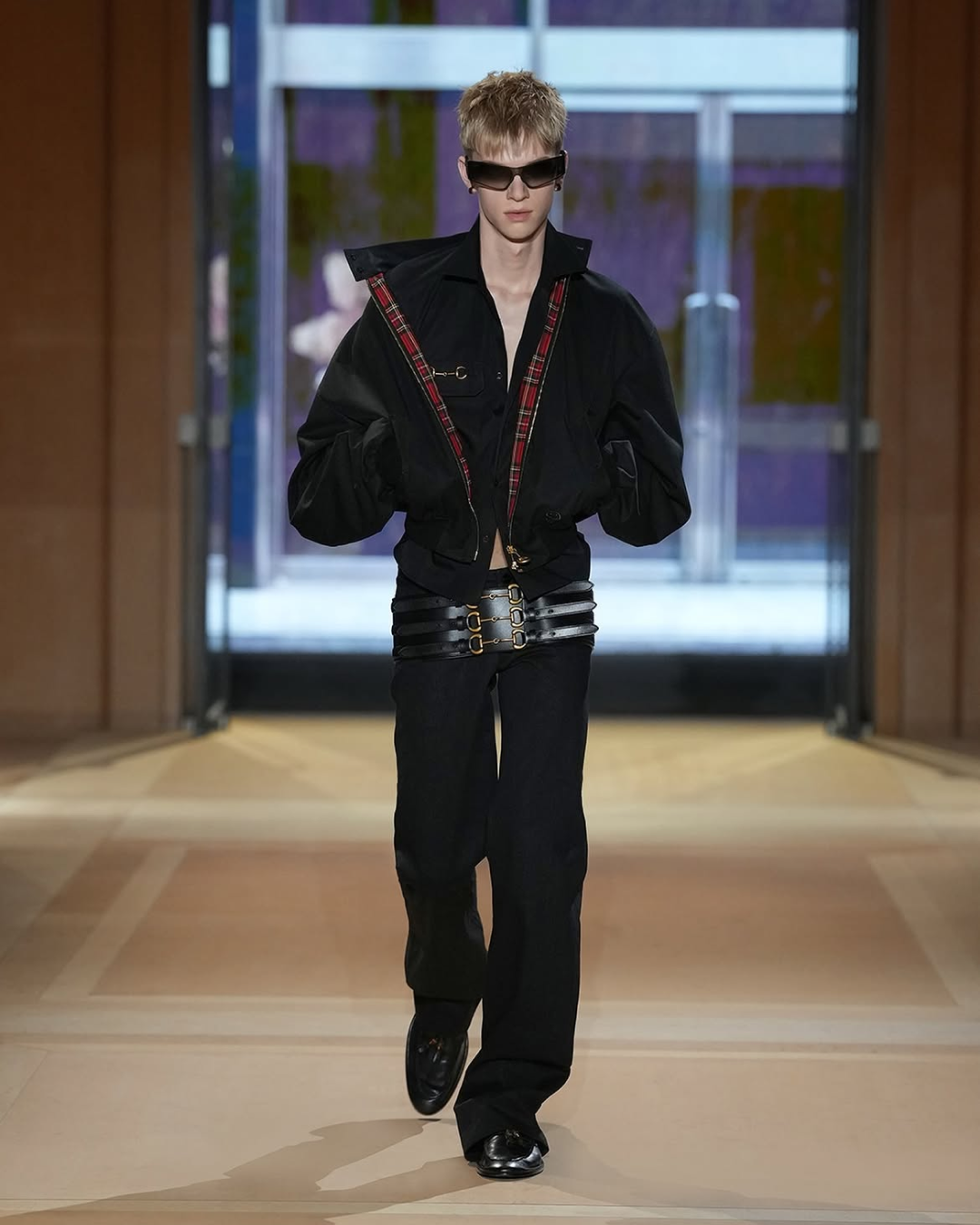
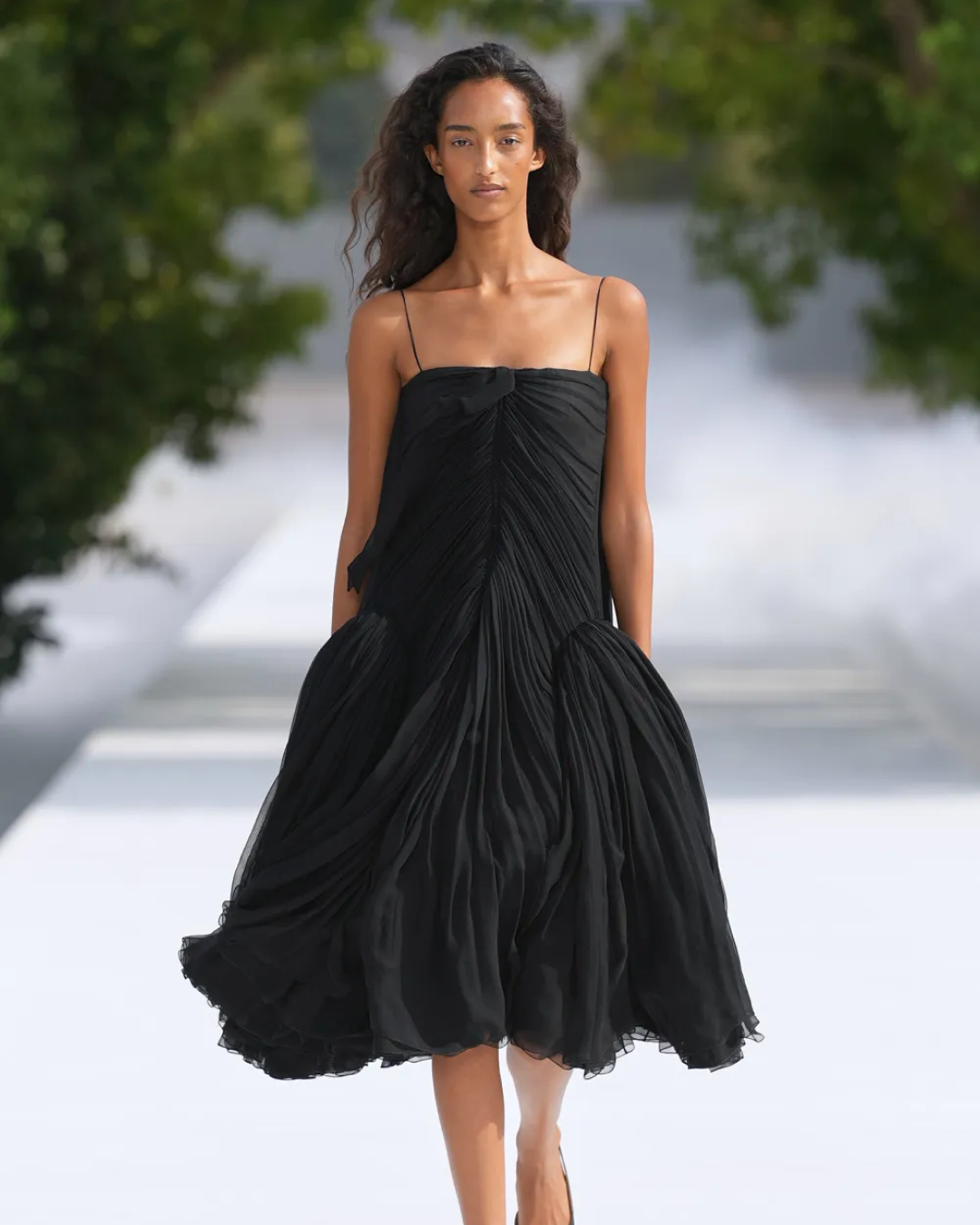
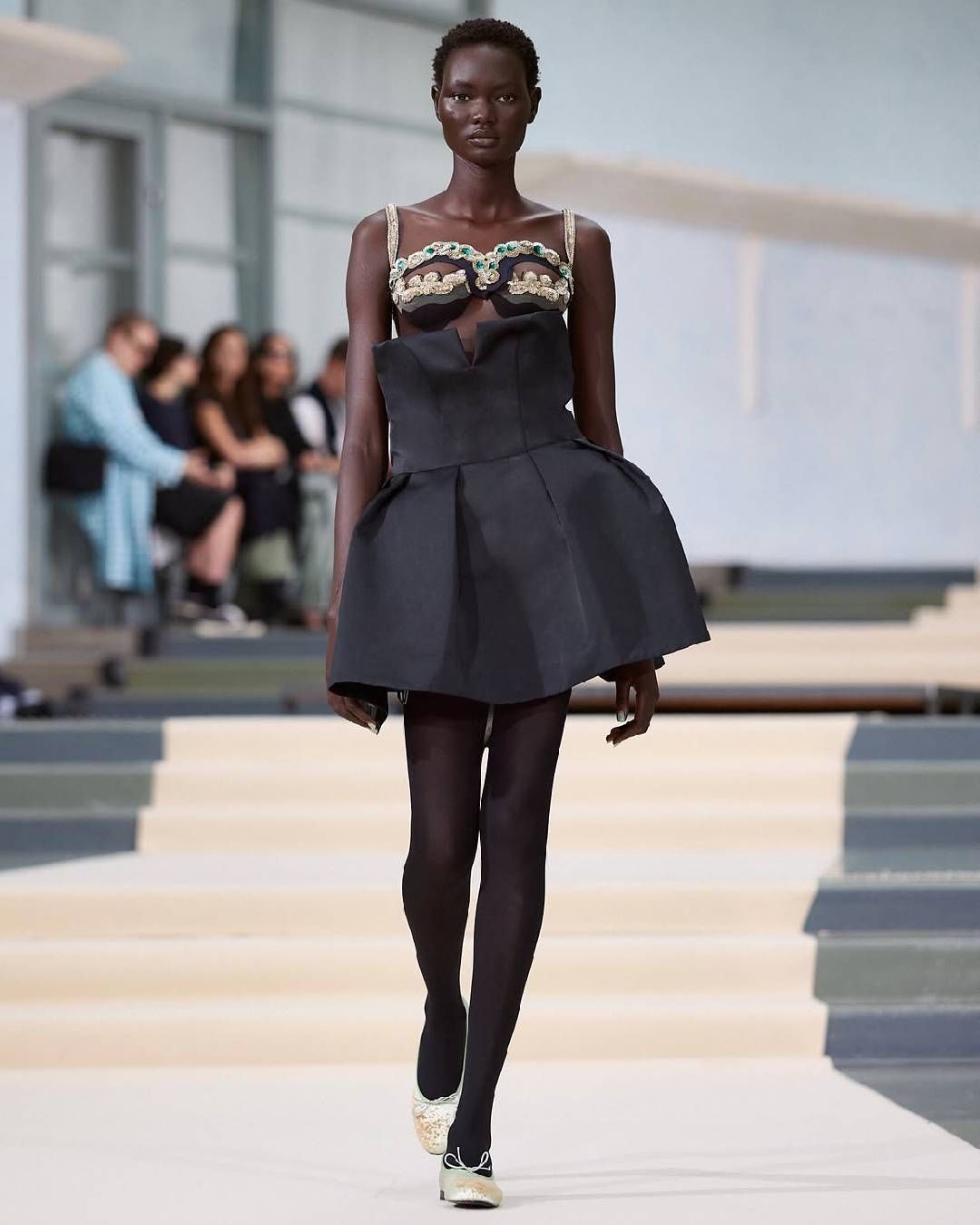
Simultaneously overseeing both the men’s and women’s lines, the designer builds a wardrobe in which desire is expressed through silhouette. His obsession: the V. Plunging necklines, vertiginous décolletés, architectural oversized shoulders, inverted triangle silhouettes -everything contributes to accentuating a dominant, sculptural allure. This is where his work on power dressing finds its full expression. The 1980s became a central reference point. As early as 2015, even before his official arrival at Saint Laurent, Elle magazine was already describing his universe as “ultra sexy eighties.” At Saint Laurent, that visual grammar became even more pronounced.
Thigh-high boots worn by men, entire collections built around tights and transparency, almost liquid fabrics paired with omnipresent leather, tuxedos reinvented in velvet or sequins, sometimes seen on Naomi Campbell: Vaccarello turns provocation into a weapon.
Black and red, already present in his personal universe, become powerful chromatic markers. They converse with his cultural heritage, balancing Belgian rigor with Italian sensuality. It is precisely this tension between innovation and homage that gives strength to his artistic direction. He never references too directly, yet reactivates collective fantasies intrinsically linked to Saint Laurent: the tuxedo, the night, the body... the scandal.
Desire as a business model
Saint Laurent was named the most desirable brand twice by the Lyst Index. A performance that is far from accidental. The designer has perfectly understood the contemporary mechanics of virality. The choice of muses plays a central role, with Bella Hadid leading the way -a figure endlessly amplified across social media and the ideal embodiment of this cool sensuality.
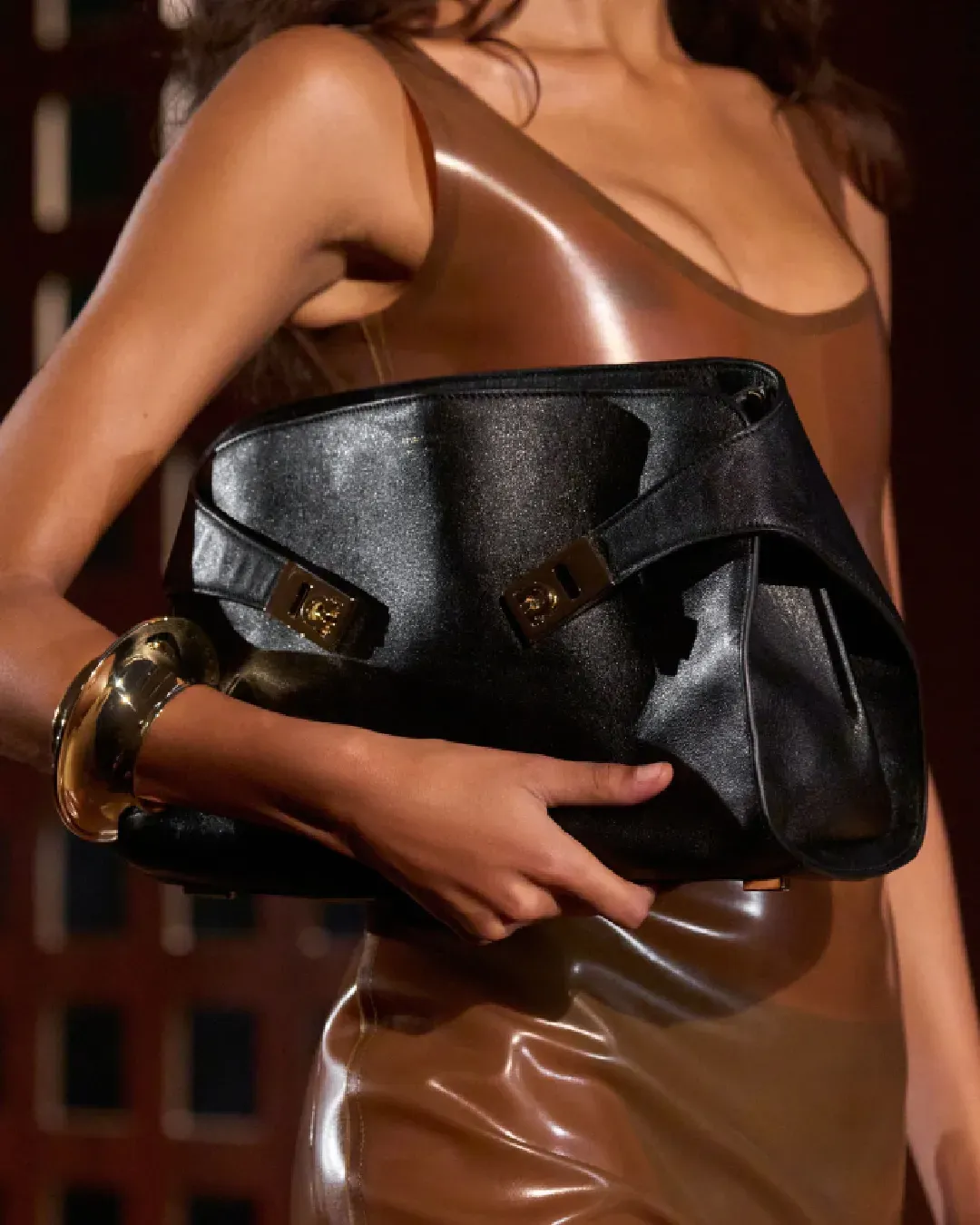
He also knows how to transform heritage into an object of immediate desire. The reissue of the Saint Laurent Mombasa bag, originally created during the Tom Ford era, is a perfect example. Aware of the model’s growing popularity, particularly on the vintage market, Vaccarello brought it back and significantly contributed to its soaring value on the resale market. Pieces became best-sellers, campaigns turned increasingly sulfurous, often fronted by his longtime muse Anja Rubik, and the brand established itself as one of luxury’s strongest performers. In 2019, under his direction, Saint Laurent surpassed the €2 billion revenue mark, overtaking Gucci within Kering’s portfolio at the time. A success that demonstrates just how effectively Vaccarello has been able to align creative desire with growth imperatives.
A global creative director
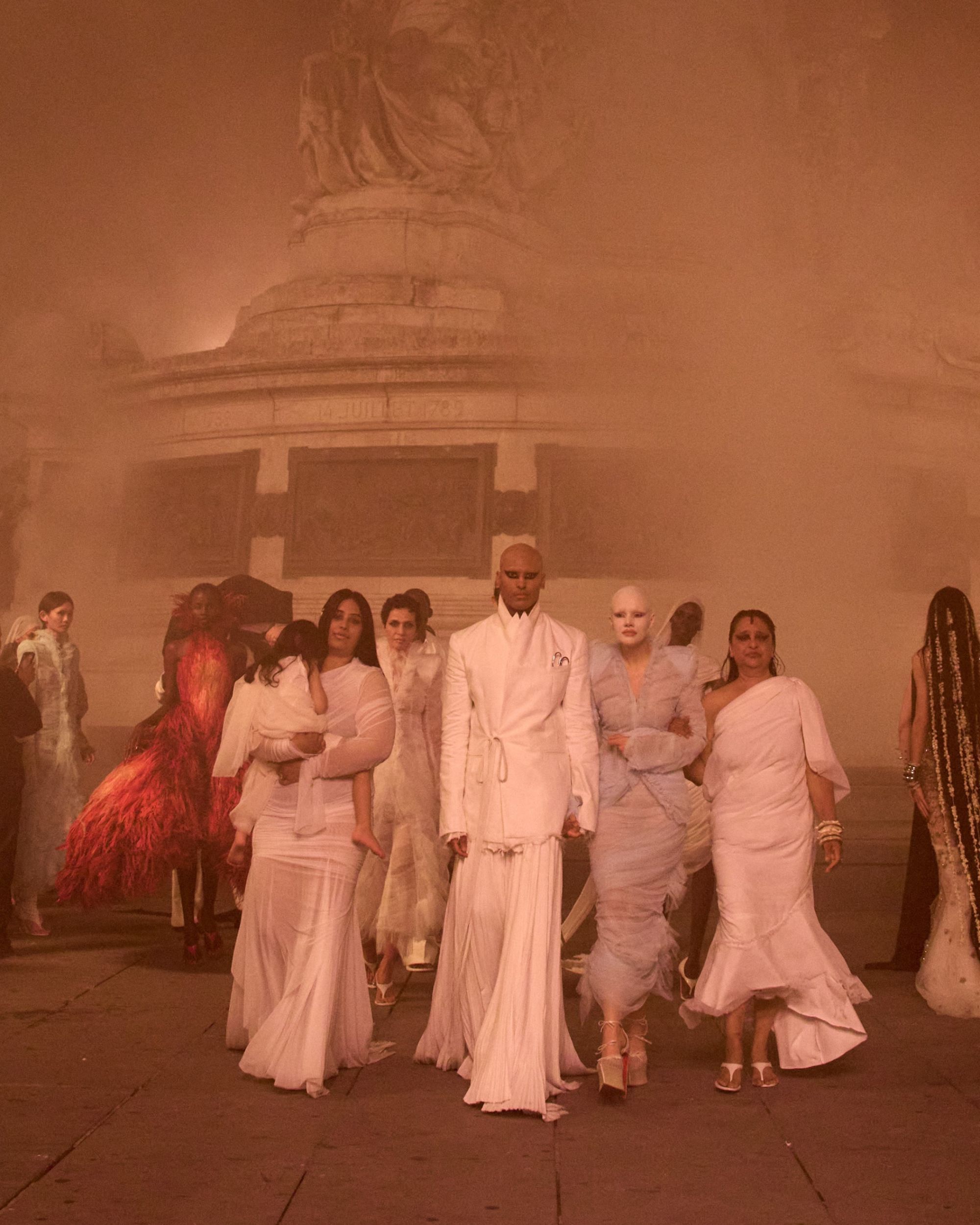
Where Anthony Vaccarello particularly stands out is in his expanded vision of the creative director’s role. For him, clothing is only one part of the narrative. Shows become large-scale events: the esplanade of the Eiffel Tower, beneath the dome of the Bourse de Commerce, or in the Moroccan desert. Very quickly, Saint Laurent moved beyond the strict confines of fashion. The house entered cinema with Saint Laurent Productions, becoming one of the first luxury houses to produce films. This extension into moving image is far from anecdotal: it prolongs Vaccarello’s vision, often described as deeply cinematic. The brand has established a presence at the Cannes Film Festival, both on screen and on the red carpet, contributing to productions such as Emilia Pérez by Jacques Audiard and The Shrouds by David Cronenberg. It is therefore no coincidence that Harper's Bazaar describes him as a “fashion filmmaker.”
In Paris, the Babylon bookstore-boutique follows the same logic: a space at the crossroads of gallery, retail and cultural venue. The house also supports photographers and visual artists, further reinforcing its image as an aesthetic laboratory. At a time when major houses change creative directors at a frantic pace, this decade at Saint Laurent feels almost exceptional. The real question now is no longer whether Anthony Vaccarello has found his place, but how far he still intends to extend his visual empire.