





































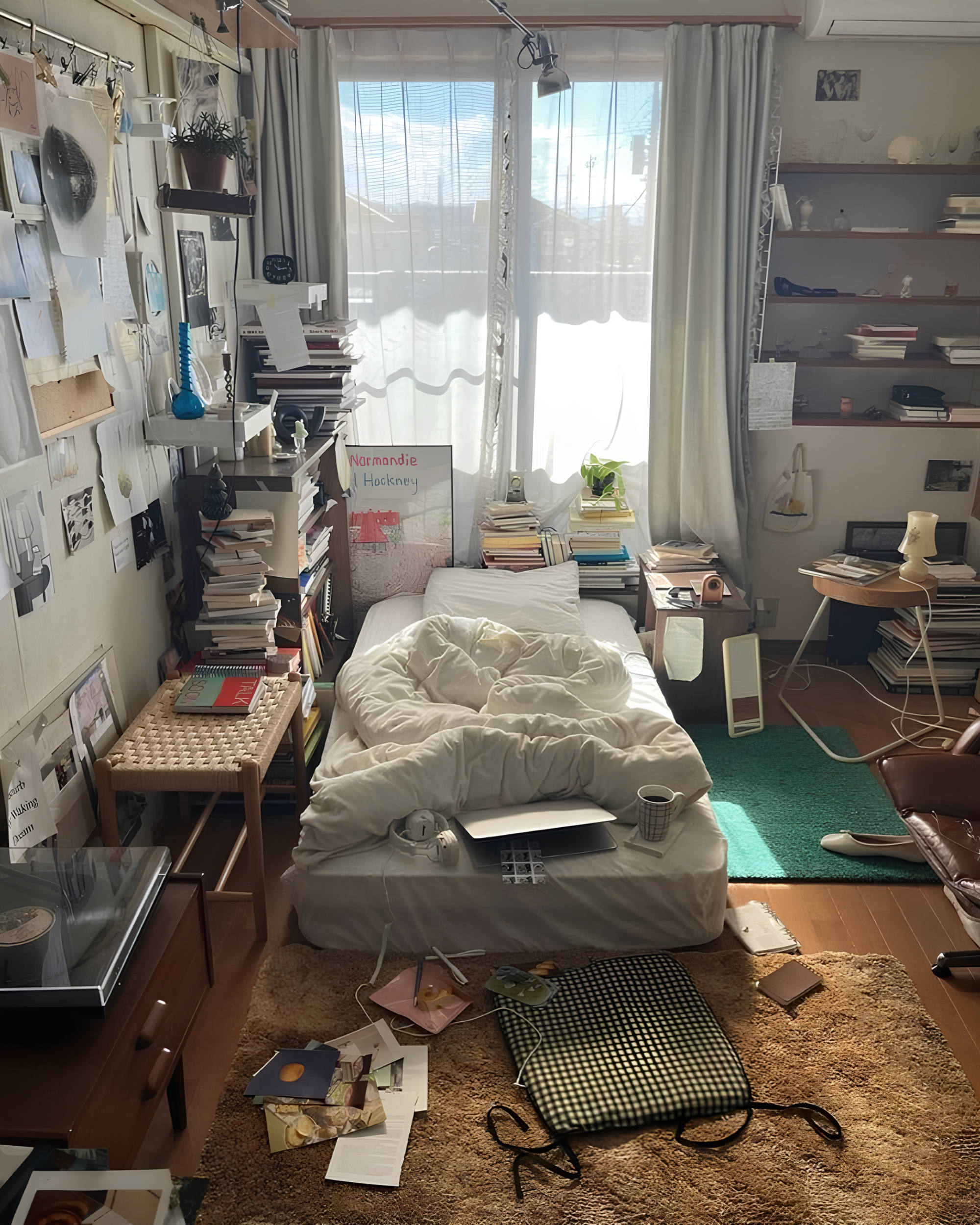
According to IKEA, people who live in a messy home do so by choice A new report from the Swedish brand explores how we really live
How many times have we scrambled to tidy up the mess we'd left at home before a guest arrived? We probably welcomed them with a "Sorry, it's a bit messy in here!" only to get a puzzled look in return, because the mess wasn't actually visible. Of course not — we'd stuffed everything into the wardrobe at the last minute.
The thing is, people do try to keep their homes as immaculate as the ones we see on Pinterest, with a spotless bedroom and a cart for books instead of leaving them on the floor. But nobody wants the perfect home anymore and the numbers back this up: Ikea asked more than thirty thousand people across 31 countries, Italy included, how they really live in their homes this spring, compiling everything into the report "Finding Meaning in the Mess."
Making sense of the chaos
@grombot3000 Brb i need to go apologize to my mom for not putting my dishes away #imsorrymom #messyroommate #mother #iamamother female rage - bel6va
The "meaning in the mess" that Ikea refers to is the idea that we actually find a home steeped in chaos more authentic than a minimalist one. It doesn't matter if we're living in a cramped 45 square metres: 59% of respondents say they prefer a lived-in home, while 82% still hold on to objects they no longer use simply because they carry a certain sentimental value.
However much mess may represent our identity, at some point things will have to be tidied up. According to the Ikea report, in nearly four out of ten homes there's someone who leaves things lying around and hopes someone else will deal with it. And in the end, especially when living together, someone else really does give in, even though it isn't their job and that's when the arguments start. Ikea calls it the "Silent Protest," and the battlefield is the kitchen. For one in four respondents, the worktop is the hardest surface to keep clear, and for 37% it's the spot in the home that sparks the most arguments, more than any other room.
A home that feels like home
adhd moving nightmare: having to pack up the Drawer Of Doom
— b (@bmoneyybaby) May 27, 2023
And it's worth talking about all those lost objects that are never truly forgotten. The data in the report shows that more than one in ten Gen Z members spends half an hour a day looking for their charging cable. In India, the hunt averages as long as 80 minutes a day. They haven't vanished into thin air in most cases they've been swallowed up by what Ikea calls the "drawer of doom": the place where things we don't have the courage to sort out go to live, and what you find inside depends on your age.
Boomer men, in more than half of cases, keep cables for devices they no longer own in this drawer — devices that may not even be in production anymore. And the report notes that some people have tackled the problem of limited space and overflowing drawers at the source: by using the oven as a wardrobe. In South Korea, one in five people does exactly that.
In the end, though, it doesn't matter if the wardrobe gets stuffed at the last minute out of embarrassment. It doesn't matter that those who consider mess an expression of their creativity are somewhat in the minority, backed by a mere 15%. The charger turns up eventually, the chaos gets sorted out eventually. What matters is that home feels like home that it's ours. And that it's a place where no one expects us to be perfect.
What to read next

What does «democratic design» mean to IKEA?
Interview with Patrik Gustafsson, Global Home Furnishing and Retail Design Manager at IKEA