




















Will the Biebes manage to resurrect MP3 players? The pop star's intriguing bet on the return of analog
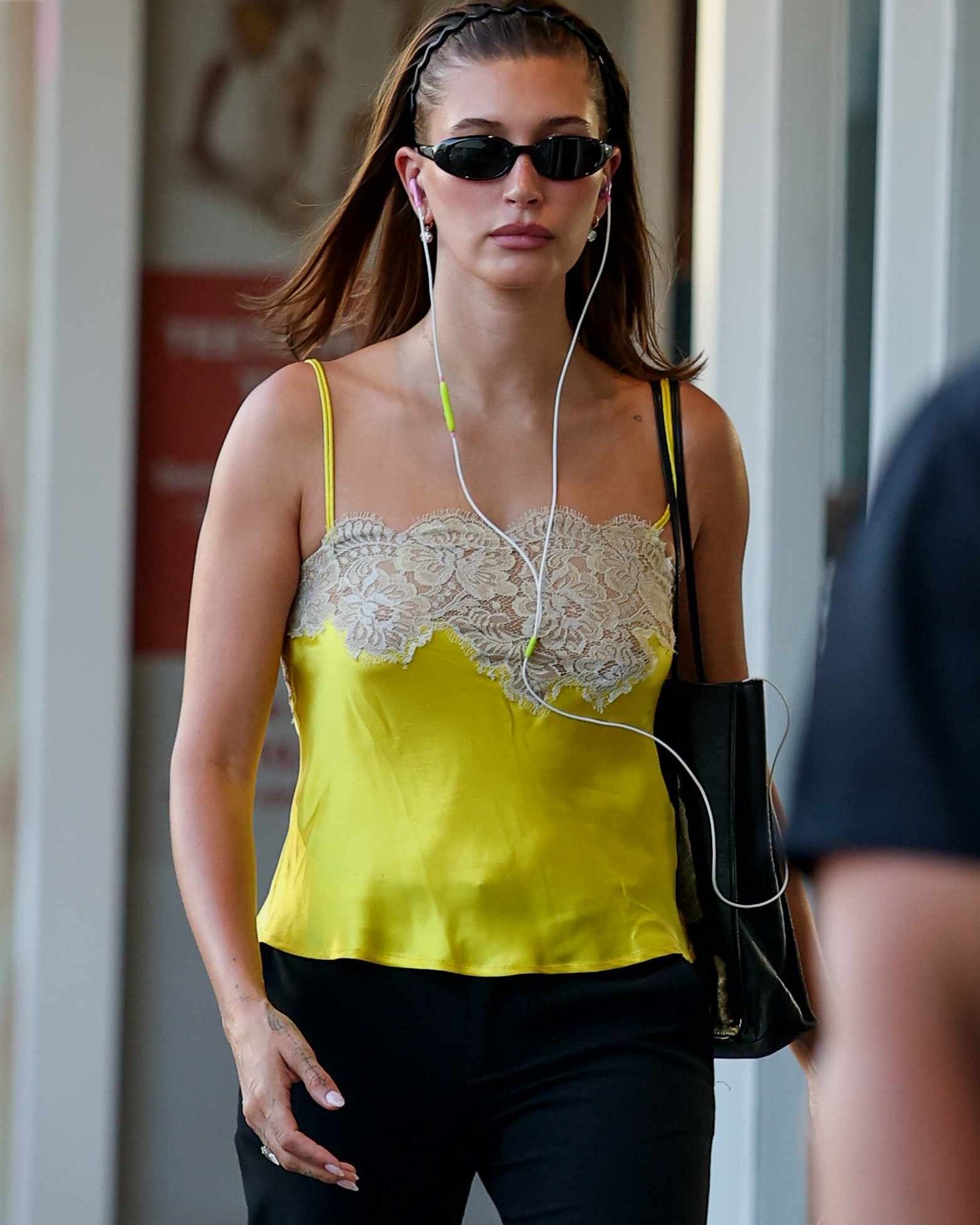
A few days ago, the signs appeared: Hailey Bieber visited Sushi Park in West Hollywood. Every celebrity in the area goes to that restaurant when they want to be papped with a new product to promote or tease to their audience. In Hailey Bieber's case, it was an old-school MP3 player, complete with wired headphones. Now, it's been years since Bella Hadid and her extended clan of co-celebrities and followers established that the "old" headphones are cool, but the MP3 player spotted these past few days has nothing old about it — in fact, it hasn't even hit the market yet: it's the new device produced by SKYLRK, Justin Bieber's lifestyle brand.
The fact that Bieber has decided to bring such a nostalgic object to market (by any measure, the most nostalgic piece of wearable tech imaginable) can be linked to an attempt to attract new generations with products or moments that a Millennial recognizes instantly. Last April, after all, Bieber chose to play YouTube videos of his old songs during his Coachella set. A nostalgic move, yes, but also the revival of an experience with a flavor very familiar to all Millennials. Producing a "pure" MP3 player — one that is also far removed from the classic iPhone aesthetic — thus represents the culmination of a repositioning strategy for Bieber and his brand. But how has this strategy evolved?
Justin Bieber and the Return to Analog Audio
@canoopsy Justin Bieber is launching an audio brand called SKYLRK AUDIO - with some cool new speakers, headphones, and even an iPhone magsafe battery pack. and they all looks really cool, with some fresh and pretty fun looking designs. BUT there's drama... #tech #audio #design #justinbieber original sound - canoopsy
In April 2025, Bieber launched the teaser for SKYLRK, his new brand. At first glance, it looked like a typical celebrity brand, in the same vein as Golf Le Fleur, Yeezy, and AWGE. And indeed, that's exactly how it had started: hoodies, shoes, sunglasses, and at one point even Coachella merch. By August of its launch year, however, it was becoming clear that the brand wanted to be something more. Bieber posted photos on Instagram of a SKYLRK sofa prototype that was never actually produced. But the real repositioning that was coming wasn't about furniture — it was about technology.
Last April, ahead of the Coachella set, SKYLRK put on sale an iPhone case alongside a merch capsule that explicitly evoked Bieber's 2016 aesthetic. The result was $15 million in sales. June brought the next step forward: again on Instagram, Bieber unveiled the new SKYLRK Audio line, signaling a reorientation that Hypebeast describes as «a comprehensive tech-streetwear hybrid ecosystem». Audio equipment, then, but with a more appealing aesthetic than typical tech products. In the launch photos, Bieber holds two colorful, round magnetic speakers that are, in fact, quite pleasing to the eye.
Fast forward to July. SKYLRK brought a five-day pop-up to New York that drew a line stretching a full 12 hours. The assortment was split down the middle: clothing and accessories on one side, audio equipment on the other. Portable speakers, wall-mounted speakers, headphones. The entire range was covered. A month later, on Twitter, Bieber wrote «I wanna make SKYLRK phone», inviting followers who had already thought of a product to get in touch. A few days after that, Hailey Bieber dedicated a post to the new light-up wired headphones and, as mentioned at the outset, performed the ritual of getting papped at Sushi Park in West Hollywood. Ten hours ago, Bieber posted the first photo of the new MP3 player. The circle is complete.
Why an MP3 Player, and Why Now?
While the speaker market is already fairly saturated and populated by established brands that are hard to dislodge, the MP3 player market is relatively uncharted territory. Today everyone listens to music on Spotify, but now that young people have to choose between one subscription and another for cost reasons, now that the general market sentiment is beginning to favor individual ownership of music whose availability shouldn't depend on a streaming service that could disappear tomorrow, having an MP3 player to plug into your PC and load up with your own tracks without too much hassle is an increasingly appealing prospect. It also helps, of course, that many MP3 players currently on the market — especially the more affordable ones — tend to be pretty ugly.
This brings us to another sensitive point: price. We have no idea what this device might cost, though it's reasonable to assume it won't be priced like an Apple gadget. The important thing is that it's an accessory that can complement an outfit, that it has an objectively attractive design reminiscent of the Tamagotchis of the good old days, and that it's one of those low-commitment purchases you can make without overthinking it. In other words, it looks like a recipe for high sales volumes. In that same spirit of low-maintenance simplicity, we'd assume that loading music onto it won't require any tedious apps or subscriptions.
The entire product would therefore seem to be a major bet on the return of the analog. But an analog that shouldn't be read as surface-level nostalgia (as might be the case with, say, a speaker shaped like an old 1950s radio), but rather as a renewed push toward consumer independence — the desire to buy a product and be done with it, without having to deal with apps, sign-ups, subscriptions, and all the rest. The fact that the product in question can also serve as an accessory for your outfits is an unexpected bonus. But will Justin Bieber actually manage to resurrect the MP3 player?