



























The therapeutic power of light in design, interview with Theo Pinto On the occasion of the solo show “The Weight of Light”, at the Cadogan Gallery in London
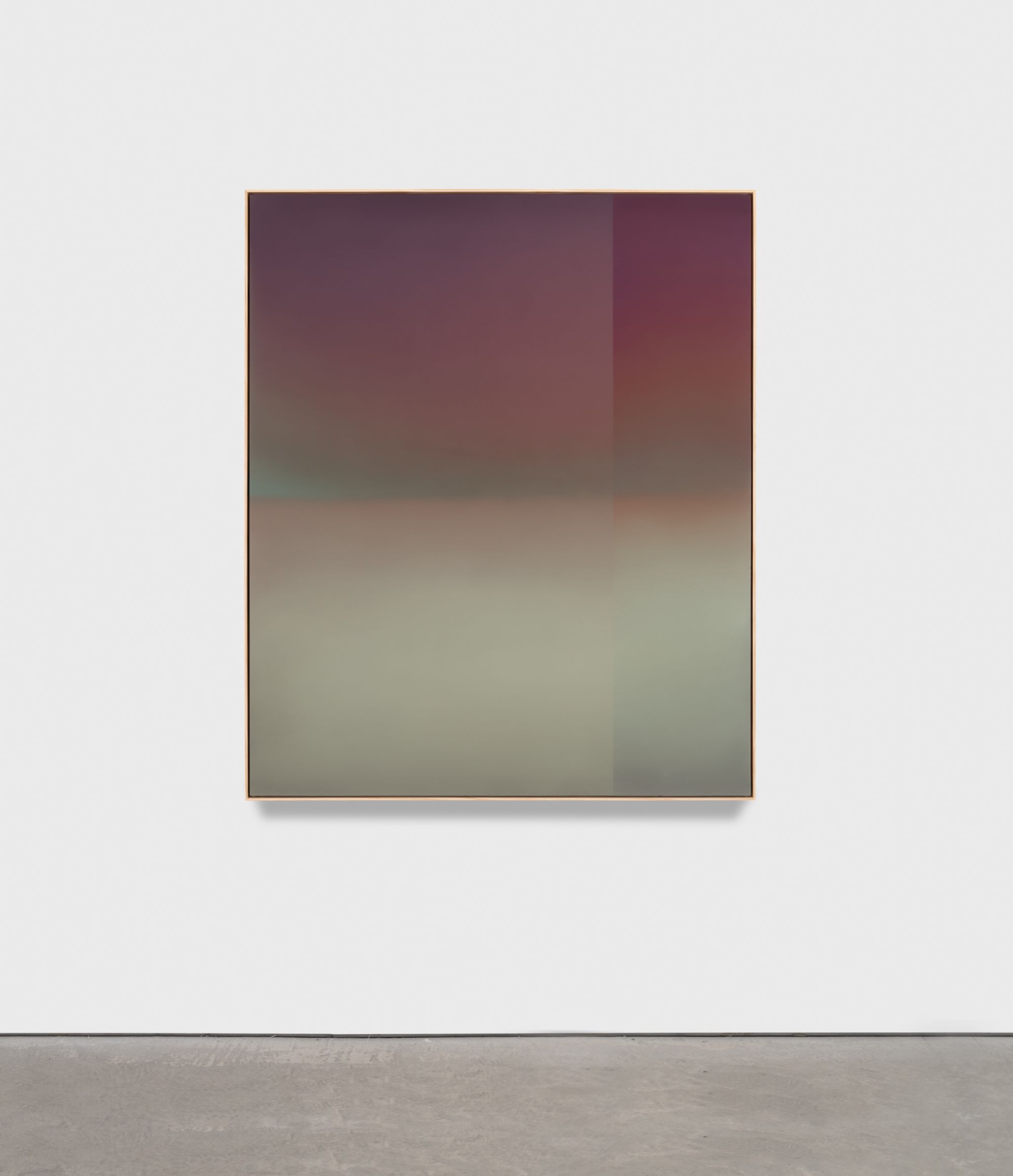
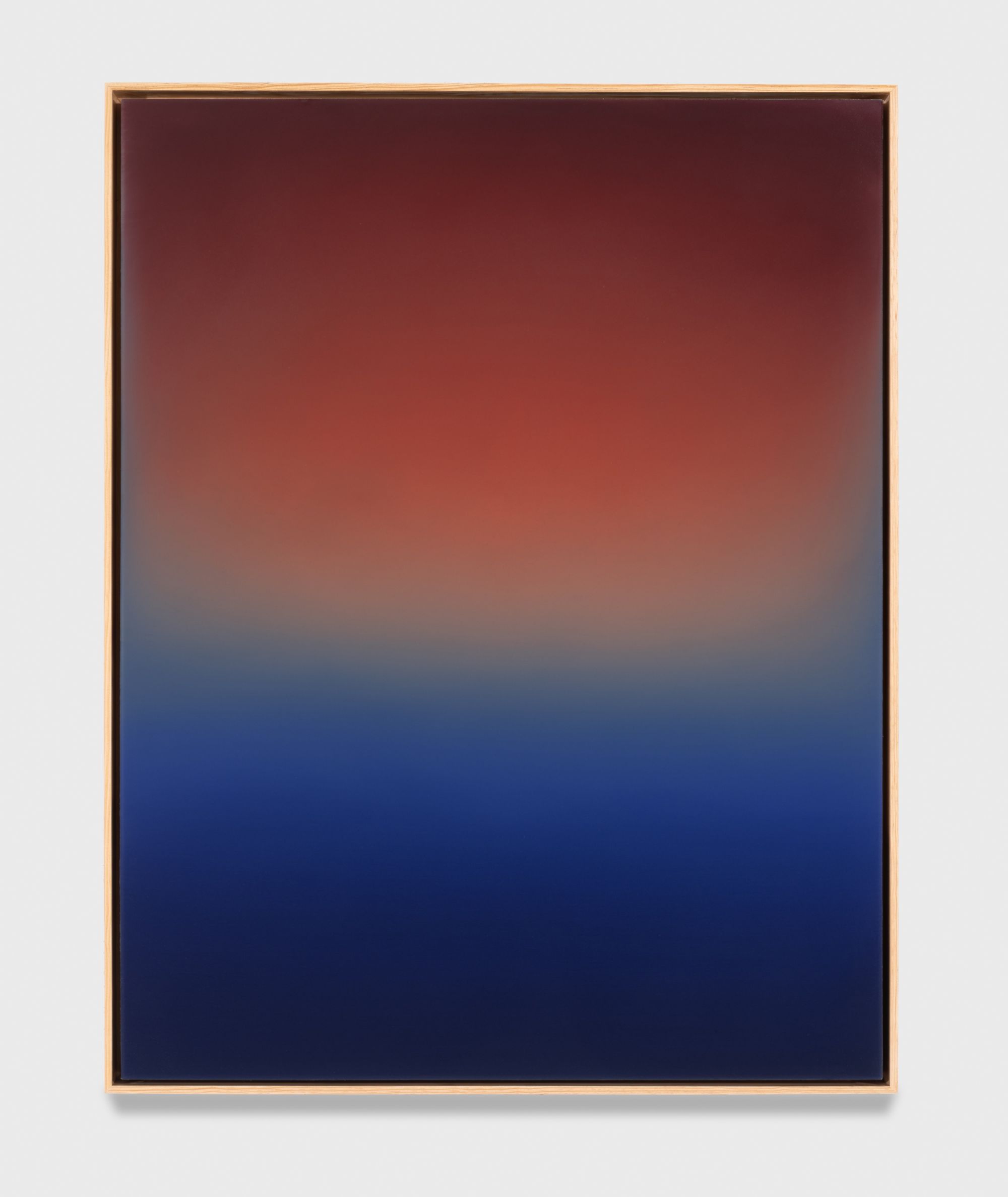
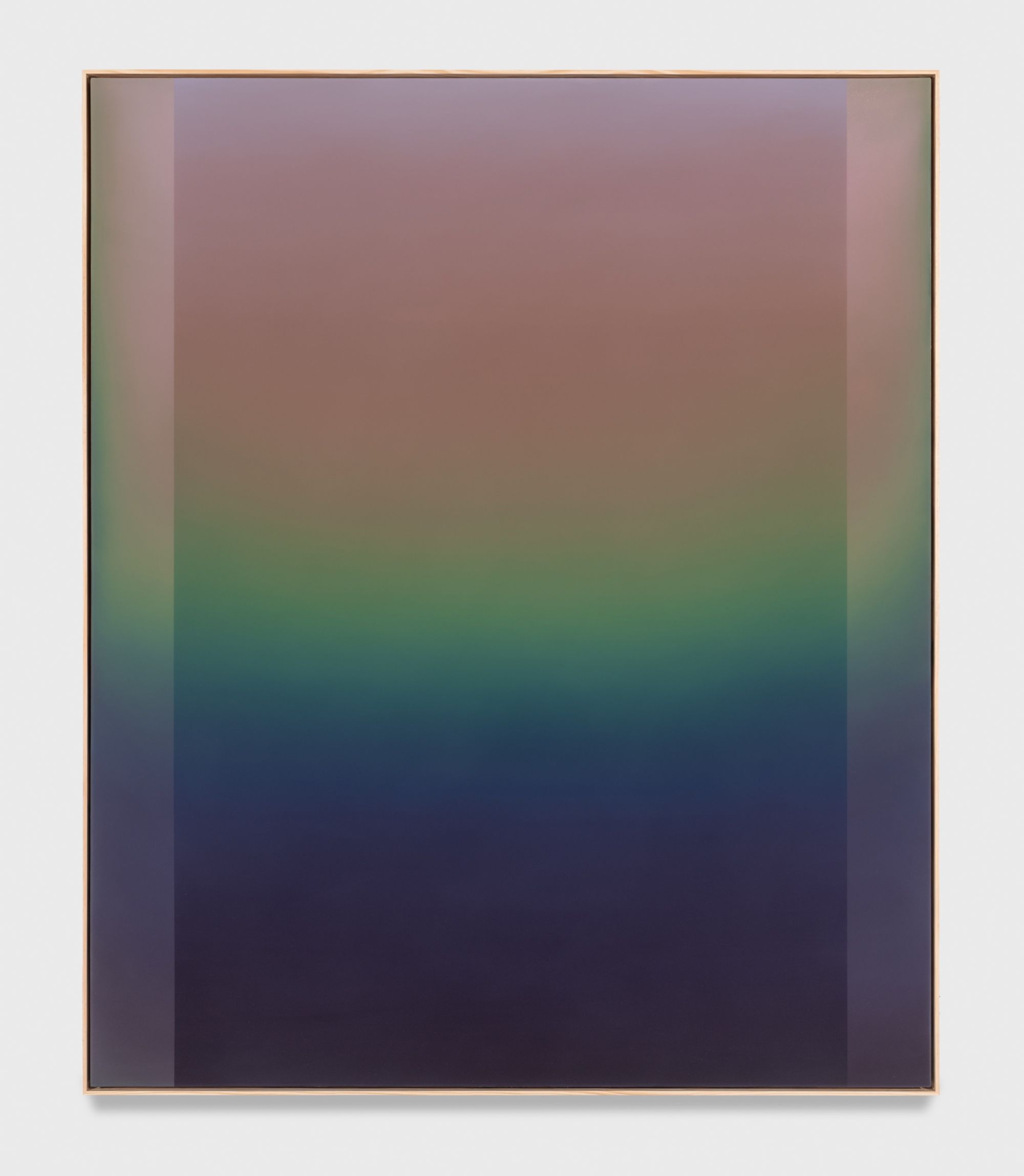
We are used to watching everything quickly. Exhibitions, interiors, objects, houses, cities: everything must work in a few seconds, before the eye changes to something else. At a time when everything seems to have to be immediate, light is once again one of the most interesting tools for talking about space, perception and design.
It's not just a matter of lighting a room well or building a scenographic effect for social networks. Light modifies surfaces, changes the way we read an environment, makes a color less stable and transforms the relationship between the body and what surrounds it. In art, design, architecture and retail spaces, designing increasingly means building an atmosphere, not just organizing objects and materials.
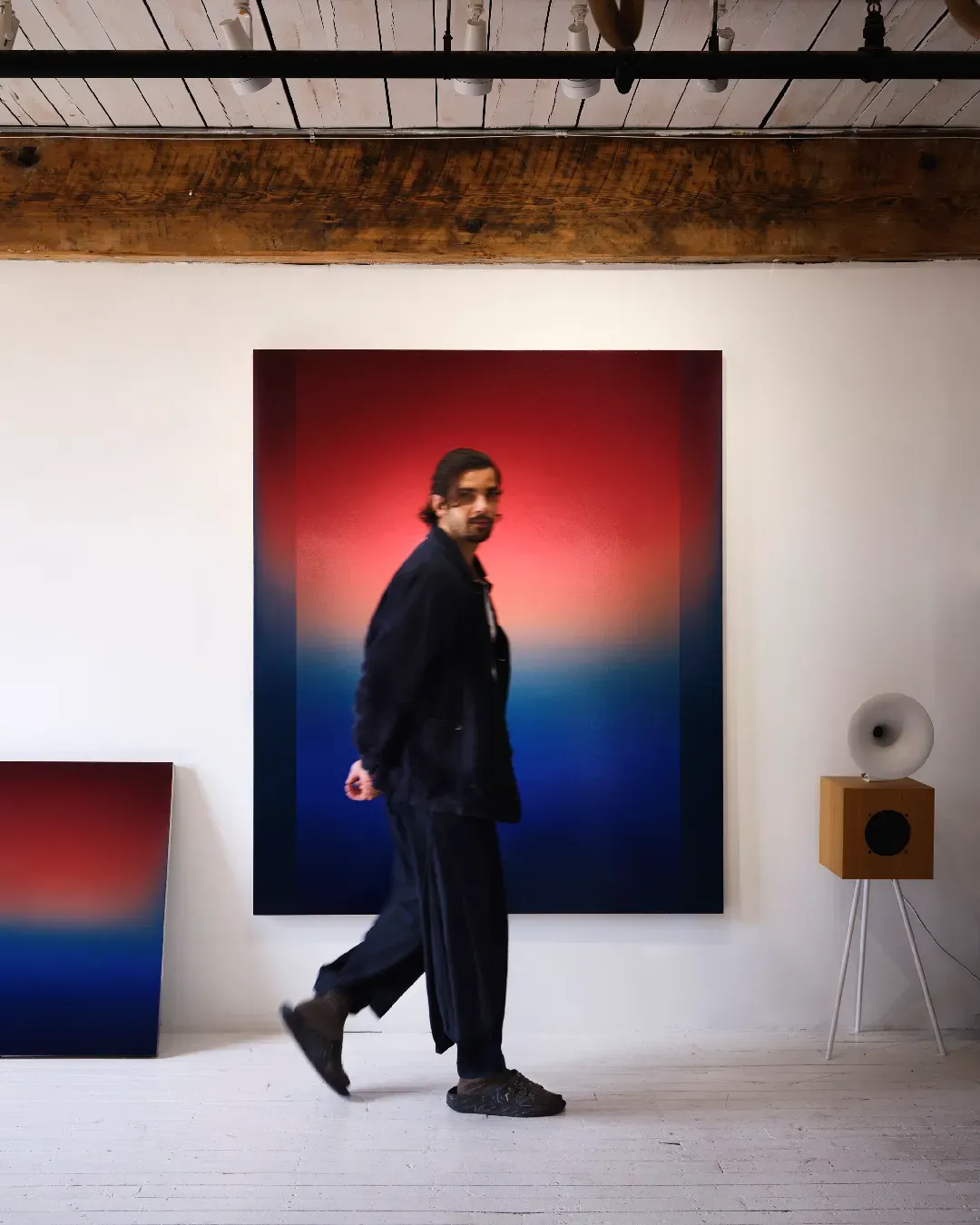
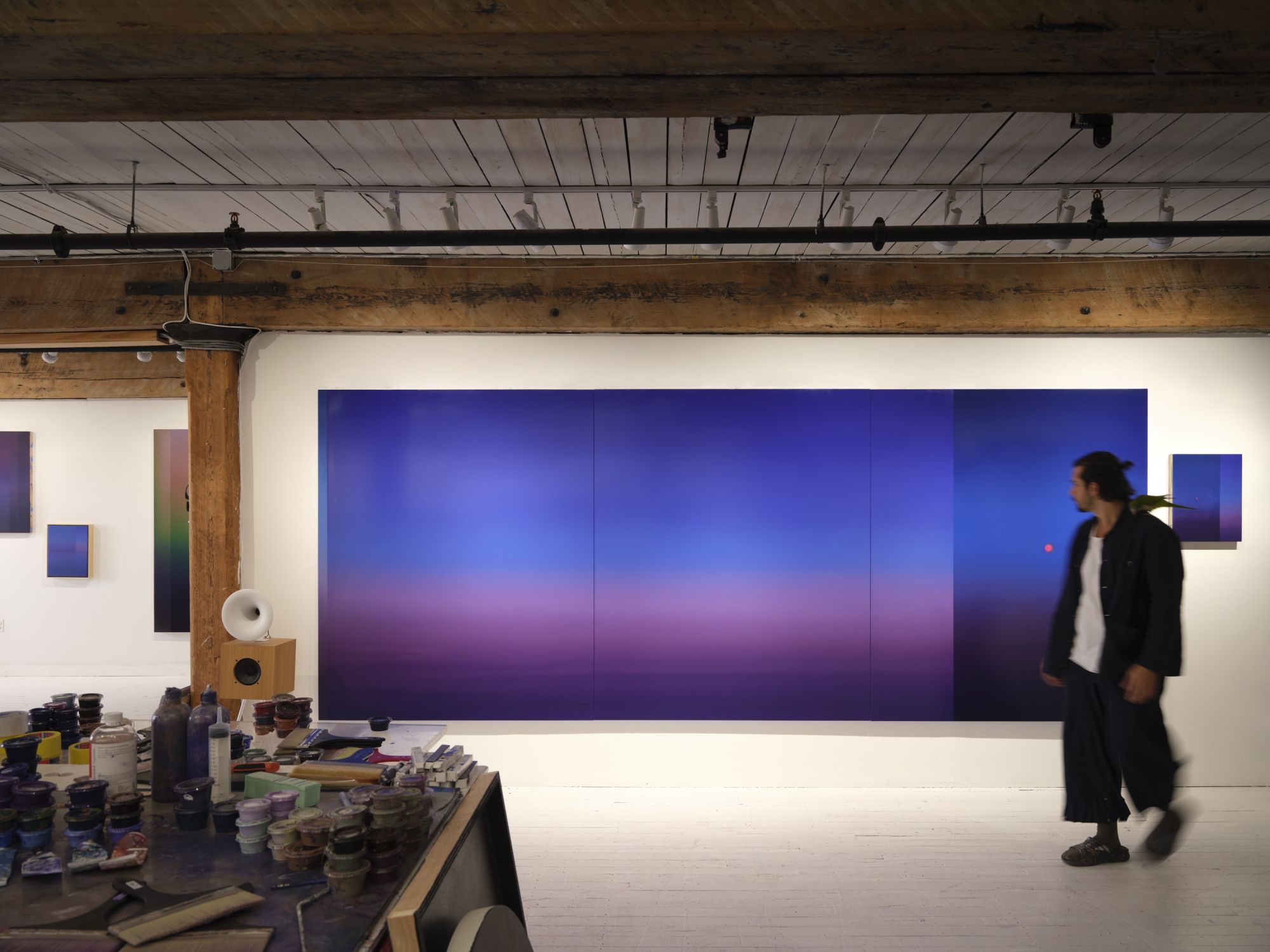
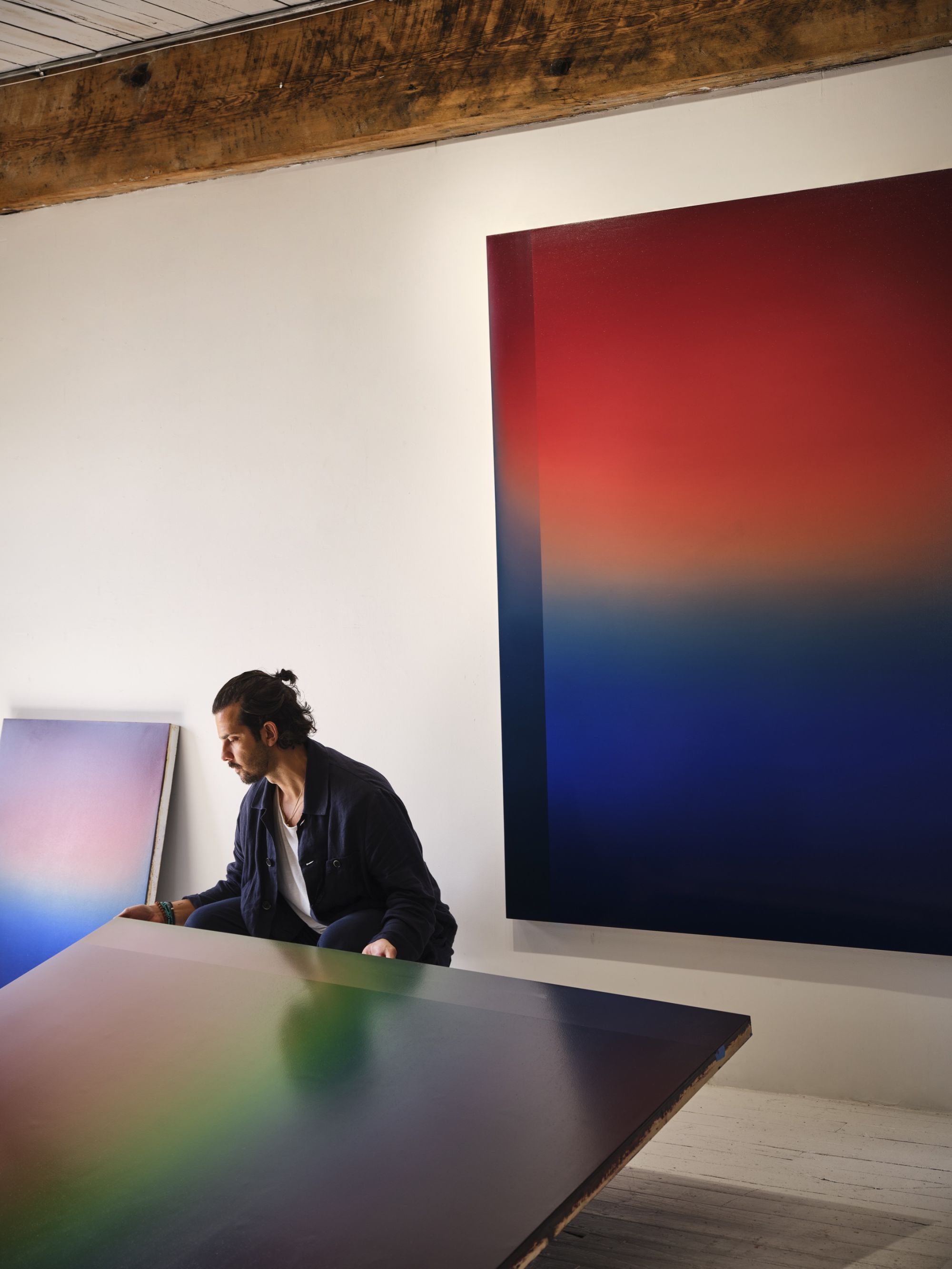
It is within this transformation that The Weight of Light, Theo Pinto's new solo exhibition at the Cadogan Gallery in London, fits in. Brazilian artist based in Brooklyn, before dedicating himself to painting, Pinto studied architecture, a training that continues to profoundly influence the way in which he thinks about scale, surface, matter and physical presence of works.
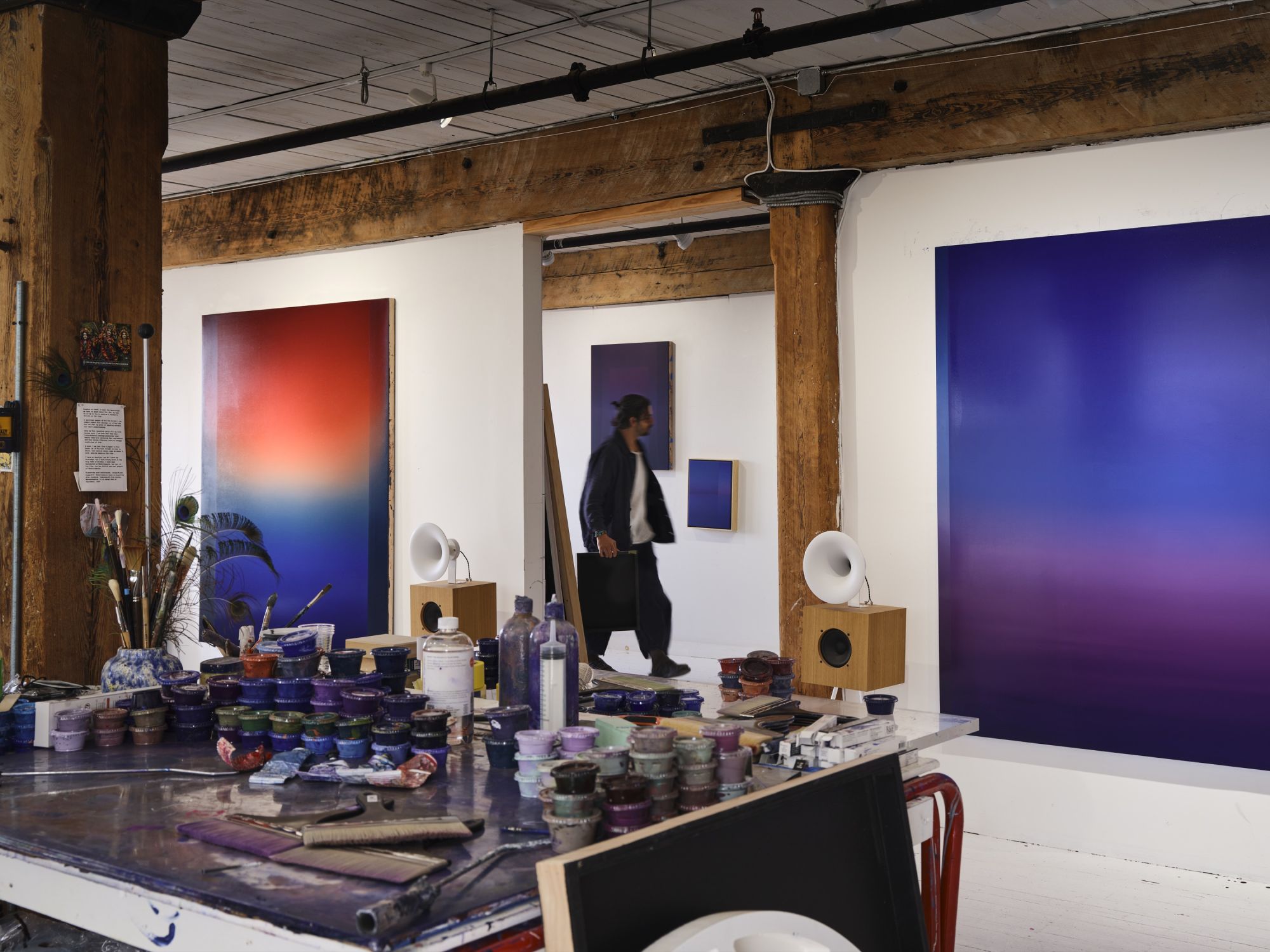
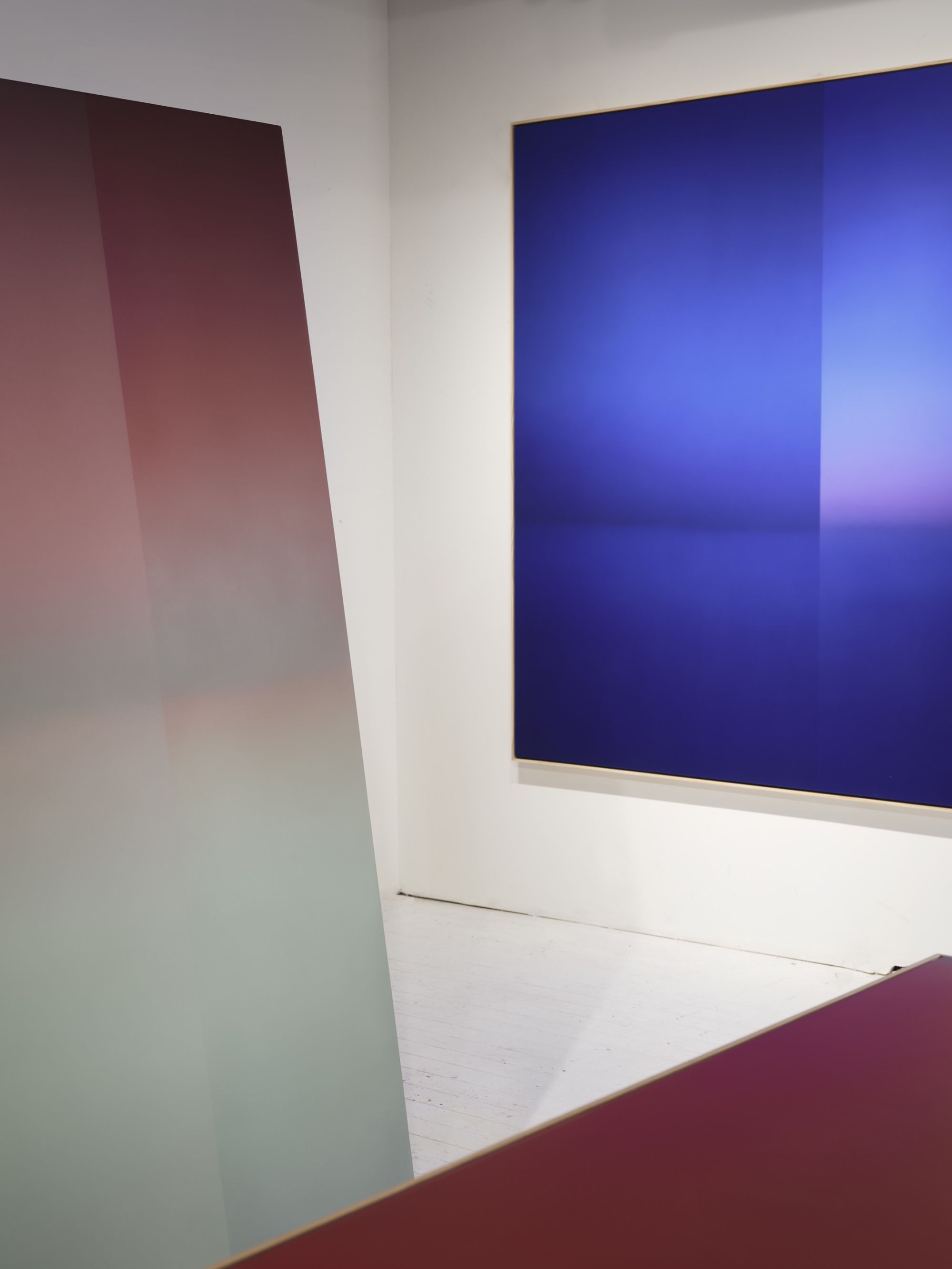
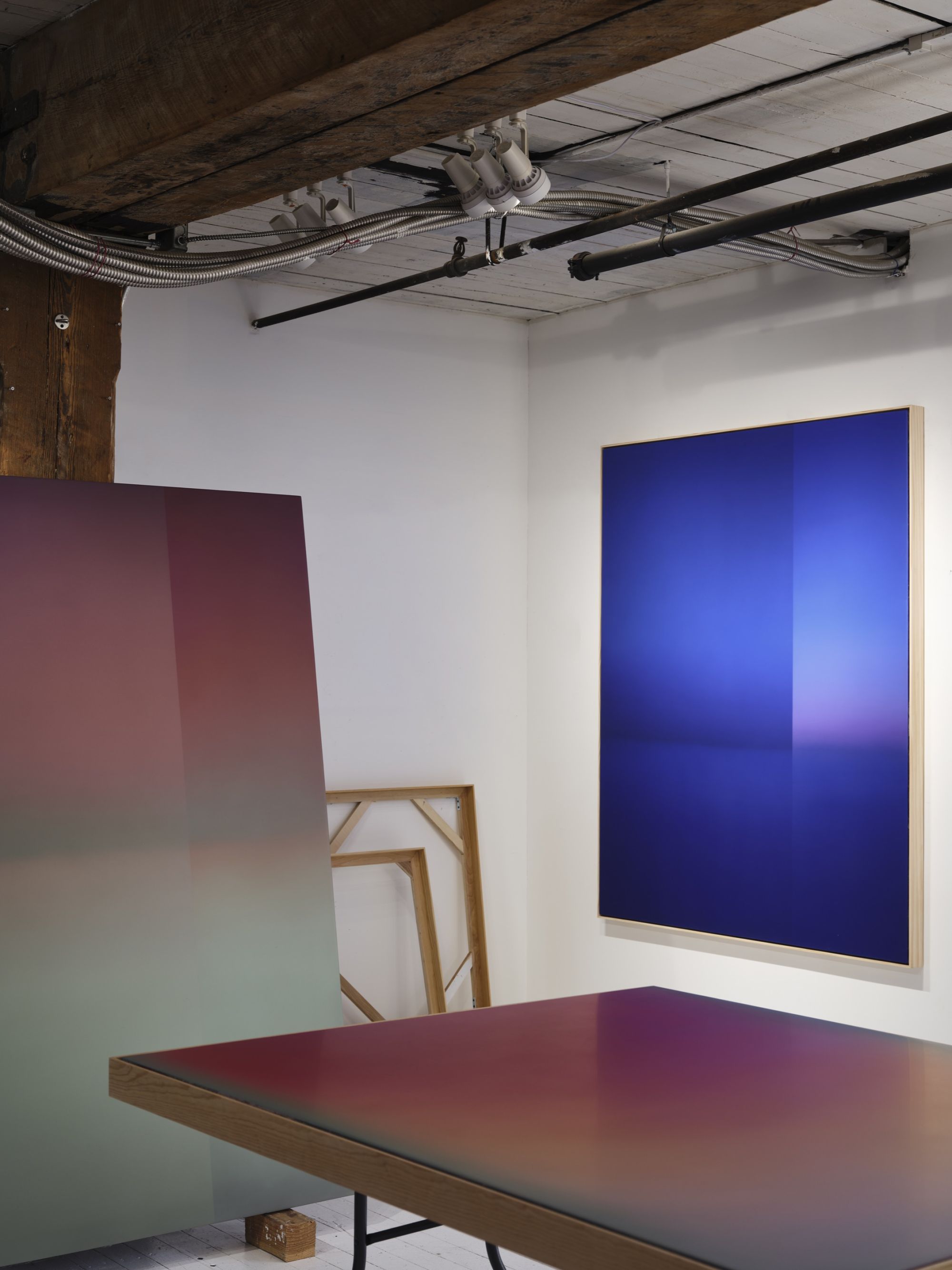
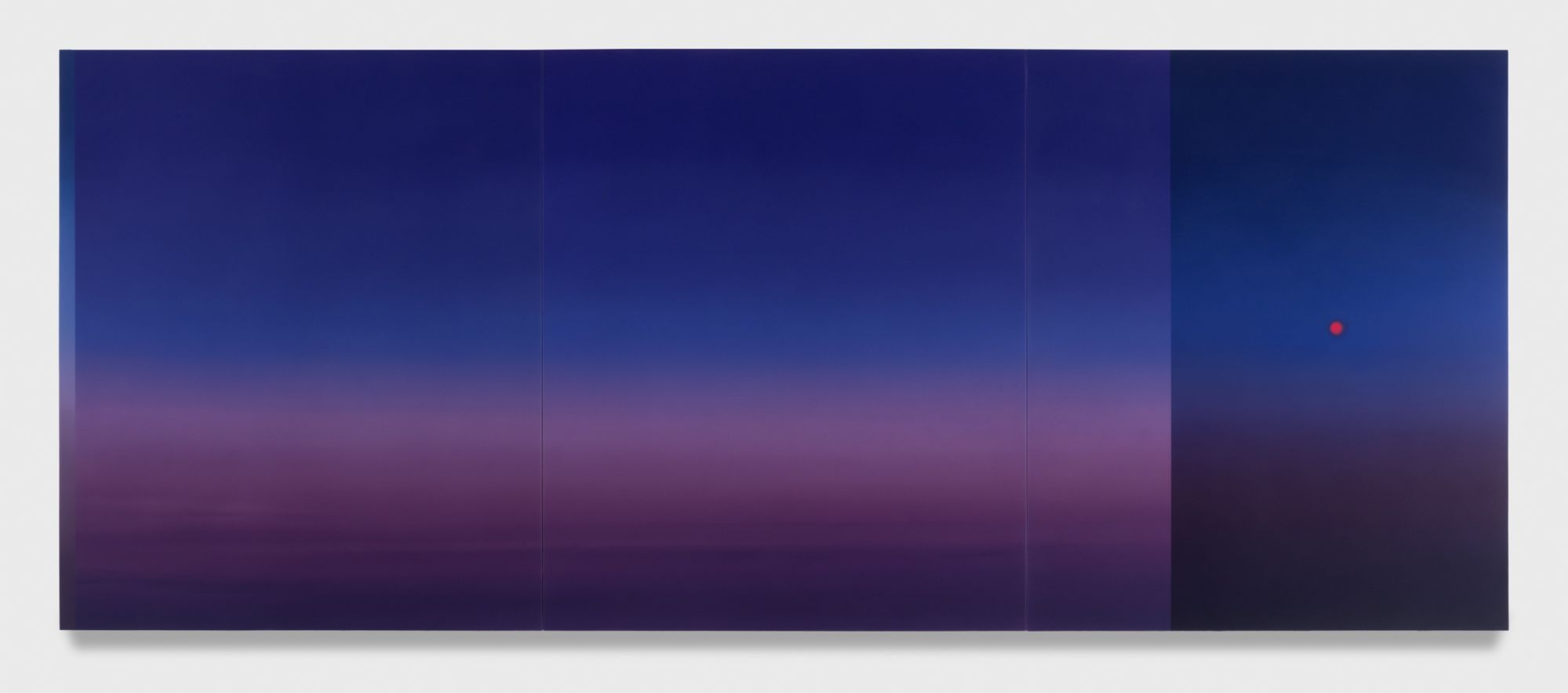
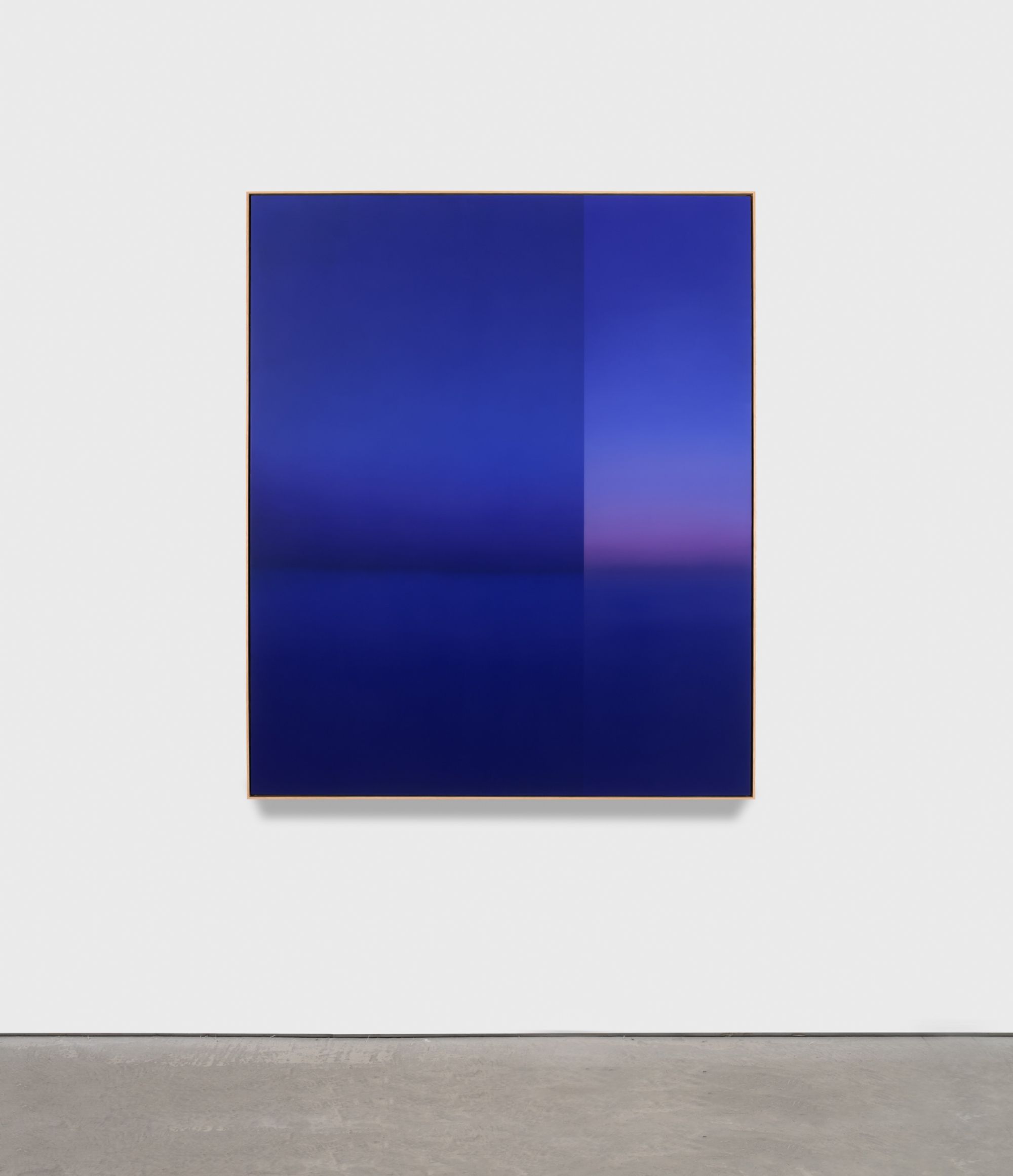
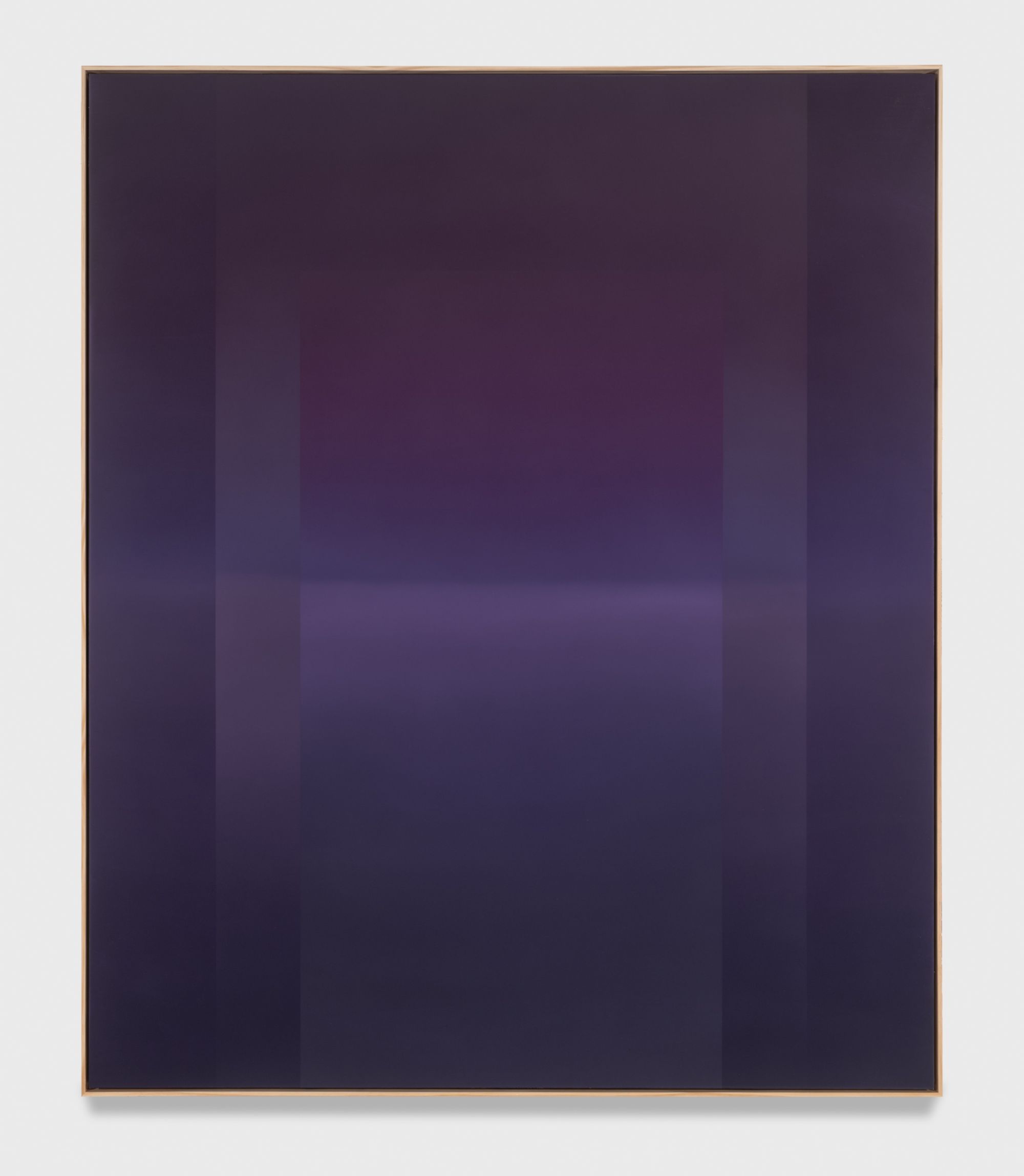
His paintings are made through layering, sanding and continuous color adjustments. Opaque surfaces absorb light instead of reflecting it, causing the work to change based on the distance, the position of the spectator and the time spent in front of it. They do not represent precise landscapes, even when they recall skies, horizons or atmospheric moments.
Pinto explains that his process almost never starts from a defined image. «I usually start from a feeling rather than an image,» he says. There may be the memory of a sky, of a moment at dusk or of a particular quality of light, but he does not try to reproduce them faithfully: what interests him happens later, during his work in the studio.
A painting can remain for months in an uncertain condition, without a fully defined destination. Pinto says that these are often precisely the most interesting moments, those in which he still doesn't know where the work is taking him. This is also why he often works on sunrise and sunset, moments of transition in which the light changes rapidly and nothing appears completely stable. «The world is constantly in the process of becoming something else,» he says. Each painting then becomes an attempt to remain in that state a little longer, before it is transformed.
The light, in his works, does not reach the end: it is part of the structure of the work. It goes into the way in which color is formed, in the way in which the surface absorbs the environment and in the way in which the image presents itself to the viewer. This is why his paintings do not deliver everything at first glance. They need distance and attention.
Today, art, design and architecture seem less and less interested in the fixed image and more and more in the construction of perceptual experiences. In interiors, hotels, museums, showrooms and stores, light is no longer an added element at the end of the project, but what decides the character of the space even before the furnishings.
But a wall can change completely based on the way it's illuminated. The same material may feel warm, cold, light, or heavy depending on the time of day. A shadow can redraw a room, while a reflection can make one detail more obvious and hide another. The artist says that architecture has taught him to think first of all about experience, rather than objects: to observe how people cross a place and how proportions, materials and light build the perception of space.
Even today, Pinto views every painting as something that must be built, not just composed. In fact, much of his studio work concerns the supports, finishes, panels and systems through which materials are layered. As he himself explains, his paintings are «as constructed as they are painted.»
Even the choice of large format stems from this relationship with architecture. Pinto wants the work to be perceived as a presence capable of entering into a relationship with the body and with the surrounding space and of modifying the environment in which it is placed. Hence a larger question: what happens when design begins to design conditions? The answer inevitably comes from light, one of the most effective materials for making what would seem fixed variable.
Many contemporary spaces treat light as a simple aesthetic: soft environments, warm tones, controlled shadows and surfaces designed to be photographed. In these cases, the image of space changes, but not necessarily the experience of those who cross it. When light is treated like a material, however, it really changes the relationship between body and environment. It not only serves to make something visible, but it suggests a rhythm and determines how much time we are willing to dedicate to what is in front of us.
This theme becomes even more relevant in a culture dominated by scrolling. Pinto does not consider his paintings to be a form of direct opposition at this speed. He prefers to call them an invitation. «We spend so much time scrolling from one image to another that we've almost forgotten what it means to really dwell on something,» he says.
Even beauty in Pinto's work is not understood as something superficial or decorative: the artist speaks openly of his possible 'therapeutic power'. Not a beauty used as luxury or as an escape from reality, but something capable of returning a feeling of connection, presence and wonder.
We live in a culture that favors efficiency, productivity and continuous stimulation, while the experiences we remember the longest are often those that ask for nothing but attention. Beauty, says Pinto, does not change the world, but it can change the quality of a moment. This is where The Weight of Light surpasses the story of a single exhibition, with Theo Pinto's works that allow us to observe a wider direction of art, architecture and design through a transition from the construction of the image to the construction of the experience.