
































Why is the Vatican collaborating with the AI industry? The official explanation may come in Pope Leo XIV’s first encyclical
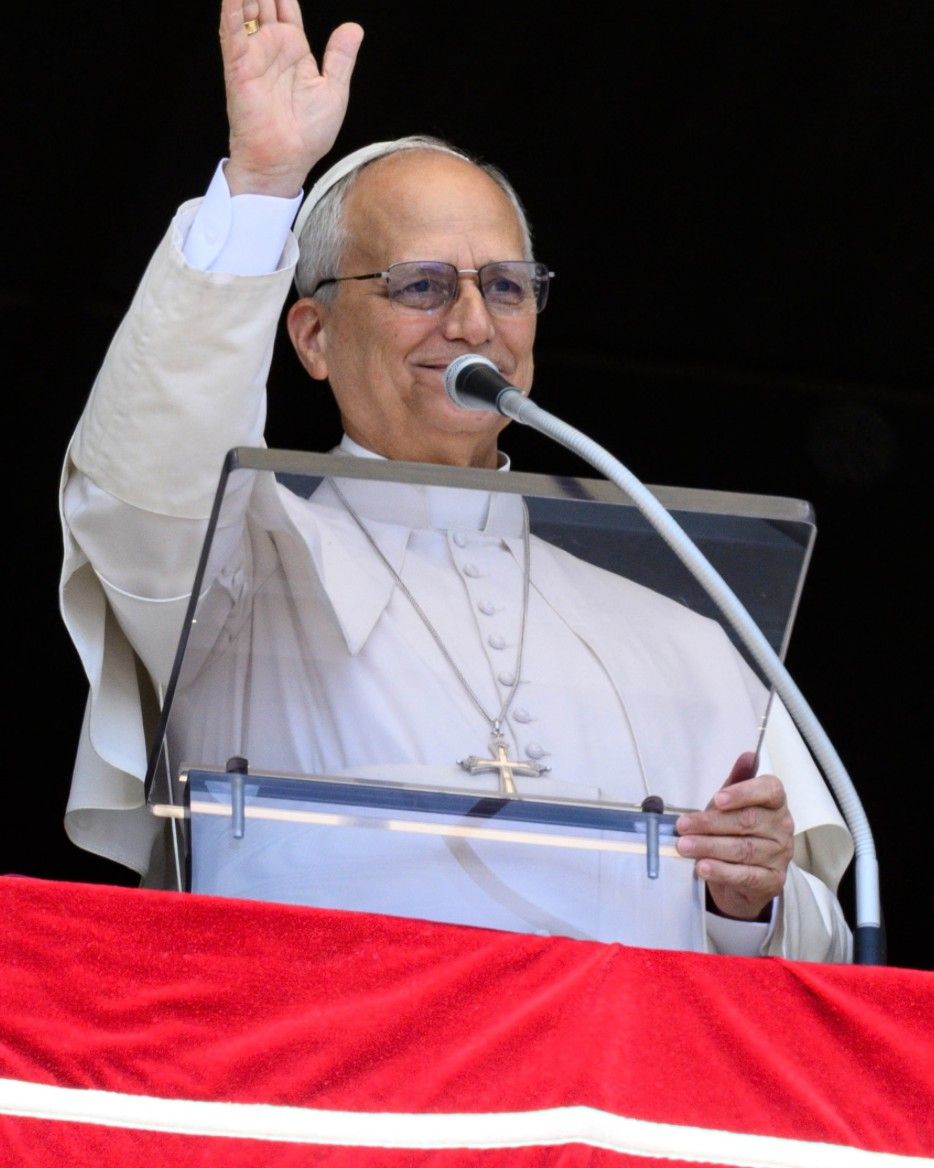
Today Pope Leo XIV will publish the first encyclical of his pontificate, which will not address the theological topics many expect, but will be entirely dedicated to artificial intelligence. It is titled Magnifica Humanitas and, as the New York Times also reported, it is addressed not only to Catholics, but to “people of good will” throughout the world. This, it is assumed, also includes the great lords of AI from Silicon Valley, one of whom will be present in Rome.
It was in fact announced that Christopher Olah will also participate in the presentation of the encyclical, a declared atheist who is nevertheless the co-founder of Anthropic and heads the company’s “interpretability” team, tasked with investigating the inner workings of AI. His presence should not surprise us, given that the Church has been following the rise of AI for over a decade, and a company like Anthropic has made extensive use of the experience of theologians, religious leaders, and experts in the field to give its language models a human depth that pure computational technology cannot provide. But why is the Church collaborating with the AI industry?
The Relationship Between the Church and Silicon Valley
Since 2016, the Catholic Church has launched an initiative known as the Minerva Dialogues, an annual series of meetings that brings together technology leaders and representatives of the Holy See to discuss AI. The initiative was founded by the Dominican friar Éric Salobir, who managed to bring MIT scientists and Silicon Valley leaders to Rome, gathering them in the Basilica of Santa Maria sopra Minerva — the same place where Galileo’s trial was held. Among the participants who have attended these conferences over the years are Reid Hoffman, founder of LinkedIn; former Google CEO and vice president Eric Schmidt and James Manyika, and Microsoft executive Kevin Scott.
The idea has always been to get ahead of the new technology, creating a network of dialogue between Silicon Valley and the Holy See, but above all to be ready for what appeared to be a new industrial revolution. In the same year the Minerva Dialogues were founded, Pope Francis met privately with Eric Schmidt, then Executive Chairman of Google; Tim Cook; and, a few months later, also Mark Zuckerberg. Three years later, the Pope also met Brad Smith, President of Microsoft, who returned the following year to meet the pontiff together with John Kelly III, IBM’s head of research and one of the leading experts on AI.
Over the years, the forum has influenced the creation of several documents, such as the Rome Call for AI Ethics of 2020 and the more doctrinal document Antiqua et Nova, presented in January 2025. From the very beginning, the Church’s official position has been to ensure that the development of AI remains at the service of human dignity and the common good. Shortly after the publication of the Rome Call, Dario and Daniela Amodei founded Anthropic in 2021, positioning it as the AI lab most attentive to ethics and therefore most inclined to interact with the Vatican through the division led by Christopher Olah.
Anthropic and the Theology of AI
@abdimarihotmarbun Pope Leo XIV met Friday with participants in the International Conference on Artificial Intelligence, entitled "Preserving human faces and voices." He pointed out that the Al age and our response to it is an essential theme for the Church, as she seeks to help everyone grow to full maturity. "It is my hope," he said, "that these reflections lead to a restored trust in technology as a fruit of the genius of the human person in harmony with God's creative design." credit video IG reels vaticannews
suara asli - Adie Marbun
Starting from January 2025, Olah organized meetings with religious leaders and philosophers in San Francisco. The objective was both technical and philosophical: to define a theory of mind, halfway between religion and cognitive science, to understand how human morality could be conferred to machines. The most tangible product of this dialogue is Claude’s Constitution, nicknamed the “soul doc” (the “soul document”), which defines the character, values, and behaviors of Anthropic’s AI model.
To write this “soul doc,” several philosophers and scholars gathered, including a good number of Catholic thinkers such as Brian Patrick Green, director of technology ethics at Santa Clara University; Father Brendan McGuire, a Silicon Valley priest with a degree in computer science and mathematics, co-founder of the Institute for Technology, Ethics and Culture at Santa Clara; and Bishop Paul Tighe, secretary of the Vatican Dicastery for Culture and Education, who launched the Minerva Dialogues and co-author of the document Antiqua et Nova influenced by them. Beyond the religious aspect (Olah is an atheist, as we said), there was a technical need to overcome the fundamental amorality of AI to make the model capable of making good decisions.
Obviously, Trump could not be left out of this discussion. In February 2025, Anthropic publicly opposed the use of its AI systems for military drones and mass surveillance of American citizens, issues that the Vatican had explicitly condemned and which Peter Thiel with his Palantir was happy to overlook. Trump canceled a $200 million contract with the Pentagon and declared Anthropic a security risk. The company challenged the decision in court and presented a document signed by fourteen Catholic theologians and academics in its support. It was the first time that, albeit indirectly, the Church sided with an AI company in a government matter.
The relationship between the Church and AI grew stronger with the Builders Artificial Intelligence Forum at the Pontifical Gregorian University in Rome (which will meet for the third time in autumn 2026) and with the founding of the DELTA network at the University of Notre Dame, created to “form the souls” of those who build and use artificial intelligence. Meanwhile, Pope Leo XIV was elected — a name referring to Leo XIII, the pope who at the end of the 19th century wrote the encyclical Rerum Novarum on workers’ rights during the First Industrial Revolution, placing the Church at the center of the most urgent social debate of its time. This pope wants to do the same. The official position is that the Church has always been pro-technology but only if it is used for good.
Why the Catholic Church and Not Other Religions?
Anthropic’s Chris Olah at the Vatican press conference to present Pope Leo XIV’s encyclical on AI: “There is a real possibility that AI will displace human labor at very large scale. If that happens, supporting those displaced will be a moral imperative of historic proportions.”… pic.twitter.com/WDsbne8zz2
— Courtney Mares (@catholicourtney) May 25, 2026
Speaking with The Atlantic, the important tech investor Reid Hoffman said he also approached Buddhist representatives without success. In reality, however, AI “prefers” the Church because Catholicism is the most centralized religion in the world and addresses 1.4 billion faithful. It is also the institution best prepared to discuss these issues, with two thousand years of theology on humanity, the mind, dignity, and virtue behind it.
The relationship between the two worlds is also, perhaps, one of mutual convenience. Tech oligarchs know they need moral legitimacy (or morality itself), while the Church wants relevance. After decades of scandals and secularization, the current historical moment and the regulation of AI ethics represent an opportunity to demonstrate that the Catholic tradition is still important for the modern world. And on this relationship there are broader doubts about whether AIs are intrinsically unethical and whether the tech world’s attention is motivated only by political and marketing reasons. Nevertheless, as Father Salobir told The Atlantic: “You can disagree with the rain, but you will still be wet.”
Today, with Magnifica Humanitas, this dialogue reaches its institutional climax, as the words come directly from the Head of the Church. We cannot know how much the Pope’s intervention will shape the future behavior of the tech barons (whom we would not exactly call examples of piety and religion), but judging by how the sense of powerlessness in the face of a new technology-fueled political authoritarianism has made the Pope a “good guy” figure to appeal to, the encyclical could have a very strong impact in the years to come, if only on the perception of the Church.