






















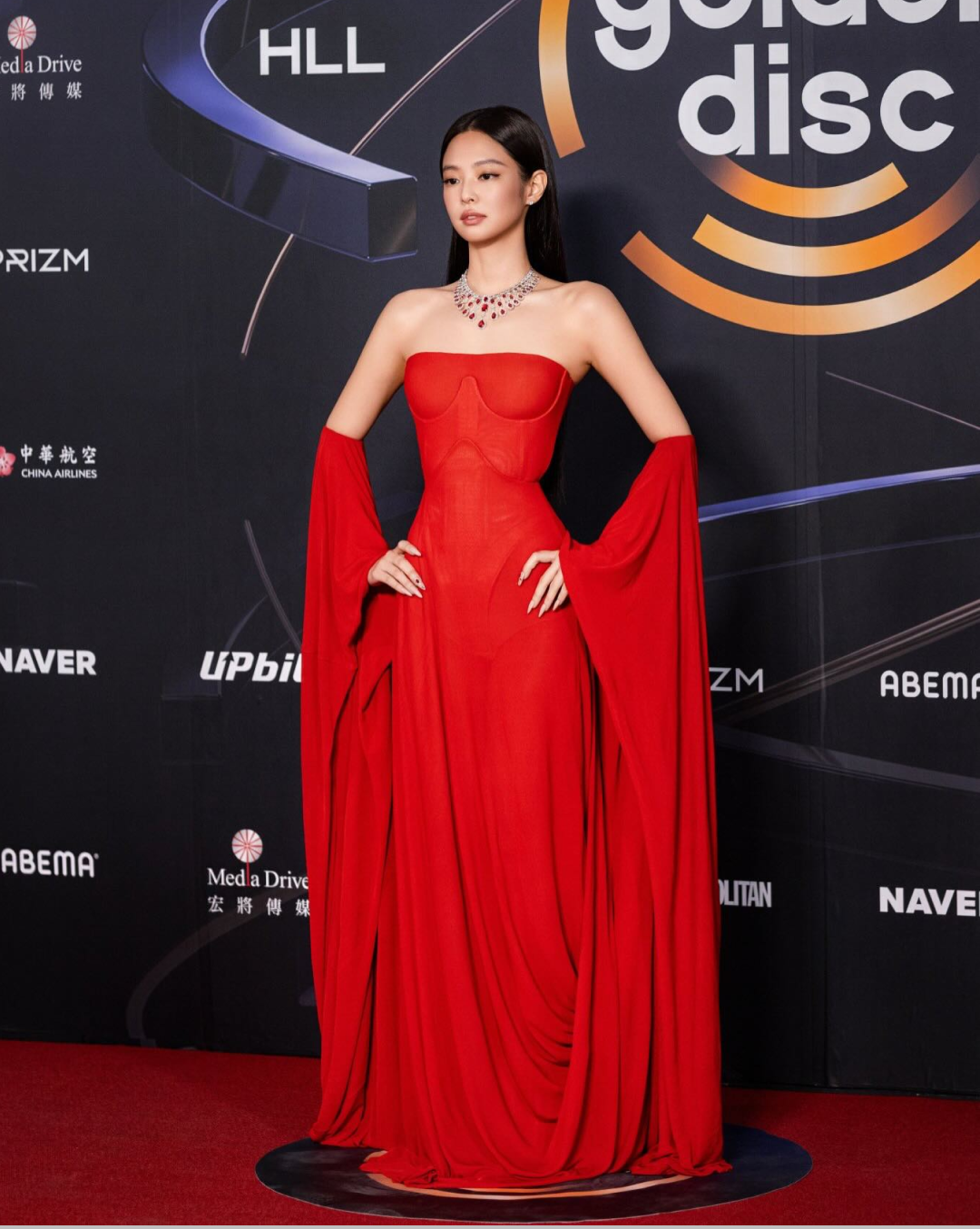
Maison Margiela is dressing K-pop idols now Blackpink Jennie's latest looks raise questions about the cult brand's strategy
Paparazzi shots of a double-breasted herringbone coat layered over a sweater with elbow patches, tabi loafers on her feet, and a keychain with the distinctive four-stitch motif attached to the belt loops of a pair of oversized jeans: Jennie of Blackpink strolls through Incheon Airport in a total look Maison Margiela. The final blow came, and it did not go unnoticed, at the 40th Golden Disc Awards in Taipei. For the occasion, the singer wore look 38 from the Artisanal 2025 collection, the Maison’s first under the creative direction of Glenn Martens, reinterpreted for her in a scarlet red.
She is the third celebrity to wear this constrictive, deliberately claustrophobic-looking dress: first Kim Kardashian at last year’s Met Gala, then Anya Taylor-Joy at the Governors Awards in Los Angeles. The reception was extremely positive. «In custom margiela feels like art that learned how to breathe», wrote one user on X.
It’s all about the stylist
Jennie’s off-duty style is the result of the work of Sam Woolf, an Australian stylist behind many of her tour looks (as well as Doechii’s highly acclaimed ones). During the Tokyo stop of Blackpink’s current tour, the singer wore a custom-made Maison Margiela look featuring red micro-shorts and a leather jacket, a crystal-embellished top from the SS26 collection, and patent leather high Tabi boots.
Fans reacted with overwhelming enthusiasm, with comments ranging from «I have no words to describe how much Sam Woolf's styling enhanced Jennie's beauty and aura» to «Thank you for working with Jennie. I truly hope we’ll see her at the Met Gala and at Chanel fashion shows in the future».
What happened to Maison Margiela’s anonymity?
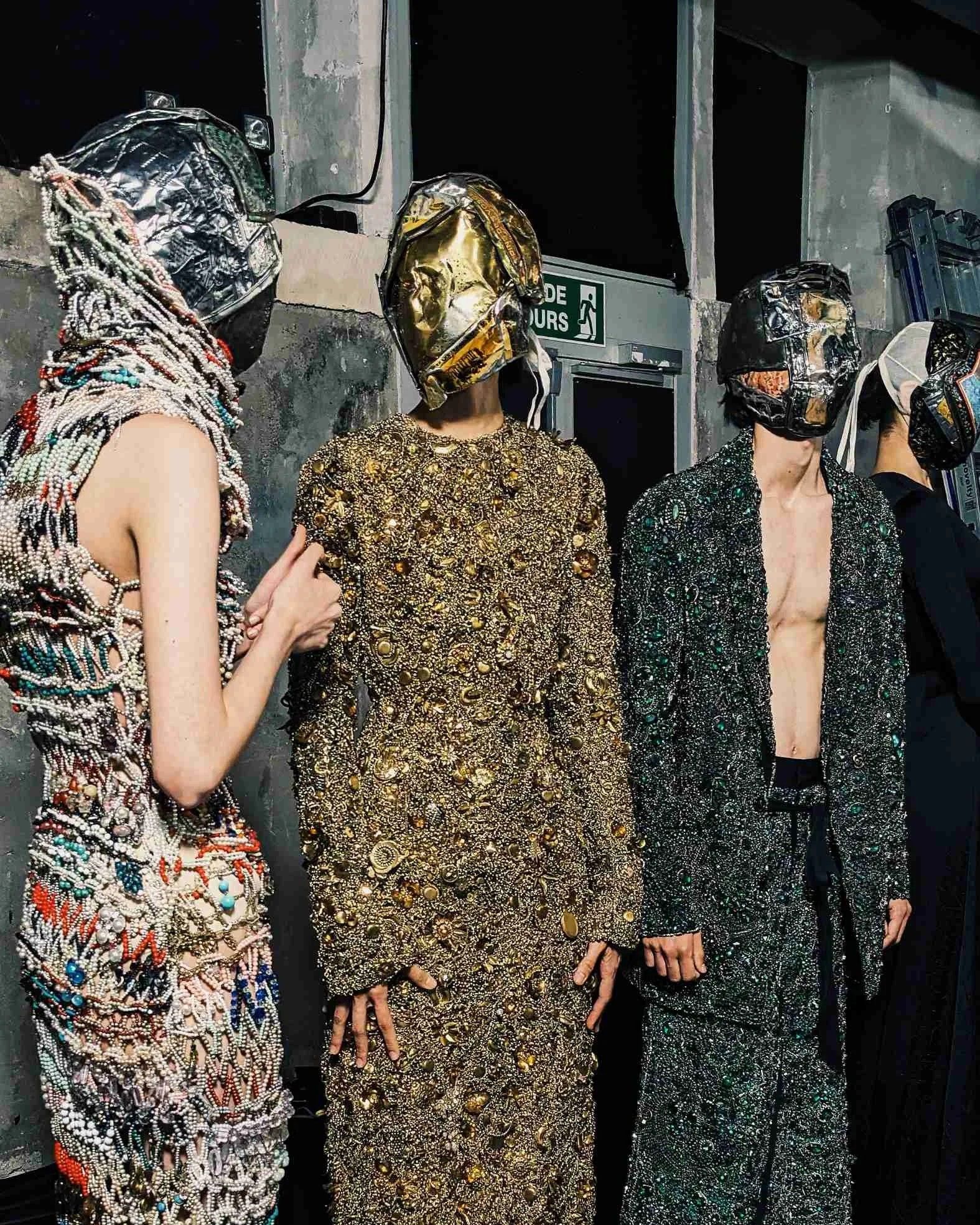
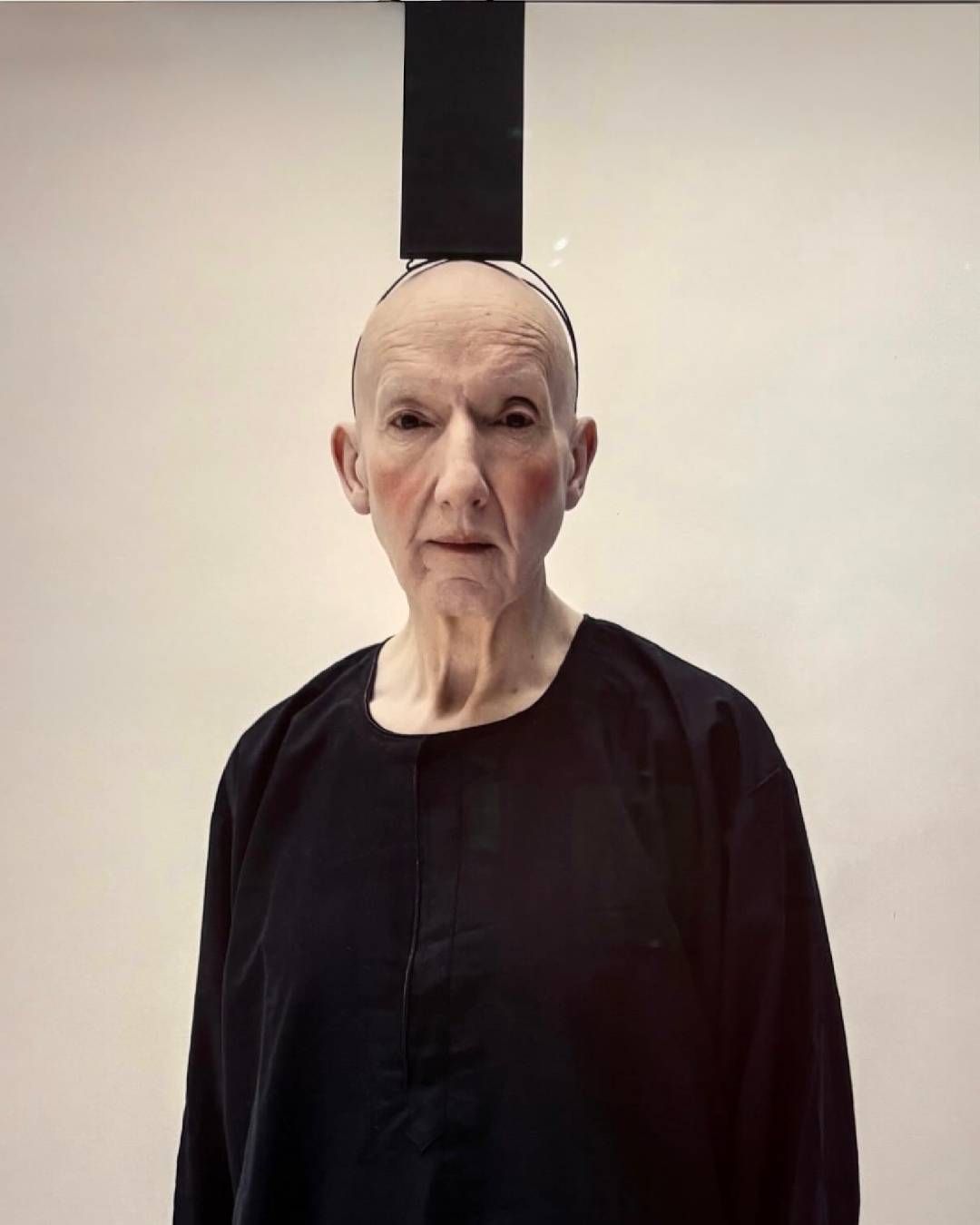
Everything looks great, but what would Martin Margiela—the man who made anonymity the key to his branding—say? Since its founding, the brand positioned itself far from ambassadors and distinctive logos; its guiding principle was always silence. Martin Margiela gave no interviews, took no photos, and never appeared on the runway at the end of shows. In speech, he used the pluralis maiestatis; at work, everyone wore the same white lab coat. For him, the Maison was a collective machine, a place to generate meaning through processes of deconstruction and brush up against surrealism without being overshadowed by the presence of a celebrity-creative. Nothing was meant to divert attention from the collection. «I don’t like the idea of being a celebrity. Anonymity is very important», Margiela states in the docufilm Martin Margiela: In His Own Words. He founded a brand and then deliberately chose to remove himself from it.
Throughout its history, the brand respected the artistic testament of its founder, exercising the power of mystery in an age of overexposure and managing to create a niche of consumers who embraced the brand’s intellectual commitment and revolutionary, conceptual aesthetic. It has always been a brand for a few, by design. The problematic nature of this approach only emerges today, almost 40 years later. Preserving secrecy while winning over modern consumers is undeniably challenging. The Maison’s approach to social media has always been cautious, far from influencer marketing and focused on craftsmanship, product storytelling, and behind-the-scenes narratives. A tendency that is now beginning to waver—and not necessarily by the brand’s choice.
Margiela has gone mainstream
I love Margiela’s Tabis because they are one of the few designs that are still popular today that evoke a strong emotion in everyone. It’s not something you see much in fashion, anymore.
— Lakyn Thee Stylist (@OgLakyn) September 3, 2023
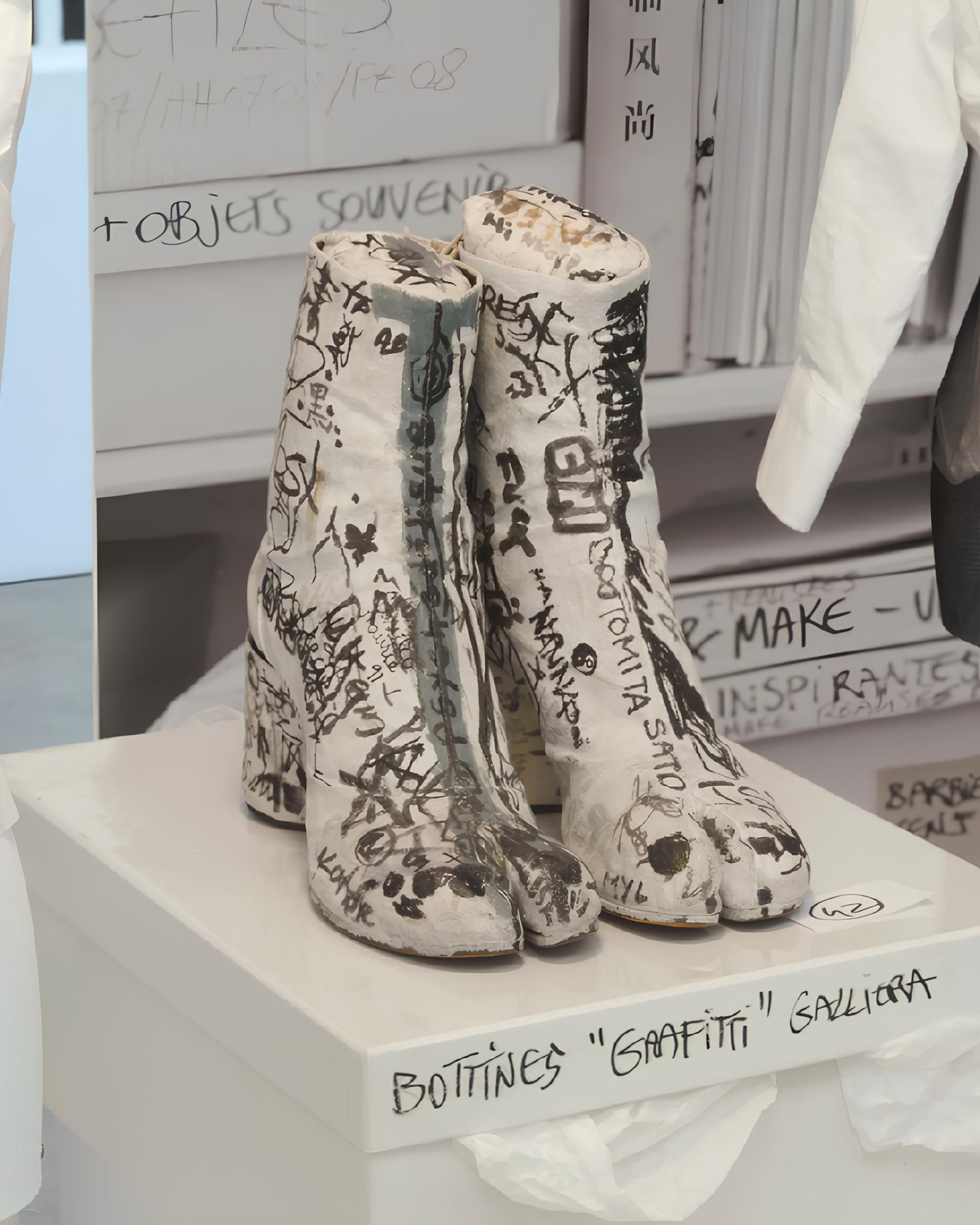
In 2023, a young woman told a story on TikTok about the theft of her Tabi shoes by a Tinder date. According to Google Trends, that same week the shoes’ popularity saw a 143% spike. This kind of unintentional fame is perhaps the most emblematic case of how the brand has both lost and consolidated control over its symbols. The Tabi went viral not because they were promoted, but because they were narrated—inserted into an absurd story, far removed from the language of conceptual fashion. They turned into an immediately recognizable object, meme-ready and desirable precisely because of their eccentricity.
The object stopped belonging exclusively to the Maison and entered the collective imagination, showing how today “pop” is not necessarily the result of a marketing strategy, but often the side effect of a loss of symbolic authority. Shortly after, Miley Cyrus became the brand’s first official ambassador. A clean break with the past, yet not a denial of its heritage. Miley Cyrus is not a silent muse or a neutral face; she is a celebrity carrying a baggage of experiences, scandals, and public metamorphoses. The ambassador does not become a vehicle for simplification, but a narrative device through which the brand accepts complexity as an integral part of contemporary visibility.
The Jennie Kim–Maison Margiela pairing
Within this transition, Jennie seems to occupy a position of balance. Unlike other celebrity dressing operations, her relationship with Maison Margiela does not translate into a taming of the brand, but into a form of measured and coherent exposure. Jennie does not wear Margiela to make it ironic, nor does she aesthetically adapt it to bend it to her will: she adopts it as a language, even in off-duty contexts, without narrative overstructures.
Her image—harsher, less accommodating, distant from the classic femininity of traditional K-pop—aligns with the brand’s anticonformist aesthetic. In this sense, Jennie does not represent the “popularization” of Margiela, but proof that the brand can inhabit the mainstream imagination without giving up its ambiguity. Perhaps this is where the real shift lies: not in becoming easily understandable, but in remaining complex even under everyone’s gaze.
What to read next
There Is a Streaming Service Dedicated to John Galliano's Fashion Shows
It's called GallianoFlix and it was created by an Indian fashion writer