
























Atelier Versace will be back, Prada Group confirms While awaiting Mulier's arrival, the group presented excellent annual results
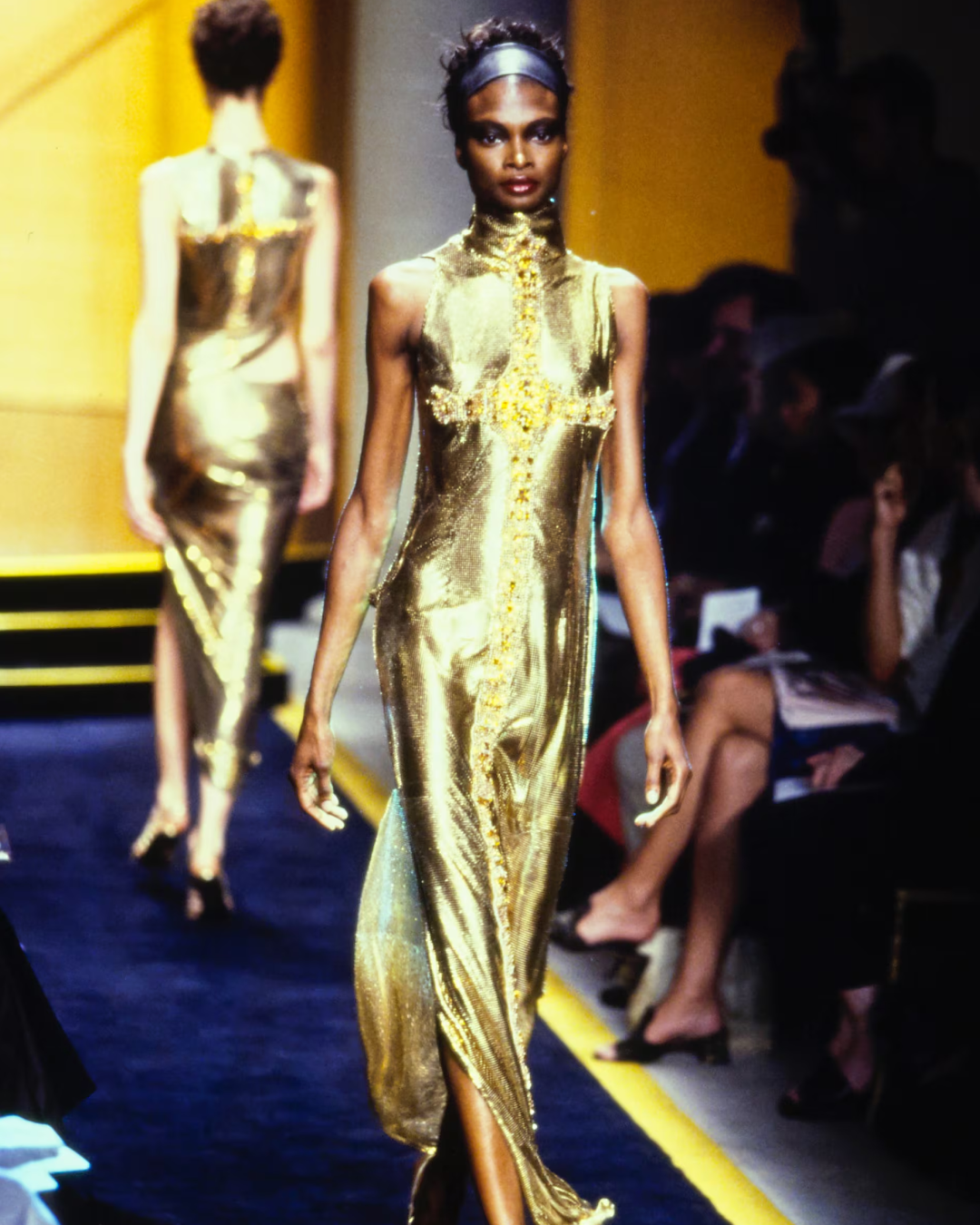
Yesterday, during the announcement of the financial results for the fiscal year ending last December 31, the Prada Group confirmed the upcoming return of Atelier Versace, the historic haute couture line of the brand recently acquired and entrusted to Pieter Mulier. The announcement came during the conference call with analysts, where Lorenzo Bertelli, heir to the Prada Group and chairman of Versace, outlined the plans for the brand’s relaunch, emphasizing the creative vision of the new chief creative officer. The decision to reopen the Haute Couture line clearly signals the repositioning strategy of Versace within the Prada portfolio.
Atelier Versace as the symbol of a new era
When a brand commits to presenting Haute Couture collections, complying with the various operational rules required to be allowed to use this designation, the intention to reposition itself becomes very clear. It is not simply about boosting sales or increasing visibility (Versace already has plenty of that) but about sending a clear message that we are talking about an extremely sophisticated brand, refined and in dialogue with the most exclusive and high-spending segments of the global clientele.
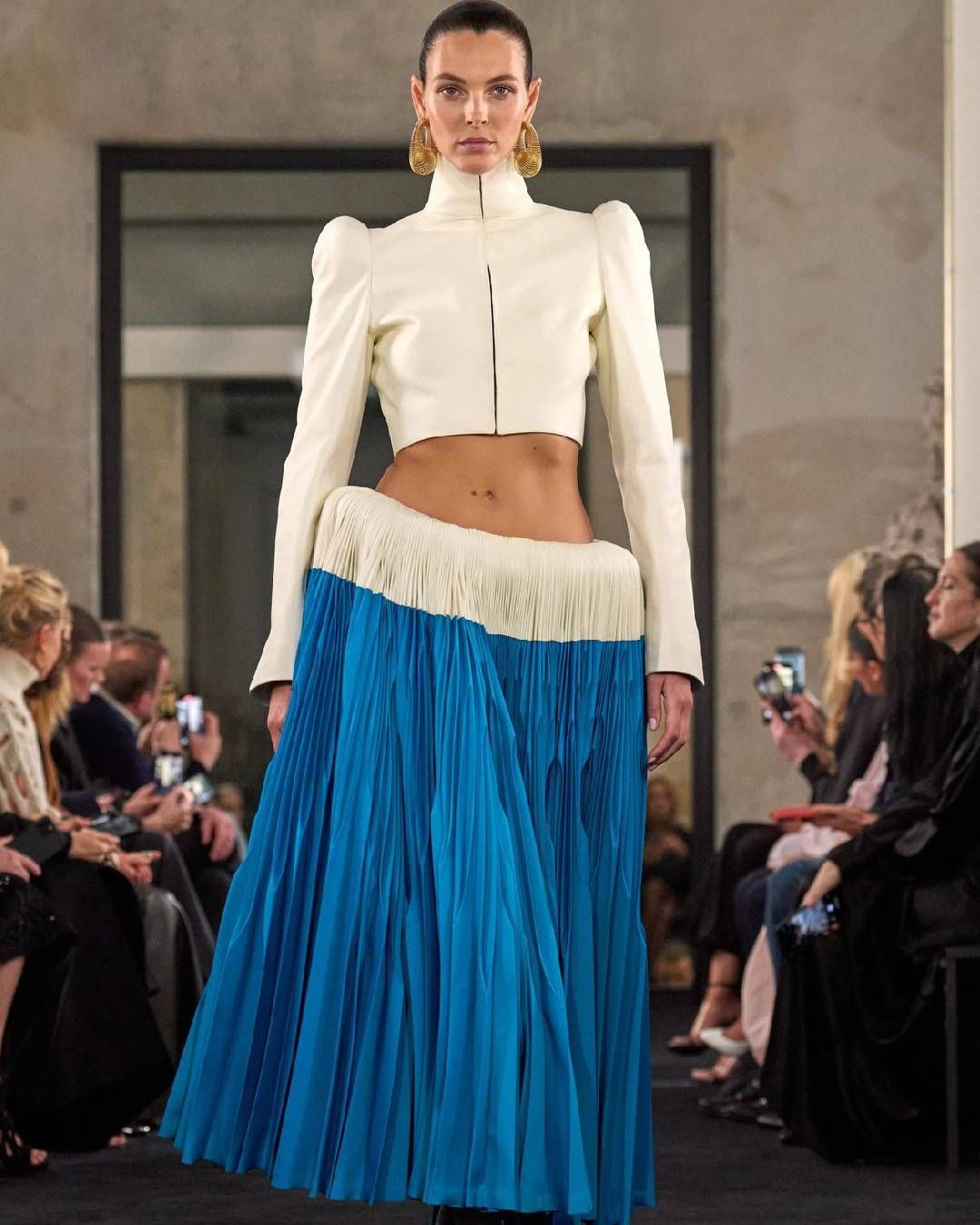
Lorenzo Bertelli announced that the couture line will be relaunched alongside the arrival of the Belgian designer, who will assume the role of chief creative officer in July 2026 and has just presented his final collection for Alaïa. «The first show presenting the new vision for Versace is scheduled for the beginning of next year, when the first collection of the new creative direction led by Pieter Mulier will be unveiled», Bertelli explained during the call, without specifying whether Mulier will debut immediately with a Haute Couture collection or whether it will instead be ready-to-wear. Given the timing of the early-year fashion shows, the second option appears more plausible, with the return of Atelier Versace happening later, once the waters have been tested.
The return of Atelier Versace represents an important step in the brand’s turnaround strategy also because it will be connected to unspecified “special projects” that could bring renewed relevance to Versace through artistic collaborations (in this case, Miu Miu and Prada represent the blueprint) but also through other types of initiatives aimed at elevating the cultural relevance of a brand that is commercially beloved yet today perhaps appears somewhat superficial and lacking a strong identity.
Bertelli indeed emphasized the great potential of Versace: «We started this journey relying on several factors: first of all, the extraordinary and enduring awareness of Versace; secondly, its diversified customer base, with limited overlap compared to Prada and Miu Miu; a strong legitimacy in haute couture, menswear, womenswear and across all product categories; and its cultural relevance and brand equity».
How will Versace be repositioned?
Pieter mulier at Versace owned by Prada will actually alter the chemicals in m brain and change the trajectory of my life btw… maybe even bring back the spark in my eyes
— mar (@vogueheroine) February 6, 2026
Before Mulier’s official debut, the new management will focus on two initial pillars: analyzing the current collections to identify areas for improvement in terms of quality and structure, and optimizing distribution channels, the brand positioning, and the transition toward high-quality full-price sales. The diffusion line Versace Jeans Couture will be discontinued and Versace’s current supply chains will be reintegrated into the Prada Group’s manufacturing platforms in order to contain costs.
The message that emerges, however, seems quite clear. Over the past decade Versace has struggled somewhat to keep pace with the evolution of fashion’s collective codes. In a world dominated by deconstruction, Phoebe Phil-ism and preppy aesthetics, the baroque prints, hyper-logoed products and the strong emphasis placed on ultra-commercial categories had begun to appear excessively formulaic and lacking direction.
What the group expects from Mulier is a new it-bag like the Teckel or the famous mesh ballerinas: highly sellable products that are also extremely luxurious and sophisticated, which will likely aim to rebuild the brand’s reputation that today perhaps appears too self-referential and nouveau riche. In recent years, Versace’s aesthetic has in fact celebrated a very assertive and opulent glamour, with strong logo accents, provocative silhouettes and an imagery that has sometimes bordered on the codes of a more exhibitionist and immediate luxury, as well as somewhat dated, partly losing that subtlety that many today associate with contemporary desirability.
Big investments with big returns
The major relaunch of Versace nevertheless takes place within a context of strong growth for the Prada Group. The financial results for 2025 were in fact excellent, with net revenues growing by 9% to reach €5.72 billion. Although the Versace operation, acquired in December 2025, introduced some complexity, the group maintained a consistent growth trajectory for the fifth consecutive year, even within a slowing luxury market.
And even though Versace contributed net revenues of €684 million in 2025, the Prada Group warned that the relaunch could weigh on revenue in the short term due to the inevitable investments required. The entire brand reset process is expected to dilute the group’s net margins in 2026, but if everything goes according to plan the improvement should begin to be felt in the following years.
At the level of individual brands, Miu Miu once again confirmed itself as the group’s true champion, with 35% year-on-year growth and a gross margin rising from €4.34 billion to €4.59 billion. Prada, on the other hand, recorded a 1% decline in retail sales, with signs of improvement in the second half of the year and a positive fourth quarter. And even if the group’s leadership would ideally like to see Prada accelerate a bit more, the formula developed in recent years seems to be working very well, with the flagship brand offering a more refined aesthetic while Miu Miu, with a more casual and youthful proposition, sweeps away the competition.
Globally, the Asia-Pacific market (which also includes China) remains the largest and recorded 11% growth, while Europe saw +5%. In America sales increased by 18%, and in Japan by +3%, while in the Middle East they rose by +15%. The ongoing conflict, which is inflaming the entire Gulf region, will however lead to temporary store closures and could therefore impact earnings for the current year.
What to read next
Creative directors want a soft launch too
Why a teaser look on the red carpet is often better than a plain debut