
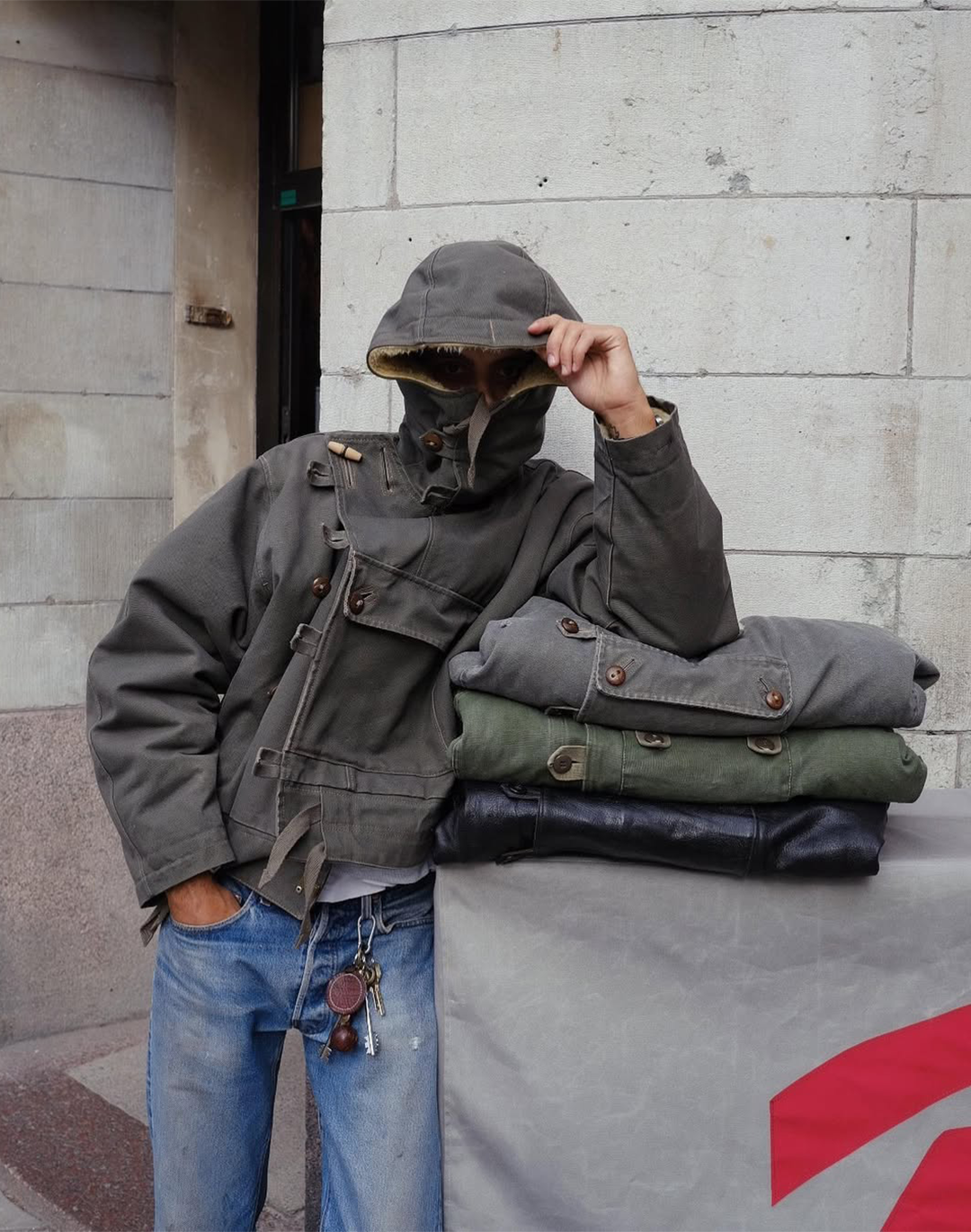
Even fast fashion is pretending to be vintage The Swedish Motorcycle Jacket that is going viral on Shein
What we thought we knew about buying second hand clothes in near new condition on online marketplaces such as Vinted, in order to participate in the circular economy and consume in a more environmentally responsible way, is a lie. This is the conclusion reached by a report published by The Sun which discusses a questionable new business model currently spreading: buying ultra fast fashion items from ecommerce platforms such as Shein, Temu and Aliexpress and reselling them at inflated prices, sometimes two or three times higher, on Vinted. One example is the new Swedish Motorcycle Jacket by Shein, which is gaining visibility in Google ads and across social media. But what changes does this phenomenon bring to the way we shop? And how does it redefine the value we attribute to vintage?
The case of the Shein Motorcycle Jacket
Shein, Temu and Aliexpress are brands that have been accused of many practices, among which design plagiarism stands out. This has become one of the factors, together with extremely low prices, on which these ecommerce platforms build their traffic, offering products that imitate original designs. More specifically, we are witnessing the growing circulation of a new 1960s biker jacket model inspired by Swedish military army garments. The piece is rapidly gaining visibility among Google ads and within contemporary outerwear trends.
The imitation of this jacket, or rather its reproduction, depends on the success that vintage fashion is currently experiencing in the market. The second hand market represents 19% of global clothing sales in volume. To this must be added the 6% market share currently captured by low price Chinese actors such as Shein, Temu and AliExpress. In terms of value these two categories represent respectively 11% and 2% of the market. It is also important to consider that the share of ultra fast fashion products continues to increase on second hand platforms.
This represents both a commercial and cultural paradox, since ultra fast fashion imitates vintage, even though vintage by nature stands at the opposite end of rapid industrial production. Some users eventually fall into the traps of these new “entrepreneurs”, who manage to bypass the platform controls. One method consists of removing the label of the original fast fashion brand and then responding vaguely to buyers who ask for more information about the item and its origin.
The consequences of the deception
The consequences of this phenomenon affect both the fashion industry and the cultural perception of vintage. Traditionally, vintage garments gained value precisely because of their history, the quality of their materials and their relative rarity. Owning a vintage piece means possessing an object capable of standing apart from mass production, a compromise between economic accessibility and aesthetic exclusivity. Today, however, the fast fashion industry has intercepted precisely this demand for uniqueness, replicating aesthetics from the past without preserving their historical or cultural dimension, while increasing traffic on their own platforms.
This transformation may also have effects on consumers. On one hand, the diffusion of inexpensive reproductions makes certain aesthetics more accessible. On the other hand, it reduces the possibility of purchasing objects that are truly unique or historically meaningful. The approach of fake vintage is symptomatic of the economic and cultural moment we are living in, one in which we never seem to have enough clothes. Satisfying this need, or perhaps this whim, becomes increasingly difficult when confronted with rising prices. Not to mention how the vintage fashion market itself contributes to making the prices of new garments appear increasingly difficult for consumers to accept.
We no longer know our clothes
In a certain sense, buying vintage used to be the perfect compromise between quality and accessible price. Platforms such as Vinted had become true gold mines, places where rare pieces could be discovered but also well made basic garments, offering at the same time a more conscious alternative to the circuits of ultra fast fashion. Today, however, these new “fake entrepreneurs” are also the product of our own way of consuming.
Perhaps we have lost sight of the original meaning of vintage. If it once represented a real alternative to fast fashion, today it increasingly risks replicating the same logics. At this point the question becomes inevitable. How far can this hybridisation go? And above all, will we be able to reclaim the value of what we buy or are we destined once again to move within the very mechanisms we believed we had escaped?
What to read next

adidas Originals opens a new store in Rome on Via del Babuino
Here's what went down at the opening event
Miu Miu's commercial boom is coming to a halt
The rest of the Prada Group, however, is holding up well
5 Style Lessons We Can Learn from Jeff Goldblum
How to put together a look inspired by the iconic actor